
30, April 2020
Why attempts to end the Southern Cameroons Crisis have failed- and how Francophones and Ambazonians can live together “separately” 0
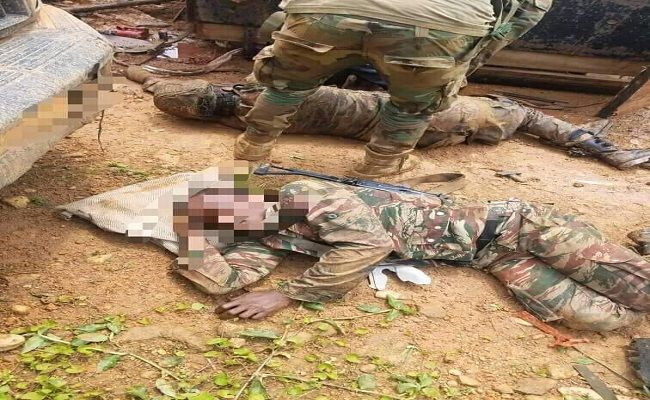
Cameroon government army soldiers are moving throughout Southern Cameroons committing what has been described by human rights organizations as crimes against humanity and war crimes as thousands of Ambazonian civilians continue to escape in to Nigeria. Hundreds of Southern Cameroonians are moving further into areas held by Ambazonia Restoration Forces with fighting reportedly slowing down due to the outbreak of the coronvirus. The war in Southern Cameroons is a geopolitical and humanitarian crisis that is threatening the Federal Republic of Nigeria and increasing crime rate in states such as Benue and Cross River.
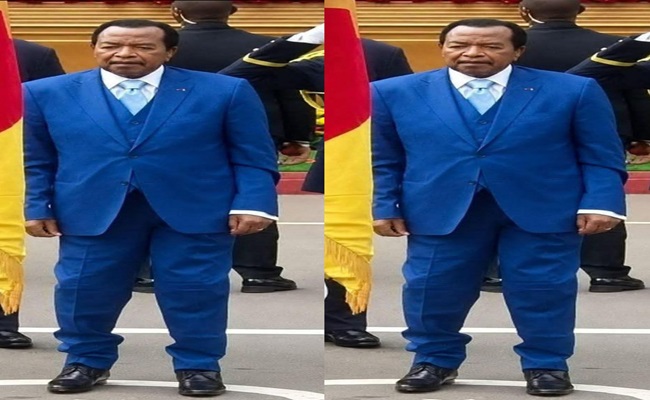
Hundreds of poorly armed Southern Cameroonian criminal fleeing the conflict have also migrated into French Cameroun towns and cities such as Dschang, Bafoussam, Douala and Mbounda, creating the possibility of another Francophone and Anglophone confrontation deep inside French Cameroun territory. Cameroon government army soldiers dedicated to President Paul Biya of French Cameroun and abetted by French government military aid say they are in the final stages of attempting to take control of the entire British Southern Cameroons occupied by a number of Ambazonian Resistance groups. From every indication, the Buhari administration in Nigeria does not want to become involved in the Southern Cameroons war. Yet as hostilities move inside Nigerian territory and as an estimated 50,000 Southern Cameroons refugees inundate border settlements in Nigeria, Abuja could be drawn in.
The Southern Cameroons war has become a war in which the French, the British and the Chinese are exploiting to get whatever oil, gas and mining deals they had long for from the failed French Cameroun regime in Yaoundé. In a country already fractured in two, it was evidently clear that from the abduction of the Southern Cameroons leaders in Abuja and their forced extradition to Yaoundé, Southern Cameroons independence was no longer in doubt but was now linked to Biya’s continued stay in power.
The Southern Cameroons crisis has indeed spawned many arguments about humanitarian interventions with the UN coming across as a toothless bulldog that can bark but cannot bite. Under the UN’s watchful eyes, thousands of innocent Southern Cameroons civilians including women and children have been killed by the Francophone dominated Cameroon government army soldiers as they flee attacks in both the Northern and Southern Zones of Southern Cameroons. The renowned Human Rights Watch and the International Crisis Group have both described the situation in Southern Cameroons a total meltdown of humanity. The recent attack in Bafut carried out by the Cameroon government army is yet another humanitarian disaster in Southern Cameroons – and the Ambazonia Interim Government and its current Vice President Dabney Yerima are calling on the international community to intervene.
The Marginalization of Southern Cameroons: When facts don’t lie
Lying is a sin that was committed by five Francophone Ministers who told the world at a press conference that there is no Anglophone problem in Cameroon. The integrity deficit associated with lying about the Anglophone problem is a travesty that insults and diminishes every Cameroonian and must stop.
The point must therefore be made, and with emphasis, that there is an Anglophone problem but the problem is deeply embedded in the asymmetrical political structure of the country, which has led to institutional paralysis engendered by leadership failure. Anglophones are divided over the Anglophone problem, just as Francophones are united in their bellicosity and belligerence towards Anglophones whom they cast as treasonable felons and secessionists who cannot be trusted. Francophones have used this self-fulfilling fallacy as an excuse to exclude Anglophones from the commanding heights of decision-making and treat them as second class citizens. But facts don’t lie.
Consider this: over 58 years after independence and re-unification, there has never been an Anglophone President or an Anglophone Secretary General or Director of Civil Cabinet at the Presidency. Nor has an Anglophone ever held the strategic ministerial portfolio of Defense, Finance, Communication, External Relations or even in charge of the Police, Gendarmerie, the Army and Intelligence services; not even ambassadors to English-speaking countries like the USA and Nigeria.
For a region that represents about 20% of the population, accounting for over 60% of GDP, the fact that the lone oil refinery named in French (SONARA) is in Anglophone Cameroon, yet has been run by Francophone general managers with a predominantly Francophone workforce since its creation is unacceptable. It just cannot be that there are no competent Anglophones to occupy these positions.
As if that was not enough, higher institutions like the National Polytechnic, ENAM, IRIC, ESSTIC, INJS, IFORD, CUSS, Public Works, ENSPT, IRAD, are heavily laden with French courses; another way of saying, Anglophones need not apply. Although Cameroon is officially a bilingual country where both English and French are equal, when has the president ever made an official address to the nation in English? All official correspondences are in French, even when directed to Anglophones. French is the language used in the administration, police, gendarmerie, army and the courts. Anglophones have to seek translators at their own expense. All road signs are in French and there is not a single word in English on the FCFA currency in circulation; is this constitutional?
The facts and figures of Anglophone marginalization under President Biya are staggering. Of the 292 ministers appointed since Biya took office in 1982, only 76 (10.8%) have been Anglophones. In the last 63-member cabinet before Southern Cameroonians started the uprising, there were only six Anglophones (9%) and only, Philip Ngole Ngwese (2%) out of the 38 Ministers had a cabinet portfolio. There are four Anglophone Secretary Generals (10%) and three Anglophone DAGs (7%) in the central administration. In state corporations, there are less than 15 Anglophones (11%) out of over 130 general managers. Of the over 130 Board chairmen of state corporations, there are only 10 Anglophones (7%). only three of the nation’s 33 generals in the Armed Forces are Anglophones.
The picture in the judiciary is even more pathetic and scandalous with Francophones occupying all key positions in the Supreme Court – President of the Supreme Court; Attorney General; Head of Judicial Division; Head of Administrative Division; Head of audit Division; Head of Special Criminal Court; Special Attorney Special Criminal Court; Director of Military Justice; Registrar-In-Chief Supreme Court and Secretary General Supreme Court. 58 (39%) of the 148 magistrates in the Southwest are Francophones while 54 (61%) of the 89 magistrates in the legal department in the Southwest are Francophones. Of the 50 magistrates working in Buea (Bench & Legal Department), 20 (40%) are Francophones while 20 (71%) of the 28 magistrates in the legal department in Buea are Francophones. Of the 30 new bailiffs that were appointed in January 2014 in the Southwest, 28 of them (93%) are Francophones.
The situation in the Northwest region is even worse. Of the 128 magistrates in the Northwest, there are 67 Francophones (52 %). Of the 97 magistrates of the legal departments, 64 of them are Francophones, (65.9%); 22 (48.9%) of the 45 magistrates in Bamenda are Francophones. There are 27 magistrates in the legal department in Bamenda of which 21, (77.8%) are Francophones. All the 21 new bailiffs (100%) appointed in January 2014 to the Northwest are Francophones. Comparatively, of the 119 magistrates in Douala, only two (1.7%) are Anglophones. Likewise, only two (1.9%) of the 107 magistrates in Yaoundé are Anglophones. These are very disturbing statistics in a bilingual country with two legal systems!
There is no reference hospital and no functional airport or seaport in Anglophone Cameroon. It is worth recalling that preliminary studies by the consortium charged with the construction of the Chad-Cameroon oil pipeline had established that the project will be cost-effective if the pipeline was built from Doba in Southern Chad to Limbe, which has a natural deep seaport. According to documents from the World Bank and the Washington-based Environmental Defence Fund, the then Secretary General at the Presidency, Joseph Owona re-routed the project to his native Kribi; taking the pipeline through ecologically sensitive areas and increasing the distance by 90 miles and the cost by $2 billion. Owona warned the investors that Limbe was risky because Anglophones might one day agitate for secession and the pipeline will be exposed to sabotage and vandalism.
To add insult to injury, the government has made it a point to assign Francophones who neither speak nor understand English to Anglophone regions. A Francophone DO in Oku, Kamdem Andre once called a meeting with traditional rulers and started speaking in French. Not understanding what he was saying, the Fons started dozing. Feeling snubbed, the angry DO ordered his bodyguards to wake-up the Fons with a slap each and the meeting ended in chaos.
DO Kamdem is not an isolated case. Francophones disrespect Anglophones in positions of authority, even the prime minister, head of government. Francophone ministers either ignore cabinet meetings called by the PM or come late, in breach of standard protocol. When then prime minister, Achidi Achu appointed Raymond Gwanyalla as Director of Customs, the then Finance Minister; a Francophone openly challenged the PM in a flagrant display of insubordination. The Minister not only refused to preside at Gwanyalla’s installation, but ordered a boycott of the event which was heeded by all Francophone Directors in the Ministry of Finance. Surely, nothing like this happens in any country worthy of respect.
As Prime Minister, Peter Mafany Musonge was humiliated by the paymaster general in Yaoundé. Musonge was dealing with a crisis after a timber truck derailed killing dozens, mostly roadside hawkers in the hotbed of Mutengene. Anger was boiling on the streets when President Biya ordered that FCFA 200 million be given to the PM to go help the victims and deceased families. A voucher was established to this effect; with the “visa” of the Finance Minister and the PM’s office and sent to the Yaoundé central treasury, but then paymaster general, Etogo Mbezele refused to pay, ostensibly because the director of the treasury had not “visa” the voucher.
The treasury director was vacationing in France and traveled abroad with his “visa.” Informed of Mbezele’s decision, an exasperated Musonge could not help but exclaim in anger and frustration: “Oh these Frogs!” It must be stated in no ambiguous terms that Musonge spoke from the heart. His spontaneous outburst speaks to a deep-seated Anglophone frustration with an erratic system of government, with its consequent value misplacement, the like of which should never be countenanced in any civilized nation.
There are countless instances where Francophones are appointed to boss better educated and qualified Anglophones. It is a tragedy that after fifty-five years of independence and re-unification, we are still talking of Anglophones and Francophones, but that is the sad reality of Cameroon. Anglophones have been treated shabbily; they are asking whether they made the right choice in 1961, since only they were asked if they wanted reunification with Francophones.
Despite that fact that East Cameroun was deeply embroiled in a bloody insurgency and terrorism, Anglophones closed their eyes and voted with their hearts. Fifty-five years after that vote, all Anglophones are asking is to be given the opportunity to manage their own affairs but they are being called secessionists and enemies from within, Biafrans, and even asked to go back to Nigeria.
This in itself is demeaning and outlandish. Our strength as a nation lies in our diversity. The bridge towards our future will be built on lessons from the past; hence the government must refrain from assuming that anyone calling for restructuring of the present structure wants to breakup the country. It is not Anglophones who threaten national unity; rather, it is the politics of exclusion and marginalization of Anglophones that poses a threat to peace and stability. Those who see Anglophones as a conquered people should look at these unsettling statistics and learn the right lessons because the mood is very scary.
What Could Be Done?
To stop the genocidal campaign going on in Southern Cameroons, there must be regime change in Yaoundé. The West should design a plan for the 87 year old French Cameroun monarch to abdicate immediately. Correspondingly, France and the United States should stop supplying Yaoundé with weapons on lame and ridiculous reasons that the Biya regime is fighting the Nigerian Islamic sect, Boko Haram.
Southern Cameroonians should channel their financial resources to the Ambazonia exiled government represented by its Vice President Dabney Yerima instead of chosen from the many obscure resistance groups such as the ADF and the Sako-IG. All other regional participants – the Buhari administration in Nigeria, President Obiang of Equatorial Guinea and the Republic of Chad should be required to depart.
Persuading the jailed Southern Cameroons leader, President Sisiku Ayuk Tabe to accept and enforce a cease-fire will be a complex process, but could save hundreds of lives both in Ambazonia and deep within the French Cameroun army.
The provision of humanitarian aid by the UN and other aid agencies to displaced Southern Cameroonians must become a priority at the negotiating table while an independent international fact-finding mission with a UN Security Council mandate should be deployed to Southern Cameroons.
By Soter Tarh Agbaw-Ebai with additional reporting from Valerian Ekinneh Agbaw-Ebai















30, April 2020
UK has second-highest Covid-19 death toll in Europe, new figures show 0
The United Kingdom now has Europe’s second-highest official death toll from the novel coronavirus pandemic, according to new figures on Wednesday that cover fatalities in all settings, including in nursing homes.
Some 26,097 people died after testing positive for the novel coronavirus as of April 28 at 1600 GMT, Public Health England (PHE) said. That means the United Kingdom has had more COVID-19 deaths than France and Spain have reported.
“These more complete data will give us a fuller and more up to date picture of deaths in England and will inform the government’s approach as we continue to protect the public,” Yvonne Doyle, medical director at PHE, said.
Although international comparisons are difficult, the new figures confirm Britain’s place among the European countries worst hit hardest by the pandemic.
Italy said on Wednesday that 27,682 people had died after testing positive for coronavirus. Like Britain, its figures are based on deaths following positive coronavirus tests, in all settings.
(REUTERS)