9, June 2026
BEAC halts key refinancing facility for productive investments across CEMAC 0
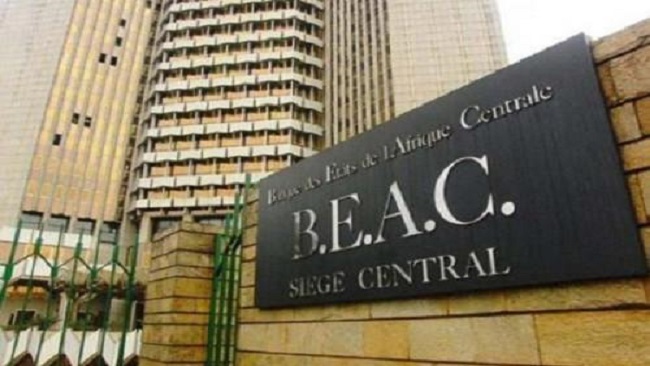
The Bank of Central African States (BEAC) has suspended new refinancing operations under a key facility designed to support productive investment across the six-member Central African Economic and Monetary Community (Cemac), according to sources familiar with the matter.
The decision was reportedly made after heated discussions during a meeting of the bank’s Monetary Policy Committee (MPC) in Yaoundé on April 2.
The suspension affects medium-term credit refinancing for investment projects, a mechanism that allows commercial banks to obtain funding from the central bank after extending loans to businesses undertaking qualifying projects. According to a BEAC source, the measure is temporary and is intended to give the institution time to modernize the facility.
“This is a provisional suspension that will allow us to update the operating framework of a mechanism that has been in place for decades. For now, we are no longer accepting new refinancing requests from commercial banks, but we continue to process applications submitted before the suspension took effect,” the source said.
The move follows comments made by BEAC Governor Yvon Sana Bangui during a September 2025 press conference, when he announced plans to reform the facility, formerly known as Window B. At the time, he said the review was intended to adapt the mechanism to current economic realities.
A Tool Designed to Support Investment
The Cemac money market operates through two main channels. The first is the interbank market, where commercial banks lend to one another using liquidity held at the central bank. The second consists of BEAC interventions through two refinancing facilities known as Window A and Window B.
“Window A is the traditional monetary policy channel through which liquidity is injected into or withdrawn from the banking system. Window B is dedicated to refinancing medium-term loans granted for productive investment,” Bangui previously explained.
Under the rules governing the facility, BEAC financing cannot exceed 60% of a project’s total cost.
Refinancing requests of up to CFA20 billion can be approved directly by the governor. Applications above that threshold require approval from the Monetary Policy Committee. National BEAC directors can approve requests of up to CFA4.5 billion per quarter, with a monthly ceiling of CFA1.5 billion.
For years, commercial banks across Cemac made extensive use of Window A while largely ignoring Window B. “In June 2025, we brought together all commercial banks in Bangui and presented the facility. The finding was striking: many banks were simply unaware that the instrument existed,” Bangui revealed following the September 2025 MPC meeting.
That changed after BEAC’s outreach campaign. Cameroonian banks, in particular, began using what the central bank now calls the Special Refinancing Facility. In 2025 alone, BEAC approved refinancing for CFA41.2 billion in loans linked to the Bipindi-Grand Zambi iron ore project in Cameroon and CFA31.3 billion in financing for telecommunications operator Camtel’s investment program.
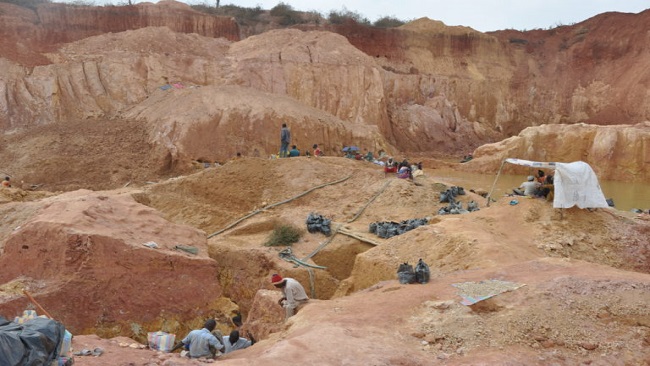
CCA Bank was also authorized to raise CFA30 billion from the central bank to help finance a mining project in the Republic of Congo. Afriland First Bank sought refinancing support for a CFA20 billion palm oil processing plant project being developed by the Cotton Development Company (Sodecoton).
Given the growing interest from commercial banks, the suspension temporarily removes an important source of funding for both lenders and industrial projects. Until the revised framework is finalized, banks and businesses across Cemac will have one less tool available to finance investments considered critical to the region’s industrial development.
Source: Business in Cameroon






















9, June 2026
Child Benefit: Biya regime audit families after 55% jump in declared children 0
Cameroon has launched a nationwide audit of family benefit payments to public sector employees after a sharp increase in the number of children declared in the government payroll system raised concerns about possible fraud.
The operation, known as AALFA, officially began on June 3, 2026, when the steering committee overseeing the audit held its first meeting in Yaoundé under the chairmanship of Finance Minister Louis Paul Motaze.
The government’s objective is to verify the legitimacy of children registered for family benefits, identify irregularities, and recover any funds paid improperly. The Finance Ministry says the initiative forms part of a broader effort to control public payroll spending.
The review follows a surge in the number of children declared by state employees. According to figures presented by the ministry, the total rose from 594,728 in June 2024 to more than 923,000 in March 2026, an increase of about 55% in less than two years. Officials considered the growth unusual enough to warrant a nationwide audit.
The increase came after family allowances were raised in February 2024 to CFA4,500 per dependent child each month. While the measure was designed to strengthen social support for public employees, it also increased the financial importance of maintaining accurate records.
According to Motaze, the audit is not intended to challenge the rights of public employees who legitimately qualify for family benefits. Instead, he said, the goal is to remove fraudulently declared children from the payroll system and recover improperly paid benefits.
The review will focus on the authenticity of birth certificates, the validity of supporting documents, and the consistency of information submitted by beneficiaries. Authorities hope to identify duplicate records, irregular declarations, and cases where children were registered without reliable documentation.
The initiative follows a series of government efforts to clean up public payroll records. The physical headcount of public employees conducted in 2018 is cited by the Finance Ministry as one of the measures that generated significant annual savings. Additional audits have also targeted pension payments, beneficiaries, and other categories of public spending.
With AALFA, the government is turning its attention to family-related payroll expenses. Although less visible than salaries or pensions, these benefits can place a substantial burden on public finances when beneficiary records are not regularly verified.
The committee responsible for the operation was established in July 2024 and includes representatives from agencies overseeing public finances, the civil service, defense, national security, territorial administration, and civil registration. The multi-agency structure is intended to allow cross-checking of databases, strengthen oversight, and reduce opportunities for document fraud.
The audit will run for 24 months and begin with the collection and verification of birth certificates for children declared by active public employees. Participating agencies are expected to work closely together to ensure reliable results and prevent similar irregularities from recurring.
Beyond its technical aspects, the operation highlights a broader challenge for the government: balancing fiscal discipline with social protection. Authorities say the objective is to reduce losses linked to fraud without depriving eligible beneficiaries of their rights.
As pressure on public finances continues, the credibility of the audit will depend not only on the quality of the checks but also on the transparency of the process. The government will need to show that the initiative leads to lasting improvements in payroll management rather than a one-time review.
Source; Business in Cameroon