
22, July 2018
Cameroon military ‘torches villages’ as separatist conflict escalates 0
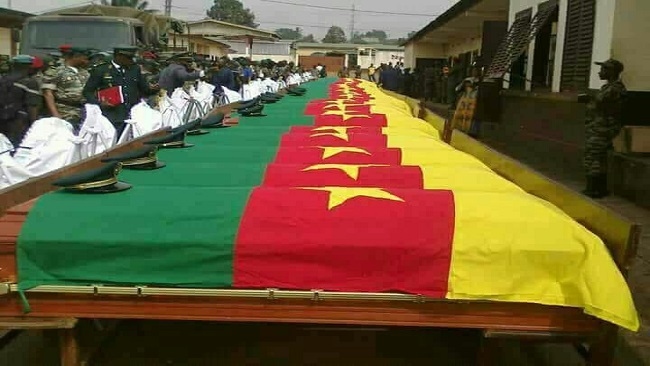
The military of Cameroon has committed a series of massacres across the country’s minority English-speaking regions, as part of a wider escalating conflict between separatists and the central government, according to reports.
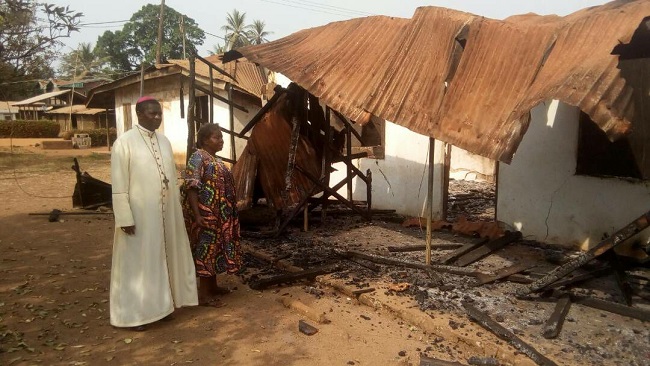
Human Rights Watch (HRW) alleges that the military of the predominantly Francophone nation burned down at least 20 villages in the Southern Cameroons region of the country, where the majority language is English.
A number of unarmed civilians, including at least four elderly women, were reportedly burned alive during the massacre.
“The human rights situation in Cameroon has reached crisis level and could still get much worse,” said Mausi Segun, Africa director at HRW. “International action is needed to ensure that both sides protect civilians and ensure justice for crimes against them,” he added.
So exactly what is happening in Cameroon, and what does it mean for West Africa?
The ‘Anglophone Problem’
The conflict has its roots in the so-called Scramble for Africa in the late 1800s, when a number of competing European superpowers used force to claim as much territory on the continent as possible.
Originally a colony of the German Empire, the region was taken by British and French forces during the First World War. The new rulers split the region into Cameroun – the French-speaking part that makes up most of the region’s land mass – and two British protectorates, Southern Cameroons and Northern Cameroons.
Although the country officially gained independence from both empires in the early 1960s, tensions remain between French and English-speaking regions – historically referred to as the Anglophone Problem. According to Reuters, English speakers “feel that the best government jobs go to French speakers, and that education, roads and health in their western region are neglected”.
Around 20% of Cameroon’s 23 million population are Anglophones.
Why is there fighting now?
Tensions reached boiling point in 2016 following industrial strikes and protests against the imposition of the French language in courts and schools of traditionally Anglophone regions, says news site Quartz.
The protests were violently repressed by the French-speaking government, leaving dozens of protesters dead and more than 100 injured, according to the International Crisis Group, a conflict-prevention organisation.
The majority of English speakers in the country initially just “wanted their grievances addressed“, says Reuters, but the violent crackdown on protests “has convinced many that only severance from Cameroon will satisfy their yearning for a better life”.
As a result, a militant separatist movement has emerged that seeks to establish an English-speaking state entirely independent from Cameroon – known as Ambazonia – in the area known as Southern Cameroons.
Reuters reports that the breakaway region has already “printed passports, designed a currency and a flag, composed a national anthem and set up a satellite TV station”.
In response, the government has “used tear gas and live ammunition to disperse protesters, tortured and detained civilians, killing some, and burned villages”, says Sky News.
What is the solution?
Responding to HRW’s damning report, Cameroon’s government said the level of force it used remained “proportional to the extent of the threat”.
The report’s author, Jonathan Pedneault, has dismissed that claim, saying that the government needs to “recognise the fact that its soldiers have committed severe abuses. It needs to order a stop to the abuses and ensure accountability for crimes.”
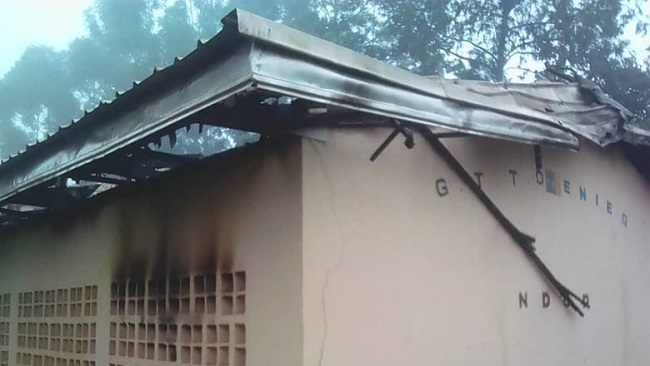
Ambazonian separatists are also committing “grave abuses” in the country, allegedly “torching schools and threatening teachers and students”, according to Sky News.
Voice of America reports that “armed separatists” have “abducted at least seven traditional rulers they accuse of collaborating with the government”. Some of the leaders are accused of calling for the region to participation in Cameroon’s presidential election later this year, rather than adhering to Ambazonia’s vaguely defined boycott of the central government, the news site adds.
As the situation continues to deteriorate, the HWR is calling on international actors including the African Union and the United Nations to “press the government and armed separatists to accept a third-party mediation led by an independent and trustworthy international actor”.
Source: The Week.co.uk

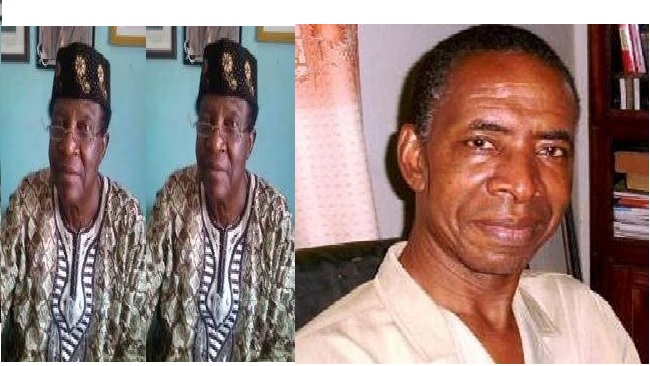
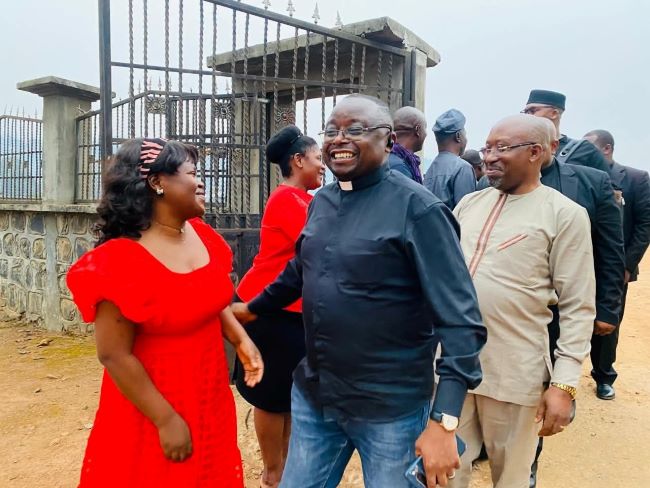
 Father Sob and Father Constant
 Father Sob and Father Constant(Douala airport)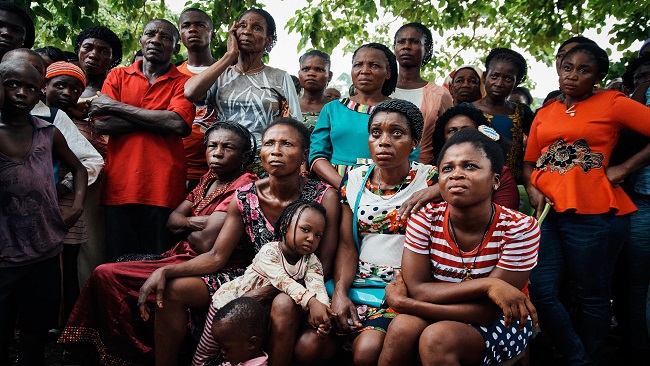















23, July 2018
Yaounde: Opposition Fails to Present Candidate to Challenge Biya 0
Cameroon’s opposition has again failed to present a single presidential candidate to challenge Paul Biya who has been in office for 36 years. Twenty-eight candidates will be contesting the country’s October 7 presidential election, which Biya is favored to win.
The youngest candidate registered to compete in the October 7 presidential election is journalist Cabral Libi. Just before the filing deadline, the 38-year old said he was still uncertain if he would run because he could not single handedly raise the $60,000 required by the election commission to run. He says he had to ask well wishers to help him.
He says he has demonstrated that he is the only candidate strong enough to challenge the incumbent president because he was able to raise over $ 60,000 from well wishers within three days to pay the caution fee required by Cameroon’s electoral laws for each presidential aspirant.
Libi is one of the 28 candidates to contest the poll. Two women: Ze Genevieve, an independent candidate and Habiba Issa who will run for the opposition UPC party, also registered to challenge the 86-year old Biya, who has been president for 36 years.
Last January, Cameroon’s notoriously fractured opposition attempted to unite behind a single candidate. About a dozen opposition parties were negotiating to back Akere Muna, a prominent lawyer who specializes in fighting corruption. Muna pledged a non-partisan platform, but today is running on the ticket of his Peoples Development Front political party.
Maurice Kamto, who was meeting with Muna and the main opposition political party the SDF to discuss the possibility of a single candidate, is today running for his Cameroon Renaissance Movement Party. Kamto says after discussing with some political parties, he found out that all of them wanted a single candidate, but felt they were the stronger politicians that other weaker parties should join.
He says he then decided that he, like other politicians who want to run for president should present to Cameroonians their programs and projects that they will implement if elected, instead of basing their strengths on the religious, tribal and ethnic groups they represent.
The SDF has chosen a 50-year old lawmaker, Joshua Osih, as their candidate and says it is sure Osih will perform better in the elections if the polls are transparent and fair.
The ruling CPDM party has gathered at least 30 of the divided opposition political parties to rally behind its candidate, Paul Biya. Issa Tchiroma, president of the Cameroon National Salvation Front, says the opposition’s inability to come up with a single candidate indicates how they are divided and so he will support Biya, who according to him is the only one that can bring peace and development to the troubled country.
“By declaring his candidature, this is an indication, clear indication that he sent to the nation and the world that he is the man of his generation. Mr president move forward, we are ready to support you,” said Tchiroma.
Cameroon is dealing with attacks by Boko Haram militants in the north, separatist movements in two English-speaking regions and a spillover of violence from the Central African Republic.
Biya has ruled Cameroon since 1982 and is Africa’s second longest serving president, after his neighbor Theodoro Obiang Nguema of Equatorial Guinea.
He is seen by many as favored to win the polls. If he does, he will rule the central African state up to 2025 when the next presidential election will take place.
Source: VOA