
25, October 2021
Nigeria, Africa’s largest economy, launches digital currency eNaira 0
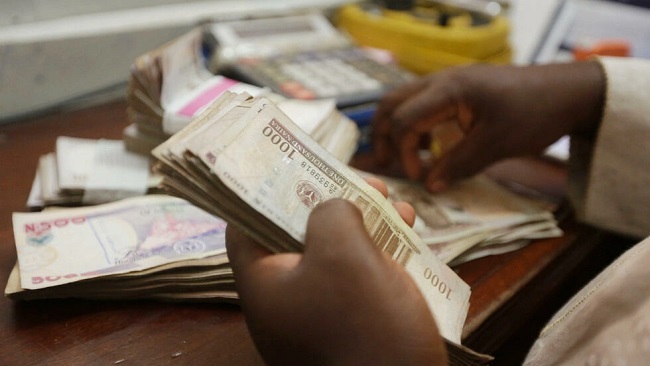
Nigerian President Muhammadu Buhari launched the country’s new digital eNaira currency on Monday as Africa’s largest economy looked to tap into the growing popularity of virtual money and cryptocurrencies.
With the eNaira, Nigeria becomes the first in sub-Saharan Africa to fully launch a digital currency and joins China and a few other countries using or piloting central bank-regulated electronic tender.
“We have become the first country in Africa and one of the first in the world to introduce a digital currency to our citizens,” Buhari said at the official launch.
Nigeria has seen booming interest in cryptocurrencies as people look for ways to avoid the weakening naira currency and combat high costs of living and unemployment in Africa’s most populous country.
Central bank-backed digital currencies or CBDCs and cryptocurrencies are both virtual money though the CBDCs are legal tender regulated by central banks while cryptos are out of government control.
Five countries have already launched CBDCs, with another 14 including Sweden and South Korea in the pilot stage, according to the Atlantic Council’s CBDC tracking project.
In West Africa, Ghana is also looking to launch its own CBDC soon.
Nigeria’s central bank earlier this year sought to control the use of cryptocurrencies by ordering banks to close accounts that were involved in such transactions.
‘Increasing the tax base’
But in spite of the central bank ban, many Nigerians still skirt traditional sectors to use cryptocurrency for overseas transactions.
Experts say digital currencies can potentially reduce transaction costs and ease cross border transfers while also expanding financial inclusion as people with no banking access can use their mobile phones.
“The use of CBDCs can help move many more people and businesses from the informal into the formal sector, thereby increasing the tax base of the country,” Buhari said.
The new eNaira will be issued as legal tender like the current naira currency and will operate on the Hyperledger Fabric Blockchain. It will also follow the official exchange rate.
Customers will be able to download the eNaira app and fund their mobile wallets using their bank accounts, according to the central bank.
Nigeria’s central bank says it will adapt the system after the launch to encourage use by people with no banking access, especially in rural areas.
The eNaira launch comes as Nigeria, Africa’s largest oil producer, is tackling the economic fallout of the coronavirus pandemic and the sharp drop in global crude prices.
Slipping into its second recession in five years after the start of the pandemic, Nigeria’s economy has bounced back to growth. But inflation, especially cost of food, remains stubbornly high and the naira weak against the dollar.
Source: AFP



















26, October 2021
Anti-coup protests in Sudan continue with 7 killed, 140 injured 0
Protesters in Sudan remained in the streets on Tuesday, despite the violence, a day after the country’s military seized power from a transitional government in an apparent coup d’état.
At least seven protesters have been killed and 140 others injured in the countrywide protests that broke out on Monday.
Military forces in the African Union country on Monday detained Prime Minister Abdallah Hamdok after besieging his house. He was taken to an unknown location “after refusing to support coup”.
Hamdok had shared power with the country’s military leadership following the ouster of former president Omar al-Bashir more than two years ago.
Hours after the apparent military coup on Monday, Sudan’s main opposition coalition called for civil disobedience and protests across the country.
The Sudanese Information Ministry said the Forces of Freedom and Change alliance had demanded that the transitional military council step down and transfer power back to the civilian government.
The alliance also called for the release of all detained members of the Sudanese cabinet and the Sovereign Council, the ministry said on its Facebook account.
On Tuesday, more than 24 hours later, protests were gathering momentum across the country, according to reports.
Sudanese security forces keep watch as they protect a military hospital and government offices during protests on October 25, 2021 in the capital’s twin city of Omdurman. (Photo by AFP)
Protesters were chanting slogans like “returning to the past is not an option,” and “civilian rule is the people’s choice,” while some were using tyres to create burning barricades.
The employees of the country’s central bank have also announced a strike to reject the coup, according to the Information Ministry.
The protests have, however been marred by violence. The country’s Health Ministry on Tuesday announced that at least seven people had been killed by gunfire and 140 others were injured.
Authorities said tens of thousands of people opposed to the takeover had taken to the streets and had faced gunfire near the military headquarters in the capital Khartoum.
The Information Ministry said on its Facebook page that the transitional constitution gives only the prime minister the right to declare a state of emergency, calling Hamdok a “legitimate transitional authority”.
The state of emergency was on Monday declared by the coup leader, General Abdel Fattah al-Burhan, who dissolved the cabinet, as well as the ruling sovereign council of military and civilian figures.
The international community has condemned the military takeover, with the UN Security Council expected to hold a closed-door meet on Tuesday to discuss the unfolding crisis.
The United Nations has demanded the prime minister’s “immediate release,” with Secretary-General Antonio Guterres describing their detention as “unlawful.”
UN High Commissioner for Human Rights Michelle Bachelet warned that Sudan risked the return to oppression.
“It would be disastrous if Sudan goes backwards after finally bringing an end to decades of repressive dictatorship,” she said.
Meanwhile, the US government has decided to halt the $700 million in economic support for the African country, according to the US Department of State.
African Union Commission head Moussa Faki Mahamat has also expressed “deep dismay” about the emerging political situation in Sudan.
General Burhan, however, defended the military actions, saying, “What the country is going through now is a real threat and danger to the dreams of the youth and the hopes of the nation.”
He is slated to hold a news conference later in the day, officials from his office said.
Source: Presstv