28, November 2021
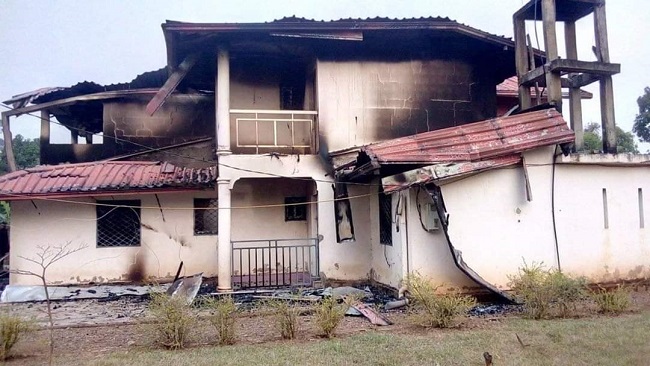
Southern Cameroons Crisis caused a cumulated XAF412 bln loss in GDP in 2017-2020 0
The anglophone crisis dragged growth down by 0.8 and 0.3 points of GDP respectively in 2019 and 2020 in Cameroon. This represents a cumulated loss in GDP estimated at XAF421.3 billion between 2017 and 2020.
The figures were presented on November 23, 2021, by Paul Tasong, Minister Delegate to the Minister of Economy Planning and Regional Development, while presenting the presidential plan for the reconstruction of the anglophone regions.
For Paul Tasong, the poor performance was due to decline in business in several sectors, the most affected being the agricultural sector.
For instance, the paddy rice segment recorded an average of 14.5% drop in activities yearly between 2017 and 2019 before rising by about 10% in 2020. Meanwhile, crude palm oil production dropped by about 90% over the period, going from 37,400 tons in 2016 to about 4 300 tons in 2019. “In 2020, however, there was a reverse in the downtrend with a 131% rise in the production of palm oil to reach 9 900 tons,” Paul Tasong explained.
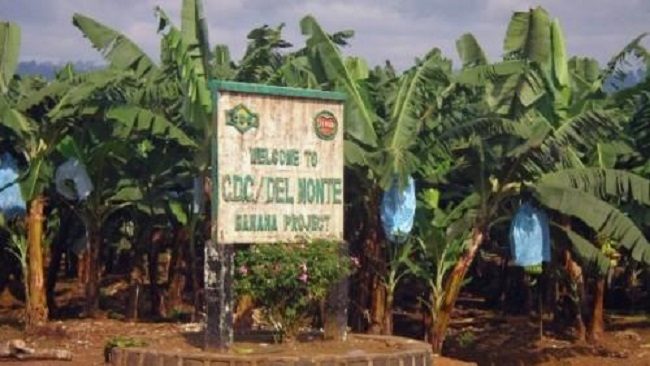
Regarding the banana sector, production dropped from 125,019 tons in 2016 to 16,897 tons in 2019 in the South West because state firm Cameroon Development Corporation (CDC) stopped operations in 2018.
“However, production recovered in 2020 to 21,132 tons. In the first half of 2021, the company produced nearly 16,272 tons of bananas,” the delegated Minister added.
As far as consumer products are concerned, fish supplies dipped significantly in the regions in 2019 before stabilizing in 2020 that saw a 14.6% rise in the Northwest and 25.3% in the Southwest, we learn.
Industry
The poor performance of manufacturing industries in the anglophone regions caused a decline in medium-voltage energy consumption in the order of 19.5%, 6%, and 25%, respectively in 2017, 2018, and 2019. The resumption in activities recorded in the manufacturing industries 2020 resulted in a 7% rise in the consumption of that type of energy, Paul Tasong continued.
He further explained that the cocoa and tourism sectors were impacted as well. Also, due to the crisis, a significant number of public projects worth XAF16.4 billion were not executed during the 2017-2019 period despite the increase in budgets allocated. In that context, the public investment budget implementation rate remained relatively low in the North-West and South-West regions (the estimated average is 64.4% and 68.2 respectively) between 2017 and 2019. In 2020, that rate improved notably to 83.7% in the North-west and 89.9% in the South-west.
According to the GICAM, the largest employers’ grouping in Cameroon, from 2016 to date, companies have lost an estimated XAF800 billion.
Source: Business in Cameroon

















4, December 2021
CPDM Crime Syndicate: Over 51% of the national road network is in a dilapidated state 0
Currently, Cameroon’s road network is 121,873.93 kilometers long. However, only 48.86% of that network is in a good or average condition. As for the remaining 51.14%, it is in bad condition, Minister of Public Works Emmanuel Nganou Djoumessi explained on December 1, 2021, while defending the 2022 budget of his ministerial department before the parliament.
According to the official, the poor condition of those roads is due to a lack of maintenance fundings. Indeed, he explained, over the past ten years, Cameroon’s road network has increased by 121%, from 55 000 km in 2010, to 121,873.93 km in 2021. But the budget dedicated to its maintenance has not grown proportionally.
To address the situation, the government intends to not only concede the road maintenance but also implement a new strategy aimed at ensuring the sustainability of dirt roads that constitute well over 93% of the national road network, he explained.
The new strategy was developed because the Ministry of Public Works noticed that the maintenance solutions implemented so far have limitations. On June 1-3, 2021, a workshop was organized in Yaoundé to discuss the new strategy, we learn.
Based on new maintenance methods and the use of innovative products, the strategy is aimed at “improving the load-bearing capacity of the unconsolidated materials that usually form the surface of those roads. It is also aimed at reducing the impacts f traffic on them by controlling and monitoring the circulation of heavy vehicles as well as controlling and limiting the impacts of climatic conditions…”
Emmanuel Nganou Djoumessi stresses that the implementation of the new strategy will have to be supported with governance measures such as improved rigor in the execution of the works in strict compliance with agreed terms and the multiplication of monitoring and emergency intervention networks.
According to the Ministry of Public Works, the feedback collected one year after implementing this strategy will serve as guidelines for the elaboration of a technical guide for the maintenance of dirt roads taking into account ecological and technical specificities, the problems encountered, the optimal solutions, and the implementation protocol.
Ultimately, in addition to optimizing the maintenance of dirt roads, the strategy is expected t positively impact Cameroonians whose “living standard (…) is affected by the services they receive through those dirt roads.”
Source: Business in Cameroon