30, March 2025
Cameroon still faces power cuts despite full output from Nachtigal Dam 0
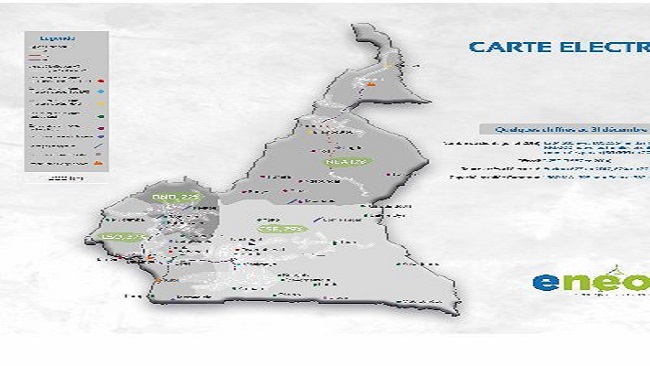
Nearly a month after blackouts began to worsen across Cameroon’s Southern Interconnected Grid, electricity outages continue to affect seven of the country’s ten regions. In Yaoundé, the planned power cuts announced to last four to six hours often extend for several days. Many neighborhoods are without power, and other towns and villages across the country are also affected. Homes and businesses are struggling to cope.
Power utility Eneo has been sending alerts to customers, citing repeated issues on the transmission network managed by Sonatrel, the national electricity transmission company. The alerts mention ongoing maintenance work, fallen poles, broken cables caused by trees falling during heavy rains, and fires at overloaded transformers. In recent days, Eneo has reported almost daily incidents at the Nyom substation, located on the outskirts of Yaoundé. This substation is newly built and plays an important role in transmitting power from the Nachtigal dam.
The Nachtigal hydropower dam has been connected to the national grid since the first half of 2024. The first of its seven turbines, each with a capacity of 60 MW, began generating electricity last year. On March 18, 2025, the dam reached full capacity, with all seven turbines injecting a total of 420 MW into the grid, according to NHPC, the company in charge of the project. The official inauguration of the dam is scheduled for April 3.
Despite the increase in electricity production, the distribution network remains unreliable. Many parts of the country are still experiencing power cuts. Sources close to the project say that some of the new power lines needed to deliver electricity from the Nachtigal project are not yet completed. As a result, it is difficult to use all the power produced by the dam. Industrial demand has also grown, with an estimated additional need of more than 300 MW, according to industry sources.
Under the agreement between the State of Cameroon and NHPC, the government is required to pay CFA10 billion each month as soon as the dam becomes fully operational. This payment is due whether the energy is consumed or not. Since March 18, when the dam began supplying its full 420 MW to the grid, this condition has been in effect.
Although the dam has increased Cameroon’s electricity production capacity by 30%, many consumers are still experiencing daily outages.
Source: Business in Cameroon




















1, April 2025
Former Nigerian head of state Obasanjo to invest $700mln in Kribi 0
Olusegun Obasanjo, Nigeria’s former president turned businessman, is set to visit the Kribi deep-sea port in Cameroon this April to launch his company, Obasanjo Agro-Allied Business Ltd (OABL). His venture aims to strengthen cross-border trade between Cameroon and Nigeria.
According to Agha Albert Ngwana, CEO of Aftel Cameroon Limited, a partner of Obasanjo’s group, OABL plans to invest $700 million (about CFA420 billion) in multiple sectors, including agriculture, maritime transport, hospitality, and oil.
As part of the project, Obasanjo will expand his farm operations into Cameroon, cultivating maize and soybeans on 610 hectares of land to support his livestock business. OABL has secured land concessions from the Kribi port authority and intends to set up packaging factories, wholesale fertilizer distribution, and warehouse facilities.
The company also plans to develop a 10-hectare site for wood processing and introduce various maritime services to ease congestion at Nigeria’s Apapa and Lekki ports. “Our goal is to provide transshipment services and other key operations at the Kribi deep-sea port,” Ngwana explained. OABL’s plans also include building oil and gas storage facilities for ship refueling and constructing a five-star hotel in Kribi.
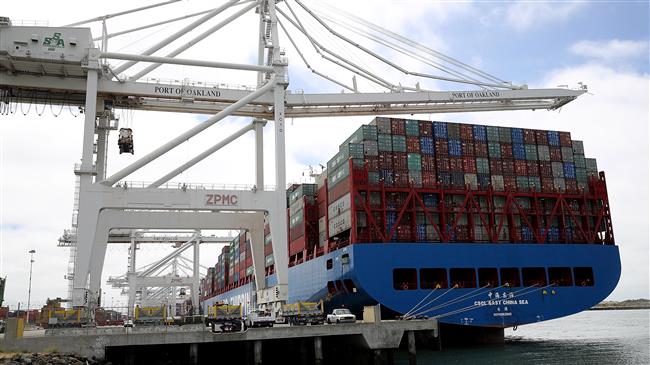
Obasanjo’s investment comes as Kribi prepares to launch the second phase of its port expansion. China Harbour Engineering Company (CHEC), a subsidiary of China Communications Construction Company (CCCC), completed the technical handover of the new infrastructure on February 21, 2025. The extension, which includes a 715-meter-long dock, is expected to boost efficiency and capacity when commercial operations begin in April.
OABL’s projects will not only strengthen economic ties between Cameroon and Nigeria—two of the region’s leading economies—but also support local producers, enhance regional development, and position Kribi as a key hub for cross-border trade. This aligns with the objectives of the African Continental Free Trade Area (AfCFTA) by promoting intra-African commerce.
In 2023, trade between Cameroon and Nigeria was largely driven by exports, reaching CFA39.5 billion, with imports totaling CFA39.4 billion, according to Cameroon’s National Institute of Statistics. However, authorities note that informal trade and smuggling significantly impact official trade figures, given the two countries share a long and porous 1,500-km border.
Source: Business in Cameroon