28, July 2026
FIFA president asked to appear before US Congress over Trump ties 0
US House Judiciary Committee ranking member Jamie Raskin has launched an investigation into FIFA President Gianni Infantino, requesting documents detailing the football governing body’s interactions with US President Donald Trump, his administration, and his family business.
In a letter sent on Sunday, Raskin asked Infantino to provide records and communications related to any gifts, payments or benefits provided to Trump and his associates. The request also seeks visitor logs for FIFA’s office in Trump Tower, which the organization opened after acquiring the space last year. Raskin additionally requested that Infantino appear for a transcribed interview.
The letter sets an August 9 deadline for FIFA to provide the requested documents and arrange the interview. However, Raskin cannot compel Infantino to testify because Democrats do not hold a majority in the House unless he secures Republican support.
Investigation cites transparency, ethics concerns
In the letter, Raskin linked the request to concerns over FIFA’s governance and its relationship with the Trump administration.
“Your election as FIFA president was supposed to mark a red-card break from a decades-long culture of corruption and scandals that dressed down world soccer’s reputation,” Raskin wrote.
“Instead, at the start of your tenure, you dismantled FIFA’s ethical guardrails and disabled the organization’s ethics committee by pushing out most of its members. This lack of transparency and oversight has since paved the way for you to ingratiate yourself with the Trump administration via tactics that a New York University law professor and one of your former ethics committeemen described as ‘legal bribery.’”
The letter also refers to the US Department of Justice’s decision to “dismiss the indictments” of defendants in US government investigations into corruption in global football, including the 2015 prosecution involving more than 20 senior FIFA officials and sports-marketing executives.
World Cup events drew renewed scrutiny
Infantino’s relationship with Trump received heightened attention before and during this summer’s FIFA World Cup.
At the World Cup draw in Washington in December, Trump received a newly created “FIFA peace prize” at the Kennedy Center, where renovations were reportedly rushed on the administration’s orders ahead of the event. FIFA also opened its office in Trump Tower in Midtown Manhattan last July.
During the tournament, Trump made several calls to Infantino, urging a review of US striker Folarin Balogun’s controversial red-card suspension before the Americans’ round-of-16 match against Belgium. FIFA later reversed the suspension, a decision that drew criticism from teams and football associations.
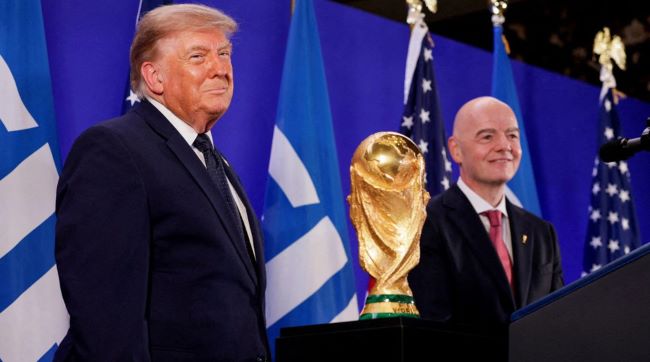
Trump also joined Infantino, alongside the top officials of Canada and Mexico, for the World Cup trophy presentation after Spain defeated Argentina in the final. The pair watched the match together from a glass-enclosed luxury seating area before taking to the field, where they were met with boos from spectators at New York New Jersey Stadium.
Raskin’s letter also addresses FIFA’s World Cup ticketing policy, which is already under investigation by several US state attorneys general.
The use of dynamic pricing during the tournament prompted criticism after ticket prices surged, making matches unaffordable for many fans.
“The most recent quid pro quo that FIFA and President Trump orchestrated is not a victimless crime. It hurts Americans. FIFA has taken its newfound favored status in the Trump administration as a sign that it may rip off its consumers, most notably, by employing illegal price-gouging and fraudulent sales tactics for the World Cup,” Raskin wrote.















28, July 2026
Paul Biya’s 50 Days in Switzerland: The long goodbye to an era 0
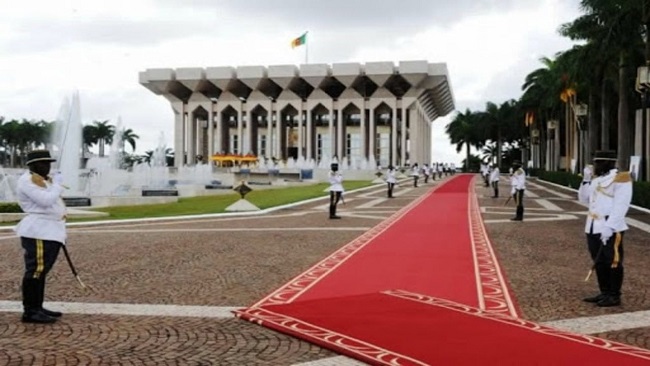
For more than four decades, President Paul Biya has defied predictions of his political demise. He has outlasted rivals, survived crises and maintained an iron grip on Cameroon through a system built on centralized authority and carefully managed succession. Yet politics is often defined not by dramatic events, but by prolonged absences that expose uncomfortable realities. Biya’s record 50-day stay in Switzerland is one such moment.
Whether the official explanations are accepted or not by the people of Cameroon, the extraordinary length of Biya’s absence has inevitably fueled questions about his health, his ability to govern and the future of the Cameroonian state. In any functioning democracy, such questions would be answered with transparency. Instead, Cameroonians have been left with rumors, speculation and official denials from Biya acolytes that have done little to dispel uncertainty.
The issue is no longer simply where President Biya is. The issue is what his prolonged absence says about the state of power in Cameroon.
For decades, Biya’s authority rested on the perception that he alone embodied the state. That image becomes increasingly difficult to sustain when the country’s leader spends weeks away from the seat of government while critical national decisions continue to accumulate. Even if the machinery of government continues to function, prolonged physical absence inevitably raises doubts about who is truly making decisions and how power is being exercised behind closed doors.
History shows that the twilight of long-serving leaders is often marked not by a formal resignation, but by a gradual erosion of their political presence. Authority shifts quietly before power changes hands officially. Ministers become more cautious. Political allies begin calculating the future. Ambitious successors position themselves discreetly. The conversation moves from loyalty to succession. Cameroon increasingly appears to be entering that phase.
The government’s insistence that everything is normal has not prevented widespread speculation. If anything, the absence of clear communication has amplified it. In the age of instant information, silence rarely reassures. Instead, it creates space for competing narratives that undermine public confidence.
No one outside the president’s closest circle can state with certainty the full circumstances surrounding his stay in Switzerland. It is therefore important to distinguish between verified facts and speculation. But one fact is undeniable: a president who has remained away from his country for an unprecedented period inevitably invites questions about continuity, governance and succession.
For a leader who has ruled Cameroon for more than four decades, this may well be remembered as the moment when the country collectively began contemplating the post-Biya era—not because an official announcement was made but because events spoke louder than words.
Political endings rarely arrive with fanfare. They emerge gradually, as confidence fades, uncertainty grows and the symbolism of power begins to outweigh its exercise. Biya’s prolonged stay abroad has become more than a personal matter; it has become a national political event.
Whether President Paul Biya ultimately returns to Yaoundé or not, his record stay in Switzerland may come to symbolize the beginning of the end of one of Africa’s longest presidential tenures. The transition may not happen today or even this year, but the aura of permanence that once surrounded his rule appears increasingly fragile.
For Cameroon, the more pressing question is no longer whether the Biya era will end. It is whether the country is prepared for what comes after.
By Soter Tarh Agbaw-Ebai