
30, July 2026
Tchiroma, Akere, Kamto: an opposition that still cannot seize the moment 0
More than 50 days into President Paul Biya’s latest stay in Switzerland, Cameroon has once again found itself confronting familiar questions about presidential absence, succession and the future of governance. Yet if this prolonged absence has exposed the vulnerabilities of an aging political system, it has also revealed an equally uncomfortable truth: the Cameroonian opposition remains unable to transform political opportunity into a credible national movement.
For years, opposition leaders have argued that President Biya’s long rule has exhausted the country’s political institutions and that Cameroon urgently needs democratic renewal. If that diagnosis is correct, then the president’s extended stay abroad should have represented a defining political moment. Instead, Issa Tchiroma, Akere Muna, Maurice Kamto, Joshua Osih and others have largely settled for press conferences, social media statements and isolated criticisms that have failed to generate sustained national momentum.
The problem is not a lack of grievances. Cameroon faces persistent economic pressures, youth unemployment, insecurity in several regions and widespread public frustration over governance. These concerns are real and deeply felt. What has been missing is an opposition capable of organizing these frustrations into a coherent political project.
Too often, opposition parties such as the SDF, MRC, UNDP and of late Issa Tchiroma’s majority following appear more invested in competing with one another than in building a united front. Personal rivalries overshadow strategic cooperation. Leaders who speak passionately about change frequently struggle to agree on common priorities or a shared electoral strategy. The result is fragmentation at precisely the moment when unity would carry the greatest political weight.
The inability to capitalize on President Biya’s prolonged absence also raises questions about preparation. Effective opposition movements do not wait for political openings to develop policies, grassroots networks or leadership structures. They spend years building credibility so that when circumstances shift, they are ready to offer themselves as a convincing alternative. In Cameroon, that level of preparation has often been lacking.
Many Cameroonians seeking change are left asking a difficult question: if the opposition cannot organize effectively during one of the most politically symbolic periods in recent years, how can it persuade voters that it is prepared to govern a complex country?
Criticism of the government alone is no longer enough. Cameroonians increasingly want practical proposals on economic recovery, employment, national reconciliation, decentralization, security and institutional reform. An opposition that defines itself solely by opposition risks only reinforces the perception that it has no governing vision beyond replacing those currently in power.
This is not to ignore the genuine constraints facing opposition parties. Cameroon has long been criticized by domestic and international observers for restrictions on political competition, unequal access to state resources and legal and administrative obstacles confronting opposition actors. These realities make political mobilization considerably more difficult. However, structural disadvantages cannot explain every missed opportunity. Political leadership is ultimately measured not only by the obstacles it faces but also by its ability to adapt, innovate and inspire under difficult conditions.
President Biya’s extended stay abroad has once again highlighted the uncertainties surrounding Cameroon’s political future. Yet history may judge this period not only by the actions of those in power, but also by the inability of their challengers to present themselves as a disciplined, united and credible alternative.
Political opportunities are rarely permanent. They emerge unexpectedly and disappear just as quickly. Unless the Cameroonian opposition can overcome its divisions, articulate a compelling national vision, and build genuine grassroots momentum, it risks watching another historic opening pass by—leaving the country’s political landscape fundamentally unchanged. Kamto, Akere, Tchiroma-over to you people!
By Soter Tarh Agbaw-Ebai















30, July 2026
A lasting gesture of solidarity with Bishop Lysinge: Thank You, Governor Peter Obi 0
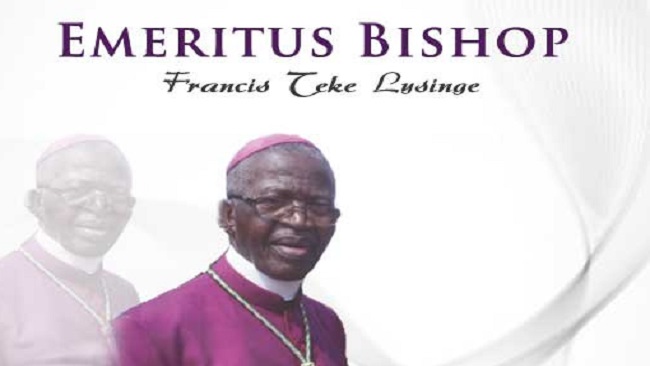
There are moments in history when a single act of generosity quietly shapes the future in ways that few could have imagined. Such acts often transcend politics, nationality including personal interest and it becomes enduring symbols of human solidarity. One such moment occurred when Governor Peter Obi of Nigeria extended a helping hand to the Diocese of Mamfe in Cameroon through the late Bishop Francis Teke Lysinge.
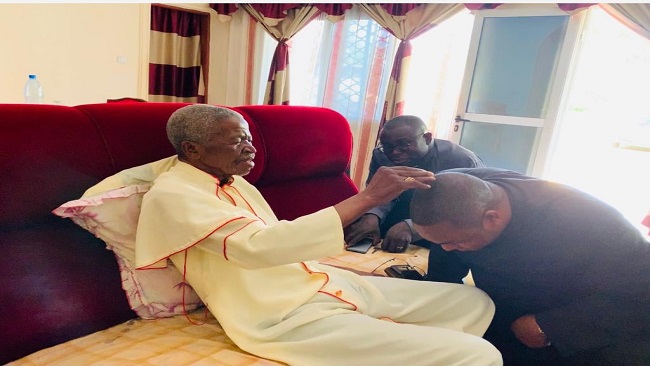
During the African Synod on the Family in Enugu, Bishop Francis Lysinge had the opportunity to meet Governor Peter Obi. In their brief audience, the Bishop shared the immense challenges facing the Diocese of Mamfe, particularly the struggle to complete the Cathedral and the Bishop’s House projects. The Diocese was young, resources were scarce and the dreams of the faithful depended greatly on the goodwill of friends.
Governor Peter Obi did not merely listen; he acted. He generously contributed ten thousand US dollars to support these important projects. It was a remarkable gesture not because of the amount alone, but because it reflected a profound belief that the Church’s mission deserves support wherever it serves humanity. Governor Peter Obi’s generosity crossed national borders, demonstrating that compassion recognizes no artificial boundaries.
History would later reveal an extraordinary irony. The Bishop’s House in Mamfe, whose construction benefited from Governor Peter Obi’s contribution, became the venue where Nigeria’s Vice President, Atiku Abubakar was received during a discreet visit to Mamfe in connection with discussions surrounding the implementation of the Bakassi Agreement between Nigeria and Cameroon. What began as an act of kindness toward a struggling diocese ultimately contributed to creating a space that would later host an event of diplomatic significance between two neighbouring nations.
More importantly, Governor Peter Obi’s gift strengthened the pastoral mission of the Diocese of Mamfe. The Cathedral and the Bishop’s House were not simply buildings of brick and mortar. They became centers of prayer, administration, pastoral care and service to thousands of Catholics and members of the wider community. They stand today as reminders that generosity invested in faith communities produces dividends that extend far beyond the original intention.
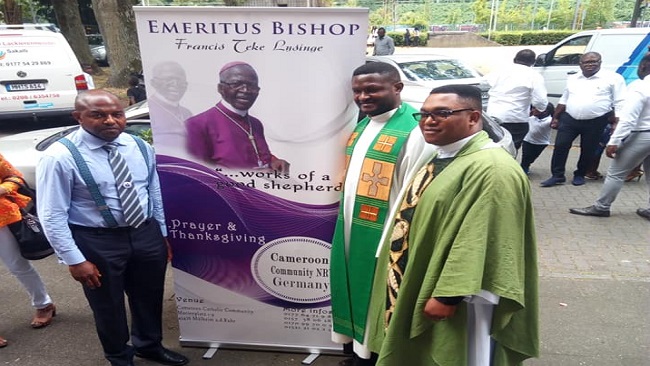
As we remember the late Bishop Francis Lysinge, whose vision and perseverance laid the foundations of the Diocese of Mamfe, it is fitting also to acknowledge those who stood with him during moments of difficulty. Governor Peter Obi was one of those friends. His support came at a time when it was needed most and it remains part of the living history of the Diocese.
In a world often divided by politics, ethnicity and national borders, Governor Peter Obi demonstrated that authentic leadership is measured not only by governance but also by compassion. His willingness to support a Cameroonian diocese reflected the shared values that unite Africans: brotherhood, faith, mutual respect and the conviction that we rise by lifting one another.
The clergy, religious and faithful of the Diocese of Mamfe have every reason to remember this gesture with gratitude. Acts of generosity may fade from newspaper and television headlines, but they remain etched in the memories of those whose lives they transform.
To Governor Peter Obi, we say thank you. Thank you for believing in the mission of the Church beyond your own country. Thank you for standing beside Bishop Francis Lysinge during a crucial chapter in the history of the Diocese of Mamfe. Thank you for demonstrating that true leadership leaves behind not only policies and speeches but also enduring legacies of hope, generosity and service.
May this noble act continue to inspire leaders across Africa to build bridges of friendship, support institutions that serve humanity and recognize that the greatest investments are often those made in people, faith and the common good.
To this I put my name
Soter Tarh Agbaw-Ebai
Chairman/Editor-In-Chief
Cameroon Concord News Group