
6, July 2026
World Cup: Belgium blasts FIFA decision to clear US striker to play despite red card 0
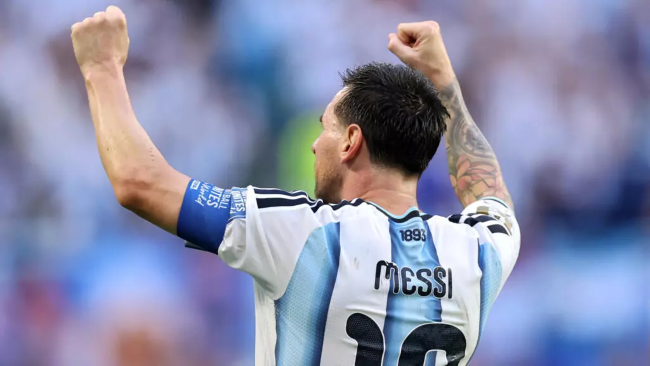
Belgium’s football federation has expressed outrage over FIFA’s decision to permit United States striker Folarin Balogun to feature in Monday’s World Cup Round of 16 match against Belgium, despite the forward receiving a red card in the previous round.
The Royal Belgian Football Association (RBFA) said Sunday it was “astonished” by the ruling, while Belgium head coach Rudi Garcia delivered a sharp criticism of football’s governing body.
“I didn’t know July 5 was actually April 1 at the World Cup. This is an April Fools’ joke,” Garcia said following FIFA’s announcement that Balogun’s automatic one-match suspension had been placed on hold for a one-year probationary period.
The decision clears the 25-year-old striker to play in Monday’s knockout-stage clash in Seattle.
The RBFA said FIFA based its decision on Article 27 of the FIFA Disciplinary Code but argued that Article 66.4 of the same code states that a red card automatically results in a suspension for the team’s next match.
It also cited Article 10.5 of the FIFA World Cup 2026 Competition Regulations, which says a player sent off by a direct or indirect red card is “automatically” suspended for the team’s subsequent match.
The RBFA noted that the automatic nature of the suspension had been reaffirmed in FIFA World Cup 2026 Circular No. 16, distributed to all participating associations on May 12, and reiterated during match coordination meetings and tournament workshops.
“In order to safeguard the legitimate rights of all participating teams and to protect the fundamental principles of fair play in our sport, both at this FIFA World Cup and at future editions of the tournament, the RBFA is investigating all potential options,” the federation said.
The New York Times reported that US President Donald Trump called FIFA President Gianni Infantino on Wednesday to seek a review of Balogun’s suspension, citing three people familiar with the conversation.
Trump welcomed FIFA’s decision on his Truth Social platform, writing, “Thank you to FIFA for doing what was right, and reversing a great injustice!”
The White House has not confirmed that Trump contacted Infantino or claimed credit for the decision.
Politico later reported that US Commerce Secretary Howard Lutnick was involved in behind-the-scenes conversations with FIFA to get Balogun’s red card ban suspended, citing two people familiar with the matter who were granted anonymity to discuss private deliberations. It noted that Lutnick has developed close ties with the leadership of soccer’s governing body.
The ruling marks the first time since 1962 that FIFA has allowed a player sent off at a World Cup to play in the next match.
Balogun was shown a red card in the 64th minute of the United States’ 2-0 Round of 32 victory over Bosnia and Herzegovina on July 1 for awkwardly stepping on the back of Bosnian defender Tarik Muharemovic’s leg while jockeying for a bouncing ball.
The American striker has scored three goals at the tournament as the US seeks its first World Cup quarterfinal appearance since 2002.
US Secretary of State Marco Rubio criticized the red card Thursday, telling reporters that the team was “treated unfairly.”
“I wish there were an appeals process for it. But it’s probably too late now,” he said.
Source: Press TV

















6, July 2026
Sudan: Over 300 children killed or injured in war over six months 0
More than 300 children have been killed or injured in Sudan during the past six months, with drone strikes responsible for most casualties, the UN children’s agency (UNICEF) says as fighting continues across several parts of the African country.
According to a statement released by UNICEF on Monday, around 60% of child casualties recorded during the period were caused by drone warfare. The agency said the conflict is currently concentrated in the Kordofan, Darfur, and Blue Nile States.
UNICEF said drone strikes and shelling have targeted civilian infrastructure, including schools, markets, fuel facilities, and water stations, placing more than 500,000 people at risk. It added that civilians have endured conditions resembling a siege for more than a year.
“Children are being caught in a relentless cycle of violence, displacement and deprivation,” said Sheldon Yett, UNICEF representative for Sudan.
The United Nations, meanwhile, called on all parties to the conflict “to protect civilians and civilian infrastructure, allow and facilitate safe, rapid, and unimpeded humanitarian access, and take all possible measures to protect children from harm.”
Sudan has been engulfed in war since April 2023 between the Sudanese military and the so-called Rapid Support Forces (RSF).
The UN has expressed alarm over the possibility of atrocities as the Sudanese military and the RSF militants battle for control of the strategic city of el-Obeid in North Kordofan.
UN rights council adopts Sudan measure
Also on Monday, the UN-backed Human Rights Council in Geneva approved, without a vote, a measure condemning escalating violence by the RSF and its allies in and around el-Obeid.
The measure also encourages increased support for countries hosting refugees from Sudan and condemns “all forms of external interference” in the conflict.
The war has killed at least 59,000 people, displaced about 13 million others and pushed many parts of Sudan into famine.
More than 30 million people across the country are in need of humanitarian assistance.
Source: Press TV