3, December 2021
Infighting among Ambazonia groups and denial by the Biya Francophone regime are escalating the war in Southern Cameroons 0
On Nov. 12, riots broke out in the city of Bamenda, the capital of Cameroon’s Northwest region, in response to the killing of 8-year-old Brandy Tataw by a stray bullet after a police officer fired a live round at a car that had supposedly not obeyed orders at a checkpoint.
After the killing, residents took to the streets with tree branches, a traditional symbol for peace, and expressed their outrage. The protests soon turned violent, with buildings burned and the military firing into the crowd. The scenes in Bamenda nearly mirrored those in Buea, the capital of the Southwest region, a month prior, when 5-year-old Caro Louise Ndialle was killed by security forces under similar circumstances and furious bystanders beat to death the officer who fired the fatal shot.
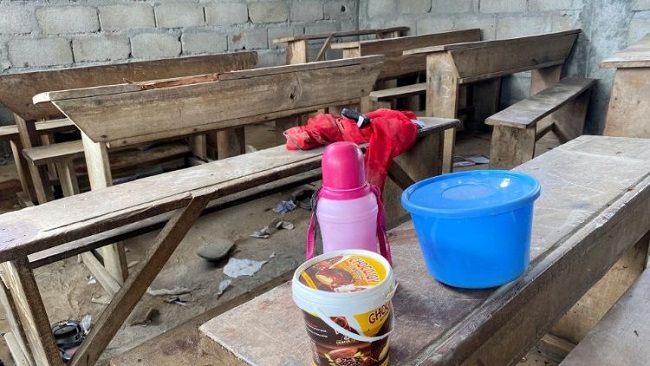
Weeks later, on Nov. 24, unidentified gunmen attacked a school in Ekondo Titi in the Southwest region, killing three students and a teacher. The government blamed secessionists, who in turn blamed other groups within the splintered Anglophone movement and the Cameroonian government.
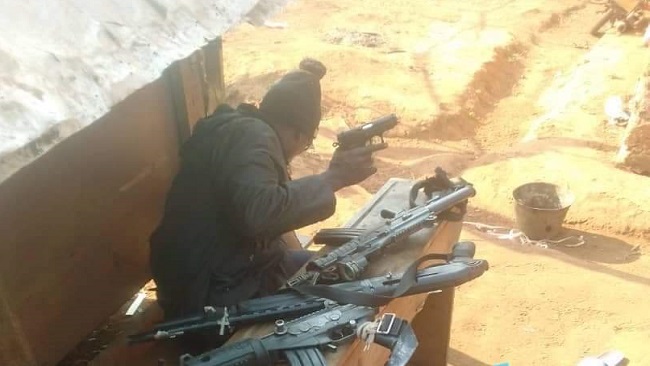
The Anglophone crisis in Cameroon has escalated in recent months at the hands of all parties to the conflict. The crisis began in 2016 as peaceful protests by lawyers and teachers demanding linguistic reforms but rapidly escalated into a war of secession that has killed thousands of people and displaced over a million. To many in Cameroon’s Anglophone regions, the recent killings are not new but instead a continuation of the heavy-handed techniques, corruption, and impunity demonstrated by the security forces.
In the aftermath of the killings, multiple factions of the divided separatist movement announced retaliatory measures, ranging from restarting a ban on all schooling, a controversial policy that they claim is to keep children safe but is seen by many on the ground to be a means of maintaining leverage and exerting control over the population, to calls to attack all members of the military.
These are far from the only recent escalations in the conflict. On Nov. 10, an explosive device was detonated inside a lecture hall at the University of Buea and injured 11 students. Just days before, a taxi driver was killed when his car exploded in the same city. The explosions followed widespread shock after passengers were forced out of a bus and tortured by separatist fighters, purportedly for not obeying orders to enact a “ghost town.”
The idea of a ghost town—similar to a general strike, albeit enforced—was originally a means for the civilian population to demonstrate their support for the striking lawyers and teachers, but it has come to be seen on the ground as an oppressive tool used by the Anglophone diaspora to demonstrate their control. While calls to create ghost towns have not been strictly followed in recent months, the explosions and attacks have caused a new sense of fear among the population.
These actions reflect a hardening of positions by all parties to the conflict, underscoring that it will continue unless the two sides shift their focus from zero-sum approaches, denials of the conflict’s severity, and infighting. However, actions by both parties indicate that the opposite is occurring.
Since the beginning of the conflict, the Cameroonian government has been in denial, hiding the burning of villages and attempting to blame the separatists for atrocities that it later took responsibility for. The government has attempted to unilaterally propose solutions that do not address the conflict’s root causes.
It held a national dialogue in 2019 that was boycotted by separatists, which led to the implementation of decades-old changes to the Cameroonian Constitution through regional elections held in December 2020. The opposition and many civil society groups boycotted these elections while the government continued to commit the very abuses that led to the conflict in the first place.
The government has continued this denial and taken its heavy-handed approach to the conflict even further. In October, Cameroon’s foreign minister summoned the diplomatic corps in Yaoundé, the capital, and said the government had undertaken “expensive and extensive structural and administrative reforms” to address the conflict, saying they demonstrated the government’s commitment to ending it.
In reality, the government allowed nascent peace talks with imprisoned separatist leaders to fall victim to political infighting and has continued to state that symbolic actions that do not include separatists are a sufficient means of addressing Anglophone grievances. Doing so continues to show its unwillingness to accept responsibility for allowing the crisis to escalate, its continued human rights abuses, and a refusal to engage in meaningful talks.
Recently, the government has taken its disproportionate and heavy-handed approach beyond its own borders, particularly into Nigeria. Nigeria hosts more than 60,000 refugees from the conflict but has also served as a source of materials including armaments and medical treatment for separatist fighters, who take advantage of the porous border between the two countries.
While Nigeria facilitated the arrest and extradition of separatist leaders to Cameroon in 2018, an act that was later declared illegal by local courts, Anglophone Cameroonians had largely been able to live in the country with minimal interference from authorities. This situation has changed rapidly in recent months.
Anglophone Cameroonians have been facing unprecedented levels of harassment and intimidation at the hands of Nigerian authorities, including extrajudicial deportation to Cameroon, often resulting in being imprisoned and tortured once being handed over. This often takes the form of joint operations against those accused of supporting separatists but regularly leads to civilians being harassed, picked up, tortured, and deported.
In other cases, the Cameroonian military has crossed into Nigeria in search of separatist fighters, leading to complaints from Nigerian villagers about harassment and intimidation by the foreign forces. When Cameroonian forces crossed into Nigeria earlier in the conflict, it led to a diplomatic standoff between Yaoundé and Abuja. Now, it seems to be done in coordination between the two. Some observers speculate this is the result of a visit by Cameroonian officials to Abuja in July, after which the Nigerian government stated it would ensure that its country was not a safe haven for separatists in Cameroon.
Some speculate that this is the result of a partnership, announced in April, between one of the major Cameroonian secessionist groups, the Ambazonia Governing Council, and the Indigenous People of Biafra (IPOB), a secessionist group in Nigeria. The Cameroonian government has taken advantage of the secessionist issue in an effort to convince Nigerian officials that both governments face the same threat. Cameroonian leaders frequently mention shared security challenges along the countries’ southern border and even congratulated the Nigerian government on its arrest of IPOB leader Nnamdi Kanu this year.
Cameroon’s Government Is Deceiving the West While Diverting Foreign Aid
Paul Biya’s regime is ignoring the battle against Boko Haram and the Islamic State and using foreign counterterrorism assistance to fund its brutal repression of citizens with legitimate grievances.
As the Nigerian government faces an increase in attacks by secessionist groups across its southwest, and responds by arresting more separatist leaders and threatening brutal retaliation, it is easy to depict the coordination as an extension of its domestic strategy to those perceived to support secession in neighboring Cameroon.
However, the fears underlying this approach are not well founded. It ignores the historically tense relationship between the Igbo people in southeastern Nigeria and the Anglophone populations of Cameroon, which has its roots in the colonial period. Moreover, the Ambazonia Governing Council is only one of several groups that comprise the bitterly divided secessionist movement in Cameroon, and cooperation between secessionists and Nigerian fighters has occurred throughout the conflict. Similarly, if any party to the recent accord were to benefit from the agreement, it would be the Ambazonian secessionists, who are far less established than the paramilitary wing of the IPOB.
Refugees living in Nigeria acknowledge that this argument could be used by the Cameroonian government, which has long been angered by the safe haven it saw Nigeria as providing to separatists. Regardless of its source, a climate of fear and distress now exists among refugees in Nigeria, with many believing the country they fled to is no longer safe.
Although the government bears the bulk of responsibility for the conflict and its continuation, actions by separatists in recent months have similarly caused the conflict to escalate.
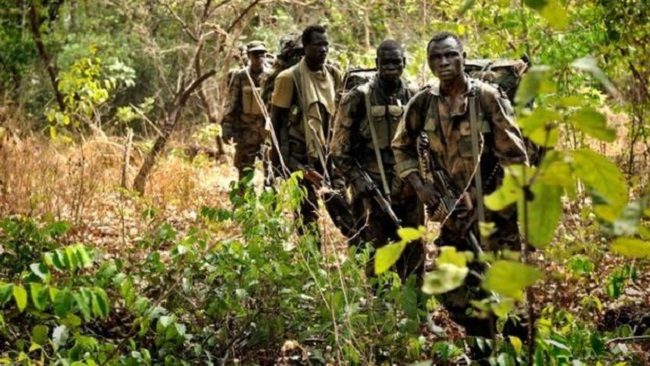
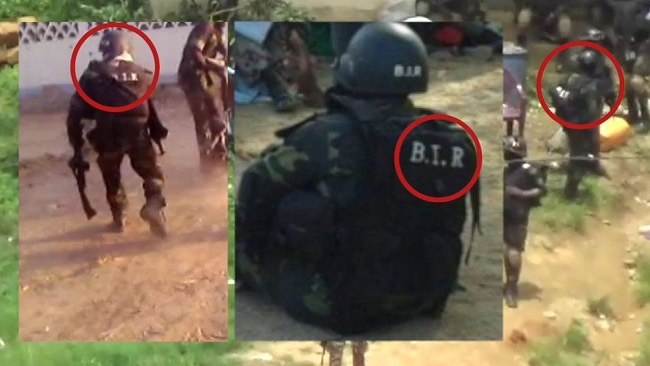
Until recently, separatist fighters, composed of loosely formed groups with shifting allegiances to the bitterly divided diaspora, have predominantly relied on ambushes, kidnappings, and similar means. However, this year, separatist fighters have increased the use of improvised explosive devices (IEDs) across Cameroon’s two Anglophone regions.
Between January and April, separatists planted at least 27 IEDs that detonated across the Northwest and Southwest regions, more than in all previous years of the conflict combined. Such attacks have continued, with 15 soldiers killed in two IED attacks in September alone. These attacks have not only led to heightened fear among the Cameroonian security forces in the two regions who already were suffering from low morale but have also had a negative impact on efforts to deliver humanitarian assistance.
In addition to the use of IEDs, separatist groups have become more daring in their attacks. In early October, Cameroonian Prime Minister Joseph Dion Ngute was rushed to safety when separatist fighters began shooting in his vicinity in the Northwest region. Similarly, targets previously seen as “off-limits,” such as traditional leaders, are now being regularly kidnapped, tortured, or even killed.
The separatists, while insisting that they are open to dialogue, have neglected to resolve the infighting within the movement that has prevented potentially promising opportunities for mediation from taking hold. The use of IEDs and an uptick in attacks have undoubtedly impacted the Cameroonian military, leading it to take more brazen actions such as forming civilian militias. However, the attacks have also increased the public’s fear of being targeted or caught up in an explosion, solidifying the sentiment that neither side is serving the interests of civilians in the war-torn regions.
While the outrage that was evident on the streets of Buea and Bamenda was directly sparked by the killing of two girls, it is emblematic of the resentment that the population of Cameroon’s Anglophone regions has felt as the conflict has escalated in recent months. This is the result of actions by both the government and separatist fighters, along with a lack of progress toward resolving the conflict.
Unless the two sides accept that concessions will have to be made and that the current zero-sum approach, fraught with infighting, is untenable, such escalations will continue. The tragic result will be more scenes mirroring those that occurred in Buea and Bamenda. Only a negotiated settlement that addresses the long-standing and genuine grievances of the Anglophone minority through fundamental changes to how Cameroon is governed will lead to a sustainable resolution of the conflict—but each escalation in the conflict makes this more difficult.
Any resolution will require the secessionist movement to resolve its entrenched infighting and understand that the desires of the populations living in Cameroon’s Anglophone regions may not be entirely aligned with the demands of activists in the diaspora. Finally, the Cameroonian government must accept its role in sparking the conflict, ranging from the decades-long marginalization of the Anglophone minority to recent human rights violations. Only after these initial steps are taken could confidence-building measures and an eventual negotiated settlement be possible.
Culled from Foreign Policy







3, December 2021
Africa: A New Path after the Coronavirus Pandemic 0
In the book ‘The Congo Cables: From Eisenhower to Kennedy,” there is a detailed plan in the presence of a sitting US president to assassinate Patrice Lumumba, whom the US considered a threat to its national interests. Nothing has changed since that plot to assassinate that great pan-Africanist about how the US and western nations operate internationally. It is all about national interests and the concerns of big western businesses. Many governments have figured out how to function internationally, but sub-Saharan African countries have not.”
If any evidence is required that Africa is considered on the global stage as only suitable for supplying vital raw materials for the rest of the world, the COVID-19 pandemic has made that clear. The UK, EU, and the USA’s latest travel bans on travelers from nine African countries have come as no surprise. The ban comes as the Centre for Disease Control announced that no cases of the Omicron virus had been found in the US. Why then was a ban against scientific advice imposed on these nine African countries?
Politics in the international arena have been laid bare since the coronavirus pandemic started. Ever since the Covid-19 vaccine was manufactured over twelve months ago, the rich countries of the West have gone into hoarding and isolationist mode. Internationalism has had to wait as the rich countries look after their citizens and big businesses first, while hundreds of thousands die in Africa, Asia, and South America.
Although governments paid for many Covid-19 vaccine researches, the subsequent vaccine and cures have become the property of the world’s biggest pharmaceutical businesses. And they are waxing fat from the profits and patents. Due to the urgency of the moment and the havoc this global virus is causing worldwide, South Africa and India have led calls for rich nations to suspend intellectual property agreement that allows pharmaceutical conglomerates to monopolize medical knowledge. This proposal, expected to save millions of lives in developing countries, has been blocked by the UK and the EU. This is shameful.
The Omicron virus is the result of vaccine-nationalism, vaccine-apartheid, vaccine hoarding and a neo-colonial mindset. Scientists now say if immediate action is not taken to vaccinate the populations of the developing countries; more variants will make their appearance soon. Western nations have snatched and keep accumulating as many million vaccine doses as they can and are accomplishing some of the highest vaccination rates in the world. According to COVAX, around 100m of the vaccines in Western countries will pass their use-by dates in December while people in developing countries are dying from a global pandemic that was not their creation.
The disparity in vaccination numbers around the globe makes for depressing reading. South Africa has achieved only 27% vaccination rate, while most Western countries have attained vaccination rates higher than 69% with vaccines produced by Johnson & Johnson in South Africa. The vaccination rates in other parts of Africa are lamentable. According to the live tracker at https://africanarguments.org/, Chad has vaccinated 250,000 of its 16.5 million people. Cameroon has vaccinated 924,000 of its 26 million people. Nigeria has vaccinated 10.5 million of its 205 million inhabitants. The numbers are pathetic, but this is not a western problem; this is our—African—problem. The time for a change in Africa is now.
The international community has failed Africa if it cannot put lives before profits in a global pandemic. Our leaders and continent cannot afford to rely on cooperation with a world that values us not. We are better than just supplying raw materials and young qualified professionals to oil the economic wheels of the West. The time has come for Africans to realize that the world order and global institutions created after 1945 have failed our continent.
It is an open secret that African leaders have been nothing short of embarrassments for the last forty years, and their people, at home and in the diaspora, have been rightfully disappointed with them. Africa has had its fair share of self-inflicted injury, from auctioning its raw materials to western companies for private gain for the political elite to butchering constitutions to stay in power forever; our recent past has been unpleasant.
This global pandemic has presented an opportunity for many African leaders to rehabilitate themselves with their people. Many Africans are now prepared to give their leaders another chance. African leaders must start putting African structures and institutions in place to serve their people. China has shown that you can lift 600 million people from extreme poverty within a generation. Africa has 1.3 billion people, and many are young, educated, and hungry for success. We have trillions of dollars worth of raw materials scattered around the continent. No continent is blessed with more natural materials and people potential than Africa.
How can vaccines manufactured cheaply in Africa be cheaper in Europe and the US than in Botswana? This is where political leadership comes in. Presidents Kagame, Nana Akufo-Addo and Ramaphosa must assume leadership immediately and invite African philanthropists, scientists, academics and billionaires to fashion concrete plans on how our continent should shield itself from future pandemics and shocks. This is the first step towards restoring self-pride.
For many in Africa, the lesson from this pandemic is painful as African governments have found it hard to protect their citizens. In contrast, the West has displayed its ruthlessness and selfishness. They might not plot to poison another Lumumba, but Western ways have not changed. It is called self-interest. After this pandemic, it cannot be business as usual. We must seize the moment and build institutions that work for Africa.
By Isong Asu
Cameroon Concord News
Senior Political Researcher in London