8, October 2021
Pandora Papers expose greed, Assange exposed war crimes 0
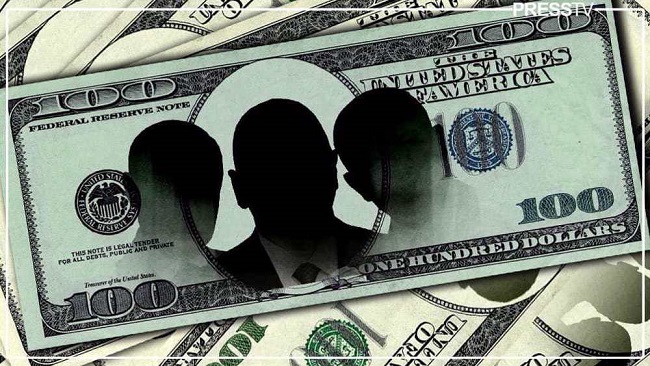
The only surprise when it comes to the Pandora Papers revelations, exposing the scale of the greed and corruption of various world leaders, political figures and officials in hoarding obscene amounts of cash in offshore tax havens, is that anyone should be surprised.
We are living through a crisis of late capitalism, an economic system whose many and manifold contradictions have been exacerbated by a global pandemic. And we have reached the point where huge imbalance in wealth within states, between states – and also within and between regions – is no longer tenable. What is also no longer tenable is the clawing hypocrisy that underpins Western liberal democracy.
The man who more than any other has exposed this hypocrisy is Julian Assange, currently languishing in Belmarsh high security prison in London awaiting the outcome of the US government’s appeal against the decision of a British judge towards the end of 2019 not to allow his extradition to the US on grounds that his treatment there is likely to amount to cruel and unusual punishment.
The level and intensity of the persecution Assange has been made to endure is a measure of the extent to which he removed the flowery curtains of democracy and human rights behind which the savage beast of US-led Western hegemony resides. In exposing the vicious and racist character of the occupations of Iraq and Afghanistan, the mountain of war crimes committed in their name, Julian Assange and Wikileaks quickly became a greater and more potent threat to the ability of the Empire to continue as normal than a thousand bayonets.
In societies underpinned by justice and decency instead of injustice and hypocrisy and lies, Julian Assange would be celebrated and lionised for his courage and fidelity to the truth in awakening the masses to the high crimes and war crimes committed by the powerful in their name. We don’t in the West live in such societies, however, which is why Assange has and continues to suffer the prolonged persecution at the hands of the medieval minds who sit at the apex of power in Washington and London.
The journalists responsible for the Pandora Papers story have been hailed as truthtellers and can no doubt look forward to being showered in awards for their efforts. The only difference between them and Julian Assange is the willingness to dig down into the very belly of this warmongering beast in Washington, responsible for unremitting death and destruction since the demise of the Soviet Union in the early 1990s, and show the world its entrails.
“It is the job of thinking people not to side with the executioners,” French philosopher and thinker Albert Camus tells us, and since the aforementioned demise of the Soviet Union the executioners of our time have been on the march, leading to the executions of Yugoslavia, Afghanistan, Iraq, and the putative executions of Cuba, Venezuela, Syria, and Iran, et al.
Julian Assange walks in the same tradition as Albert Camus. Like him he is a man of fierce moral principle who could, if he’d so wished, have ploughed the same lucrative furrow as the journalists over at the Guardian do. This is the same Guardian that squeezed Assange like a lemon, enjoying the prestige of publishing the explosive revelations that came his way as head of Wikileaks, before tossing him aside when the going got tough and fabricated allegations of sexual abuse came down the pipe against him from Sweden.
“Better to reign in hell than to serve in heaven,” is the Miltonian line from his classic 17th century poem, Paradise Lost, yet what we have with our mainstream journalists are people who made their peace with those who reign in hell and willingly serve the lie that this is the best of all possible worlds.
The revelations contained in the Pandora Papers are seismic, but compared to those contained in the Afghanistan and Iraq war logs, released by Julian Assange and Wikileaks, merely skim the surface of the depravity of the rich and powerful.
Every second of every day Julian Assange spends in prison stands as an indictment of Washington and its servile British ally. Yet on the level of consciousness, Julian Assange is not in prison we are. He has been to the mountaintop, as Dr King famously proclaimed towards the end of his life, but unlike Dr King Assange did not see the Promised Land there, he saw instead the broken land created in the name of US foreign policy.
There are no words to describe the foul stench of hypocrisy that permeates the corridors of power and corridors of mainstream newspapers and news organizations in the West. They are all part of the same lie and in order to live with themselves, they banish truth into the wilderness as if banishing a heretic.
Julian Assange is the great heretic of our age. He stands in the tradition of all the brave men and women in history who dared to say “No,” regardless of any personal sacrifice and cost involved. It is the job of all right- thinking people never to forget him or forgive those responsible for his plight.
Culled from Presstv




8, October 2021
Southern Cameroons Crisis: We turned to Twitter to understand conditions in Ground Zero 0
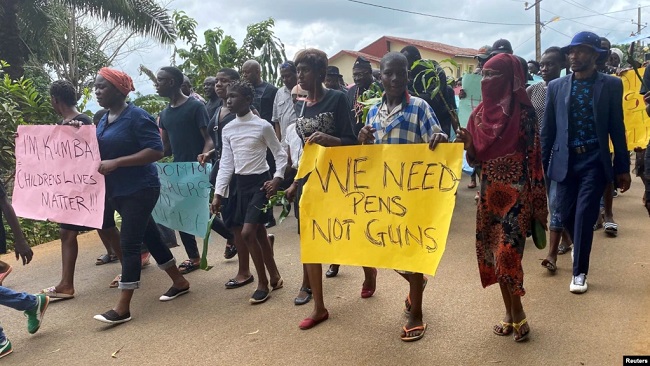
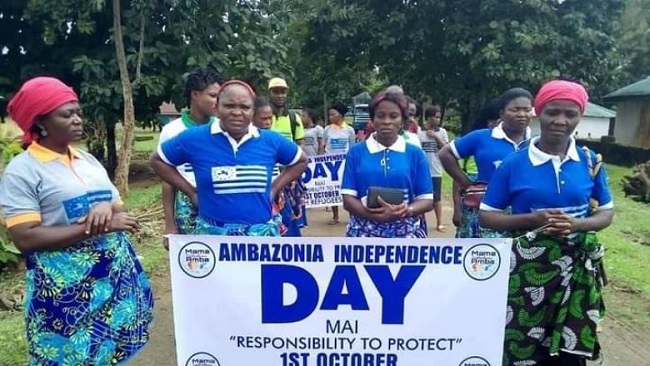
For the past five years there has been conflict in the two English-speaking regions of Cameroon, with no solution or end in sight. There have been political, social and cultural differences and antagonisms for several decades. But the current conflict began in 2016 when lawyers and teachers started protesting over the increasing use of French in the legal and educational systems in these regions, known as Anglophone Cameroon.
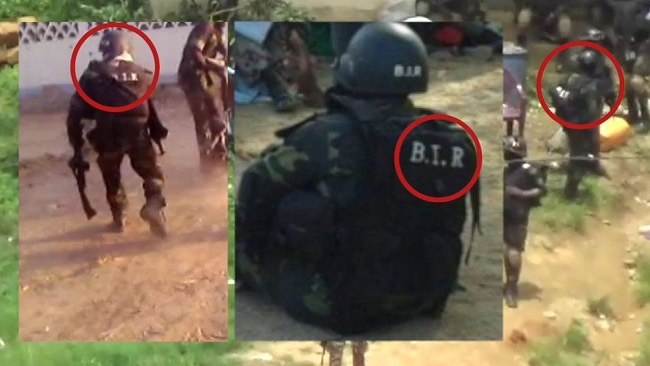
The government of Cameroon’s poor handling of the crisis contributed to its escalation into an armed conflict. Thousands have been killed, are living in the bush, or have fled to other parts of the country (becoming internally displaced persons) or in neighbouring countries as refugees. The warring parties did not heed the UN secretary general’s call for a global ceasefire to focus on ending the conflict in the midst of the COVID-19 pandemic.
As a result, the conflict continues to have a negative impact on all aspects of life, particularly the livelihoods and health of citizens in the battleground regions of the north-west and south-west. Access to already inadequate health services has been reduced. More insights about how the conflict is affecting the health of citizens are needed to understand the situation and propose solutions.
We set out to understand how the conflict was affecting the key determinants of health. These include poverty, particularly in contexts where there is no universal healthcare and where the cost of living continues to rise.
We believe in experts. We believe knowledge must inform decisions
As is the case in other conflict and war situations, it was difficult to collect public data. So we examined tweets to understand what topics were being discussed.
In 2019, the number of mobile phone subscriptions in the country was 21.4 million out of a population of around 27 million people. Data for phone usage is expensive, and internet access is not reliable. Hootsuite, a social media management platform, reported that approximately 23% of the population – 6.21 million people – were internet users. And of these, 4.3 million were active on social media platforms.
This report estimated that there were fewer than 125,000 Twitter users in the country. Nevertheless, we believe examining the use of Twitter can provide insights about the crisis because social media can provide short descriptions of the issues that people are facing.
Our use of Twitter to gather information isn’t novel. Scholars are increasingly using social media to collect data about conflicts. But we have not found many studies exploring health and the social determinants of health using this approach.
We used the descriptions shared on Twitter to provide a more visible and robust picture of health related issues. This approach can help identify health challenges and how they’re affecting citizens.
How we examined tweets
We collected and analysed 1,868 tweets posted from 1 October 2016, the month when the conflict began, to 1 September 2019 to understand what people were discussing. The tweets were from everyday citizens, the government, news outlets and nongovernmental organisations that were communicating with people in Cameroon and abroad to draw attention to the effects of the crisis on citizens and, in some cases, what actions had been taken by the government.
Our focus was on the social determinants of health, often used to understand public health issues. These are the non-medical factors that influence the health of people. They include:
policies and systems such as social, economic, employment, education and health policies and systems
social attitudes and practices related to inclusion and discrimination
factors influencing daily life in other ways such as housing, food, and cultural policies and practices.
Our findings showed that Twitter was being used to share information and to call for action. Analysis of tweets revealed eight distinct themes:
neglect from government related to health:education, loss of employment, increased poverty, housing and homelessness, social exclusion and oppression, women and gender inequality, health services.
People felt neglected by the government. There were negative tweets and criticisms of the government’s neglect of its citizens and lack of support during the crisis.
Tweets also referred to failures in the education system. Most schools in the north-west and south-west regions have remained closed for years with teachers and students staying at home due to insecurity. Several tweets called for schools to reopen.
Tweets also referred to a deterioration in work opportunities. Some businesses were closed, resulting in job losses for thousands of people. Many who were still employed either went for several months without pay or received salary cuts.
There was also evidence of poverty increasing because of the conflict. Despite these impacts, some tweets reported that the government was discouraging humanitarian support.
Thousands of people lost their homes and were displaced. Several villages were either burned down or seized by the military or non-state armed groups. Hundreds of thousands of people were internally displaced within Cameroon or fled to neighbouring countries as refugees.
People experienced social exclusion and oppression. There were tweets about the lack of human rights and the prevention of freedom of expression. Children’s rights were violated, with references made to child trafficking, slavery and a decrease in basic education.
Women and girls were very vulnerable. Sexual violence and rape increased. Some pregnant women were forced to give birth in unsanitary conditions with minimal supplies.
Health services were difficult to access. The fighting resulted in the destruction of some hospitals and clinics. Some nongovernmental organisations provided services to the vulnerable population.
The way forward
Our findings highlight two important points. The first is the need to develop and implement effective systems to collect data in regions and circumstances where conventional methods of data collection are limited.
The second is the various inequities that are affecting the citizens of Cameroon amid the ongoing political conflict.
Using Twitter to collect data demonstrates the importance of identifying new ways to actively explore the social determinants of health in understudied regions and situations.
In addition, our results have highlighted several disparities that have resulted from, or have been exacerbated by, the consequences of the conflict that continues to negatively impact the citizens of Cameroon.
Culled from The Conversation