20, November 2019
Southern Cameroons Crisis: Patrick Ekema’s corpse caught in the wild fire at the Douala military hospital 0
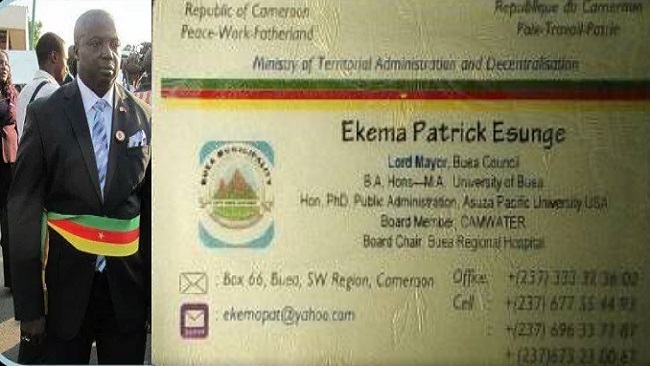
The family of the notorious former mayor of Buea, Patrick Ekema, is scared that his body might have been roasted in a wild fire that erupted on Wednessay, November 20, 2019 at the military medical facility which is part of the huge military barracks in Douala.
A source in Douala has said that there are huge concerns among government officials although some hospital sources are insinuating that the corpse has been moved to Buea.
“Even in death, Ekema is still running away from disasters. While alive, Ekema spent time running away from Amba boys who had turned the heat on him,” the source said.
“Ekema may never know peace. He is surely not resting in peace. It is hard to rest in peace when a huge fire is threatening to swallow you,” the source added.
The huge fire, which has devastated the sprawling medical facility, is being viewed by many observers as an inside job, because in recent times, the staff of the facility has been accused of corruption and theft.
A Cameroon Concord News Group correspondent in Douala has reported that the cause of the fire is not known, but was prompt to add that firefighters had been rushed to the military camp to fight the inferno.
However, many residents of the city fear that the fire might not be brought under in time, as Cameroon’s fire departments have the nasty habit of having fire trucks which do not have water in their tanks.
It is alleged that the fire trucks always go without water because senior military officials and their cronies use the equipment for the building of their personal homes.
The source, which elected anonymity, said multiple explosions could be heard at the facility as the fire threatened to spread to other areas of the barracks.
By Oke Akombi Ayukepi Akap














21, November 2019
Cameroonian Women Urge Representation in Politics 0
Delegations of women in Cameroon are visiting towns and villages to encourage women to run for office in the upcoming February local and parliamentary elections. Although half the population, women make up less than a third of Cameroon’s 180 lawmakers and just six percent of the country’s 380 mayors.
Members of the activist group More Women in Politics try to convince 62-year old Diedonne Kemche to allow one of his six wives to run as candidate for the local council election.
Kemche, a member of Cameroon’s polygamous Bamikike ethnic group, said he is not sure his wife would perform her household duties if she became an elected official.
He said his wives cannot be wasting time by taking part in political activity. They are supposed to be busy taking care of their children, said Kemche, working on the farm and at home, cooking for their family and being respectful to their husband.
Kemche’s wife Stephanie Ngono, a primary school teacher, disagreed and said, despite her husband’s resistance, she is committed to run for office.
She said men should stop the attitude of restricting their wives’ liberties and freedoms. They should understand that women join politics for their own emancipation, said Ngono, and to give to their communities just as they contribute to the progress of their families.
Ngono’s defiance of her husband to participate in politics is rare in patriarchal Cameroon. Traditional gender roles are still dominant most areas and most women are economically dependent on their husbands.
Coordinator of More Women in Politics Justine Diffo said men usually make the family decisions and do not allow their wives to be seen in public with other men, impairing their participation in politics.
She said they have mobilized support for women not only to take part at the local and parliamentary elections by voting but, most importantly, by being candidates themselves. They are visiting all the council areas where the February 9, 2020 elections will be conducted, said Diffo, to make sure female candidates will not be rejected for not meeting legal requirements.
Cameroon’s political parties say they are working to increase the number of women to run for elected office.
Secretary General of the ruling Cameroon People’s Democratic Movement Jean Nkuete says after hearing complaints from women they are making changes.
The party has decided that four out of every ten candidates for the parliamentary elections should be women, he said, and that at least 42 percent of those vying for elective positions in local councils should be women.
But even with the growing participation of female candidates, getting Cameroonians to vote more women into office in patriarchal societies remains a challenge.
Source: VOA