
2, November 2022
Yaoundé, Berlin discuss restitution of artifacts 0
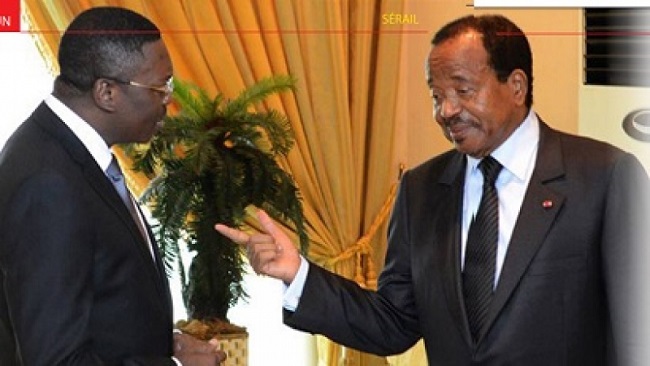
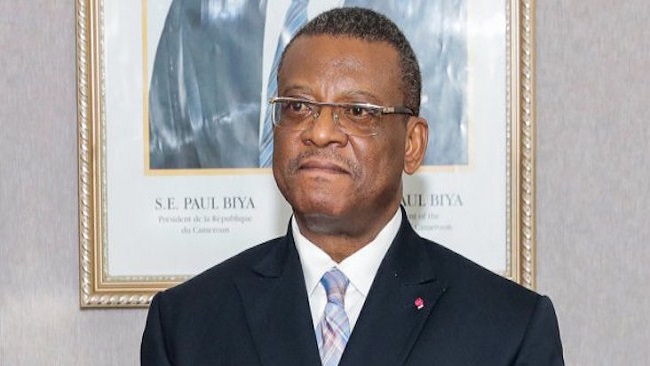
Cameroonian Prime Minister Joseph Dion Ngute on Monday discussed with visiting German Deputy Minister of Foreign Affairs Simen Katja Keul about the prospects of returning artifacts that were removed from the Central African country during the colonial era.
“There is a great interest by the German civil society to deal with this past and to work together on it, like for example the restitution of cultural goods,” Keul told reporters after the meeting in the capital, Yaounde. Keul added that the common procedure was being looked at to reinforce cooperation in this regard.
Major museums, auction houses, and private collectors in Germany have faced growing pressure in recent years to repatriate priceless works of art and other antiquities from African nations.
In May, Cameroonian authorities said during a cabinet meeting that they were working with reputed local and international experts and associations to ensure that the art objects abroad are returned “honorably, administratively and safely” to the country.
Source: Xinhuanet














2, November 2022
UK: Cameroonian social worker barred after posting obscene child porn video on Instagram 0
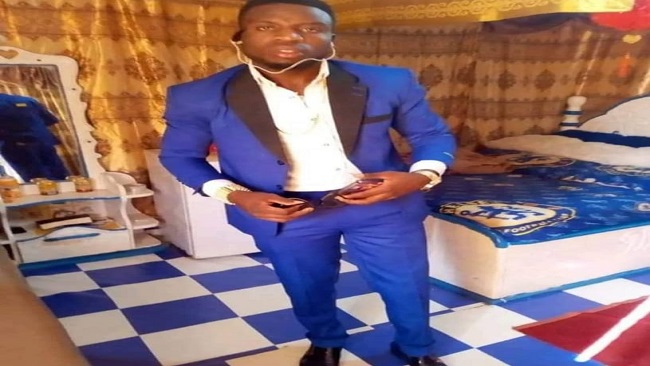
A social worker at South Gloucestershire Council children’s services has been barred from the profession for posting an obscene video involving youngsters on Instagram.
Rodrigue Ekwelle-Nkwelle received a suspended jail term at Bristol Crown Court in April 2021 for distributing an indecent image of a child in the most serious abuse category and possessing extreme porn, which also involved animals.
Social Work England has now removed him from its register following a fitness-to-practise hearing, which bans him from working in the sector.
The regulatory body’s panel ruled he committed serious misconduct that created a risk to the public.
Ekwelle-Nkwelle, 43, also failed to disclose a previous allegation of sexual misconduct from 2013, from a woman with mental health problems, when he applied to employment agency HCL Workforce, the panel’s report said.
In June 2020, while working as a locum social worker for South Gloucestershire Council for nearly three years from October 2017, he uploaded the video involving children to Instagram, Social Work England’s report said.
He pleaded guilty in court to the pornography criminal charges, and a judge last year gave him a two-year jail term, suspended for two years, along with 150 hours’ unpaid work and 30 days’ rehabilitation.
Ekwelle-Nkwelle, whose address at the time of sentencing was given as Broad Street in Staple Hill, was also handed a sexual harm protection order and placed on the sex offenders’ register.
The Social Work England report following last month’s three-day regulatory hearing said: “The panel considered that these were convictions of a very serious nature.
“It was satisfied that children and animals are likely to have been harmed by their involvement in the images which Mr Ekwelle-Nkwelle had dealt with.
“It was alarmed at his suggestion that the fact that the images came from Cameroon affected his decision whether to disclose them.”
The report said the crown court judge had rejected his explanations – that he posted the video out of “naivety” – as “manifestly false and unbelievable”.
Ekwelle-Nkwelle, originally an asylum seeker from Cameroon, who did not attend the hearing and was not represented, said in February 2021 in response to the regulatory concerns that the videos were “sent to him randomly and not by his request”, the report said.
“He said that when he had distributed the video it had been to decry some of the ‘ill things’ that were occurring in Africa and Cameroon in particular,” it said.
“Mr Ekwelle-Nkwelle expressed his total shame of himself, the shame he had brought on his family and his profession.
“He said that he understood that he ought to have reported the matter to the police.
“He said it was poor judgement, not to have promptly reported the matter, because it was from Cameroon.
“He said that he accepted that his fitness to practise was impaired due to the concerns raised and added ‘but I would like to categorically stress that, I am not a person will hurt any individual, not to talk of a child’.
“Mr Ekwelle-Nkwelle stated that he had fled his country and claimed asylum in the UK due to numerous adversities he had faced in Cameroon…He said he knew becoming a social worker was the best way to repay the UK.
“As a result he felt very down about the situation he had put himself in.”
But the panel said that while he had offered some explanation around the distribution conviction, he “had not explained the facts relating to the other conviction for possession of extreme pornography”.
The report said: “The panel considered that it had no demonstration of any insight from Mr Ekwelle-Nkwelle regarding the effect that engaging in the distribution and possession of such images has on the subjects of the material.
“The panel concluded that, in the absence of demonstrated insight and remediation, there was a risk of repetition of past behaviour which involved a risk to the public.
“In addition, the panel was of the view that members of the public who were aware of Mr Ekwelle-Nkwelle’s convictions and the underlying facts would be extremely shocked if there was no finding of impaired fitness to practise.
“The panel was concerned that there was a potential pattern of rule-breaking by Mr Ekwelle-Nkwelle.”
It said the adjudicators ruled that his failure to disclose the previous sexual misconduct allegation “materially hindered the agency in conducting a risk assessment” on his application for employment.
The report said he was accused of making sexual advances towards a service user with mental health problems but police took no further action because she did not wish to support an investigation.
Ekwelle-Nkwelle was temporarily suspended from his social work degree course as a result but was then allowed to complete it in 2015 and got his first job in the profession with Wiltshire Council from March 2016 to October 2017, it said.
“The panel concluded that the conduct underlying the convictions together with the dishonest misconduct was fundamentally incompatible with being registered as a social worker,” it added.
Source: Bristol World