6, June 2018
US: Record number of black women running for office in Alabama 0
A record number of black women are reportedly running for congressional seats across the US state of Alabama.
CNN said on Tuesday that more than 70 African-American women had launched Democratic campaigns to unseat Republicans in primary elections in the deep-red state.
All but two of the black women running for office are Democrats.
“The tide is shifting, and these southern states are showing the rest of the country, again as they always have, that we can lead, and we can change the world,” Rhonda Briggins, an Alabama native and co-founder of VoteRunLead, told the American news channel.
“If you look at history, especially Alabama history, civil rights history, women have always led those charges, and have been the ones working very diligently, behind the scenes, organizing,” she said.
VoteRunLead is a national nonpartisan organization that trains women who want to run for office.
Briggins told CNN that judicial positions provide African-American women with a unique opportunity to change their communities.
“If we’re going to do something about Black Lives Matter then it starts with our local judicial system, it starts with our local policing powers,” she said, referring to a protest movement since 2012 against the high-profile deaths of a number of African Americans at the hands of white police officers in the US.
“People are now connecting the dots to their lives and connecting that to the political power and influence and then pulling all of these pieces together to create real change,” Briggins added.

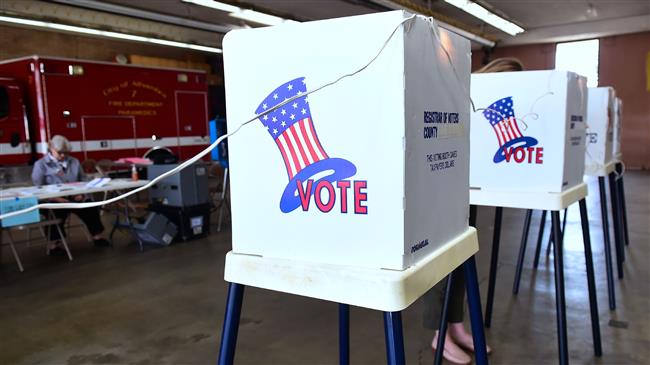
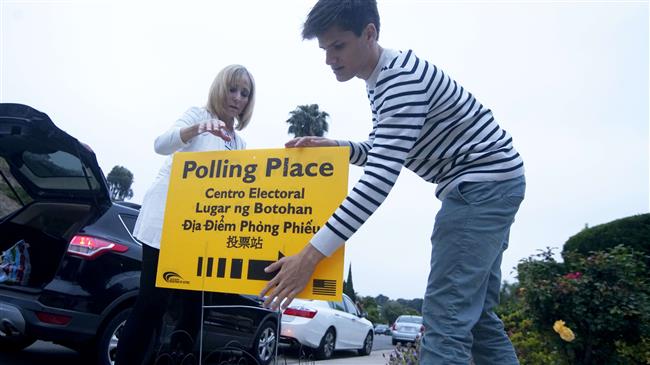
Voters have headed to polls in eight states to choose candidates in primary elections that will eventually determine whether Democrats or Republicans take control of the United States Congress during the era of President Donald Trump.
Democrats are planning to win close to two-dozen congressional seats nationwide in November elections to wrest control of the US House of Representatives from Republicans.
Alabama, Iowa, Mississippi, Montana, New Mexico, South Dakota, California and New Jersey are the eight US states where voters will choose candidates in primaries.


















7, June 2018
9/11 US politician says Kim Jong Un ‘begged’ for summit 0
Donald Trump’s attorney said North Korean leader Kim Jong Un begged “on his hands and knees” for a summit with the US president, The Wall Street Journal reported Wednesday.
“They… said they were going to go to nuclear war with us, they were going to defeat us in a nuclear war,” Rudy Giuliani told a Tel Aviv investment conference, according to the newspaper. “We said we’re not going to have a summit under those circumstances.”
“Well, Kim Jong Un got back on his hands and knees and begged for it, which is exactly the position you want to put him in,” Giuliani said.
The Trump attorney said that with the summit rescheduled, the United States has the upper hand.
Singapore’s foreign minister will make a two-day trip to Pyongyang starting Thursday, as preparations for the summit Trump-Kim summit in the city-state accelerate.
The announcement came a day after the White House revealed that the historic June 12 meeting between the US and North Korean leaders will take place in a luxury hotel on Singapore’s resort island of Sentosa.
The summit is due to be held following a rapid detente between Pyongyang and Washington — as well as South Korea — in a turn-around from a dramatic escalation of tensions last year, when the North ratcheted up its weapons programme.
(AFP)