6, February 2022
Salah or Mané? African Cup final revolves around 2 Liverpool stars 0
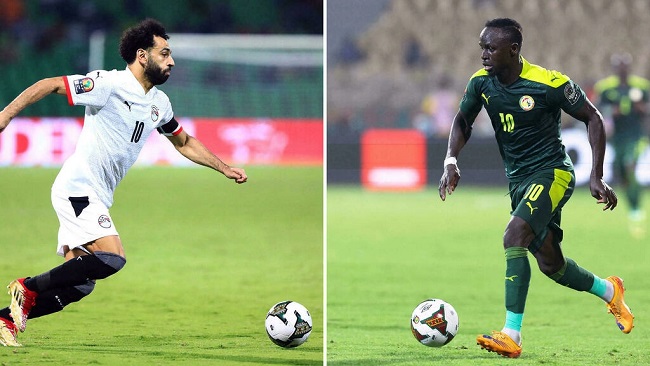
Egypt or Senegal? Or maybe a more absorbing question for world soccer fans: Mohamed Salah or Liverpool teammate Sadio Mané?
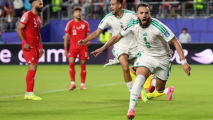
Sunday’s African Cup of Nations final in Cameroon will center on two of the continent’s biggest stars, now global stars, when Salah’s Egypt tries to reclaim its lost glory against Mané’s Senegal, which is seeking a first title and the right to finally call itself the best in Africa.
The two forwards will be on opposing sides at the Olembe Stadium in Yaounde and while their teams are playing for bigger rewards, there will be significant focus on who wins the personal battle between the club mates.
One of them is set for unrestrained joy and his first major title with his country. One is set for more misery. Salah lost in the final with Egypt in 2017, and Mané was inconsolable after Senegal lost in the final in 2019.
Mané partly predicted the matchup in a video he posted on social media at the start of the African Cup. He was cheekily addressing Liverpool teammates Salah and Naby Keita of Guinea when he said he knew he was going to face one of them in the final, he just didn’t know which.
“Unfortunately I can’t play against two teams in the final so I have to play against one,” Mané said. “Which of you?”
Turned out to be Egypt after the North Africans took the hard road to the final, beating Ivory Coast on penalties in the round of 16, Morocco in extra time in the quarterfinals and host Cameroon in another shootout in the semifinals.
That game against Cameroon saw Egypt coach Carlos Queiroz given a red card for his angry protests against some of the referee’s decisions and he will be banned from the touchline for the final.
Egypt raised the possibility of the final being put back a day to Monday to help them recover because they played their semifinal on Thursday, while Senegal had an extra day to prepare after beating Burkina Faso 3-1 on Wednesday. The Confederation of African Football hasn’t agreed to that request and the final goes ahead as scheduled.
It’s turned out to be an ideal climax for the African Cup and its attempts to attract more attention than usual. They will be watching in Merseyside, said Liverpool manager Jürgen Klopp.
“They (Salah and Mané) are superstars there so the pressure they had on their shoulders was massive, and how they deal with it, I’m really proud of them,” Klopp said. “We will watch it, definitely.”
Both players lived up to their big reputations at the African Cup.
Mané scored Senegal’s first goal of the tournament and was on target again in the round of 16 and the semifinals, when he inspired the win over Burkina Faso by setting up one goal and scoring another.
Likewise, Salah delivered the goal for Egypt’s first win in Cameroon, buried the decisive penalty in the shootout against Ivory Coast in the last 16 and scored again in the quarterfinals against Morocco.
One of them will also end up being part of a landmark moment for their country at the African Cup.
Egypt is the record seven-time African champion but having won three straight titles in 2006, ’08 and ’10 in the pre-Salah era, it failed to qualify at all for the next three tournaments when Salah was on the team. Egypt nearly returned to its pedestal in 2017, when it lost to Cameroon in the final.
Egypt now has arguably the best player in the world in Salah, its captain. He said the team must “keep our feet on the ground.”
“But … we are having a very good tournament,” Salah added.
For years, Senegal has had to carry the label of being the best team never to win an African Cup. Senegal made the quarterfinals of the World Cup in 2002, an achievement that many believed would be the start of a run of success in Africa. Two decades later, it still has no African Cup titles.
Senegal’s story could finally change on Sunday.
“I think you can see on my face how happy I am,” Mané said after making the final.
Source: AP soccer








6, February 2022
Tunisian president dissolves top judicial watchdog alleging bias 0
Tunisian President Kais Saied on Sunday dissolved a top independent judicial watchdog accusing it of bias, the latest controversial move since he sacked the government last year.
Saied has broadened his grip on power since July 25, when he sacked the government and froze parliament before moving to rule by decree in Tunisia — the cradle of the 2011 Arab Spring uprisings that ousted a series of autocratic leaders.
Many Tunisians welcomed his moves against a political system described as corrupt and ineffective, in the only democracy to have emerged from the revolts.
But political figures and rights groups have warned of a slide towards authoritarianism, and world leaders have expressed deep concern.
In a move expected to spark further unease, Saied early Sunday announced he was dissolving the Supreme Judicial Council (CSM) during a meeting with government ministers.
The council “is a thing of the past”, he said according to video footage released by the Tunisian presidency.
He accused the CSM, an independent constitutional body set up in 2016 to guarantee the good functioning and independence of the judiciary, of serving political interests.
“In this council, positions and appointments are sold and made according to affiliations,” said the head of state.
“You cannot imagine the money that certain judges have been able to receive, billions and billions,” he added.
Observers say the government is seeking to clamp down on the Islamist-inspired Ennahdha party, which has controlled parliament and the various governments since the 2011 revolution toppled veteran leader Zine El Abidine Ben Ali.
‘Red line’
The president accused the CSM of corruption and of delaying politically sensitive investigations into the 2013 assassinations of left-wing opposition figures Chokri Belaid and Mohamed Brahmi.
The Islamic State group claimed both killings, while Ennahdha, which has denounced Saied’s power grab as a “coup”, has been accused by many of blocking the investigations.
“Unfortunately, in this country, some judges in the courts have manipulated the Chokri Belaid case,” said Saied in the video.
Belaid was shot three times outside his home in February 2013, and Brahmi was killed in similar circumstances in July the same year.
The “July 25 movement” — composed of Saied supporters — on Saturday called on the president to dissolve the CSM in order to “purge” the judiciary of “corrupt magistrates”.
Saied has called on supporters to “protest freely” later Sunday, when a demonstration is also due to be held to mark the ninth anniversary of Belaid’s murder.
Protesters are expected to rally outside the Tunis headquarters of the CSM.
Saied — who has also already called for a July referendum on constitutional reforms — said on Sunday he was working “on a provisional decree” to reorganise the judicial watchdog.
“One of the key rights of Tunisians is to know the truth,” he said in a statement.
Tunisians, he said, are entitled “to have a just judicial system whose conduct is overseen by judges who only implement the law”.
The CSM had been already targeted last month by Saied, when he stripped its members of social and financial benefits, including fuel subsidies, transport and living allowances.
Created in 2016, the watchdog has 45 members, two thirds of whom are judges elected by parliament, who in turn chose the remaining third.
Raoudha Karafi, honorary president of the Tunisian association of judges, has been among critics of Saied’s power grab.
She has criticised Saied in recent press remarks of seeking to undermine the independence of the judiciary, saying: “Justice is a red line.”
Source: AFP