Cameroon Concord News
You Are What You Read
  • Home
  • News
    • Cameroon
    • Nigeria
    • Africa
    • Europe
    • World
  • Politics
    • Cameroon
    • Nigeria
    • Africa
    • Europe
    • World
  • Sports
    • Cameroon
    • Africa
    • Europe
    • World
  • Business
    • Africa
    • World
  • Life
    • Education
    • Health
    • Fashion
    • Entertainment
  • Religion
    • Cameroon
    • World
  • Contact
    • Online
    • Phone
    • Email
  • About
    • Us
    • Our Services
    • Advertising with Us

Categories

Recent Posts

  • American musician Oliver Tree killed in mid-air helicopter collision in Brazil
  • Cameroon looks to Tunisia’s textile model to develop its cotton value chain
  • Trump marks 80th birthday with White House UFC spectacle
  • Ex-Israeli PM Ehud Barak says Netanyahu must be removed ‘with sticks and stones’
  • US denies visa to Palestine football chief for World Cup attendance

Archives

  • June 2026
  • May 2026
  • April 2026
  • March 2026
  • February 2026
  • January 2026
  • December 2025
  • November 2025
  • October 2025
  • September 2025
  • August 2025
  • July 2025
  • June 2025
  • May 2025
  • April 2025
  • March 2025
  • February 2025
  • January 2025
  • December 2024
  • November 2024
  • October 2024
  • September 2024
  • August 2024
  • July 2024
  • June 2024
  • May 2024
  • April 2024
  • March 2024
  • February 2024
  • January 2024
  • December 2023
  • November 2023
  • October 2023
  • September 2023
  • August 2023
  • July 2023
  • June 2023
  • May 2023
  • April 2023
  • March 2023
  • February 2023
  • January 2023
  • December 2022
  • November 2022
  • October 2022
  • September 2022
  • August 2022
  • July 2022
  • June 2022
  • May 2022
  • April 2022
  • March 2022
  • February 2022
  • January 2022
  • December 2021
  • November 2021
  • October 2021
  • September 2021
  • August 2021
  • July 2021
  • June 2021
  • May 2021
  • April 2021
  • March 2021
  • February 2021
  • January 2021
  • December 2020
  • November 2020
  • October 2020
  • September 2020
  • August 2020
  • July 2020
  • June 2020
  • May 2020
  • April 2020
  • March 2020
  • February 2020
  • January 2020
  • December 2019
  • November 2019
  • October 2019
  • September 2019
  • August 2019
  • July 2019
  • June 2019
  • May 2019
  • April 2019
  • March 2019
  • February 2019
  • January 2019
  • December 2018
  • November 2018
  • October 2018
  • September 2018
  • August 2018
  • July 2018
  • June 2018
  • May 2018
  • April 2018
  • March 2018
  • February 2018
  • January 2018
  • December 2017
  • November 2017
  • October 2017
  • September 2017
  • August 2017
  • July 2017
  • June 2017
  • May 2017
  • April 2017
  • March 2017
  • February 2017
  • January 2017
  • December 2016
  • November 2016
  • October 2016
  • September 2016
  • August 2016
  • July 2016
  • June 2016
Southern Cameroons Crisis: Yaoundé announces massive military recruitment

28, December 2020

Southern Cameroons Crisis: Yaoundé announces massive military recruitment 0

After losing more than two thousand soldiers in a battle that will not be ending anytime soon, the corrupt and incompetent Yaoundé crime syndicate has announced that it will be recruiting thousands of poor and young Cameroonians who will be unleashed on the Southern Cameroonian population once they complete their 3-month sandwich military training.

The announcement was made last week when the Yaoundé government also discovered that thousands of its hastily trained and poorly paid soldiers had jumped ship once they got sent to fight seasoned Southern Cameroonian fighters in the dense equatorial jungles of Southern Cameroons.

Sources conversant with the country’s military have informed Cameroon Concord News Group that some 5,000 Cameroonian soldiers have simply vanished into thin air.

Initially, the unreliable and disrespected government informed parents of many soldiers who have disappeared that they were still battling insurgents in Southern Cameroons, but the truth started emerging when soldiers who survived some of the tough battles in the jungle sent videos of their friends who had been killed in battle to the families of the victims.

In the Mamfe jungle, lots of gruesome things took place and surviving soldiers are still suffering from post post-stress traumatic disorder because of the inhuman cruelty they noticed.

The jungle between Eyumojock and Nsanarakati in Manyu Division holds huge secrets whose details are only known by Southern Cameroonian fighters.

More than 20 Yaoundé soldiers are simply not resting in peace in a mass grave in which they were buried alive by Southern Cameroonian fighters.

These innocent soldiers were hastily dispatched to that part of Manyu Division without sound knowledge of the region or the terrain. They were surprised and rapidly overwhelmed and theirs became the kingdom of death.

Their remains may never be discovered and this is hurting their parents who have been having nightmares. Without proper closure, families of these soldiers will continue to ask questions, though each time they ask questions, military officials only threaten them with imprisonment.

In Akwaya, Otu, Ekondo-titi, Wum, Kumbo, Batibo and many parts of the northwest, army soldiers have been killed and their bodies dumped enabling wild animals to have a massive party. Human bones litter the forests of Southern Cameroons and it is rumored that those bones belong to young army soldiers who met their death in really unfortunate circumstances.

The war the government of Yaoundé thought it would wrap up in two weeks has gone beyond three years and thousands of army soldiers have disappeared.

But not all are dead. Some simply defected while others were aided by Southern Cameroonians for them to desert a military they described as bereft of a purpose.

Many of those who have deserted are in countries such as Gabon, Nigeria, Ivory Coast, Equatorial Guinea, United Arab Emirates and France where they are seeking to rebuild their lives.

Most of them argue that they cannot die for an old dying man whose objective is to keep power, adding that the war against Southern Cameroonians was baseless and that the conflict could have been settled through genuine dialogue.

But the fighting will not be over anytime soon. Some members of government and army generals have successfully established a war economy and they are in no rush to see the fighting come to an end.

Atanga Nji, the country’s territorial administration minister; Joseph Beti Assomo, the country’s defense minister and the architect of the war; and army generals in charge of the war are determined to prolong the agony of the population.

They have been unleashing poorly trained militiamen on innocent civilians just to intimidate the population. Some of the soldiers are even child soldiers from poor homes who desperately need a job just to help their poor families. Unfortunately, many of them hardly go back home alive!

 The government has been overwhelmed by the number of body bags returning to East Cameroon and the deafening grumbling of the parents is making government officials to be ill at ease.

But the damage done to the military will have to continue for a long time.  After four long years of prayers, the Russian killing machines are finally in most towns of Southern Cameroons.

There is total excitement in the jungles of Southern Cameroons where most insurgents are taking refuge. They now know that they have the fire power to counter any action by the Yaoundé military.

Southern Cameroonian leaders had started negotiating with Russian military officials in January 2020 after noticing that Western countries were in no rush to end the conflict that was triggered by the marginalization of the country’s English-speaking minority.

The talks had progressed to a point where both parties had to meet in Moscow in June 2020, but the Coronavirus pandemic that has spread pain and suffering across the globe, upended their plans.

Things were put on hold as most countries struggled to get out of the grip of the dangerous pandemic. With things looking up and a vaccine manufactured, both parties will soon be meeting to finalize arrangements.  

Russia wants to have a foothold in the Central African region, it needs oil and diamond and its need for a huge market for its product is increasing becoming overwhelming.

Southern Cameroonians are capable of facilitating Russian entry into the huge economic block by destabilizing Cameroon which is the engine of the region.

For now, Russians have a foot in the door in the Central African Republic by supporting the country’s current government in its efforts to flush out French-backed rebels led by former president Francois Bozize, and with Southern Cameroonian leaders willing to play ball with the oil-thirsty Russians who want to elbow the French out of the sub-region, it is clear that the dynamics in Southern Cameroons will be changing for good.

The corrupt Yaoundé government knows it has a lot on its plate. It understands Russians are simply not joking and it is scared of the alliance between the Russians and Southern Cameroonians.

It is on these grounds that it has launched a massive military recruitment to beef up security in its eastern border with the Central African Republic and to continue killing Southern Cameroonians in the Biya-owned killing fields in the country’s two English-speaking regions.

The year ahead holds a lot of suffering for Cameroonians. The incompetent Yaoundé government is still not in the mood to negotiate a way out of the four-year-old conflict and Southern Cameroonians are not yet ready to throw in the towel.

More blood is in the forecast and those Russian killing machines that have been thrown into the mix will leave many military mothers in tears.

Cameroon is really in for a bleak future. It’s dying (mis)leader, Paul Biya, is prepared to take the entire country with him into his grave.

Despite calls by the international community for a negotiated settlement, Mr. Biya and the hawks running the show strongly hold that a military victory is in the cards, but how true is that when Russian guns have made their way into the country? Let’s wait and see.

By Soter Tarh Agbaw-Ebai

Southern Cameroons: President Sisiku Ayuk Tabe’s wife denies divorce claim

27, December 2020

Southern Cameroons: President Sisiku Ayuk Tabe’s wife denies divorce claim 0

The wife of the leader of the Southern Cameroons Interim Government, Lilian Ayuk, has bluntly dismissed as irresponsible rumors on social media that she had secretly sued for divorced.

The Southern Cameroons iron lady also said that the article was not even worth reading as it was totally bereft of any modicum of truth.

Speaking exclusively to the Cameroon Concord News Group chairman, Soter Tarh Agbaw-Ebai, on Sunday, December 27, over the phone, President Julius Ayuk Tabe’s wife sounded a note of caution to all Southern Cameroonians, urging them to be vigilant, as the social media fake news is being spread by the Yaounde government in the hope that it might distract them and destabilize their jailed leader.

The objective of such a conglomeration of bunkum is to sow confusion among Southern Cameroonians with a view to stifling the justified struggle for independence.

Lilian Ayuk stated that the corrupt Yaoundé government, composed mainly of ancestors and con men, is unquestionably behind the slander with the objective of damaging the sterling reputation of Mr. Julius Ayuk Tabe.

The dissemination of such misleading and grossly false information could be damaging if Southern Cameroonians took their eyes off the cardinal objective  of the struggle.

She urged Southern Cameroonians to shun such rumor, adding that they must stay focused as victory is within reach.

A fake facebook user had stupidly claimed that Mrs. Ayuk Tabe had sued to divorce her husband, President Sisiku Ayuk Tabe.

This fake news will be the reason why Southern Cameroonians will continue to stand solidly behind their president and his lovely wife until key objectives are achieved.

By Soter Tarh Agbaw-Ebai
Cameroon Appreciates End to Toy Weapon Gifts

27, December 2020

Cameroon Appreciates End to Toy Weapon Gifts 0

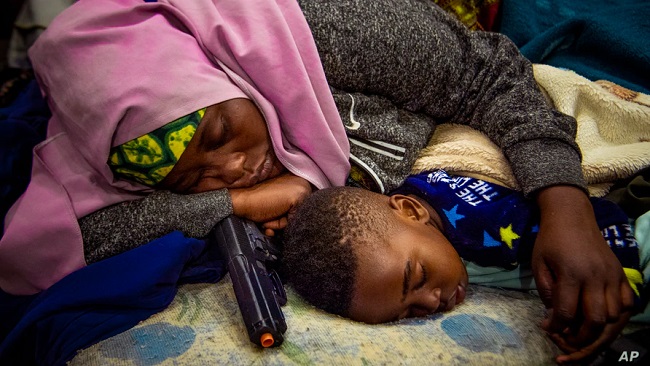
Cameroon rights groups and activists say they are gratified that for the first time since 2016, parents no longer give children and teenagers toy guns as gifts during end-of-year feasts. In 2016, rights groups launched a campaign to ban toy guns, mostly imported from China, saying they lead to violence. Alternative gifts for children include educational electronic toys.

An educational electronic toy in the form of an electronic workbook helps five children in Cameroon’s capital, Yaounde, learn the letters of the alphabet and how to recognize and spell words. Six-year-old Christina Marfaw says her parents gave her the toy as a gift for the New Year.

“It is a touch and teach workbook that our parents bought for us,” said Marfaw.

“The book is asking us to find something that begins with the letter ‘R.’

In the past it was normal for many parents to give toy guns as gifts to little children like Marfaw.

Educational toys like this one have replaced toys like guns, knives and military vehicles that were in high demand and widely used as gifts for Cameroon’s children.   

In 2016, Cameroon rights groups and activists started advocating for a ban on toy guns, most of which were imported from China. China is the largest producer and distributor of toys, especially toy guns, in Cameroon.

 Last year, during the deepening Anglophone separatist crisis and Boko Haram terrorism on the northern border with Nigeria, the rights groups began urging Cameroonians not to buy children toy guns.   

Activist and gender expert Irene Chinje is among those who pushed to stop toy gun sales. She says it breeds violence. 

“It signifies violence. Children do not know the difference between it being a toy gun and the significance it carries,” Chinje said. “They just see it as a sign of bravery for them, and so if they can handle the toy gun, then they are encouraged in the future to handle the real weapon with bullets. They can use it in any careless manner. We do not have to encourage children with guns as toys. If we have to stop violence, we start from that youthful age. We must make the children understand that it is something which could in the future impact something very harmful. We have realized even people of the underworld use the toy guns, but you cannot identify it because you do not even have the courage to look at it when you see them stand before you.” 

Chinje says societies have ethics, so people should avoid toys that seem to encourage violence and consider ethics in their choice of toys. 

She says she is happy that Cameroonians are also avoiding toys that promote gender bias.

“We do not give girls those doll babies that we used to give because it makes them feel that they are girls, they have to cater for babies,” Chinje said. “So, no. We are trying to give what is more gender balanced to children”

Chinje and some activists have been visiting markets to express their appreciation to Cameroonians for not buying toy guns. 

Twenty-four-year-old Kum Yannick, a student at the university of Buea, is in a supermarket in Yaounde to buy gifts for his teenage siblings. He says he wants to buy and share books and toys that promote peace.

“As the new year 2021 is approaching, the wish of all Cameroonians is that peace should return in the troubled regions, and what I have to share is a message of goodwill and love, which I think the Bible is the key from which I shall have all these messages that I am going to share,” Yannick said.

Cameroon has always blamed the over-involvement of teenagers in crime on what they watch on TV, and some there say the sharing of toy guns as gifts promotes violence, especially during New Year’s celebrations.   

The crossover from an old to a new year is always widely celebrated in Cameroon, with Christians, Muslims and animists sharing gifts and exchanging visits. This year, gifts that promote violence are not found in the markets. 

Source: VOA

Southern Cameroons Crisis: Russian killing machines are in town

27, December 2020

Southern Cameroons Crisis: Russian killing machines are in town 0

What was almost impossible last year is gradually becoming a reality. The adage that the only constant in life is change is gradually becoming true in Cameroon.

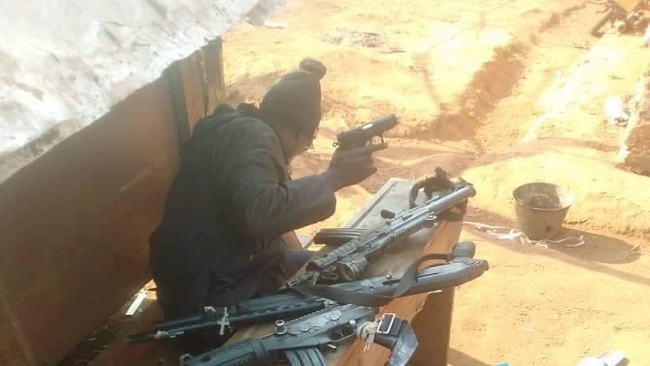
Southern Cameroonian fighters have been calling on the Diaspora to invest in Russian killing machines which will enable them to manufacture nightmares for army soldiers who have been killing innocent civilians in Southern Cameroons. These calls have not fallen on deaf ears. The dynamics are gradually changing.

After four years of crying, God seems to have answered their prayers. Russian killing machines have finally made their way into Southern Cameroons and the targets of these machines are known.

According to a Southern Cameroonian fighter who is in possession of those dangerous weapons, having that gun is like obtaining a visa to Heaven. There total jubilation in the various camps and this has boosted the morales of the fighters, he said.

“I cannot find words to express my joy. These ‘Ekelebes’ (soldiers) have been parading all over our region with their superior weapons just to intimidate us. We will now match fire with fire. Will bring them down just as they too have been bringing us down”

The fighter who met with the Cameroon Concord News Group’s correspondent in Kumba in an undisclosed location said the weapons were already in many parts of the Northwest and Southwest regions.

He added that the Mamfe jungle was providing much-needed cover and that had, indeed, helped them to transport the Russian ‘nightmare’ to many parts of Southern Cameroons.

“The weapons are confidence-inspiring. They are brand new and the boys are all elated. These are weapons that will make a huge impact once they hit their target,” the elated fighter said, adding that “we will chop down those ‘ekelebes’ like dry firewood.”

The Southern Cameroons relationship with Russia seems to be yielding some fruits. It had been reported that some Southern Cameroonian groups had been in touch with Russia and Russian support in all forms has been at the center of their discussions with Russian officials who have been sympathetic toward the Southern Cameroonian cause.

It should be recalled that Russia wants to have a strong foothold in the Central African region and its support of the Central African government against the French who want to bring back their incompetent lackey, François Bozize, to power may be the beginning of the end of French influence in the sub-region.

Russia does not only need to be influential in the sub-region. It is also seeking new market outlets and diamond. Cameroon is a huge market and if the Russians can elbow the French out of the country, they will then become the masters of the sub-region.

Besides, Southern Cameroons has huge oil deposits in the Bakassi peninsula and huge diamond fields in Ndian Division. These resources are attracting Russians whose natural resources are almost depleted because if its teeming population.

As Russia threatens to change the geopolitical equation  in the Central African region, cracks are also emerging on the wall of Cameroon’s ruling party, the CPDM also known as the crime syndicate.

Cameroon Concord News Group sources at the country’s Presidency have been reporting that there are major cracks on the ruling crime syndicate’s wall, as the ailing monarch’s health declines on a daily basis.

The country’s president, the ailing octogenarian, Paul Biya, who has misled the country for over four decades, is now slowly but surely losing his grip on power.

Over the last year, the French Ambassador to Cameroon, Christophe Guilhou, has only met with Mr. Biya with orders from the Elysée Palace.

France’s overt and heavy involvement in Cameroon’s internal affairs over the last few months has invited accusations of recolonization.

France has made no secret of its longing for political stability in Cameroon, despite the current government’s economic incompetence and human rights atrocities.

A source inside Cameroon’s presidency that elected anonymity said that “France has insisted Biya opens negotiations with the break-away Federal Republic of Ambazonia leaders in detention, but the progress is painfully slow and embarrassing, and the French are extremely disappointed that Cameroon is sliding into another Sudan”.

France is now losing patience with the intransigence of the old and ailing Yaoundé dictator, especially as Russia has clearly stated its intention to have a foothold in the Central African region and this may occur through a partnership with the insurgents in Southern Cameroons.

The Cameroon Concord News Group’s informant at the Unity Palace in Yaoundé said Mr.Biya had surrounded himself with hawks who were deceiving him that the war in Southern Cameroons could be won on the battlefield.

But France, a major supporter of the moribund Yaounde government, clearly disagrees with such baseless assertions as the reality on the ground speaks to an escalating conflict.

The Cameroon Concord News Group’s informant intimated that “those close to the physically and mentally diminished old man keep lying to him that the war can be won in the battlefield, but France disagrees. The hawks are lying to him to keep the war going as it is a lucrative business for them.”

The fast-moving geopolitical dynamics in neighboring Central African Republic, marked by huge Russian involvement, is a huge concern for France.

 France has maintained a stranglehold in the Gulf of Guinea but Putin is about to put an end to that.

 In the Central African Republic, President Faustin Archange Touadéra, has received some 300 military instructors from Russia to counter a surge in French-supported rebel violence ahead of Sunday’s election.

 President Archange Touadéra is accusing France of seeking to oust him from power.

He also stresses that such a plan will not see the light of day as Russian support to the Central African country’s government has destroyed French plans to bring back François Bozize, a French lackey, to power.

The recent news updates that the US-based Southern Cameroons Interim Government has established diplomatic relations with Moscow is keeping Yaoundé and Paris awake at night.

 Our sources opined that “The Central African Republic seems to be out of France’s grip, but the French are determined to keep Cameroon, prompting a new strategy that underscores the importance of dialogue. If Cameroon moves away from France’s orbit, then the French are out of Africa.”

The pressure from Paris is telling on Mr. Biya who is already dealing with many health issues. Our informant said that the Yaoundé old man is feeling the pressure as Christophe Guilhou is avoiding Paul Biya’s calls.

For now, the most actively important, but highly insignificant adviser to Mr. Biya is his wife and this is a colossal concern for many who hold that she lacks the intellectual and administrative capacity to handle political matters.

This is causing a split within the ruling party, though many party officials are still reluctant to publicly express their disagreement due to fear of long jail terms which await anybody who challenges the ‘monarch’ or his policies.

Very dark clouds are hovering over Cameroon. The waters are already murky but the arrival of Russians in the region makes the waters a lot murkier.

If the Biya government, which has been in power for almost four decades with nothing to show for such a long stay in power, does not change its strategy on the Southern Cameroons crisis, it will drag the country into a pretty mess that will take a long time to clean up.

Things will surely escalate in the coming year as new actors and stakeholders get thrown into the mix.

The international community must continue to mount pressure on the ailing Biya so that he can meet with the Southern Cameroonian leader, Sisiku Julius Ayuk Tabe, and his collaborators if genuine peace has to return to Cameroon.

By Soter Tarh Agbaw-Ebai

Niger set for first-ever peaceful transition of power

26, December 2020

Niger set for first-ever peaceful transition of power 0

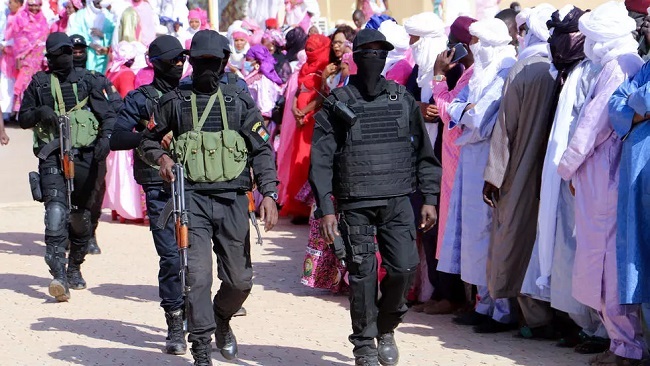
Niger hopes to make history on Sunday when elections set it on course for its first-ever peaceful transition of power despite a raging Islamist insurgency and economic woes.

The world’s poorest country by a key UN benchmark, the Sahel nation has never had two elected leaders hand over power since independence from France 60 years ago — the last coup was only a decade ago.

The man who has been in charge since then, President Mahamadou Issoufou, has gained high marks for announcing that he will hand the baton to his elected successor.

Two other nations in West Africa, Guinea and Ivory Coast, have been rocked by violence this year after their heads of state pushed through changes to the constitution.

They declared their counter on presidential limits had been reset to zero, enabling them to bid for a third spell in office — a move that triggered bloody protests.

“My most burning desire is to hand over power in 2021 to a democratically-elected successor,” Issoufou has said.

“This will be my finest achievement — it will be a first in the history of our country.”

French President Emmanuel Macron has heaped praise on Issoufou, describing him as an “example for democracy” while his foreign minister, Jean-Yves Le Drian, declared “the quality of the (December 27) elections will be a benchmark for all of Africa.”

Others have sounded a more sceptical tone, pointing to the dominant role played by the army, which in 2010 forced out a highly popular president, Mamadou Tandja, who had his eyes on a third term.

Issoufou “isn’t bidding for a third term because he doesn’t want it, but because he doesn’t have the choice,” said Bounty Diallo, a former soldier and professor at the University of Niamey.

Security crisis

Another flaw in the rosy picture is the absence of a prominent opposition candidate.

Former prime minister Hama Amadou, 70, was last month barred from contesting the vote on the grounds that in 2017 he was handed a 12-month term for alleged baby trafficking — a charge he says was bogus. In March, he was given a presidential pardon as he was seeing out his sentence.

Mohamed Bazoum, 60, a former interior and foreign minister who is Issoufou’s designated successor, is the front-runner on Sunday, after a campaign dominated by the issue of security.

Niger is being hammered by jihadists from neighbouring Mali and from Nigeria, the cradle of the decade-old insurgency launched by Boko Haram, and by armed gangs.

Last year more than 250 people died and there were more than 250 kidnappings, according to UN figures.

Jihadist attacks have displaced hundreds of thousands of people and have come closer and closer to the capital Niamey.

In August, six French tourists and their two Nigerien guides were slaughtered in the Koure National Park, just 60 kilometres (37 miles) from the city.

On December 12, 34 people were massacred in a Boko Haram attack in the southeastern region of Diffa on the eve of repeatedly delayed municipal and regional elections.

Poverty

“Our country is huge and surrounded by areas of insecurity,” Bazoum told the French radio station RFI last month.

 “This calls for more means, especially more troops… but without causing us to sacrifice what is necessary, which is the education and wellbeing of our people.”

Niger ranked 189th, the lowest position of nations assessed in the 2020 UN Human Development Index.

Around 42 percent of the population lived last year on under $1.90 (1.56 euros) per day, according to the World Bank, while nearly a fifth of its surging population of 23 million relied on food aid.

The army wants to double troop numbers, but military spending already accounts for a fifth of the state budget. The country also hosts US and French air bases that are key facilities in the fight against jihadism in the Sahel.

Source: AFP

Ruling CPDM: Cracks on the wall

26, December 2020

Ruling CPDM: Cracks on the wall 0

Cameroon Concord News Group sources at the Cameroon Presidency are reporting that there are major cracks on the ruling crime syndicate’s wall.

The report from inside the collapsing presidency of the declining Republic is  not good Christmas tidings for the ruling CPDM and its supporters who have run the country’s economy aground.

The country’s president, the ailing octogenarian, Paul Biya, who has misled the country for over four decades, is now slowly but surely losing his grip on power.

 Over the past ten months, the French Ambassador to Cameroon, Christophe Guilhou, has met Paul Biya frequently with orders from the Elysée Palace.

France’s overt and heavy involvement in Cameroon’s internal affairs over the last few months has invited accusations of recolonization.

France has made no secret of its longing for political stability in Cameroon despite the current government’s economic incompetence and human rights atrocities.

A source inside Cameroon’s presidency that elected anonymity opined that “France has insisted  Biya opens negotiations with the break-away Federal Republic of Ambazonia leaders in detention, but the progress is painfully slow and embarrassing, and the French are extremely disappointed that Cameroon is sliding into another Sudan”.

France is now losing patience with the intransigence of the old and ailing Yaoundé dictator, especially as Russia has clearly stated its intention to have a foothold in the Central African region and this may occur through a partnership with the insurgents in Southern Cameroons.

The Cameroon Concord News Group’s informant at the Unity Palace in Yaoundé said Mr.Biya had surrounded himself with hawks who were deceiving him that the war in Southern Cameroons could be won on the battlefield.

But France, a major supporter of the moribund Yaounde government clearly disagrees with such baseless assertions as the reality on the ground speaks to an escalating conflict.

The Cameroon Concord News Group’s informant intimated that “those close to the physically and mentally diminshed old man keep lying to him that the war can be won in the battlefield, but France disagrees. The hawks are lying to him to keep the war going as it is a lucrative business for them.”

The fast-moving geopolitical dynamics in neighboring Central African Republic, marked by huge Russian involvement, is a huge concern for France.

 France has maintained a stranglehold in the Gulf of Guinea but Putin is about to put an end to that.

In the Central African Republic, President Faustin Archange Touadéra, has received some 300 military instructors from Russia to counter a surge in French-supported rebel violence ahead of Sunday’s election.

President Archange Touadéra claims that an alleged coup is a sinister plot designed by the US and France to oust him from power.

He also stresses that such a plan will not see the light of day as Russian support to the Central African country’s government has destroyed French plans to bring back François Bozize, a French lackey, to power.

The recent news updates that the US-based Southern Cameroons Interim Government has established diplomatic relations with Moscow is keeping Yaoundé and Paris awake at night.

 Our sources opined that “The Central African Republic seems to be out of France’s grip, but the French are determined to keep Cameroon, prompting a new strategy that underscores the importance of dialogue. If Cameroon moves away from France’s orbit, then the French are out of Africa.”

The pressure from Paris is telling on Mr. Biya who is already dealing with many health issues. Our informant said that the Yaoundé old man is feeling the pressure as Christophe Guilhou is avoiding Paul Biya’s calls.

For now, the most actively important adviser to Mr. Biya is his wife and this is a colossal concern for many with interest in Cameroon’s politics.

Whatever happens over the next few days, 2021 is shaping up to be an interesting year in Etoudi and Ambazonia.

By Isong Asu, Cameroon Concord News Group’s London Bureau Chief

Douala: Customs Department reveals spill over effects of the Ambazonia war

26, December 2020

Douala: Customs Department reveals spill over effects of the Ambazonia war 0

The effects of the unfavourable economic situation in Southern Cameroons continued to be felt on customs revenue with declines of 39.3% and 93.8% respectively in the Southern Zone (excluding SONARA) and Northern Zone.

This is contained a 2019 report released by the Cameroon Customs Department. The report also pointed out that the Southern Cameroons crisis has impacted the Economic Partnership Agreement (EPA) between the European Union and Cameroon and has greatly affected trade between Nigeria and Cameroon.

According to the customs administration, the crisis is disrupting Nigeria’s imports from Cameroon such as rice, cocoa, eru, rubber, maize, cassava and plantain tubers, as well as chilli peppers including mangoes while Cameroon’s import of spare parts and electronic products has also been brought to a standstill.

The Cameroon Customs report also noted that trucks no longer circulate freely, especially on the Bamenda-Enugu trade route.

The customs authorities indicated that the Economic Partnership Agreement (EPA), implemented since 04 August 2016 which provides for the dismantling of tariffs between Cameroon and the European Union has also led to tax losses of CFAF 7.7 billion in 2019 against CFAF 4.3 billion in 2018, an increase of 78%.

As a reminder, this agreement enshrines the opening of the Cameroonian market to 80% of imports from the European Union in three stages corresponding to three groups of products.

By Rita Akana in Yaounde

Yaounde: Muslims Join Christians in Christmas Prayer for Peace

26, December 2020

Yaounde: Muslims Join Christians in Christmas Prayer for Peace 0

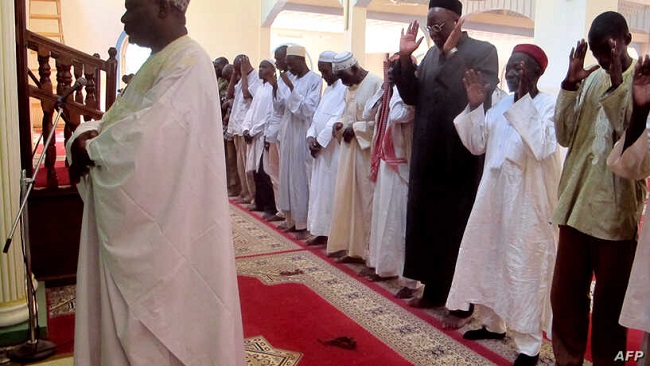
In Cameroon, thousands of Muslims are joining Christians in churches all over the country in Christmas prayers for peace in 2021. For the annual tradition this year, the Inter-Denominational Prayer for Peace group focused on Cameroon’s troubled western regions and COVID-19.

Muslims in Cameroon joined together with Christians Friday to celebrate Christmas and offer an annual prayer for peace. 

Cheikh Oumarou Mallam is president of the Islamic Superior Council of Cameroon and a member of the Inter-Denominational Prayer for Peace group.

This year, he says, they prayed for an end to COVID-19 and peace on the border with Nigeria, where security forces have been battling the Islamist militant group Boko Haram for close to 10 years. 

Mallam says they prayed especially for an end to the separatist conflict in Cameroon’s western regions, which has left more than 3,000 people dead and displaced hundreds of thousands. 

“Be loyal to your country,” Mallam said. “Compete for goodness through social work and community service to enhance people’s lives and improve the progress of the society.  Let us be united building our nation.  Let us be united for peace, safety, security, unity, reconciliation and prosperity.”

Anglophone rebels have been fighting in the western regions since 2016 to carve out an independent state from Cameroon’s French-speaking majority. 

The separatists have destroyed symbols of the state, such as schools and bridges, as well as mosques and churches. 

Reverend Father Humphrey Tatah Mbui is director of communications at the National Episcopal Conference of Cameroon’s Catholic Bishops.

He spoke by telephone from the northwestern town of Bamenda, the capital of the troubled region.

“If there is any Cameroonian who has not learnt from the 4-year war{separatist crisis} that might, force, violence does not, will not, cannot and should not be able to solve the problem, then I wonder if that person will ever learn,” Mbui said. “What is going on is horrendous and therefore justice and peace should be the message that all of us should talk about.  We have everything to gain in peace than in war.”

Christmas songs play on the speakers at the Our Lady of Victories Metropolitan Cathedral in Cameroon’s capital, Yaoundé.

Far from the separatist conflict, the focus is on another battle – to defeat COVID-19. 

Cameroon instructed churches to guard against the spread of COVID-19 during Christmas day activities.

To fight the spread of the virus, Cameroon’s churches are holding multiple Christmas day services.

Church usher Christian Olinga says they are also limiting access to the cathedral.

He says the catholic church asked him to make sure the government’s instructions are respected – no one will be granted access to the cathedral without a face mask.  Olinga says worshipers and guests must sit two meters from each other and there are enough hand washing basins and sanitizers in the church.

Cameroon has confirmed nearly 26,000 cases of COVID-19 and more than 400 deaths since the first case in March. 

A surge of more than 2,000 new infections this month raised concern that holiday gatherings could see numbers increase further.   Meanwhile, Cameroon’s Muslims and Christians are praying for a healthy and peaceful new year. 

Source: VOA

CPDM Crime Syndicate: journalists can’t breathe as laws stifle press freedom

26, December 2020

CPDM Crime Syndicate: journalists can’t breathe as laws stifle press freedom 0

While Sierra Leone and Liberia now join African countries where libel or slander is a civil and not criminal offence, journalists in Cameroon are still, in effect, caught up in a state-supported chokehold of their trade. 

The country has seen a spike in arbitrary arrests and detentions, harassments and other forms of attacks on journalists for their work. Ahmed Abba, Radio France Internationale’s Hausa-language correspondent, who was accused of terrorism, spent 29 months in detention before he was released in 2017 and forced to go into exile.ADVERTISEMENT

Journalist Samuel Wazizi, whose legal name was Samuel Ajiekah Abuwe, died in military custody in Yaoundé in August 2019, but the military made his death public only on June 5, 2020, following pressure from many quarters. He was arrested in a township in the conflict-ridden southwest region of the country and accused of having links with armed separatists fighting since 2017 to create an independent Anglophone state, ‘’Ambazonia.’’ The government has labelled the armed separatists “terrorists.”

Wazizi was the second journalist to die in custody in the country in the past 15 years. In 2010, journalist Bibi Ngota also died in government custody, according to the CPJ.

At least six other journalists in the country, including Kingsley Fumunyuy Njoka, Thomas Awah Junior and Paul Tchouta are in jail.

Shrinking press freedom

Jude Viban, the national president of the Cameroon Association of English-Speaking Journalists (CAMASEJ), says he receives complaints daily from members about harassment, threats and intimidation by people with political power.

“Journalism as a whole and journalists across the world have the same problems of intimidation, threats and attacks because they work on sensitive issues. But in Cameroon, it is accentuated and more complex,” says Mr Viban. He blames the situation on laws which give little or no protection to media professionals.

“Individuals are a threat because if you get to the authorities who are supposed to be investigated, they will, because of their interest, stall the case or make it disappear or you are not just listened to. The blame is on you when you come complaining. The authorities already tag you as the one who did something wrong. That impunity does exist, and we must admit it does,” he explained.

Yerima Kini Nsom, the Yaoundé bureau chief of the English language bi-weekly, The Post newspaper, likens journalists in Cameroon to endangered species.

“Journalists in Cameroon are born free, but everywhere they are in chains. We still have laws that tighten the lace of control around the neck of every journalist in the country,” says Mr Kini.

Although the preamble to Cameroon’s 1996 constitution guarantees both freedom of expression and of the press, libel and slander remain both civil and criminal offences. A guilty verdict can mean a prison term of up to six months and or a hefty fine.

According to Mr Kini, the criminalisation of press offences has affected the quality of journalism in the country, because it has forced journalists to exercise self-censorship.

Media scholars, journalism trainers and lawyers in the country also agree that current laws do not protect media practitioners.

Eugene Nforngwa, a Media and Development Researcher at the Yaoundé-based African Knowledge and Policy Centre (AKPC) argues that journalists do not enjoy any form of protection under the current Cameroonian laws.

“The laws in Cameroon are written to check the media and check media excesses rather than to promote the media and freedom of expression. I think we should have a law that is intended to promote freedom of expression and freedom of the media and tries to prevent any efforts by other stakeholders from infringing on these freedoms. This is the only approach that can guarantee that journalists are able to do their work well,” says Mr Nforngwa.

Punitive legislation

Arrey Collins Ojong of Arrey & Associates Law Office, a lawyer who offers pro bono defence to journalists and other vulnerable persons, says he is profoundly alarmed about the current state of the media and journalists in Cameroon because the existing legislation is solely punitive.

Apart from the constitution and a few ratified conventions, which are hardly ever applied, authorities have done little to nothing to put in place legislation that protects free speech, press freedom and digital rights for citizens and journalists, Mr Arrey said.

“For instance, the Cameroonian Penal code still convicts individuals found guilty of defamation under its section 305 with an imprisonment of from six days to six months and with a fine of between FCFA5,000 and FCFA2 million,” Mr Arrey explained, citing it as part of laws that hinder press freedom in Cameroon.

The human rights lawyer says he was motivated to defend journalists when he saw how they were continuously being molested, beaten and detained without due process, simply because they were struggling to do their job.

“I witnessed an extremely risky atmosphere for journalists [in Cameroon] who remained the sole stakeholders to report and inform the common man on the day-to-day issues that directly touch on the lives and future of the people,” said Mr Arrey, who is also the National Vice President of Cameroon Humanitarian Lawyers Without Borders (Avocats Sans Frontières Humanitaires Du Cameroon).

“I was motivated to believe even journalists admired so much were an endangered species and required protection, thereby protecting free speech and the only source of this protection would be the law,” Mr Arrey explained.

Access denied

Another issue which further compounds the situation of the Cameroonian journalist is the lack of access to official sources of information. The country lacks a Freedom of Information Act which would compel official sources to disclose public information. This, according to Mr Kini, forces journalists to resort to secondary sources which are sometimes not trustworthy.

“You can write a faulty story because first choice sources are not ready to talk to you and you rely on secondary sources. For instance, you cannot voluntarily go to the Presidency or the Prime Minister’s office to verify a particular issue of public interest,” Mr Kini, who has practised journalism since the early 90s, explained.

He further said: “We have had situations in this country where when a journalist goes to a minister who is handling an issue that the public needs to know, the minister says he needs clearance from the prime minister, and then the Prime Minister’s Office will say it needs clearance from the presidency. So the story dies, if you don’t rely on secondary sources.”

As if to confirm the situation, when this reporter approached a director in the ministry of Communication for comments, he declined on grounds that he needed clearance from the minister. At the time of publishing this report, the communication minister was yet to reply to an interview questionnaire submitted to him at his request.

The unwritten but scrupulously respected ‘’sealed lips’’ policy of the government, according to the president of the English-speaking journalists’ guild, only fuels citizens’ mistrust in authorities as it allows misinformation to flourish.

Despite the fact that Cameroon has ratified both the African Charter on Human and Peoples’ Rights and the International Covenant on Civil and Political Rights, both of which provide protections for journalists and their sources, the Yaoundé regime seems to be in no hurry to give journalists the rights they deserve.

Mr Arrey says it is regrettable that the applicability of national and international legal instruments that guarantee the rights and freedoms of journalists and other citizens “remains elusive.”

Respect for press freedom has been declining for years in Cameroon and deteriorated more in the wake of the Boko Haram insurgency and the armed conflict in the Anglophone regions, with journalists exposed to a high risk of threats and arbitrary arrest, according to independent monitors like CPJ and Reporters Without Borders (RSF).

Controversial anti-terrorism law

In an apparent move to further muzzle the press, the government went on to enact a controversial law that directly influences the functioning of journalism and limits reporting especially on human rights violations in the country.

Leaning on the controversial 2014 anti-terrorism law, Yaoundé can label journalists, opinion leaders, activists and government critics “terrorists” and prosecute them in military courts.

“Under the context of this particular law the government enjoys the exclusive monopoly to define the term terrorism,” says Mr Arrey. “Individuals and journalists even within the digital and physical space, risk jail terms of up to 20 years regarding an opinion or expression that the government deems might affect public order which they interpret as acts of terrorism which fall within the exclusive competence of military tribunals for adjudication purposes.”

Mr Arrey explains that the ambiguous law also gives law enforcement officers the leverage to continue restricting press freedom by arresting, detaining, physically abusing and harassing journalists and anyone suspected of holding an opinion and information they are empowered by the said legislation to interpret as acts of terrorism.

“The suppression of freedom of expression in the country has even gone to an extent where security forces in the areas affected by ongoing crisis, like the Boko Haram in the Far North and armed separatist conflict in Anglophone regions, would order an individual in public to hand over his or her mobile phone for examination without any judicial order, violating their privacy, yet no cause for alarm,” the founder of the Limbe-based Arrey & Associates Law Office said.

There have been cases where journalists who are covering riot and protests in the country are treated the same way as protesters and charged or tried under provisions of the said law and punished.

At least eight journalists including Tah Mai Javis of My Media Prime TV in Douala and his cameraman Tebong Christian, Equinoxe TV cameraman, Rodrigue Ngassi, French language daily newspaper, La Nouvelle Expression reporter, Lindovic Ndjio and Radio France Internationale correspondent for Cameroon, Polycarpe Essomba were arrested and detained in different police stations in the political capital Yaoundé and economic capital Douala last September while covering the anti-Biya protests. The protest was called by opposition leader and 2018 presidential candidate, Prof Maurice Kamto of the Cameroon Renaissance Movement (MRC). The journalists were accused of being supporters of the opposition leader, who has been a thorn in the flesh of the Biya regime since the 2018 presidential vote; which he claims he won but was robbed of victory.

“Some of the provisions of the [anti-terrorism] law are obnoxious. For instance, it suffices for you as a journalist to say Maurice Kamto or other civil society leaders have a right to protest for you to be accused of supporting terrorism,” says Mr Kini.

No way to report

Rights groups have indicted the military combating Boko Haram in the north and in the crackdown on armed separatist fighters pushing for the secession and independence of the country’s two English-speaking regions.

Out of fear of being persecuted and or prosecuted as well as the inability to gain access to official sources of information, journalists have underreported the security forces’ excesses and human rights violations in these areas.

“Recently, curfews and other restrictions on the general public apply to journalists too who are supposed to continue to be informing the population, even if it is about how those curfews and restrictions are successful,” Mr Nforngwa explains, saying this makes journalism tougher.

In response to criticisms for the use of obnoxious laws to muzzle the press, authorities have, in the past, touted the number of private media outlets in the country as proof that the press is free. According to media reports, the government has registered over 600 newspapers, most of which are community and regional papers and are published only occasionally.

Mr Kini and Mr Viban argue, however, that press freedom cannot be measured only by the number of private media outlets.

“It is not because you have a thousand newspapers that you think the press is free. When we have these thousands of newspapers with doubtful publishers and editors, it therefore means that they can be easily manipulated,” says Viban.

“It is important to have newspapers that are independent, credible and that can help the population to make informed choices. Having many media organs that are not helping to inform deepens mistrust in government.”

To Kini, projecting the number of private media organs in the country as a yardstick for press freedom is a “very whimsical and misleading” narrative.

Several television and radio stations too operate without a licence. Critics say this policy of delaying to issue definite licences and “administrative tolerance” also retains media in the asphyxiating grip of government because they can be closed arbitrarily, when perceived to be critical.  

“Most of the so-called newspapers are not vibrant enterprises. It is a very chaotic situation because some of the so-called publishers you see are just little birds dancing in the middle of the road where the real drummers are in government. There are many newspapers that are created by ministers,” Kini said, adding “just wait for the period of campaigns and you see those newspapers coming out like dogs, to attack the adversaries or perceived and real enemies of their masters.”

Incommunicado detentions

Cameroon has a history of detaining journalists incommunicado, according to the CPJ and RSF. The country’s press freedom ranking worsened this year. The central African country is ranked 134th out of 180 countries – where one is the freest, according to RSF’s 2020 World Press Freedom Index. The score is three places lower than its 2019 position of 131. The country has also featured among top jailers of journalists in Africa in the past half-decade years, and is rated “Not Free” by Freedom House.

Mr Nforngwa says there is a need to reform the laws, and the starting point is to have a clear understanding of what the law is intended to do.

“I think we should have a law that is intended to promote freedom of expression and freedom of the media and prevent any efforts by other stakeholders from infringing on this freedom. This is the only approach that can guarantee that journalists are able to do their work well,” proposed the researcher, who is also a journalism trainer.

However, previous attempts at engineering media law reforms have not been successful.

The government organised what it called the National Communication Forum in Yaoundé in 2012 on the stakes and challenges of the media in the country but its resolutions have never been made public.

The scientific committee of the conference organised by the country’s ministry of communication said among other things in a document then, that the forum had agreed that further reflection should be made, in order to get a substitute to imprisonment against common law offences perpetrated by media organs.

Charlie Ndi Chia, president of the Cameroon Union of Journalists (CUJ) and member of the country’s media regulator, the National Communication Council (NCC), who participated in the deliberations at the three-day conference, together with his secretary-general and NCC colleague, Christophe Bobiokono says the forum, like many others before it, might have been railroaded and taken advantage of by interests surreptitiously opposed to credible media in Cameroon.

“I personally think that completely deregulating the Cameroonian media crowded as it were, by overly gullible practitioners would be a wise step to adopt. Similarly, decriminalising offences committed by pressmen in the line of duty is a pretty dicey venture,” says Ndi Chia.

The CUJ president further said that given the queer value system that drives the average Cameroonian media practitioner, it is safer to hang on to the status quo, acknowledging it is debatable, but that it would take very open minds to put the issue on the table and discuss it openly and honestly.

Bobiokono recalls that one of the resolutions of the forum was the creation of a national order of journalists which was going to do auto-regulation but the government has been reluctant to implement the resolutions.

“The national order of journalists was going to act like a regulatory body like it is the case with medical doctors, lawyers, engineers, pharmacists. You must belong to the order and abide by its rules and it is easy to control and also take decisions,” he said.

No political will

Both Ndi Chia and Bobiokono do not see any government will to have a free and independent media in the country.

“Those who run the government are certainly aware of the virtues of a free press. But for parochial interests, I am pretty sure that many of those in government would rather have manipulable lapdogs in newsrooms,” Ndi Chia said.

While the repeal of the media law in Sierra Leone was a fulfilment of a promise President Bio made on the campaign trail prior to his 2018 election, politicians in Cameroon seem not to be concerned about the obnoxious laws in the country. None of the candidates at the 2018 presidential election, including a journalist-turned-opposition leader, Cabral Libii, mentioned in their campaigns a repeal of law such as the 2014 anti-terrorism law or putting in place a Freedom Of Information Act.

President Paul Biya who once declared he wants to be remembered as one who brought democracy and press freedom to Cameroon won a seventh term in the October 7, 2018 vote, extending his grip on the country he has ruled with an iron fist since November 1982.

Pro-democracy advocates fear a free and independent media may be a far-fetched dream for Cameroon as long-serving rulers like Biya will always try to control the narrative and manipulate their own version of reality, scheme that cannot be achieved with a free and independent media.

Jeffrey Smith, Founding Director of Vanguard Africa; a Washington DC-based pro-democracy advocacy group says truth, facts and objectivity are a dictator’s worst enemy while a free media and an informed citizenry represent their kryptonite.

“This is why leaders like Paul Biya, who have failed their citizens for generations, need to silence or quite literally kill journalists. It’s because they expose him for the supreme failure that he is,” Smith said.

“It is evident that Biya, and the ruling regime in Cameroon, have no intention of ensuring an open media or political space in the country. Their very survival, in fact, depends on restricting these spaces. This should not, however, be seen as a sign of strength for the regime. It is quite the opposite. It is the ultimate sign of their growing weakness. And they should be rightly called out for it and also held accountable,” the executive director of Vanguard Africa opined.

To Smith, for Cameroon to advance towards democracy, real democracy, there is a need for a change in leadership at the very top.

“Cameroonians are clearly demanding change. This has been evident with the growing protests and dissent we have seen throughout the country. It was also evident during the past elections, which were thoroughly rigged in Biya’s favour,” Smith said. He added that “Paul Biya has been in power longer than most Cameroonian citizens have been alive. He is a retrograde dictator who represents the worst of Africa’s past, not the future that Cameroonians are yearning for and deserving of.

87-year-old Biya first became president on November 6, 1982 when a large number of the country’s nearly 27 million citizens were not yet born. He inherited a country of 9.2 million people from Ahmadou Ahidjo, the first president.

Dr Christopher Fomunyoh, a Cameroon-born international governance, human rights, and democracy advocate concurs that Cameroon’s state of democracy is worse now than it was three decades ago.

The Senior Associate and Regional Director for Central and West Africa at Washington DC-based National Democratic Institute (NDI) says there is much to fix for Cameroon to actually be referred to as democracy.

“Credible independent organisations such as Freedom House consider Cameroon does not meet the definition of democracy and so I couldn’t rate it on that scale. The country’s overall state of democracy scorings are worse now than they were three decades ago,” Dr Fomunyoh said.

“You can’t be the oldest president in the world, soon turning 88, the longest-serving with 38 years at the helm and have that weigh negatively on a country facing multiple challenges,” opined Dr Fomunyoh who is author of the book, The Cameroon of Tomorrow, a series of thoughts, messages, criticisms and proposals on the democratic evolution of the country.

Culled from The East African

Covid-19 dampens Christmas cheer in Bethlehem, Rome and beyond

25, December 2020

Covid-19 dampens Christmas cheer in Bethlehem, Rome and beyond 0

Bethlehem on Thursday ushered in Christmas Eve with a stream of joyous marching bands and the triumphant arrival of the top Catholic clergyman in the Holy Land, but few people were there to greet them as the coronavirus pandemic and a strict lockdown dampened celebrations in the traditional birthplace of Jesus.

Similar subdued scenes were repeated across the world as the festive family gatherings and packed prayers that typically mark the holiday were scaled back or canceled altogether.

On Christmas Eve in Italy, church bells rang earlier than usual. The Italian government’s 10 pm curfew prompted pastors to move up services, with “Midnight” Mass starting Thursday evening in some churches as early as a couple hours after dark. Pope Francis, who has said people “must obey” civil authorities’ measures to fight the spread of Covid-19, fell in line. This year, the Christmas vigil Mass in St. Peter’s Basilica was moved up from 9:30 p.m. to 7:30 p.m.

Normally, seats at the vigil Mass are quickly snapped up, by Romans and by tourists, but the pandemic has reduced tourists in Italy to a trickle. In keeping with social distancing measures, barely 200 faithful — instead of several thousand — spaced out in the basilica’s pews and wearing masks, attended Francis’ celebration of the Mass. A row of fiery red poinsettia plants warmly contrasted with the sumptuous cold marble of the basilica.

Francis in his homily offered reflections on Christmas’ significance. “We often hear it said that the greatest joy in life is the birth of a child. It is something extraordinary and it changes everything,” he said. A child “makes us feel loved but can also teach us how to love.”

“God was born a child in order to encourage us to care for others,” said Francis, who has made attention to the poor and unjustly treated a key theme of his papacy.

Celebrations elsewhere in Europe were canceled or greatly scaled back as Covid-19 infections surge across the continent and a new variant that may be more contagious has been detected.

In Athens, Christmas Eve was eerily silent. In normal times, voices of children singing carols while tinkling metal triangles can be heard all day. The decades-old custom, in which children go house to house and receive small gifts, was banned this year. Groups of children managed to honor the tradition by singing to Prime Minister Kyriakos Mitsotakis by video link.

Throughout the pandemic, one of the hardest-hit churches in New York City has been Saint Peter’s Lutheran Church in Manhattan. Church leaders say more than 60 members of the congregation — which numbered about 800 before the pandemic — have died of COVID-19, almost all of them part of the community of some 400 who attended services in Spanish.

Despite their own heartbreaks, congregation members — many of them immigrants — donated coats, scarves and other winter clothes for more than 100 migrant minors at a detention center in Manhattan.

While many other New York City churches have resumed in-person services, Saint Peter’s continues to offer its Masses only online. The schedule for Christmas Eve and Christmas day included Masses in English and Spanish, and a bilingual jazz vespers service.

In Bethlehem, officials tried to make the most out of a bad situation.

“Christmas is a holiday that renews hope in the souls,” said Mayor Anton Salman. “Despite all the obstacles and challenges due to corona and due to the lack of tourism, the city of Bethlehem is still looking forward to the future with optimism.”

Raw, rainy weather added to the gloomy atmosphere, as several dozen people gathered in the central Manger Square to greet Latin Patriarch Pierbattista Pizzaballa. Youth marching bands playing Christmas carols on bagpipes, accompanied by pounding drummers, led a joyous procession ahead of the patriarch’s arrival early in the afternoon.

“Despite the restrictions and limitations we want to celebrate as much as possible, with family, community and joy,” said Pizzaballa, who was to lead a small Midnight Mass gathering later in the evening. “We want to offer hope.”

Thousands of foreign pilgrims usually flock to Bethlehem for the celebrations. But the closure of Israel’s international airport to foreign tourists, along with Palestinian restrictions banning intercity travel in the areas they administer in the Israeli-occupied West Bank, kept visitors away.

The restrictions limited attendance to residents and a small entourage of religious officials. Evening celebrations, when pilgrims normally congregate around the Christmas tree, were canceled, and Midnight Mass was limited to clergy.

The coronavirus has dealt a heavy blow to Bethlehem’s tourism sector, the lifeblood of the local economy. Restaurants, hotels and gift shops have been shuttered.

It was not the usual raucous Christmas eve in Mexico City. The big celebration was a ceremony where the country’s first coronavirus vaccine shots were administered.

On Christmas Eve, parents usually take their kids to a downtown plaza where actors dress up as the Three Wise Men or Santa Claus and pose in front of elaborate backdrops resembling the sets of popular children’s movies.

But this year, the Wise Men and Santas were banned. Mexico’s other grand tradition, Midnight Mass, was canceled in many parishes.

Still, Zoé Robledo, director of Mexico’s social security system, said the start of the country’s COVID-19 vaccine program made it “an unforgettable Christmas.”

Rio de Janeiro’s iconic beaches remained open, but a City Hall decree aimed at limiting gatherings prevented drivers from parking along the shore. Rain also kept beachgoers at home.

Thomas Azevedo and his 9-year-old son braved the bad weather to set up a small stand, selling beer and caipirinhas made from fresh fruit. By early afternoon, he hadn’t sold a thing.

“It’s not so much the rain; in previous years it was full of tourists at Christmas. This year there’s no one,” said Azevedo, 28.

Australians had until recently been looking forward to a relatively Covid-19-free Christmas after travel restrictions across state borders relaxed in recent weeks in the absence of any evidence of community transmission. But after new cases were detected over the past week, states again closed their borders.

While many places around the globe were keeping or increasing restrictions for Christmas, Lebanon was an exception. With its economy in tatters and parts of its capital destroyed by a massive Aug. 4 port explosion, Lebanon has lifted most virus measures ahead of the holidays, hoping to encourage spending. Tens of thousands of Lebanese expatriates have arrived home for the holidays, leading to fears of an inevitable surge in cases during the festive season.

Lebanon has the largest percentage of Christians in the Middle East — about a third of its 5 million people — and traditionally celebrates Christmas with much fanfare.

“People around us were tired, depressed and depleted, so we said let’s just plant a drop of joy and love,” said Sevine Ariss, one of the organizers of a Christmas fair along the seaside road where the explosion caused the most damage.

Source: AP

«< 586 587 588 589 590 >»

Featured

  • Exam leaks in CPDM Cameroon: A symptom of a deeper corruption crisisExam leaks in CPDM Cameroon: A symptom of a deeper corruption crisis
  • Biya is already in Hell as Yaoundé unravelsBiya is already in Hell as Yaoundé unravels
  • What does President Biya really want? Money, women or cigarettes?What does President Biya really want? Money, women or cigarettes?
  • Biya, how long must the nation wait for the government it was promised?Biya, how long must the nation wait for the government it was promised?
  • Cameroonians in Leicester: funeral contributions must never become a marketplace for corruptionCameroonians in Leicester: funeral contributions must never become a marketplace for corruption

Most Commented Posts

  • 4 Anglophone detainees killed in Yaounde4 Anglophone detainees killed in Yaounde
    18 comments
  • Chantal Biya says she will return to Cameroon if General Ivo Yenwo, Martin Belinga Eboutou and Ferdinand Ngoh Ngoh are sackedChantal Biya says she will return to Cameroon if General Ivo Yenwo, Martin Belinga Eboutou and Ferdinand Ngoh Ngoh are sacked
    13 comments
  • The Anglophone Problem – When Facts don’t LieThe Anglophone Problem – When Facts don’t Lie
    12 comments
  • Anglophone Nationalism: Barrister Eyambe says “hidden plans are at work”Anglophone Nationalism: Barrister Eyambe says “hidden plans are at work”
    12 comments
  • Largest wave of arrest by BIR in BamendaLargest wave of arrest by BIR in Bamenda
    10 comments

Latest Tweets

→ Follow me

Featured

  • American musician Oliver Tree killed in mid-air helicopter collision in Brazil

    American musician Oliver Tree killed in mid-air helicopter collision in Brazil

  • Cameroon looks to Tunisia’s textile model to develop its cotton value chain

    Cameroon looks to Tunisia’s textile model to develop its cotton value chain

  • Trump marks 80th birthday with White House UFC spectacle

    Trump marks 80th birthday with White House UFC spectacle

  • Ex-Israeli PM Ehud Barak says Netanyahu must be removed ‘with sticks and stones’

    Ex-Israeli PM Ehud Barak says Netanyahu must be removed ‘with sticks and stones’

  • US denies visa to Palestine football chief for World Cup attendance

    US denies visa to Palestine football chief for World Cup attendance

  • Yaoundé, Abu Dhabi explore new trade and investment framework

    Yaoundé, Abu Dhabi explore new trade and investment framework

  • Southern Cameroons Crisis: 2 gov’t soldiers killed in Ambazonia ambush

    Southern Cameroons Crisis: 2 gov’t soldiers killed in Ambazonia ambush

Log In

  • Register
  • Log in
  • Entries feed
  • Comments feed
  • WordPress.org
© Cameroon Concord News 2026

We are using cookies to give you the best experience on our website.

You can find out more about which cookies we are using or switch them off in .

Powered by  GDPR Cookie Compliance
Privacy Overview

This website uses cookies so that we can provide you with the best user experience possible. Cookie information is stored in your browser and performs functions such as recognising you when you return to our website and helping our team to understand which sections of the website you find most interesting and useful.

Strictly Necessary Cookies

Strictly Necessary Cookie should be enabled at all times so that we can save your preferences for cookie settings.

3rd Party Cookies

This website uses Google Analytics to collect anonymous information such as the number of visitors to the site, and the most popular pages.

Keeping this cookie enabled helps us to improve our website.

Cookie Policy

More information about our Cookie Policy