Cameroon Concord News
You Are What You Read
  • Home
  • News
    • Cameroon
    • Nigeria
    • Africa
    • Europe
    • World
  • Politics
    • Cameroon
    • Nigeria
    • Africa
    • Europe
    • World
  • Sports
    • Cameroon
    • Africa
    • Europe
    • World
  • Business
    • Africa
    • World
  • Life
    • Education
    • Health
    • Fashion
    • Entertainment
  • Religion
    • Cameroon
    • World
  • Contact
    • Online
    • Phone
    • Email
  • About
    • Us
    • Our Services
    • Advertising with Us

Categories

Recent Posts

  • American musician Oliver Tree killed in mid-air helicopter collision in Brazil
  • Cameroon looks to Tunisia’s textile model to develop its cotton value chain
  • Trump marks 80th birthday with White House UFC spectacle
  • Ex-Israeli PM Ehud Barak says Netanyahu must be removed ‘with sticks and stones’
  • US denies visa to Palestine football chief for World Cup attendance

Archives

  • June 2026
  • May 2026
  • April 2026
  • March 2026
  • February 2026
  • January 2026
  • December 2025
  • November 2025
  • October 2025
  • September 2025
  • August 2025
  • July 2025
  • June 2025
  • May 2025
  • April 2025
  • March 2025
  • February 2025
  • January 2025
  • December 2024
  • November 2024
  • October 2024
  • September 2024
  • August 2024
  • July 2024
  • June 2024
  • May 2024
  • April 2024
  • March 2024
  • February 2024
  • January 2024
  • December 2023
  • November 2023
  • October 2023
  • September 2023
  • August 2023
  • July 2023
  • June 2023
  • May 2023
  • April 2023
  • March 2023
  • February 2023
  • January 2023
  • December 2022
  • November 2022
  • October 2022
  • September 2022
  • August 2022
  • July 2022
  • June 2022
  • May 2022
  • April 2022
  • March 2022
  • February 2022
  • January 2022
  • December 2021
  • November 2021
  • October 2021
  • September 2021
  • August 2021
  • July 2021
  • June 2021
  • May 2021
  • April 2021
  • March 2021
  • February 2021
  • January 2021
  • December 2020
  • November 2020
  • October 2020
  • September 2020
  • August 2020
  • July 2020
  • June 2020
  • May 2020
  • April 2020
  • March 2020
  • February 2020
  • January 2020
  • December 2019
  • November 2019
  • October 2019
  • September 2019
  • August 2019
  • July 2019
  • June 2019
  • May 2019
  • April 2019
  • March 2019
  • February 2019
  • January 2019
  • December 2018
  • November 2018
  • October 2018
  • September 2018
  • August 2018
  • July 2018
  • June 2018
  • May 2018
  • April 2018
  • March 2018
  • February 2018
  • January 2018
  • December 2017
  • November 2017
  • October 2017
  • September 2017
  • August 2017
  • July 2017
  • June 2017
  • May 2017
  • April 2017
  • March 2017
  • February 2017
  • January 2017
  • December 2016
  • November 2016
  • October 2016
  • September 2016
  • August 2016
  • July 2016
  • June 2016
Putin says if Russia had poisoned opposition leader Navalny he would be dead

18, December 2020

Putin says if Russia had poisoned opposition leader Navalny he would be dead 0

President Vladimir Putin on Thursday rejected reports that Russia’s security services were behind the poisoning of Alexei Navalny, saying that if they were, the opposition leader would not be alive.

Navalny, 44, fell violently ill during a flight from Siberia to Moscow in August and was hospitalised in the Russian city of Omsk before being transported to Berlin by medical aircraft.

Experts of several Western countries concluded that the Kremlin critic was poisoned with the Soviet-era Novichok nerve agent — a claim that Moscow has repeatedly denied.

A joint media report this week revealed what it said were the names and photos of chemical weapons experts from Russia’s Federal Security Service (FSB) that had tailed Navalny for years.

Speaking to reporters at his annual end-of-year press conference, Putin described the report as “the legalisation of materials from the American special services”, adding that the Kremlin critic “has their support”.

The Russian leader said that if Navalny was supported by US special services, then Russia should of course tail him.

“But this does not at all mean that it is necessary to poison him. Who needs him?” Putin said.

If the Russian special services had wanted to poison Navalny, “they would have taken it to the end,” he said.

‘Putin admitted to everything’

The joint report on Navalny led by the investigative website Bellingcat said that the FSB agents had shadowed the opposition leader on a regular basis since 2017.

Bellingcat said it had made the conclusion based on volumes of data, including phone logs and travel records.

The joint report with CNN, Der Spiegel and Russian outlet The Insider did not establish any direct contact between the 44-year-old opposition leader and the named agents.

Navalny said Thursday that Putin’s comments amounted to an admission.

“Putin admitted to everything,” the Kremlin critic wrote on Twitter. “That is, yes, the FSB tailed me for 4 years.”

Navalny had earlier said that Putin was behind his poisoning and that he will return to Russia once he has made a full recovery in Germany.

In response to the poisoning, the European Union has imposed entry bans and frozen the bank accounts of six people suspected of being responsible, including FSB chief Alexander Bortnikov.

Source: AFP

More than 300 kidnapped Nigerian schoolboys handed to govt

18, December 2020

More than 300 kidnapped Nigerian schoolboys handed to govt 0

Security forces on Thursday rescued nearly 350 schoolboys who had been kidnapped by suspected Islamist gunmen in northern Nigeria and taken into a vast forest, the governor of Katsina state said.

The abduction last Friday night had been claimed by Islamist militant group Boko Haram in an unverified audio recording.

Gunmen raided the Government Science Secondary School in Kankara town, Katsina state, on motorbikes and carried off the boys in the biggest such incident in the lawless region in recent years.

Governor Aminu Bello Masari said in a televised interview with state channel NTA that a total of 344 boys held in the Rugu Forest in neighboring Zamfara state had been freed.

“We have recovered most of the boys. It’s not all of them,” he said.

In the rescue operation, security forces had cordoned off the area where the boys were being held and had been given instructions not to fire a fire a single shot.

“We had already established indirect contact to try to make sure that we secure the release of the children unharmed,” Masari said. “We thank God that they took our advice and not a single shot was fired.”

The boys were on their way back to Katsina state and would be medically examined and reunited with their families on Friday, Masari said.

The abduction gripped a nation already incensed by widespread insecurity, and evoked memories of Boko Haram’s 2014 kidnapping of more than 270 schoolgirls in the northeastern town of Chibok.

Abduction of schoolboys shows ‘a very dangerous trend’ toward radicalisation of crime groups in northwest Nigeria

News of the release came hours after a video started circulating online purportedly showing Boko Haram militants with some of the boys.

The video, which featured Boko Haram’s emblem, showed a group of boys in a wood pleading “Help us, help us.” Reuters was not able to immediately verify the authenticity of the footage, the boys, or who released it.

The father of one of the missing boys, who gave only his first name Umar, said his son, Shamsu Ibrahim, was one of the boys who is heard speaking in the video .

“All the armies that have come here to help us, please send them back. They can do nothing to help us,” the boy says.

Boko Haram has a history of turning captives into jihadist fighters. If its claims were true, its involvement in northwestern Nigeria marks a geographical expansion in its activities.

Earlier on Thursday, protesters marched in the northwestern city of Katsina under a banner reading #BringBackOurBoys as pressure mounted on the government to improve security.

“Northern Nigeria has been abandoned at the mercy of vicious insurgents, bandits, kidnappers, armed robbers, rapists and an assortment of hardened criminals,” said Balarabe Ruffin of the Coalition of Northern Groups (CNG), which focuses on the welfare of northern Nigerians.

Armed gangs that rob and kidnap for ransom, widely referred to as “bandits”, carry out attacks on communities across the northwest, making it hard for locals to farm, travel or tap rich mineral assets in some states such as gold.

Criminal gangs operating in the northwest have killed more than 1,100 people in the first half of 2020 alone, according to rights group Amnesty International.

In the northeast, Boko Haram and its offshoot, Islamic State West Africa Province, have waged a decade-long insurgency estimated to have displaced about 2 million people and killed more than 30,000. They want to create states based on their extreme interpretation of sharia law.

Buhari, who comes from Katsina, has repeatedly said that Boko Haram has been “technically defeated”.

A former military ruler, Buhari was elected in 2015 in large part due to his pledge to crush the insurgency. Under his predecessor, Goodluck Jonathan, Boko Haram grew in strength and controlled territory around the size of Belgium.

Source: REUTERS
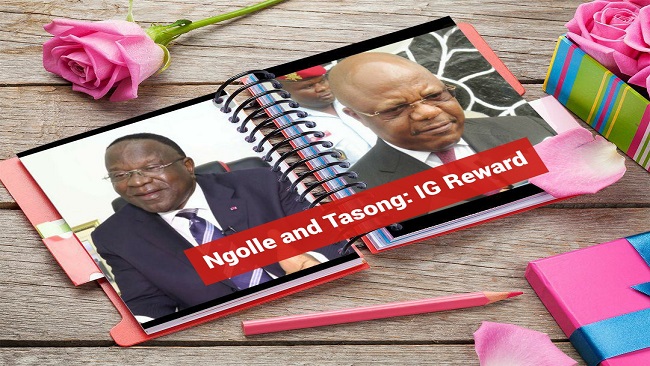
Ambazonia Interim Gov’t offers 200,000 dollars bounty for capture of Ngolle Ngolle and Paul Tasong

17, December 2020

Ambazonia Interim Gov’t offers 200,000 dollars bounty for capture of Ngolle Ngolle and Paul Tasong 0

The Southern Cameroons Interim Government (IG) has finally put a huge price on the heads of some members of the ruling crime syndicate also known as the CPDM.

A source close to the IG has revealed to the Cameroon Concord News Group that Paul Tasong and Elvis Ngolle Ngolle each have USD 200,000 on their heads.

The source, which elected anonymity, said the two Southern Cameroonians, who have given up their nationality and are serving the Yaoundé government as consultants, are still seeking to influence life in Southern Cameroons.

The source added that the IG is particularly upset with Elvis Ngolle Ngolle who is working very hard to demonstrate that there is no problem in Southern Cameroons and has been giving the newly minted country a bad name by speaking very bad English.

The price on Ngolle Ngolle was put when he decided to head to Kupe Muanenguba in an armoured car to campaign for the enemy.

His action was viewed as a gross violation of the 2017 death penalty issued against any enablers of the corrupt Yaoundé government.

Mr. Paul Tasong is also accused of similar offenses and he will surely be picked up like his friend Professor Lambo who was picked up and kept in protective custody in one of the beautiful green jails of Southern Cameroons in 2018.

“The IG is very serious. It has ordered its troops to only engage in hit and run tactics for now to minimize civilian casualties,” the source which lives in Amsterdam said.

“The IG is determined to keep the heat on those infidels until they crack. The IG will, in the days ahead, announce new effective measures which will make the arrest and physical elimination of these enablers very possible,” the source added.

“The corrupt Yaoundé government is holding our leaders in their dungeons and it is in no hurry to liberate them. We are gradually transiting from soft tactics to very harsh tactics which will include physical elimination of so-called CPDM militants in Southern Cameroons,” the source underscored.

“We will stop at nothing when it comes to the liberation of President Julius Ayuk Tabe and his collaborators. We are no longer interested in the government’s version of dialogue. The Biya government which is on its last leg lies through its teeth and speaks from both sides of its mouth. It cannot be trusted and we are convinced that the only things it understands are an iron fist and a tough language,” the source stressed.

“We must hit the dying government where it hurts the most. High value targets remain our focus, but we will continue to turn the heat on those low-class, ill-behaved commoners who pass off as chiefs and fons who have sold their souls to the devil for food and drinks. They are all bereft of integrity and they don’t deserve to walk on our land,” the source said.

“Some of them are not even worth the bullets our fighters use. Many of them will even die like the chief of Dibanda who cheated the Southern Cameroonian justice system by dying even before he was questioned. His financial desperation and stress coupled with his reckless lifestyle had reduced him to a bag of bones. His health woes were known to his family though some dishonest imbeciles are seeking to pin it on our effective and professional law enforcement officials,” our source pointed out.

“These chiefs and fons are supposed to be apolitical, but hunger and financial desperation have pushed them into the waiting arms of the corrupt Yaoundé government. Ever since the Yaoundé government started paying them stipends, many of these chiefs and fons have abdicated their responsibilities and the only thing that pleases them now is for them to attend CPDM rallies in their dirty traditional attires,” the source said.

“They must choose between doing their job objectively or attending those rallies organized by the notorious crime syndicate that has been in power for 38 years with nothing of value to show for such a long stay in power,” our source said.

“Maybe they want to end up like chiefs Tabetando who is also moonlighting in Yaoundé as a senator, Dion Ngute who has willfully accepted the death penalty by taking up his current function, Edward Ako of Ossing who is suffering from acute insomnia due to morbid fear of Southern Cameroonian fighters. He seems to be wearing a crown of thorns and he has lost his smile ever since he made that trip to Ossing under police escort. For Chief Ayuk Hope, his fate is sealed and for more than a year, he has been without a fixed address ever since he skipped town because he could not come up with the modest CFAF 1,000,000 Amba levy. Some chiefs like Tabetarh have been quiet for a long time, but we will like to know their position on this matter. We know he has been collaborating with the enemy behind the scenes and has never paid any levy,” the source said.

“As far as we are concerned, silence is acquiescence in this situation. It is simply not golden in this context. Our people are dying and the living are living rough. More than 700,000 Southern Cameroonians are either internally or externally displaced. Zipping his lips does not make him a responsible chief. The ball is in his court,” our source said.

“Of course, they know their fate. Those who still have doubts can check with the Fon of Babanki who returned home yesterday after posting bail. He might not talk in public due to the agreement he signed and he knows there are special eyes on him. However, he can share his experience with his fellow fons and chiefs for them to adopt the appropriate conduct. The Fon of Kumbo also knows how things get done when you violate the people’s law. He is a treasure trove of information for any Fon who is still hungry and is in denial,” our source concluded.

By Soter Tarh Agbaw-Ebai

Southern Cameroons Interim Gov’t says revenge for Ambazonians killed will come soonest

17, December 2020

Southern Cameroons Interim Gov’t says revenge for Ambazonians killed will come soonest 0

The Vice President of the Southern Cameroons Interim Government Dabney Yerima has reportedly told an Ambazonian think tank in the United Kingdom of Great Britain that revenge for all Southern Cameroons women and children killed by the Cameroon government army, are certain and will be exacted at the right time.

Vice President Dabney Yerima made the remarks last week Saturday at a meeting with ASCAP UK. Members of The Coalition for Dialogue and Negotiations (CDN) were also present at the meeting.

Comrade Yerima drew the attention of the forum to the numerous funerals that are currently taking place in Southern Cameroons of civilians including women and children killed by the Francophone dominated army saying that revenge will come in due time.

The exiled Southern Cameroons leader added that 2021 will be a decisive year for the war in Southern Cameroons.

Yerima also cautioned the so-called Southern Cameroons CPDM elites including Prime Minister Dion Ngute saying that “Harsh actions against the pro French Cameroun corrupt elites will be separate from the revenge that will be exacted on the French Cameroun army and administrative structures in Southern Cameroons.”

Dabney Yerima said the continued detention of President Sisiku Ayuk Tabe has turned him not only into a national hero for Southern Cameroonians, but also a hero for all oppressed people around the globe.

Yerima furthered that the people of Southern Cameroons are now using the name Sisiku for mobilization and resistance.

By Isong Asu in London

US Covid-19 death toll reaches new daily record, President-elect Biden 78, is in a high-risk category

17, December 2020

US Covid-19 death toll reaches new daily record, President-elect Biden 78, is in a high-risk category 0

The United States on Wednesday widened its network for administering COVID-19 vaccines to doctors and nurses on the frontlines of a pandemic killing more than 3,000 Americans a day, even as a major storm threatened to slow progress on the East Coast.

While medical professionals at a growing number of hospitals rolled up their sleeves, lawmakers on Capitol Hill said they were nearing a long-elusive bipartisan deal on $900 billion in economic relief to pandemic-hit U.S. workers and businesses.

The aid package, to be attached to a massive spending bill that must pass by Friday to avert a federal shutdown, was not expected to include COVID-relief funds for state and local governments, as Democrats wanted, or protections for companies from pandemic-related lawsuits, as sought by Republicans.

Rollout of the first tranche of 2.9 million doses of a newly authorized vaccine from Pfizer Inc and German partner BioNTech SE was in its third full day, with shipments headed to 66 more distribution hubs nationwide.

A second vaccine from Moderna Inc could win emergency-use approval from the U.S. Food and Drug Administration this week.

Express delivery companies FedEx and United Parcel Service, sharing a leading role in vaccine shipments, said they were monitoring potential impacts of heavy ice and snow that began to disrupt transport along the Eastern Seaboard.

U.S. Army General Gustave Perna, overseeing the government’s Operation Warp Speed campaign, said FedEx and UPS have developed contingency plans to keep any delayed vaccine shipments secure until they can be “delivered the next day.”

“We are on track with all the deliveries we said we were doing,” Perna told reporters at a briefing. He cited a minor glitch involving four trays of vaccine – two sent to California and two to Alabama – that arrived at temperatures lower than prescribed. The trays in question were shipped back to Pfizer and later replaced, Perna said.

Some 570 other vaccine distribution centers received the bulk of the initial batch of shipments on Monday and Tuesday, and an even larger wave was due for delivery to 886 additional locations on Friday, Perna said.

From each distribution site, vaccine doses were divided up among area hospitals and administered to healthcare workers, designated as first in line to be immunized. Some were also going to residents and staff of long-term care facilities. Later vaccine rounds will go to other essential workers, senior citizens and people with chronic health conditions.

U.S. President-elect Joe Biden, who has said he would get the vaccine publicly to help instill confidence in its safety, is expected to receive his first injection as soon as next week, according to his transition team.

Biden, 78, is in a high-risk category for the coronavirus due to his age.

‘Not over yet’

It will take several months before vaccines are widely available to the public on demand, and opinion polls have found many Americans hesitant about getting inoculated.

Political leaders and medical authorities in the meantime have launched a media blitz assuring Americans that the vaccines are safe while urging them to avoid growing weary of social distancing and mask-wearing while the pandemic rages on.

“It is not over yet,” Dr Anthony Fauci, a member of the White House coronavirus task force, told CBS News. “Public health measures are the bridge to get to the vaccine, which is going to get us out of this.”

Data shows surging infections and hospitalizations are driving healthcare systems to the breaking point across much of the country, with many intensive care units at or near capacity.

The United States reported at least 3,459 additional coronavirus deaths on Wednesday alone, a record that marks the fourth time in a week the daily toll has surpassed 3,000, according to a Reuters tally. The seven-day average has topped 2,500 lives lost every 24 hours for the first time this week.

To date, COVID-19 deaths total more than 304,000 nationally, while the mounting case load of 16.7 million known infections represents roughly 5% of the U.S. population.

With hospitalizations setting a record for the 19th day in a row – nearly 113,000 patients under treatment on Wednesday – health experts warn that fatalities will rise higher still in the weeks ahead, even as the vaccine campaign steadily expands.

Another 2 million doses of the Pfizer vaccine and 5.9 million doses of Moderna’s vaccine could be allocated next week, U.S. Health Secretary Alex Azar told a conference call. Both require two doses, given three or four weeks apart, for each person inoculated.

In all, the United States has options to buy up to 300 million doses of those vaccines, Azar said, plus hundreds of millions more doses of vaccines yet to receive approval, including some single-dose drugs.

The United States could have a surplus supply of vaccines in the future, if all the vaccines it has secured are authorized for use, Azar said, which could eventually benefit other countries.

The Trump administration was also in talks to secure additional antibody treatment doses from Regeneron Pharmaceuticals Inc and Eli Lilly and Co, Operation Warp Speed chief adviser Moncef Slaoui told the same conference call.

Source: REUTERS
Southern Cameroons Crisis: Babanki Fon Posts Bail

17, December 2020

Southern Cameroons Crisis: Babanki Fon Posts Bail 0

As part of efforts to cleanse Southern Cameroons of the infidels who are enabling the Yaoundé government, the Small Babanki Fon, Uiyuoh Nelson Sheteh was brought to the Southern Cameroons Special Investigation Unit (SIU), North West Division, on Saturday, December 12, 2020, where he has been helping the SIU agents with their investigations.

After a thorough security assessment and a psychological evaluation of the Fon who was determined to have political intercourse with the corrupt Yaounde government, it was determined that he could post bail and professional and seasoned SIU undercover agents will continue to keep a special eye on him.

Some Southern Cameroonian Fons and Chiefs have taken to political crime and Southern Cameroonian security operatives are not leaving any stone unturned when it comes to watching over these strayed citizens.

The Fon of Kumbo is one other fon who has been in the spotlight for all the wrong reasons. His long collaboration with the enemy is well documented and despite multiple arrests by SIU agents, the Kumbo Fon keeps on returning to his old bad ways.

The last time he had to skip town to Foumban, screaming like a desperate swine, when SIU agents were closing in on him.

 He has run afoul of Southern Cameroonian law on many occasions and he knows how things are done in the beautiful green jails of Southern Cameroons.

After serious negotiations, he was allowed to return to his palace, but information reaching the Cameroon Concord News Group’s global headquarters in the United Kingdom says that the Fon might have participated in the last electoral charade organized by the criminal and outlawed Yaoundé crime syndicate known as the Cameroon People’s Democratic Movement (CPDM).

According to a source close to the SIU, the Kumbo Fon is in the cross hairs of the SIU, adding that in the days ahead he might be brought in for soft questioning.

The SIU has a long list of people who will be brought in in the days ahead. The list includes all those who are still militating in the ruling CPDM which is considered a terrorist organization in Southern Cameroons.

Meanwhile, the Southwest SIU has put in place Operation Sphinx which will, in the days ahead, weed out those chiefs who are still defying the 2017 decree issued by the USA-based Interim Government.

Some Southwest chiefs have already left their chiefdoms for unknown destinations following an increase in pressure by ruthless and brave Southern Cameroonian fighters.

Chief Ayuk Hope of Sumbe had to skip town one year ago when he could not come up with an Amba levy of CFAF 1,000,000 that was required of him. He has been loitering all over East Cameroon and he is gradually giving up hope as the fighting protracts.

Chief Adolf Tambe of an obscure chiefdom is currently hiding in Buea and he has been duly advised not to return. There is ample and incontrovertible evidence that Chief Adolf Tambe is enjoying his political intercourse in violation of the 2017 Interim Government Decree.

There is also another mad dog known as Moja Moja (to use his real name Ewome John Eko) who is courting death. It is a misnomer to call him a chief and he is clearly in the cross hairs of Southern Cameroonian fighters.

From every indication, he has not learned from the mistakes of the former mayor of Buea, Patrick Ekema, who thought Buea belonged to him. He died of a massive heart attack leaving behind all what he thought he was fighting for.

According to a senior Southern Cameroonian official, “these scums do not deserve to live among us. They have betrayed the people’s confidence and have fallen short of their glory.”

The Southern Cameroonian official who elected anonymity said that “Southern Cameroons will never be the same again. These scums have robbed themselves of the people’s respect. They will never enjoy that in this territory. They will only be coming in their armored cars to conduct business. Any of them who shows up without the Yaoundé government’s security will surely not have the time to relate his ordeal. The 2017 death penalty issued by the USA-based Interim Government still stands.”

“We are determined to ensure that these traitors pay with their lives. I hear Dion Ngute was in Buea yesterday. Luckily, there was security for him. He is one of those criminals hiding in Yaounde and evading Southern Cameroonian justice. We will keep on waiting until we get our opportunity. We must take our pound of flesh,” he stressed.

Many chiefs and fons in Southern Cameroons will surely not be having a good Christmas period. There will be massive arrests in the days ahead and the fighters on the ground are prepared to disrupt the activities and lives of those chiefs who have turned their backs on their people.

By Soter Tarh Agbaw-Ebai in Mulheim an der Ruhr, Germany

Covid-19 Party: Cameroon keeper Fabrice Ondoa sacked by KV Oostende

16, December 2020

Covid-19 Party: Cameroon keeper Fabrice Ondoa sacked by KV Oostende 0

KV Oostende has terminated Cameroon goalkeeper Fabrice Ondoa’s contract with immediate effect after he organized a party during Belgium’s ongoing Covid-19 lockdown.

According to the club website: “During the night from Saturday to Sunday, the Ostend police were called up because of noise nuisance in the apartment building of Fabrice Ondoa in the Koningsstraat.

“It turned out to be a lockdown party in which ten people violated all corona measures.

“When the police arrived, they were also verbally harassed by the revelers and 11 police reports were drawn up.”

Ondoa though was unhappy by the way the club handled the situation and denied holding a party.

“I just heard the news this (Tuesday) afternoon in an e-mail almost at the same time as the press,” he posted on social media.

“They are taking such a serious decision without even bothering to hear me. I just got a letter from their lawyer. It’s scandalous!”

“If they had bothered to invite me to explain, they would have understood that I have done nothing wrong. I have not organized anything at all and it sure wasn’t a lockdown party.”

The club’s executive president Gauthier Ganaye said 24-year-old Ondoa’s behaviour was unacceptable.

“As a football club, we cannot tolerate such selfish and irresponsible behaviour,” he said.

“We are relieved that we have not had any Covid contamination so far and we are doing everything we can to keep it that way.

“That is why we always remind our players of their duties and they also assume their responsibility.

“KVO as a club is above the individual and given the seriousness of these facts, we therefore feel compelled to initiate the dismissal procedure against Fabrice Ondoa.”

Ondoa had been with Oostende since 2018 and had been second-choice keeper this season behind Guillaume Hubert.

Source: BBC

Southern Cameroons Crisis: Yaoundé condemns Amba Fighters for abducting village chiefs

16, December 2020

Southern Cameroons Crisis: Yaoundé condemns Amba Fighters for abducting village chiefs 0

There has been widespread condemnation of separatists in Cameroon for a string of attacks and abductions of traditional village chiefs. Anglophone rebels released two chiefs on Monday but killed another for defying their demand not to participate in Cameroon’s December 6 regional elections.

Scores of Dibanda villagers, near southwestern Cameroon’s Buea town, are mourning their chief, whose body was found Sunday after he was abducted by rebels.

Cameroon authorities say Chief Emmanuel Ngalle Ikome was abducted on December 13 with two other village chiefs – they were freed on Monday unharmed.

His daughter, 37-year-old Libonge Epossi, says the anglophone separatists also abducted four family members when they attacked the palace.

She says a few dozen people who were in the palace escaped to neighboring houses and bushes when the rebels were shooting indiscriminately in the air.  Epossi says Chief Ikome was abducted along with two other village chiefs who had come for the inauguration of the newly constructed Dibanda palace building.

Cameroon’s government says rebels abducted four other village chiefs in the northwest region last week.  Two were immediately released but the whereabouts of the other two is unknown.

Buea lawmaker Donald Malomba Esembe, who visited the bereaved family on Monday, says the rebels killed her father because he took part in Cameroon’s first regional elections on December 6.

He called for villagers to arm themselves against the rebels.

“It is very preoccupying that the chiefs are specifically being targeted,” Esembe said. “I am calling on the people of Buea, people of goodwill, each of us has to become a vigilante{militia group member} in our villages and communities.”

Cameroon’s rights groups and political parties condemned the attacks on village chiefs as a desecration of African traditions.

The separatists accuse the chiefs of collaborating against them with the central government in Yaoundé.

Buea administrative official Abba Abdouraman also visited the palace of the slain chief.

He says the military will collaborate with militias to stop separatists from attacking village chiefs.

“We have come to condole with the bereaved family, but to a larger extent to condole with the entire community,” Abdouraman said. “We have also come here to assure the bereaved family of the unflinching resolve of the state of Cameroon to stand by them, to fight those who are against peace.”

Cameroon authorities in 2018 said a majority of village chiefs in the troubled western regions were fleeing the area to escape rebel attacks.

Cameroon’s government in September pleaded with the chiefs to return to their palaces to take part in the December regional elections.

Cameroon organized the elections in part to help resolve the four-year separatist conflict, which the United Nations says has claimed more than 3,000 lives and displaced over 430,000.

But separatist leaders in social media threatened to kill anyone who supported the polls.

The separatists are fighting for an independent state for English-speaking Cameroonians, who they say have been marginalized by the country’s French-speaking majority.

Source: VOA

Europe introduces tighter Covid-19 restrictions amid fears of Christmas surge

16, December 2020

Europe introduces tighter Covid-19 restrictions amid fears of Christmas surge 0

Several European countries on Wednesday imposed tighter coronavirus restrictions ahead of Christmas, as the United States reported another record number of new infections.

Hopes for an end to the pandemic were boosted by positive assessments of the Moderna Covid-19 vaccine, but a study warned that at least a fifth of the world’s population in poorer nations may not have access to vaccines until 2022.

With the virus resurgent in Europe, Germany closed non-essential shops and schools, swathes of England came under tighter curbs, and the Netherlands extended its restrictions.

“It’s very good that we’re closing the shops, it’s for our health. We can’t wait for things to fall apart,” said shopper Jurgen in Berlin, where people were rushing to finish their Christmas purchases before the shutdown.

Germany had coped relatively well with the first wave in the spring, but it has struggled to contain a resurgence in recent months and its health minister said it wanted the European Union to approve the Pfizer-BioNTech vaccine “before Christmas”.

Calls have been growing for the EU health regulator to speed up its vaccines decision process, with the bloc lagging behind a growing number of nations that have authorised the drug.

Britain has already started using it, but high infection numbers forced London on Wednesday to join large parts of central and northern England under tough, economically painful restrictions.

Pubs, bars, restaurants and other hospitality sites will close, apart from takeaways, as will theatres and other entertainment venues.

“The hospitality business needs this week, and it’s devastating. It is devastatingly awful,” said Lesley Lewis, owner of The French House, a London pub.

“But if this is what it takes to save lives, that’s what we have to do.”

The Netherlands, France and Turkey have also announced restrictions to be in force over the holiday season.

Upbeat Moderna assessment

Known worldwide infections are nearing 73 million, with more than 1.6 million deaths.

The United States remains the hardest-hit nation, setting a record for new daily infections on Tuesday with more than 248,000 cases.

The Washington National Cathedral rang its bells 300 times Tuesday in memory of the 300,000 people who have lost their lives to coronavirus in the United States.

The situation has become severe in California, where officials ordered thousands of extra body bags as Los Angeles was left with fewer than 100 available intensive care beds for a county of 10 million people.

The US has started using the Pfizer-BioNTech vaccine, and the Food and Drug Administration on Tuesday issued an upbeat briefing about the Moderna candidate too, ahead of a meeting of experts on whether to grant it emergency approval.

The regulator also approved the country’s first rapid at-home coronavirus test for Covid-19, which is available over-the-counter and produces a result in around 20 minutes.

President-elect Joe Biden said Tuesday that he would be vaccinated in public.

Poorer nations left behind?

With wealthy nations reserving more than half of next year’s potential doses, there are fears the poorer parts of the world will be left behind.

Even if the drug makers all produce effective, safe vaccines and meet their maximum global manufacturing targets, a study published Wednesday by researchers from Johns Hopkins University warned that “at least a fifth of the world’s population would not have access” until 2022.

The World Health Organization has said it is in talks with Pfizer and Moderna about including their vaccines at affordable prices for poor countries.

The widespread deployment of vaccines is seen as crucial to reviving the global economy.

“I’ve been at home for the past eight months, there’s been no income coming in,” said Ashwin Pal, a dive operator in Fiji, where the lack of visitors has devastated the key tourism sector. “Life’s been pretty tough.”

Source: AFP

Ethno-Political Tensions in Cameroon: Reasons and scenarios

16, December 2020

Ethno-Political Tensions in Cameroon: Reasons and scenarios 0

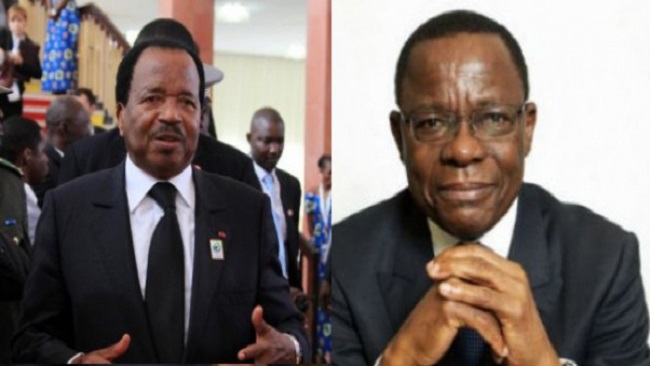
Political rivalry in Cameroon has taken a worrying direction, as supporters of incumbent Paul Biya trade ethnic slurs with backers of his main political rival Maurice Kamto. The situation is threatening national stability by separatist insurgency in the Anglophone regions.

Cameroon’s opposition leader Maurice Kamto continues to dispute the 2018 presidential election results, while his supporters and President Paul Biya’s exchange invective that often descends into ethnic slurs. The dispute uses online trolling campaign that is leading to violence. Maurice Kamto continues to challenge the vote’s outcome, while President Paul Biya shows no sign of wanting to relinquish power after 38 years in office.

Biya is supported by Bulu ethnic group, indigenous to the Francophone South region, and the Beti of the Francophone Centre with whom the Bulu identify. Kamto is supported by Bamileke, indigenous to the Francophone West.

The day after 2voting in 2018, Kamto declared himself winner, pre-empting the official result. Two weeks later, on October 22, 2018, the Constitutional Council, the only body with a legal mandate to announce results, proclaimed Biya winner with an overwhelming 71 per cent of the vote, with Kamto coming in second with only 14 per cent. Kamto himself seemed to reinforce an ethnic interpretation by suggesting he was denied victory in 2018 because of his ethnicity.

Reasons and scenarios of Ethno-Political Tensions in Cameroon

Prior to announcing the results, the Constitutional Council heard and dismissed petitions in which two opposition candidates, Kamto and the SDF’s Joshua Osih, pleaded for an annulment on grounds of violence in the Anglophone regions, widespread fraud and incorrect tallies. Most non-partisan observers thought it likely that Biya had won more votes than any of his rivals, even if the president’s numbers were inflated, and foreign governments recognized his victory. However, the head of the country’s Catholic bishops’ conference, Bishop Samuel Kleda, expressed doubt about the president’s wide victory margin. The Catholic Church has five archdioceses in Cameroon— four French and one mostly English-speaking.

Kamto, being a part of Cameroon’s Francophone majority, criticizes the government for holding elections in which few Anglophones could vote due to violence and a separatist-led boycott. He accuses Biya of mishandling the Anglophone crisis by prioritizing force over dialogue.

In 1992, Maurice Kamto supported what was then Cameroon’s leading opposition party, the Social Democratic Front (SDF), when it put forward John Fru Ndi for president. By 2004, he had joined Biya’s government as junior minister of justice. However, he resigned in 2011, complaining of deteriorating rule of law and development failures. In 2012 he founded the Cameroon Renaissance Movement (MRC) that has become the government’s leading adversary, at least in Francophone areas.

Reasons and scenarios of Ethno-Political Tensions in Cameroon

Before German colonization, Bamileke territory comprised the present-day West and North-West Regions of Cameroon. Under German colonial rule, which lasted until 1916, this part of Cameroon was referred to as the “Grasslands”. When the French and British colonial masters took over the German colonial positions in Cameroon after Germany’s defeat in World War I (1914–1919), they divided the Grasslands into two parts, one of which was under French direct rule, while the other was under British indirect rule. When Cameroon became independent in 1960, the term “Bamileke” gradually came to be applied only to the people of the North-West, whereas people of the South-West (another province under British colonial rule) became known as the “Anglo-phones” because they were colonized by the British and, therefore, adopted the English language. In particular, the native populations have labeled the Bamileke “strangers,” “invaders,” and “land hunters”. Among the various newcomers, the Bamileke have distinguished themselves by virtue of their leading role in economic life, especially in retail trade and in the budding informal sector.

The politicization of ethnicity is driving polarization, with hostility on the rise between, on the one hand, Bulu and Beti, perceived by numerous Cameroonians as close to Biya and prevalent in the South and Centre regions, and on the other, Kamto’s Bamileke, a community indigenous to the Francophone West but also with a heavy presence in cities across the country.

The Beti ethnic group belongs to the Bantu cultural area in Central Africa. The name “Beti” is a generic term referring to people from several tribes including the Ewondo, Mbane (or Bane), Eton, Manguisa, Mvele and Bulu. The Beti people come from the central and southern Regions of Cameroon, which correspond to the equatorial forest areas. Historically, the term “Beti” originated within the Ewondo tribal group. The Beti people define themselves as lords or respectable people, in short, as gentlemen (nti) as opposed to slaves (halo). German colonial administration played an important role in extending and adopting the Ewondo language as a means of communication for all the people of the region. This strategy of rallying a large number of tribal groups around one politico-ethnic pole under the Beti name is definitely inflated today by the political usage of this name and by its imaginary construction as an “ethnic complex” with a mixed sociological composition. Beti name thus serves as an umbrella term for a wide array of ethnic groups from the Southern Forest Area. In the 1970s, the Beti umbrella name came to be applied not only to the Ewondo and the Eton, whose homelands are in the vicinity of Yaounde, but also to groups such as the Bulu, the Manguissa, the Fang and the Mvele.

The present-day situation of conflict between the Bamileke and Beti is not the result of their cultural differences, nor due to any natural predisposition to exclude each other, but because they live within an environment where the resources necessary for survival are scarce. Hence, the competition for resources such as land and control of economic or political power in the city seems to have cleared a path for feelings of hatred and jealousy and, over time, reinforced these attitudes, eventually leading to ethnic exclusion and antagonism. It is this context that has led to the development of discourses and stereotypes that serve the purpose of rationalizing certain socio-political behaviors present in people’s daily scramble for scarce resources.

Ideological stereotypes and discourses accelerating the antagonism between Bamileke and Beti have been constructed and reconstructed by socio-political actors to serve their own political and economic ambitions. Actors who belong to the political, administrative, intellectual, economic and religious elites use elements of the social and cultural repertoires of each of the major ethnic groups to construct stereotypes, which are then used to separate and distinguish the various groups. However, beyond the official ethnic divide depicted by politicians, peaceful indigenous mechanisms for avoiding tensions or reducing their intensity have been developed by members of distinct or officially opposed ethnic groupings. These mechanisms include interethnic marriages and interethnic friendship between members of different groups who interact within a common neighborhood or workplace.

Unable to freely express themselves in media dominated by Biya’s administration and its allies for decades, government opponents, independent journalists and bloggers have leapt into the new social media space to get their messages across to Cameroon’s domestic and diaspora audiences.

Activists of all political camps use it to propagate misinformation, widen ethnic divides and even incite violence. As the result, inflammatory content online pitting Bulu and Beti against Bamileke has stoked tensions. MPs from the South – largely Biya loyalists – accuse emigres from the West, who are generally regarded as Kamto supporters, of tribalism.

In response, the government and its supporters have also upped their presence online. They have also opened it up for bigots and hate-speaking. Thus, both pro-government and anti-government activists now use social media to spread inflammatory discourse, propaganda and misinformation.

So, social media companies, notably Facebook, have a major role in rising tensions, by placing toxic ethnic content and fueling ethnic tensions in Cameroon.

Government supporters, in part using their control of public and some private media, consistently underline the MRC leader’s Bamileke origin, insinuating that his party has an inherent ethnic bias. However, MRC’s leadership does not show that any of ethnic group dominates the party. Many rich Bamileke are a key source of funds and support for the ruling party, likely fearing that doing otherwise might jeopardize their business interests.

In the South, an area long dominated by the ruling party, mounting ethnic tension appears to have contributed to riots in 2019 by groups of indigenous Bulu targeting Bamoun and Bamileke, who originate in the West.

Causes of the conflict

In trying to consolidate post-colonial national unity, Cameroon evolved through a series of revolutionary political stages which spanned across the federal and unitary system. In 1972, a constitutional referendum replaced the federal system with the unitary system. West Cameroon, which had federated in 1961 as an equal state, eventually ceased to exist, thus giving rise to an Anglophone political consciousness – the feeling of being exploited by the Francophone- dominated state. Cameroon also went through several changes under the incumbent president, who came to power in 1982. These included a change of name from the United Republic of Cameroon to the Republic of Cameroon (exact appellation of former French Cameroon when it got its independence), a change of national flag from two-star design (symbol of the coming together of Francophone and Anglophone parts) to a single star, and the adoption of a new constitution in 1996 that transformed Cameroon into a decentralized unitary state. These changes are the reasons why many protesting Anglophones feel that their cultural and historical uniqueness was trounced in the union.

Reasons and scenarios of Ethno-Political Tensions in Cameroon

Today there are three main types of movements in modern Cameroon:

  • federalists who demanding a return to federalism;
  •  separatists who are fighting for secession;
  • unionists who are standing against any change to the form of the state.

This continued contestation of state structures threatens peace and stability in Cameroon as evidenced by the ongoing Anglophone crisis and highly polarized political climate.

Overtime, Anglophones in the South West and North West regions, who make up only about 20% of Cameroon’s 25.88 million population, have felt marginalized by the Francophone-dominated government in the political, economic and socio-cultural spheres. Anglophones accuse the government of marginalizing the two English-speaking regions over Cameroon’s other eight administrative regions. Politically, some argue that there is an under-representation of the Anglophone minority in key government positions as well as other government services. Out of the 67 members of government, only 3 Anglophones occupy high-level cabinet positions.

There has also been significant economic disparity when it comes to allocation of investment projects by the State to the two English-speaking regions, compared to the other eight French-speaking regions. The French- speaking South region was allocated far more resources (over 570 projects with over $225 million) than the two English-speaking North West region (more than 500 projects with over $76 million) and South West region (over 500 projects with over $77 million) as in 2017.

Social disparities equally exist due to the centralization of power, with decision making centers in Yaoundé, far from Anglophone regions. Policies in the education and judicial systems also created a fertile ground for the emergence and violent radicalization of those with grievances. There were 1,265 French- speaking magistrates and only 227 English-speaking magistrates in 2016 and out of 514 judicial officers, 499 were Francophone and 15 Anglophone. The current Anglophone crisis is, therefore, a manifestation of frustration arising from both real and perceived discrimination and marginalization of the English-speaking minority.

The escalation of violence in the English-speaking regions of Cameroon brought to light several non-state armed separatist groups. These secessionist groups are determined to see the North West and South West regions of Cameroon completely separated from the rest of the country and form its own state referred to as “Ambazonia.” They have sustained their claims by relying on the logistical and ideological support of Cameroonians from the diaspora who played and continue to play an influential role in the emergence, escalation and maintenance of the current Anglophone crisis.

The Ambazonia Defense Forces (ADF) which emerged in 2017, is one of the most prominent and active secessionist militant groups in the two Anglophone regions of Cameroon. It is the official military wing of the Ambazonian separatist movement and the military force of the self-declared Ambazonia, with an estimated 200-500 militants under its command.

The Southern Cameroons Defense Forces (SOCADEF) is also one of several militant groups participating in a conflict that has, in the last few years, rapidly grown in intensity. With a presence in the South-West region’s administrative division of Meme, SOCADEF was founded in 2017 to secure secession for the Anglophones and has an estimated 400 members. It is the armed wing of the African People’s Liberation Movement (APLM), an Ambazonian separatist movement, and has carried out several attacks with home-made bombs against security forces.

The Ambazonia Self-Defence Council (ASDC) incorporates smaller militias like the Ambazonia restoration army (few dozen est. members) and other larger ones such as the Manyu Tigers (500 est. members), Red Dragons (400 est. members) and Seven Karta (200 est. members).

Several other separatist groups and recent self-defense groups such as the Vipers (few dozen est. members), the swords of Ambazonia and Ambaland Quifor (200 est. members each) are also engaged in the conflict. Although they operate in different locations across the North West and South West regions, ADF and SOCADEF have claimed responsibility for most of the attacks in the Anglophone regions.

Terrorism factor

The hub of Boko Haram’s terrorist attacks has always been in Nigeria’s Northeastern Borno State. The Islamist group, however, extended its operations into Cameroon since 2013. The spillover has led to multiple displacements, suicide attacks, bombings, kidnappings, targeted killings and village destructions in Cameroon’s Far North region.

The presence of local Fulani civilians alongside with government security forces in conflict areas is particularly worrying. The mainly pastoralist Fulani community – known locally as Mbororos – began arriving from neighbouring Nigeria at least a century ago. The traditionally nomadic community started settling in the highlands of Cameroon’s Northwest and Southwest regions and has since suffered marginalisation and oppression, struggling to obtain citizenship and land ownership rights.

For decades, cattle-grazing Mbororos have clashed with local communities, who are primarily engaged in sedentary agriculture, but tensions have worsened with conflict and reports of rebels seizing Mbororo cattle, demanding political allegiance, and forcing some pastoralists to flee.

The government, which views the farming communities in the region as pro-separarist, has exploited this local conflict, promising the Mbororo land in return for their support, one local opposition politician told TNH, asking for anonymity to speak freely. The Mbororo have a reputation for violent retaliation and community defense.

Conflict Development Scenarios

The Most Likely Scenario

Although international and regional laws, as well as the Cameroon constitution, guarantee the right to self-determination, the prospects of a negotiated secession are slim, given the government’s stance against federalism or secession. The most likely scenario could, therefore, be the violent repression of the separatist groups and the continuation of the unitary system with some level of decentralization. This scenario is likely to occur given that the president signed Decree No 2018/191 of March 2, 2018, creating the Ministry of Decentralization and Local Development.  Important reforms are also underway to accelerate decentralization and implement recommendations from the Major National Dialogue.

A year ago, the parliament of Cameroon adopted Law No. 2019/019 on the Promotion of Official Languages in Cameroon. The law guarantees the equality of English and French in all sectors of administrative, economic, social and political activity and it has been enacted by the Head of State.

It is, therefore, probable that compromises will be reached on the effective implementation of constitutional provisions for decentralization in Cameroon and this would likely preserve national stability by guaranteeing more inclusive decision-making. Similarly, the Cameroon government will continue its campaign against Boko Haram although this may not lead to the total defeat of the Islamist group. The group remains a major threat to security as it continues to demonstrate its ability to carry out significant terrorist attacks in Cameroon’s Far North region and across countries of the Lake Chad basin.

The Best-Case Scenario

The best scenario for the Anglophone crisis will be a return to the original federal system which was abolished during the incumbency of the country’s first president. This will be the best way to express the government’s commitment towards resolving the Anglophone crisis and ensuring sustainable peace. Similarly, the current campaign against Boko Haram may lead to the decimation and total defeat of the terrorist group in Cameroon’s Far North region and other neighboring countries affected by Boko Haram. If this scenario occurs, it will prevent the escalation of Boko Haram’s operations in other regions of the country that are not directly affected by the group’s terrorist attacks.

The Worst-Case Scenario

The worst-case scenario would be for the Anglophone crisis to escalate into a protracted civil war and/or eventually lead to secession of the Anglophone regions from the rest of the country. Although the separatist agenda asserts that secession offers the best solution to the ongoing Anglophone problem, it is an option to be avoided. This scenario, should it occur, could have negative geopolitical implications for the region. It may inspire a renewed Biafra separatist insurgency or lead to further disintegration as the North West and South West regions do not have a cohesive political agenda. It would also lead to the annihilation of the country’s linguistic diversity and national unity. This is not only a major political objective of the Cameroonian government, but also strength and enriching feature of the country’s identity. In the case of Boko Haram, the worst-case scenario would be the extension
of the Islamist group’s operations to other regions of Cameroon. This would further destabilize the country and deepen the on-going humanitarian crisis.

Political strains may be turning ethnic to some degree, as the Kamto-Biya divide sets a pro-Kamto West, inhabited mostly by Bamileke, apart from a pro-Biya Centre-South, dominated by Beti and Bulu. Ethnic discord has even seeped into the Catholic Church, which suffers disputes along these same lines. A new government policy requiring city mayors to be selected from the region’s indigenous population may make things worse. The new policy sowed resentment, especially among Bamileke, many of whom have migrated from the western highlands to major towns and cities in the central, southern and coastal areas. They see the new policy as a ploy to deny them political agency in the cities where they have settled and where migrant ethnic groups would otherwise likely dominate councils.

Culled from Institute For Global Threats and Democracies Studies

«< 590 591 592 593 594 >»

Featured

  • Exam leaks in CPDM Cameroon: A symptom of a deeper corruption crisisExam leaks in CPDM Cameroon: A symptom of a deeper corruption crisis
  • Biya is already in Hell as Yaoundé unravelsBiya is already in Hell as Yaoundé unravels
  • What does President Biya really want? Money, women or cigarettes?What does President Biya really want? Money, women or cigarettes?
  • Biya, how long must the nation wait for the government it was promised?Biya, how long must the nation wait for the government it was promised?
  • Cameroonians in Leicester: funeral contributions must never become a marketplace for corruptionCameroonians in Leicester: funeral contributions must never become a marketplace for corruption

Most Commented Posts

  • 4 Anglophone detainees killed in Yaounde4 Anglophone detainees killed in Yaounde
    18 comments
  • Chantal Biya says she will return to Cameroon if General Ivo Yenwo, Martin Belinga Eboutou and Ferdinand Ngoh Ngoh are sackedChantal Biya says she will return to Cameroon if General Ivo Yenwo, Martin Belinga Eboutou and Ferdinand Ngoh Ngoh are sacked
    13 comments
  • The Anglophone Problem – When Facts don’t LieThe Anglophone Problem – When Facts don’t Lie
    12 comments
  • Anglophone Nationalism: Barrister Eyambe says “hidden plans are at work”Anglophone Nationalism: Barrister Eyambe says “hidden plans are at work”
    12 comments
  • Largest wave of arrest by BIR in BamendaLargest wave of arrest by BIR in Bamenda
    10 comments

Latest Tweets

→ Follow me

Featured

  • American musician Oliver Tree killed in mid-air helicopter collision in Brazil

    American musician Oliver Tree killed in mid-air helicopter collision in Brazil

  • Cameroon looks to Tunisia’s textile model to develop its cotton value chain

    Cameroon looks to Tunisia’s textile model to develop its cotton value chain

  • Trump marks 80th birthday with White House UFC spectacle

    Trump marks 80th birthday with White House UFC spectacle

  • Ex-Israeli PM Ehud Barak says Netanyahu must be removed ‘with sticks and stones’

    Ex-Israeli PM Ehud Barak says Netanyahu must be removed ‘with sticks and stones’

  • US denies visa to Palestine football chief for World Cup attendance

    US denies visa to Palestine football chief for World Cup attendance

  • Yaoundé, Abu Dhabi explore new trade and investment framework

    Yaoundé, Abu Dhabi explore new trade and investment framework

  • Southern Cameroons Crisis: 2 gov’t soldiers killed in Ambazonia ambush

    Southern Cameroons Crisis: 2 gov’t soldiers killed in Ambazonia ambush

Log In

  • Register
  • Log in
  • Entries feed
  • Comments feed
  • WordPress.org
© Cameroon Concord News 2026

We are using cookies to give you the best experience on our website.

You can find out more about which cookies we are using or switch them off in .

Powered by  GDPR Cookie Compliance
Privacy Overview

This website uses cookies so that we can provide you with the best user experience possible. Cookie information is stored in your browser and performs functions such as recognising you when you return to our website and helping our team to understand which sections of the website you find most interesting and useful.

Strictly Necessary Cookies

Strictly Necessary Cookie should be enabled at all times so that we can save your preferences for cookie settings.

3rd Party Cookies

This website uses Google Analytics to collect anonymous information such as the number of visitors to the site, and the most popular pages.

Keeping this cookie enabled helps us to improve our website.

Cookie Policy

More information about our Cookie Policy