18, March 2020
Air France delivers coronavirus infected passengers to Cameroon 0
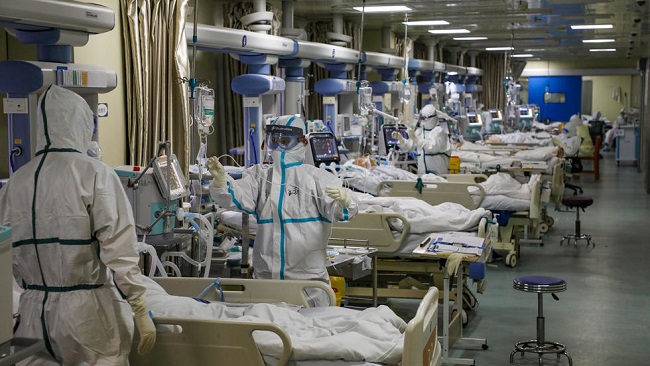
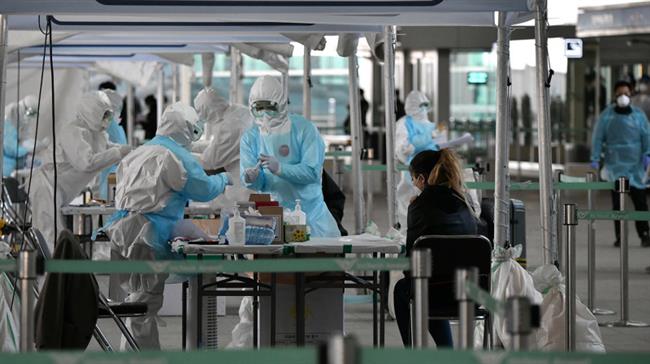
An Air France flight that landed on Tuesday, March 17, 2020 in Douala, Cameroon’s economic capital, was at the center of heated debates at the Douala International Airport because of its contaminated human contents.
The flight has raised fear in the Central African country by many notches, as Cameroonians fear that their fellow Cameroonians and some Frenchmen returning to the country were bearers of the dangerous Coronavirus that has disrupted economic activity across the globe and killed thousands, especially in China where the virus started.
More than half of the passengers tested at the airport were positive, creating a situation that many think could bring the country to a standstill.
Upon hearing about the unfortunate situation in Douala, the low-energy and bankrupt government in Yaounde simply ordered that the plane should take its infected contents back to Paris, but the crew argued that Roissy Charles de Gaulle was on lockdown and that it would impossible to take the infected human cargo to France.
Even the Frenchmen who came on that flight said they could not return to France, as the insidious virus was prowling all over France in search of victims.
The situation required the intervention of the Littoral governor who promptly arrived at the airport to take care of business. The passengers and crew on the Air France flight have been quarantined at a local hotel in Douala
The world has not yet seen such a high number of infected people on one flight. Cameroon is always setting examples, even in bad situations.
144 passengers on the plane should not have even made the trip to Douala as they were already showing symptoms of the deadly Coronavirus disease even before boarding the plane in Paris.
There was total confusion at the Douala International Airport as the 144 infected passengers were told to fly back to Paris where they picked up the unwanted virus.
It is suspected that all 144 passengers on board the flight were escaping the Coronavirus outbreak in Europe.
A Douala airport official who elected anonymity told Cameroon Concord News Group that Air France had finally delivered death to Cameroonians, adding that more Cameroonians would soon be heading to an early grave due to the unpardonable mistake that had been made by bringing such unwanted cargo to the country.
To restore calm to the airport, the Littoral governor informed the passengers that due to many Coronavirus cases on board the plane, they would be kept in a holding centre for thorough assessment and surveillance.
But Cameroonians are already losing sleep because they know how things work in their country.
The country’s monitoring systems leave much to be desired and given the level of corruption in the country, some of those passengers might bribe their way out of their quarantine centers.
“There is total panic in the country and city. These Air France passengers have spoiled my day. I have been seeing crowds of infected people on TV, I never knew my country will be receiving some of them right here in Cameroon,” the Cameroon Concord News Group source said.
“There is a lot of pressure across the country and news about these latest arrivals has only made things worse. Many people are contemplating escaping to their villages as the virus gains grounds in the cities,” he said.
He added that the government must act promptly and should ensure that even Cameroonians living abroad should not come home at least over the next three months.
“COVID-19 is nobody’s friends. It is a no respecter of people. If it could deliver a deadly punch to China and Italy, then it can rush us to an early grave with relative ease.”
“We do not have the health infrastructure and our leaders think in slow motion. If we are not careful, this virus will wreak havoc on the country,” he concluded.
By Soter Tarh Agbaw-Ebai in the United Kingdom


18, March 2020
Maurice Kamto says “Cameroon can achieve peace. But first, it needs a ceasefire” 0
On March 18 last year, the United States assistant secretary of state for African affairs, Tibor Nagy, met Cameroonian President Paul Biya in Yaoundé, the country’s capital. The meeting took place after nearly three years of mounting concerns about the violent descent into chaos in Cameroon’s northwest and southwest regions. The central government and separatists from our English-speaking minority have been engaged in a brutal conflict deriving from the latter’s valid grievances about marginalisation and the ongoing, deliberate efforts to dilute their English cultural heritage in the predominantly French culture of Cameroon.
Several months earlier, in December 2018, before a congressional committee hearing in the US House of Representatives, Nagy raised the issue of Cameroon as among the world’s most dire conflicts, stating: “I fear that [the crisis] could get much, much worse.” He was, indeed, correct. And Nagy’s grim prediction paralleled that of countless Cameroonian activists, journalists and pro-democracy leaders, including my own colleagues, who have consistently raised the alarms — often putting their lives and livelihoods at risk for doing so, and incurring the wrath of Cameroonian authorities.
The United Nations conservatively estimates that the ongoing conflict has killed more than 3 000 people and displaced nearly 700 000 more in the Anglophone regions, a staggering number that comprises about 20% of our country’s population. Most recently, on February 14, about two dozen villagers, including 14 children and a pregnant woman, were massacred in the village of Ngarbuh in the northwest region by suspected members of the Cameroonian army. This state of affairs has led to massive instability inside Cameroon, as well as the surrounding region, including in our neighbour Nigeria, where tens of thousands of civilians — mainly women and young children — have sought fleeting security.
One year after the meeting between Nagy and Biya, nothing has changed for the better. In fact, it has merely metastasised, largely due to government incompetence, ongoing acts of state violence and unthinkable brutality, and a hardened resolve among Cameroon’s Anglophone separatists, who now view violent retaliation as the last and seemingly only option to achieve their demands.
A feasible plan to resolve Cameroon’s worsening conflict (which represents only one of the many symptoms of the long-ruling, long-abusive Biya dictatorship) is long overdue. Last month, I visited Washington DC to raise my concerns and to present an alternative vision to secure a democratic and stable Cameroon. For my efforts, I was greeted with death threats and intimidation, which prompted US legislators to demand my safe return. These hazards, of course, are not surprising in light of my nine-month prison ordeal in 2019, as well as what appears to be an attempt on my life this past weekend while touring Garoua, a town in the north. I will not be deterred, and I will not be silent.
Here is my plan to move Cameroon forward, from ongoing violence to a just peace. First and foremost, as an act of good faith, the Cameroonian government must immediately release all political prisoners who have been incarcerated, ostensibly because of the Anglophone conflict, as well as the post-electoral crisis triggered by the sham presidential election of October 2018, which extended Biya’s almost four-decade rule. The prisoners released must include, for example, Ayuk Tabe, a well-known voice from the Anglophone separatist community, and Mamadou Yakuba, the first vice-president of my political party, the Cameroon Renaissance Movement.
Second, the violence on both sides must end today. To accomplish this feat, the Cameroonian government, and Biya specifically, must agree to at least a temporary ceasefire with separatist forces in the Anglophone regions, including the removal of all major military installations. Our people have suffered enough calamity, and further violence will only entrench the now nearly insurmountable animosities on both sides of the divide.
Third, the separatists and the central government must agree to a basic framework for inclusive dialogue. A key element of this roadmap will be to have honest discussions about the form and make-up of a new Cameroonian state. For me, federalism holds the key for a more sustainable and peaceful future. The proposed dialogue, presided over by an impartial international mediator, will work towards the definitive settlement of the now full-blown civil war that is tearing apart the Anglophone regions. Further delays toward this end are wholly irresponsible.
Fourth, the government must assist Anglophone citizens to return to their homes and communities by pledging to rebuild infrastructure destroyed during the war, including countless private residences, hospitals and schools. Indeed, most schools in the two Anglophone regions have already been empty for three years, effectively robbing our country of its future and a generation of knowledge and needed skills.
Lastly, Biya’s government — in co-ordination with civil society and the pro-democracy opposition — must undertake long-overdue political reforms; in other words, we must address the root causes of Cameroon’s cascading crises. There must be a consensual reform of the electoral system, certainly before the planning of any new elections, to avoid the post-election conflicts that have festered for the past 17 months. Relatedly, there must be a consensual drafting of a uniquely Cameroonian charter that guarantees the respect of basic freedoms and human rights, which have been trampled on for too long.
These interrelated initiatives will build the mutual respect that is required, and thus far lacking, to forge a viable path forward for Cameroon. If undertaken in good faith, by both sides of the conflict, we, as patriotic Cameroonians can earnestly begin to stitch together our frayed social fabric. It is not beyond repair, but the time to act is now. Only then can we, as concerned citizens, begin to trust in our leaders, heal divisions, and to put faith in our future as a nation.
Maurice Kamto is the president of the opposition Cameroon Renaissance Movement and a former political prisoner in Cameroon