Cameroon Concord News
You Are What You Read
  • Home
  • News
    • Cameroon
    • Nigeria
    • Africa
    • Europe
    • World
  • Politics
    • Cameroon
    • Nigeria
    • Africa
    • Europe
    • World
  • Sports
    • Cameroon
    • Africa
    • Europe
    • World
  • Business
    • Africa
    • World
  • Life
    • Education
    • Health
    • Fashion
    • Entertainment
  • Religion
    • Cameroon
    • World
  • Contact
    • Online
    • Phone
    • Email
  • About
    • Us
    • Our Services
    • Advertising with Us

Categories

Recent Posts

  • Kremlin says US mediation role in Russia-Ukraine negotiations on hold
  • Football: Bayern Munich eye €50m move for Yann Bisseck
  • Southern Cameroons Crisis: Suspected Ambazonia fighters kill two students in Bambui
  • Biya is already in Hell as Yaoundé unravels
  • Child Benefit: Biya regime audit families after 55% jump in declared children

Archives

  • June 2026
  • May 2026
  • April 2026
  • March 2026
  • February 2026
  • January 2026
  • December 2025
  • November 2025
  • October 2025
  • September 2025
  • August 2025
  • July 2025
  • June 2025
  • May 2025
  • April 2025
  • March 2025
  • February 2025
  • January 2025
  • December 2024
  • November 2024
  • October 2024
  • September 2024
  • August 2024
  • July 2024
  • June 2024
  • May 2024
  • April 2024
  • March 2024
  • February 2024
  • January 2024
  • December 2023
  • November 2023
  • October 2023
  • September 2023
  • August 2023
  • July 2023
  • June 2023
  • May 2023
  • April 2023
  • March 2023
  • February 2023
  • January 2023
  • December 2022
  • November 2022
  • October 2022
  • September 2022
  • August 2022
  • July 2022
  • June 2022
  • May 2022
  • April 2022
  • March 2022
  • February 2022
  • January 2022
  • December 2021
  • November 2021
  • October 2021
  • September 2021
  • August 2021
  • July 2021
  • June 2021
  • May 2021
  • April 2021
  • March 2021
  • February 2021
  • January 2021
  • December 2020
  • November 2020
  • October 2020
  • September 2020
  • August 2020
  • July 2020
  • June 2020
  • May 2020
  • April 2020
  • March 2020
  • February 2020
  • January 2020
  • December 2019
  • November 2019
  • October 2019
  • September 2019
  • August 2019
  • July 2019
  • June 2019
  • May 2019
  • April 2019
  • March 2019
  • February 2019
  • January 2019
  • December 2018
  • November 2018
  • October 2018
  • September 2018
  • August 2018
  • July 2018
  • June 2018
  • May 2018
  • April 2018
  • March 2018
  • February 2018
  • January 2018
  • December 2017
  • November 2017
  • October 2017
  • September 2017
  • August 2017
  • July 2017
  • June 2017
  • May 2017
  • April 2017
  • March 2017
  • February 2017
  • January 2017
  • December 2016
  • November 2016
  • October 2016
  • September 2016
  • August 2016
  • July 2016
  • June 2016
Rush for chloroquine as coronavirus tsunami looms

3, April 2020

Rush for chloroquine as coronavirus tsunami looms 0

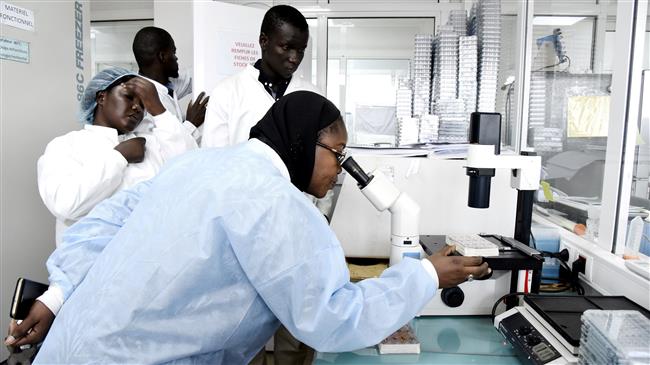
Despite loud appeals for caution, Africans are rushing to embrace chloroquine, the venerable anti-malaria drug touted as a possible treatment for coronavirus.

From hospitals in Senegal to pharmaceutical companies in South Africa and street sellers in Cameroon, chloroquine has fired hopes of a medicinal fix against a virus that is set to scythe through Africa’s poorly protected countries.

Chloroquine and derivatives such as hydroxychloroquine have been used for decades as cheap and safe drugs against malaria, although their effectiveness in this field is now undermined by growing parasite resistance.

Small-scale tests in China and France — either unpublished or outside the rigorous framework of mainstream drug trials — suggest that chloroquine reduces virus levels in people with coronavirus.

On March 24, President Donald Trump said chloroquine could be a “gift from God” — a comment that sparked strident criticism.

Health watchdogs have issued calls for caution until larger clinical trials are carried out, and there have been several recorded deaths from self-medication because of toxic side effects.

Despite this, in many settings across Africa, chloroquine has been placed in the front line against coronavirus.

Its rise stems partly from desperation, given Africa’s meager capacity to deal with a pandemic on the scale seen in Europe or the United States.

Burkina Faso, Cameroon and South Africa have swiftly authorized hospitals to treat virus patients with the drugs.

Around half of infected people in Senegal are already being prescribed hydroxychloroquine, Moussa Seydi, a professor at Dakar’s Fann Hospital, told AFP last Thursday.

Every patient who was recommended the drug accepted it, “with no exceptions,” he said.

In Democratic Republic of Congo, President Felix Tshisekedi last week declared it was “urgent” to produce chloroquine “in industrial quantities”.

South Africa has already said it will join a large-scale trial, and one of the country’s biggest pharmaceutical companies has promised to donate half a million pills to the health authorities.

Africa last in line?

Even if the effectiveness of the drugs against coronavirus remains for now unproven, concern about securing enough of them already runs deep.

Two decades ago, Africa, the continent worst hit by HIV, was last in line to get new antiretroviral AIDS drugs when the treatment emerged from the labs.

“If it turns out that chloroquine is effective, Africa, which imports most of its drugs, perhaps won’t be a priority for (the pharmaceutical) industry,” said Professor Yap Boum of Epicenter Africa, the research arm of the medical charity Doctors Without Borders (MSF).

France has already imposed a ban on exporting chloroquine and Morocco has requisitioned all stocks of the drug.

“You won’t find any in pharmacies in Yaounde, everyone is out of stock,” Boum said, referring to the Cameroonian capital.

“Local people have been buying it, apparently without prescription, which is dangerous.”

The Cameroonian government has officially asked health professionals “not to yield to the desire for profit” and to avoid prescribing chloroquine preventatively.

AFP correspondents report frantic demand in pharmacies in Abidjan, Ivory Coast’s economic hub, in the Angolan capital Luanda and also in Malawi — one of a handful of sub-Saharan nations where there are still no recorded cases of coronavirus.

The rush is a deep source of anxiety for people with the auto-immune disease called lupus, which is also treated with chloroquine.

In the Gabonese capital Libreville, Armelle Oyabi, head of an association of people with lupus, has been closely monitoring purchases at the only pharmacy left in the city that still has chloroquine.

“I check that the drug is being given to people who actually need it,” she said.

“If we can’t get this drug, we will not only be hit by lupus but also be more vulnerable to coronavirus.”

Chloroquine has been part of the medical toolkit from before World War II — it was developed in 1934 as a synthetic derivative of quinine.

Backstreet sales

Alice Desclaux, a doctor at the Institute of Development Research (IRD) in Senegal, said the risks from self-medication from chloroquine were largely rooted in illegal sales.

“Chloroquine has always been on sale informally in Africa,” she said.

“It’s still used to cause abortions” and even for attempted suicide, Desclaux said.

In one backstreet pharmacy in Douala, Cameroon’s economic hub, the manager said he had run out of stock.

For anyone who wished to order some, “careful, the price has gone up,” he said. A pill now changes hands for the equivalent of 71 US cents, four times more than a month ago.

The chloroquine craze is not just affecting the black market for drugs — it is also spurring the production of counterfeit medications.

Cameroon’s government has already issued a warning about fake chloroquine, samples of which have surfaced in health centers.

Source: AFP

Mikel Obi en route to Brazil

2, April 2020

Mikel Obi en route to Brazil 0

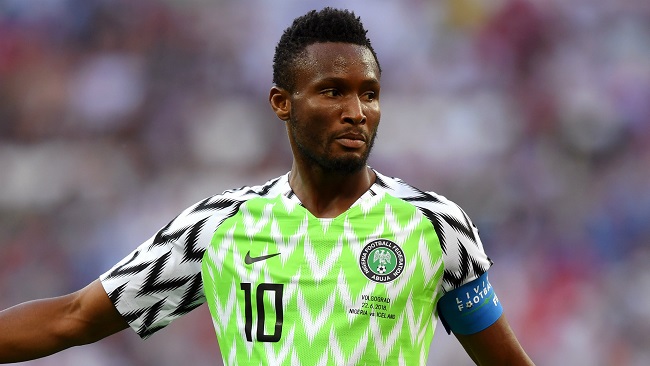
Botafogo are interested in former Chelsea midfielder John Obi Mikel, according to Yahoo! Esportes.

The 32-year-old left previous club Trabzonspor over their handling of the coronavirus pandemic and has reportedly been in talks with the Brazilian side.

He played 23 times in Turkey after spending the second half of last season in the Championship with Middlesbrough.

Source: Goal.com
For some survivors, coronavirus complications can last a ‘lifetime’

2, April 2020

For some survivors, coronavirus complications can last a ‘lifetime’ 0

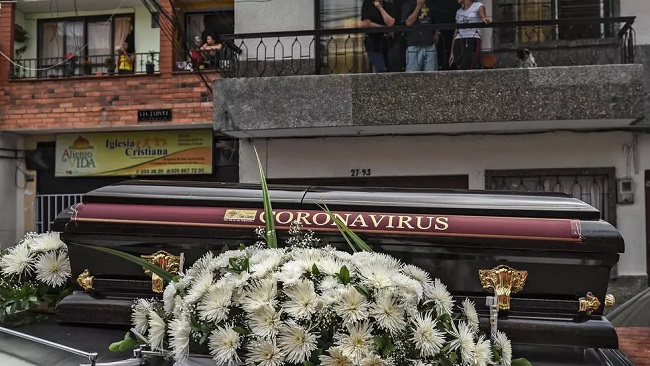
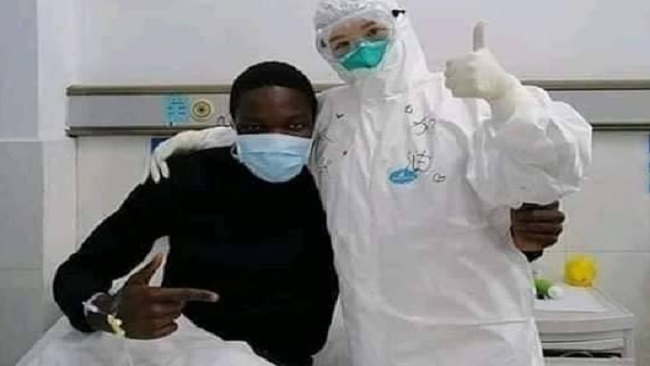
As the number of worldwide confirmed coronavirus cases climbs towards 1 million, the number of recoveries is thankfully more than four times the death toll. But medical experts told FRANCE 24 that COVID-19 can cause severe long-term damage to the lungs, heart, brain and other organs – and that for some patients, these complications may be permanent.

Out of more than 950,000 cases of coronavirus so far across the globe, over 202,000 people have recovered, while more than 48,000 have died. However, clinicians have pointed out that some COVID-19 survivors have developed acute respiratory distress syndrome (ARDS) – a severe condition that, for the worst-affected patients, can last for the rest of their lives.

The doyen of medical journals, The Lancet, was one of the first to sound the alarm, publishing a report in February showing that 29 percent of a group of patients in Wuhan whom the researchers tracked between mid-December and early January had got ARDS.

A similar report by the British Faculty of Intensive Care Medicine, published in The Sunday Times on March 15, found that some 17 percent of intensive care patients whose treatments they analysed developed the syndrome. In addition, a few days before the British doctors released their findings, medical researchers in Hong Kong found that, out of a small study of 12 patients who left hospital after recovering from the coronavirus, two or three had diminished lung function.

‘The damage you can have is for a lifetime’

The coronavirus has been treated “as though it’s life and death – if you have the right medical care you can survive – but some survivors are having issues that are lingering”, noted Lynn Goldman, dean of the Milken Institute School of Public Health at George Washington University. “Because of how serious the ARDS is, the damage that you can have for that is for a lifetime.”

“Large numbers of ARDS survivors are not able to go back to work,” added Onjen Gajic, a critical care specialist at the Pulmonary Medical Department of the Mayo Clinic in Rochester, Minnesota.

>> How long will coronavirus lockdowns last?

ARDS is not a new phenomenon – it was first described in 1967. Common causes include pneumonia, sepsis and serious influenza cases. Symptoms include extreme shortness of breath, and feelings of exhaustion and confusion. As well as the respiratory and cardiovascular systems, it can damage other vital organs by preventing the lungs from supplying them with sufficient oxygen.

With coronavirus, patients can suffer from “inflammation and the build-up of fluid in a significant portion of their lungs, which limits their ability to get enough oxygen into their blood to support normal organ function”, explained Julie Fischer, an associate research professor of microbiology and immunology at Georgetown University.

“The most severely ill patients require mechanical ventilation to keep their tissues supplied with oxygen until the inflammation subsides,” Fischer continued. “Both the inflammation and the mechanical ventilation required to help patients survive can damage the delicate tissues of the lung that are involved in oxygen transfer, which may affect the function of the lungs even after recovery from acute COVID-19 disease.”

‘Survival is just the beginning’

In serious cases of COVID-19, “the associated viral pneumonia progresses to ARDS more often than in influenza”, Gajic observed.

Over the medium- and long-terms “the decline in lung function itself is less pronounced than other consequences” for ARDS sufferers, Gajic continued. The most serious of these ramifications are a “decline in physical and functional status, changes in cognitive function and psychological effects”, he said.

A significant amount of the damage outside the lungs is a side-effect of necessary but invasive treatments in intensive care, explained Panagis Galiatsatos, a pulmonologist and assistant professor at Johns Hopkins University School of Medicine: “The challenge in critical care is that the two organs we put a lot of emphasis on are the heart and lungs, and when we put so much strategy into trying to protect them we know that’s going to come as a consequence for other organ systems.

“Kidneys for instance, begin to self-destruct, so it’s common that patients on medical ventilators for ARDS require dialysis – and flooding the brain with medications to provoke a medically induced coma will cause some level of delirium that’s going to be hard to undo,” he continued.

Galiatsatos agreed with Goldman that for some survivors, the effects of ARDS caused by the coronavirus may never go away: “Some patients will recover within three months, but for others it can be a lifetime.”

He said that the severity and duration of these complications will depend on three factors. Firstly, “how good your lungs are to begin with; if you’ve got good lungs and have breathed good air your entire life, you’re in a better position to recover quickly”. Secondly, “how bad the ARDS was”. Thirdly, given that breathing machines themselves can cause lung damage, “whether you needed a medical ventilator”.

“Survival is just the beginning of the journey for an individual,” Galiatsatos emphasised. “The more that we recognise that this is going to be the next chapter of the pandemic, the better.”

Culled from France 24

Cameroon sees boom in number of COVID-19 cases

2, April 2020

Cameroon sees boom in number of COVID-19 cases 0

Nearly a month since the declaration of the first case of COVID-19 in Cameroon, the African nation is seeing a boom in the reported infections after having generalized the testing.

According to the latest numbers given by the health minister Manaouda Malachie, Cameroon recorded until Wednesday morning 233 confirmed cases, including six deaths and ten cured. The total number of confirmed cases was only 99 last Saturday.

“The time is bad enough for us all to realize,” tweeted Manaouda on Tuesday night, asking Cameroonians to stay at home for as long as possible, and to cover their mouths and noses when going out.

The recent surge in reported cases could be explained by the fact that the Cameroonian government has decided, since last week, to generalize the testing for a better response to the pandemic.

“Active and early case finding by generalized testing” was listed as the first axis of the “new response strategy to COVID-19”, said Manaouda via twitter last Friday.

To do this, the Cameroonian government invited people who have entered the country since March 10 to contact the health authorities to be tested. A door-to-door search will also be organized from April 2 to 7 in Douala, the most populous city in the country.

Other priorities of the response to COVID-19 are the qualitative management of cases with capacity expansion, social regulation to avoid the spread, and governance and accountability, according to the health minister.

A special fund has thus been created to implement these strategies. This fund has already acquired one billion CFA francs (about 1.67 million U.S. dollars), according to a press release from the Prime Minister’s office published on Tuesday.

Source: Xinhuanet

Coronavirus, African Imams and  Men of God: The New Trinity

2, April 2020

Coronavirus, African Imams and Men of God: The New Trinity 0

The coronavirus remains on course to inflict uncountable health and economic damage the world over. It’s a resistible force of nature that is keeping most of the world up at night. Numerous elements have come together to help the virus spread unchallenged and it has claimed over 47,521 lives around the globe.

Immediately science and technology accumulated enough data about the virus, broad recommendations were set out to slow its spread while research laboratories went to work for a cure or vaccine. The determination of COVID-19 is being matched by that of world leaders and scientists.

Social distancing is the foremost measure imposed and encouraged by political leaders and experts all over the planet. So far, statistics suggest that the curve is flattening in many parts of the world. To curb the spread of the pandemic, the population has a role to play which is simply following government and medical directives. It is here that the current absurdity of religious fanaticism in Africa comes into play.

Cameroon Concord News Group believes that many pastors and religious clergies in Africa are putting the lives of their followers at risk in seeking to start the age-old God versus science squabble game in the middle of a global crisis. Insisting on holding church services at this time in defiance of scientific and government guidance is reckless and very dangerous.

Science and religion are two sides of the same deep human impulse to comprehend our universe. Embracing both helps mankind in understanding our place in it and to marvel at the wonder of life and the infinite universe we are surrounded by. Let’s keep them that way, and not let one usurp the role of the other.

The actions of some of our religious leaders during this coronavirus pandemic in leading vulnerable and gullible people into early graves are completely unacceptable. The denial of science amongst Christian and Muslims fundamentalists now haunts countries in the Sub-Saharan region.

In professing to be wise, by their actions and denials of the ferociousness of the coronavirus, our Imams and men of God, are becoming fools because this global killer knows no race, age, social status, religious beliefs nor borders. The number of avoidable fatalities in Africa is rising at catastrophic rapidity as people continue to ignore social distancing guidance and mindful of Africa’s poor record keeping history, the full extent of the damage will never be known.

Today, it is difficult in Cameroon, Gabon, Congo-Brazzaville, Chad and Equatorial Guinea to differentiate people with COVID-19 and a common flu as many have mild symptoms like tiredness, fever and dry cough.  Consequently, a person may be carrying and transmitting the virus without any knowledge. The virus is particularly aggressive among the elderly and those with pre-existing health conditions resulting in a higher death rate amongst this group. Armed with these facts, Cameroon Concord News Group believes that any responsible religious leader would instruct his followers to adhere to social distancing for their own good.

Churches and Mosques in nations that started Islam and Christianity have all shut down in line with government policy. But those in Sub-Saharan Africa are still operating claiming that their leaders have the backing of the Holy Spirit and Prophet Mohammed. This is going on in areas with little or no healthcare system and ventilators.

The evidence is prodigious that Christians and Muslims fundamentalist leaders in Sub-Saharan Africa have considerable power in society with millions of followers that can never be challenged especially during a pandemic.

Cameroon Concord News Group including thousands of our readers is caught in a state of disbelief! What kind of religious beliefs could propel church leaders in the 21st century to challenge scientific evidence when thousands are dying? 

This hostility to science will deplete thousands in Africa over the next few weeks. Correspondingly, we of this publication salute the Ugandan government decision to arrest three Roman Catholic priests last Sunday for celebrating Mass publicly, in alleged defiance of government orders banning religious gatherings during the pandemic.

Isong Asu

London Bureau Chief

Wimbledon cancelled for first time since WWII over coronavirus

2, April 2020

Wimbledon cancelled for first time since WWII over coronavirus 0

The Wimbledon championships were cancelled for the first time since World War Two on Wednesday as the coronavirus pandemic struck another blue-ribbon sports event off the calendar and wiped out the entire tennis grasscourt season.

While the decision had looked inevitable for some time, since the virtual shutdown of world sport and the postponement of the Tokyo Olympics, Wimbledon had been one of the few events not to have been officially cancelled or postponed.

But after emergency talks between the various stakeholders over the last few days, the All England Lawn Tennis Club (AELTC) announced that it was impossible for the grasscourt Grand Slam, scheduled for June 29-July 12, to take place.

“It is with great regret that the main board of the All England Club and the committee of management of the championships have today decided that The Championships 2020 will be cancelled due to public health concerns linked to the coronavirus epidemic,” the AELTC said in a statement.

“The 134th Championships will instead be staged from June 28 to July 11, 2021.”

Following the cancellation of the grasscourt major, and with the pandemic worsening in Europe and the U.S., the men’s ATP Tour, women’s WTA Tour and the International Tennis Federation extended the suspension of professional tennis for another five weeks to July 13.

“At this time, tournaments taking place from July 13, 2020 onwards are still planning to proceed as per the published schedule,” a joint statement from the three governing bodies said.

Britain’s death toll from the virus reached 2,352 on Wednesday, according to NHS figures.

The French Open, originally due to be held from May 24-June 7 has been postponed and controversially rescheduled by the French tennis federation for Sept. 20-Oct. 4, shortly after the end of the U.S. Open.

‘No vaccine = no tennis’

Former Wimbledon champion Amelie Mauresmo doubts whether either tournament will be played though.

“I think we’re going to have to draw a line under the 2020 tennis season,” Mauresmo said on Twitter this week.

“International circuit = players of all nationalities plus management, spectators and people from the 4 corners of the world who bring these events to life. No vaccine = no tennis.”

Unlike the French Open which is played on clay, Wimbledon’s scope for re-arranging the start date was extremely limited.

While Centre Court and Court One boast a roof, playing elite level tennis outside on grass would have been extremely challenging in late summer or autumn with a lack of light and problems caused by dew forming on the surface late in the day.

Shortening the format of the tournament, or playing behind closed doors, would also have proved extremely unpopular with the players.

“While in some ways this has been a challenging decision, we strongly believe it is not only in the best interests of society at this time, but also provides certainty to our colleagues in international tennis given the impact on the grass court events in the UK and in Europe and the broader tennis calendar,” AELTC chief executive Richard Lewis said.

Tickets holders will be offered the chance to purchase tickets for the same day and court for 2021 championships as well as being issued with a refund for this year’s event, organisers added.

Wimbledon has been held every year since 1946 after a six-year hiatus because the country was at war.

(REUTERS)

WHO troubled by ‘near exponential’ growth of coronavirus pandemic

2, April 2020

WHO troubled by ‘near exponential’ growth of coronavirus pandemic 0

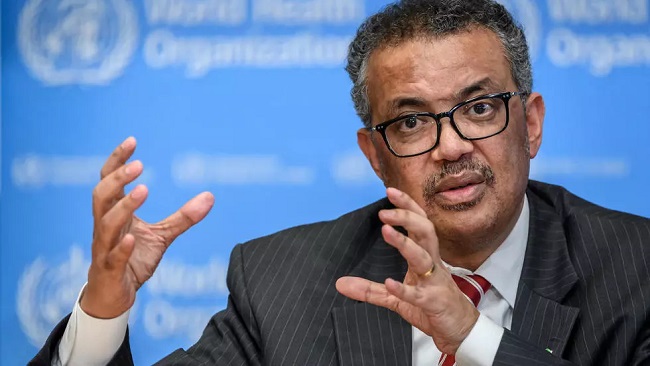
The World Health Organization said Wednesday it was deeply concerned about the near-exponential escalation of the new coronavirus pandemic, with the number of deaths doubling in a week.

WHO chief Tedros Adhanom Ghebreyesus urged citizens around the globe to stand together to fight COVID-19, as he braced for the millionth confirmed case.

“As we enter the fourth month since the start of the COVID-19 pandemic, I am deeply concerned about the rapid escalation and global spread of infection,” he told a virtual news conference.

“Over the past five weeks, we have witnessed a near exponential growth in the number of new cases, reaching almost every country.

“The number of deaths has more than doubled in the past week. In the next few days we will reach one million confirmed cases and 50,000 deaths.”

Since emerging in China in December, COVID-19 has spread across the globe, claiming more than 43,000 lives, and infecting more than 860,000 people, according to an AFP tally of officially confirmed cases.

The coronavirus pandemic has killed more than 30,000 people in Europe alone. Italy and Spain account for three in every four deaths on the continent.

Debt relief call

However, the virus is expected to gain a greater foothold in parts of the world that have not, so far, seen such large numbers of cases and deaths.

“While relatively lower numbers of confirmed cases have been reported from Africa, and from Central and South America, we realise that COVID-19 could have serious social, economic and political consequences for these regions,” Tedros warned.

“It is critical that we ensure these countries are well equipped to detect, test, isolate and treat COVID-19 cases, and identify contacts.”

He urged governments to implement social welfare measures to ensure that vulnerable people have access to food during the crisis — and called for debt relief for poorer states.

“Many developing countries will struggle to implement social welfare programs of this nature. For those countries, debt relief is essential to enable them to take care of their people and avoid economic collapse,” said Tedros.

He said there were many “unknowns” about how COVID-19 will behave, as it is the “first-ever coronavirus pandemic in the world”.

A safe vaccine is thought to be 12 to 18 months away, while WHO emergencies director Michael Ryan stressed: “There is no therapy that has been proven to be effective in the treatment of COVID-19.”

As regards the use of face masks, the WHO recommends that those people who are infected and health workers who care for them should use medical masks.

(AFP)

Global virus cases near million as US baby dies

2, April 2020

Global virus cases near million as US baby dies 0

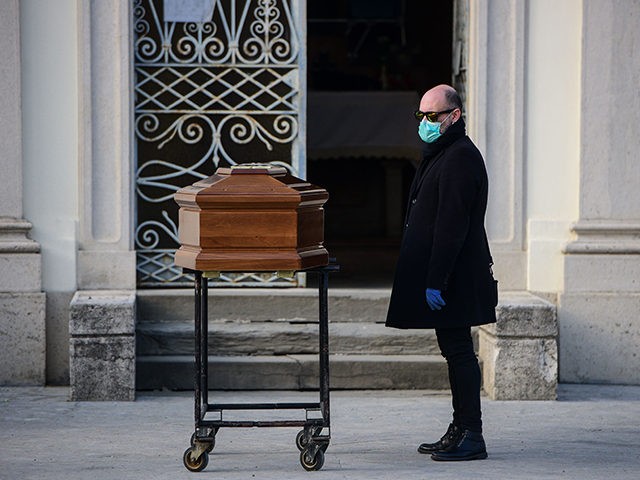
Confirmed coronavirus infections around the world approached one million Thursday as the pandemic spread at a “near-exponential” rate, with a six-week-old baby becoming one of the youngest known victims.

Half the planet is under some form of lockdown as governments struggle to tamp down a virus that has killed tens of thousands of people.

Those restrictions — while necessary for health — risk causing global food shortages, experts have warned, as supply chains gum up and panic buying sparks export controls.

The death toll from COVID-19 continued its relentless march upwards, with more than 46,000 people known to have died worldwide.

The United States, which now accounts for almost a quarter of reported global infections, logged its 5,000th death overnight, according to a tally by Johns Hopkins University.

And, said President Donald Trump, things were going to get worse.

“We’re going to have a couple of weeks, starting pretty much now, but especially a few days from now, that are going to be horrific,” he said.

“But even in the most challenging of times, Americans do not despair. We do not give in to fear.”

Among the latest US fatalities was a six-week-old baby who was taken to a Connecticut hospital late last week.

“Testing confirmed last night that the newborn was COVID-19 positive,” the state’s Governor Ned Lamont tweeted. “This is absolutely heartbreaking.”

The new coronavirus has chiefly affected the elderly and those with pre-existing medical conditions, but a number of recent cases have highlighted that it can affect people from all walks of life.

The dead have included a 13-year-old in France, a 12-year-old in Belgium and 13-year-old Ismail Mohamed Abdullah in Britain, whose family said the “gentle and kind” boy had no underlying health issues.

World Health Organization head Tedros Adhanom Ghebreyesus said the disease’s rapid spread was alarming.

“Over the past five weeks, we have witnessed a near exponential growth in the number of new cases, reaching almost every country,” he said.

“The number of deaths has more than doubled in the past week. In the next few days we will reach one million confirmed cases and 50,000 deaths.”

– Spanish peak? –

Britain and France both reported their highest daily death tolls from COVID-19 on Wednesday, although there were signs the epidemic could be peaking in Europe.

Italy’s toll — the highest in the world — climbed past 13,000, while Spain surpassed 9,000.

But epidemiologists said the infection rate was continuing to slow.

Fernando Simon, head of Spain’s health ministry’s emergency coordination unit, said it appeared the country may have passed the peak.

The US is rapidly becoming the worst hit country, with its total number of infections rising above 215,000.

More than three-quarters of Americans are under lockdown, including tens of thousands of prisoners, who were told Wednesday they would be confined to their cells for two weeks.

Officials also shuttered the Grand Canyon to prevent tourists gathering there and New York announced that basketball courts would be closed as the city grapples with sky-rocketing infections and a severely strained health system.

America’s unwanted title as most-infected country was questioned Wednesday by a Bloomberg report, which cited US intelligence as saying China’s infection rate was far worse than officially acknowledged.

China says it has around 81,000 infections, and 3,300 deaths.

Republicans, many of whom are naturally skeptical of Beijing, attacked China’s numbers as “garbage propaganda”.

“Without commenting on any classified information, this much is painfully obvious: The Chinese Communist Party has lied, is lying, and will continue to lie about coronavirus to protect the regime,” Senator Ben Sasse said.

– Sporting victim –

Having already caused the Tokyo 2020 Olympics to be postponed for a year, the pandemic on Wednesday claimed its latest sporting victim as the Wimbledon tennis tournament was shelved.

The cancellation of the world’s oldest Grand Slam tournament — for the first time since World War II — leaves the season in disarray, with no tennis set to be played until mid-July.

Roger Federer proclaimed himself “devastated” by the news, while Serena Williams said: “I’m shooked”.

But the loss of sporting events in the developed world paled in comparison with the hardships imposed on those in poorer parts of the globe, where lockdowns were threatening whole communities.

Dwellers of South Africa’s townships say it is simply impossible to stay at home.

“We don’t have toilets… we don’t have water, so you must go out,” said Irene Tsetse, 55, who shares a one-bedroom shack in Khayelitsha township with her son.

The macroeconomic impacts of such measures could be far-reaching, experts warned.

The Food and Agriculture Organization, WHO and World Trade Organization said panic buying could threaten food supplies.

“Uncertainty about food availability can spark a wave of export restrictions, creating a shortage on the global market,” they said.

Source: AFP

Record COVID-19 deaths in Europe as global cases surpass 900,000

2, April 2020

Record COVID-19 deaths in Europe as global cases surpass 900,000 0

Spain and the United Kingdom have recorded their biggest one-day death tolls from the novel coronavirus, which has so far infected over 900,000 people across the world.

Spain on Wednesday recorded its highest daily death toll – another 864 people – while infections jumped to 102,136, up from 94,417.

The country, which has the second highest number of COVID-19 fatalities after Italy, has imposed a lockdown that brings economic activity to a virtual standstill.

The UK’s death toll also rose by 563 in 24 hours, a record jump that brought the number of patients who died in hospital to 2,352, the country’s Health Ministry announced.

The death toll in the United States has also exceeded 4,000 and the number of confirmed cases surpassed 200,000.

Also in Germany, the social distancing measures were extended through the end of the Easter holiday break (at least April 19), Chancellor Angela Merkel announced on Wednesday following a call with state leaders.

“A pandemic doesn’t take a vacation,” Merkel said announcing the decision. The restrictions were initially due to end on April 5.

The decision was made shortly after the country confirmed 5,453 new cases, including 149 deaths. The figures increased Germany’s death toll to 909 and total cases to 77,558, according to the data collected by Johns Hopkins University.

Right now, at least 926,095 people have been infected by the deadly virus across the world, out of whom 46,252 have died, and 193,031 have recovered.

On Tuesday, UN Secretary-General Antonio Guterres described the coronavirus outbreak as the worst global crisis since World War II, warning that it could trigger conflicts around the world.

He said that the large magnitude of the crisis was due to “a disease that represents a threat to everybody in the world and… an economic impact that will bring a recession that probably has no parallel in the recent past.”

“A stronger and more effective response… is only possible in solidarity if everybody comes together and if we forget political games and understand that it is humankind that is at stake,” Guterres said.

Source: Presstv

UK reports daily death toll of 563 in worst day of coronavirus crisis

1, April 2020

UK reports daily death toll of 563 in worst day of coronavirus crisis 0

Britain reported 563 daily coronavirus deaths on Wednesday, the first time the national toll has exceeded 500, bringing the total fatalities to 2,352, according to official figures.

“As of 5pm (1600 GMT) on 31 March, of those hospitalised in the UK who tested positive for coronavirus, 2,352 have sadly died,” the health ministry said on its official Twitter page.

Some 29,474 people have now tested positive, an increase of 4,324 over the previous day, it added.

Britain locked down last week in an attempt to combat the virus, but Prime Minister Boris Johnson, who himself has tested positive, warned that it would “get worse before it gets better”.

The virus has also hit the royal family, with Prince Charles only coming out of isolation on Tuesday after displaying mild symptoms of the disease.

On Wednesday he released a video message praising the “remarkable” state-run National Health Service. “None of us can say when this will end, but end it will,” he said.

“Until it does, let us all try and live with hope and, with faith in ourselves and each other, look forward to better times to come.”

Source:AFP

«< 729 730 731 732 733 >»

Featured

  • Biya is already in Hell as Yaoundé unravelsBiya is already in Hell as Yaoundé unravels
  • What does President Biya really want? Money, women or cigarettes?What does President Biya really want? Money, women or cigarettes?
  • Biya, how long must the nation wait for the government it was promised?Biya, how long must the nation wait for the government it was promised?
  • Cameroonians in Leicester: funeral contributions must never become a marketplace for corruptionCameroonians in Leicester: funeral contributions must never become a marketplace for corruption
  • Atanga Nji’s Samuel Eto’o comment: Cameroon does not need bombastic declarationsAtanga Nji’s Samuel Eto’o comment: Cameroon does not need bombastic declarations

Most Commented Posts

  • 4 Anglophone detainees killed in Yaounde4 Anglophone detainees killed in Yaounde
    18 comments
  • Chantal Biya says she will return to Cameroon if General Ivo Yenwo, Martin Belinga Eboutou and Ferdinand Ngoh Ngoh are sackedChantal Biya says she will return to Cameroon if General Ivo Yenwo, Martin Belinga Eboutou and Ferdinand Ngoh Ngoh are sacked
    13 comments
  • The Anglophone Problem – When Facts don’t LieThe Anglophone Problem – When Facts don’t Lie
    12 comments
  • Anglophone Nationalism: Barrister Eyambe says “hidden plans are at work”Anglophone Nationalism: Barrister Eyambe says “hidden plans are at work”
    12 comments
  • Largest wave of arrest by BIR in BamendaLargest wave of arrest by BIR in Bamenda
    10 comments

Latest Tweets

→ Follow me

Featured

  • Kremlin says US mediation role in Russia-Ukraine negotiations on hold

    Kremlin says US mediation role in Russia-Ukraine negotiations on hold

  • Football: Bayern Munich eye €50m move for Yann Bisseck

    Football: Bayern Munich eye €50m move for Yann Bisseck

  • Southern Cameroons Crisis: Suspected Ambazonia fighters kill two students in Bambui

    Southern Cameroons Crisis: Suspected Ambazonia fighters kill two students in Bambui

  • Biya is already in Hell as Yaoundé unravels

    Biya is already in Hell as Yaoundé unravels

  • Child Benefit: Biya regime audit families after 55% jump in declared children

    Child Benefit: Biya regime audit families after 55% jump in declared children

  • BEAC halts key refinancing facility for productive investments across CEMAC

    BEAC halts key refinancing facility for productive investments across CEMAC

  • Biya leaves for Europe as Yaoundé await new cabinet

    Biya leaves for Europe as Yaoundé await new cabinet

Log In

  • Register
  • Log in
  • Entries feed
  • Comments feed
  • WordPress.org
© Cameroon Concord News 2026

We are using cookies to give you the best experience on our website.

You can find out more about which cookies we are using or switch them off in .

Powered by  GDPR Cookie Compliance
Privacy Overview

This website uses cookies so that we can provide you with the best user experience possible. Cookie information is stored in your browser and performs functions such as recognising you when you return to our website and helping our team to understand which sections of the website you find most interesting and useful.

Strictly Necessary Cookies

Strictly Necessary Cookie should be enabled at all times so that we can save your preferences for cookie settings.

3rd Party Cookies

This website uses Google Analytics to collect anonymous information such as the number of visitors to the site, and the most popular pages.

Keeping this cookie enabled helps us to improve our website.

Cookie Policy

More information about our Cookie Policy