
1, December 2019
Southern Cameroons Crisis: Amba fighters fire at Camairco plane 0
Southern Cameroonian fighters have fired at a Camairco plane in Bamenda, as the airliner was about to land at the Bamenda airport.
The airliner, which has been grounded in Bamenda, took some bullets and will not be flying for sometime.
The incident that occurred today December 1st 2109 is a clear indication that the Southern Cameroons crisis is far from over despite the optimism generated by the Major National Dialogue held in Yaounde in October 2019.
Camairco is now among other state corporations which have been affected by the crisis.
PAMOL, CDC, and SONARA have been hit hard by the crisis and this is a severe blow to the cash-strapped Yaounde government that is still hoping that time will help solve a problem that has become a millstone around its neck.
Since the commencement of the crisis, the government of Cameroon has lost more than USD 50 billion due to the war and the country’s economy is in a free fall.
Unemployment has reached unbearable levels and insecurity is heading for the sky, especially in Yaounde and Douala which are the country’s most economically active cities.
According to a source at the Unity Palace, government officials are really concerned by the declining economy and they fear that the country’s increasing isolation at the international level may make things worse.
The source, which elected anonymity, said that there was fear among government officials, especially those who still hold that the government should not negotiate with Southern Cameroonians because in their view, negotiating with people who have taken up weapons against their country will be like promoting terrorism.
As the economy continues its race to the bottom, many analysts hold that the government might finally come to its senses.
Many state corporations are already having huge liquidity issues, and a corporation like ENEO, the country’s inefficient power utility, has not paid its workers for more than three months.
SONARA is down and what is left of it is not really delivering the revenue the government needs to pay some of its bills.
This explains why a huge chunk of next year’s budget has been allocated to the repairs of the units of the national oil refinery that were heavily damaged in a fire whose origin remains a mystery.
Meanwhile, to cushion the impact of the economic crisis the country is dealing with, the government last week surreptitiously rushed a high-level delegation to Washington to negotiate with the Trump Administration on the country’s readmission into AGOA, an economic program that gives poor African countries like Cameroon access to the huge and lucrative American market.
After having made a lot of noise about the country’s sovereignty and insisting that Cameroon’s dismissal from AGOA will not hurt the country, the government had to eat its words.
America is Cameroon’s ally in the war against terrorism on the continent and American economic assistance to the Central African country has been helping it to stave off some of the social and economic pressure that could help bring down the corrupt and ineffective Yaounde government.
It was on this grounds that a high-level delegation headed to Washington to plead for clemency after having insulted Americans.
However, the mission to Washington has not gone very well as Washington is insisting that the Yaounde govern must stop conducting itself as a rogue regime.
The delegation met with U.S. under-secretary of State for African Affairs, Tibor Nagy, who advised the government delegation that there would be conditions to be met if the country would continue to enjoy free and unfettered access to the U.S. market.
Among the conditions are a release of all political prisoners in the country, a release of all Southern Cameroonians arrested due to the crisis, the holding of an inclusive dialogue as requested by the international community and the cessation of military operations in the two English-speaking regions of the country.
Yaounde is therefore looking at ways of complying with the conditions without losing face. Its politicians have already begun admitting that the government had made mistakes and that Southern Cameroonians should forgive and forget.
In this regard, there is a flurry of activities taking place in Yaounde to find lasting solutions to the crisis that has put the country in the spotlight for all the wrong reasons.
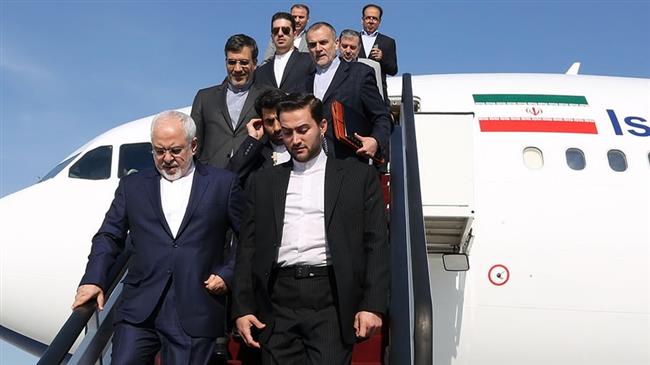
With the arrival last week of the heads of the AU, Commonwealth and the Francophonie in Yaounde, it is clear that the noose around the government’s neck is getting tighter.
The pressure is mounting and the country’s low energy prime minister has been busy all weekend holding meetings on how to find sustainable solutions to the issues that triggered the Southern Cameroons crisis.
The weeks ahead will be producing some good news, but the news might be coming too late as Southern Cameroonians have been radicalized and many simply want a total disconnection from East Cameroon because of the long years of pain and suffering inflicted on them by the country’s military.
The world needs a solution from the Yaounde government and some of the government’s allies are already running out patience with a government that has been at best ineffective throughout this conflict.
If it needs to regain the confidence of its allies, it must swallow its pride and approve the Canadian-sponsored, American-supported Swiss initiative that has also been approved by the European Union.
Time is of the essence. The government has been cornered and it must act fast and effectively if genuine peace and confidence have to return to Cameroon.
By Kingsley Betek and Joyce Ekinde in Yaounde
















2, December 2019
Southern Cameroons Crisis: Commonwealth, AU, OIF Call for Peace and Unity 0
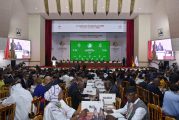
Three international organizations have ended an official visit to Cameroon with a call for efforts to restore security, justice and the conditions for the resumption of normal life in English-speaking northwest and southwest regions of the country hit by the separatist crisis that has killed over 3,000 people. The Commonwealth, African Union, and International Organization of La Francophonie delegation says it is convinced dialogue remains the preferred path for peace to return, but that the government should start implementing the recommendations of the last major national dialogue it organized. Some, however, have been critical of government efforts.
Moussa Faki Mahamat, chairperson of the African Union Commission, says after exchanging views with Cameroonian President Paul Biya, Prime Minister Joseph Dion Ngute, representatives of the main political parties, religious leaders, youth representatives and a cross-section of Cameroonians, the organizations are convinced that there is a yearning for peace to return to the restive English-speaking regions.
He says they noted that a majority of Cameroonians welcomed the convening of the Grand National Dialogue from September 30 to October 4, in which Cameroon’s government consulted with political party leaders, activists, opinion leaders, traditional rulers, lawmakers and clergy, and are anxiously waiting for the government to implement its recommendations. Those recommendations include establishing some sort of special status for the minority English-speaking regions, to be considered by the country’s parliament. It also backed enforcement of the constitutional language giving English and French equal status and saying they must be used in all public offices and documents. It also backed continuing the process of decentralization by giving more powers and resources to local councils.
Mahamat participated in the tripartite mission with International Organization of La Francophonie Secretary General Louise Mushikiwabo and Commonwealth Secretary General Patricia Scotland to encourage national peace efforts.
Mahamat said after their meetings in Yaounde, they observed that a large majority of Cameroonians supported the convening of the major national dialogue and believe it aided their quest for peace. He said they were convinced that dialogue remains the only path to peace, and asked the government to implement the recommendations of the national dialogue.
After the national dialogue, hundreds of prisoners were freed when Biya ordered a halt to court proceedings against them, saying he was implementing the recommendations of the dialogue.
However, Albert Mvomo, an official of the opposition Cameroon United Party, says Biya’s government has not been doing enough to solve the crisis. He says the AU, OIF and Commonwealth delegation should have proposed sanctions to force Biya to solve the crisis.
He says the three organizations, like any international organization, should force the government in Yaounde to solve the crisis in the English-speaking regions through economic and diplomatic sanctions. He says Cameroon’s government shows no serious sign of wanting to stop the crisis.
Mvomo said the growing number of displaced people in towns and villages in the French-speaking regions showed the government has not been doing much to stop the separatist conflicts.
Simon Munzo, an Anglophone leader who took part at the national dialogue, says while some recommendations would require legislation, Cameroon should have started showing serious signs that it wants peace to return by restoring public infrastructure and villages and towns destroyed by the fighting for the population to return.
“We expect the government to maintain the momentum through the implementation of the recommendations of the dialogue,” said Munzo. “Some of them require legislation. Others do not, for example rebuilding schools and bridges and all of that. You do not need legislation for that except in terms of budgeting. Now, there are other aspects that will require modifying the constitution.”
Separatists have insisted on social media that they do not recognize the outcome of the national dialogue and will be ready to negotiate with the Yaounde government only on the terms of the separation of the English-speaking and French-speaking parts of Cameroon.
Source: VOA