14, April 2025
Algeria to expel 12 French embassy officials 0
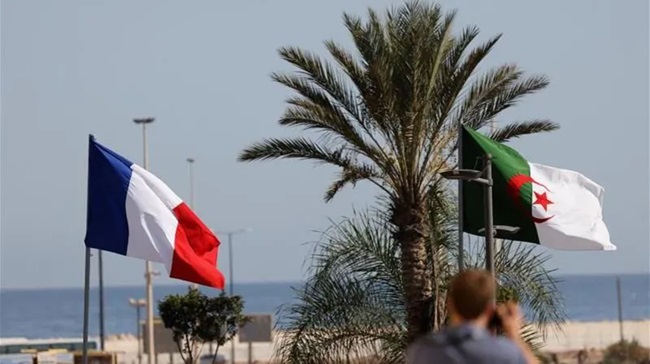
Algeria has asked 12 French embassy staff to leave the country within 48 hours, France’s foreign minister has said.
Jean-Noël Barrot added that it was linked to the indictment of three Algerians in France on Friday, one of whom is a consular official.
They are accused of involvement in the abduction last year of Amir Boukhors, 41, an outspoken critic of Algeria’s government who has an audience of more than one million people online. He had reportedly been granted asylum in France in 2023.
Barrot urged Algeria to “abandon” the expulsions and said France was ready to “respond immediately” if they went ahead.
Boukhors, also known as Amir DZ, has lived in France since 2016.
He was abducted in April 2024 in the southern suburbs of Paris and released the following day, according to his lawyer Eric Plouvier.
Plouvier told the AFP news agency that Boukhors had been “the subject of two serious attacks, one in 2022 and another on the evening of April 29 2024”.
French media reported that he was forced into a car with a flashing light by “fake police officers”, then released the next day in woodland without explanation.
Algerian authorities accuse the influencer of being “a saboteur linked to terrorist groups”. The North African nation has issued nine international arrest warrants against him, accusing him of fraud and associations with terrorist organisations.
He denies the allegations. In 2022, the French courts refused attempts to extradite him to Algeria.
The case is the latest in a growing number of incidents to have exacerbated a rift between France and Algeria.
They include the arrest and imprisonment in Algeria of French-Algerian author Boualem Sansal, who was accused of undermining Algeria’s territorial integrity.
Algeria recalled its ambassador from Paris last year after France backed Morocco’s claim to the disputed territory of Western Sahara.
The 12 French officials asked to leave on Monday include some members of the French interior ministry, a diplomatic source told AFP.
On Monday, Barrot said: “I am asking Algerian authorities to abandon these expulsion measures… if the decision to send back our officials is maintained, we will have no other choice but to respond immediately.”
Barrot claimed that the expulsions were a response to the indictment of three Algerian nationals on Friday in Paris – including the consular official – on charges including abduction, arbitrary detention and illegal confinement and participating in a terrorist organisation.
Algeria’s foreign ministry said it had summoned French ambassador Stéphane Romatet in response to “express its strong protest” and called for the official’s immediate release, according to the official Algerian news agency.
It added that the individual “was arrested in public and then taken into custody without notification through the diplomatic channels”.
The ministry claimed the move was “not a coincidence as it happens in a very specific context with the aim of stymying the process of relaunching bilateral relations”.
Tentative steps have been made to repair relations between the two nations with a phone call between French President Emmanuel Macron and President Abdelmadjid Tebboune taking place in March.
“The two presidents had a long, frank and friendly exchange on the state of bilateral relations and the tensions that have built up in recent months,” a joint statement read.
Following an official visit to Algeria on 6 April where he met with Tebboune, Barrot said he hoped for a “new phase” in relations.
Source: BBC














15, April 2025
CDC banana exports hit 10,400 tons in Q1 2025 0
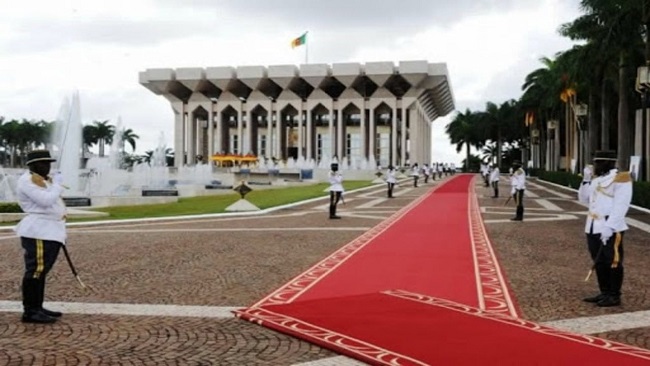
The Cameroon Development Corporation (CDC) exported 10,400 tons of bananas between January and March 2025, according to data from the Banana Association of Cameroon (Assobacam). This is the company’s best quarterly performance in seven years.
The last time CDC reached this first-quarter level was back in 2018, when it shipped 11,631 tons. Later that year, the company was forced to halt operations due to the escalating Anglophone crisis in the South-West and North-West regions. Armed separatist groups took over CDC plantations, turned some into operational bases, destroyed infrastructure, and killed staff. By September 2018, the company had completely stopped exporting bananas.
CDC resumed activities in June 2020, after nearly two years of shutdown. But recovery was slow. In Q1 2021, it exported just 5,317 tons of bananas. That number dipped to 4,541 tons in Q1 2022, then rose to 7,289 tons in 2023 and 7,712 tons in 2024. Breaking past 10,000 tons this year signals real progress, driven by the gradual reopening of CDC’s abandoned banana farms in 2021.
The return to form is tied closely to improved security in the region and renewed support from the government, CDC’s sole shareholder. Since 2021, the state has been working to stabilize the company and help it recover.
In a speech delivered on January 15, 2025, in Buea, South-West Region, Finance Minister Louis Paul Motazé explained how the government stepped in to address the company’s heavy debt load. He announced that the state reached a deal with two local banks—Société Générale and AGF Bank (formerly Banque Atlantique Cameroun)—to take over and restructure CDC’s social and wage-related debt.
“The state, through a debt takeover agreement, transferred CDC’s debt of CFA59.8 billion to the two banks. This included CFA35.4 billion in unpaid wages and CFA24.1 billion in social security contributions. As part of the deal, CFA20 billion was paid to workers in 2024, and the remaining CFA15 billion will be paid this year. The tax debt of CFA31.8 billion was converted into CDC equity,” the minister said.
With the final wage payments expected in 2025—covering all salary arrears as of June 2023—CDC may finally get the breathing space it needs. There is also a broader effort underway. According to Paul Tasong, Minister Delegate at the Ministry of the Economy, the government is currently in talks with international partners to secure funding for CDC.
Source: Business in Cameroon