6, June 2018
Cameroonian teacher makes re-usable pads to help girls stay in school 0
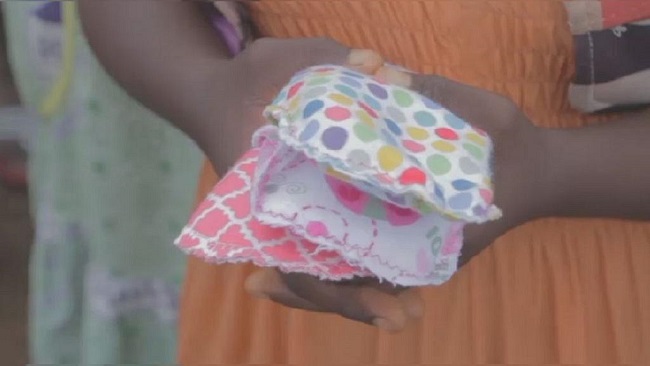
After realizing that girls often skipped school every month because they couldn’t afford sanitary pads, Feka Parchibell is on a mission to make cheaper options available to students from disadvantaged communities in Cameroon.
Feka, a teacher, is the founder of Hope for Vulnerable and Orphans (HOVO) an organization that helps teach youth life skills and seeks to empower them through entrepreneurship, leadership and agriculture.
Feka learnt to make washable pads using fabric through her organization’s partners, Rose Academies that’s based in the United States.
We do not have the money to buy the fabrics so it is not easy. The need is really huge and then getting into some of these communities is not easy. It’s really-really risky and challenging because we have to use the motto bikes, use public transports. So it’s really not easy.
The pads made from cotton, flannel, fleece fabrics and towels also have a fastener.
Washable pads provide an affordable alternative for girls from low-income families compared to a pack of disposable sanitary pads which cost about 1 US dollar.
“Mothers don’t talk these things with children so in my days nobody told me about it. When it happened they just told me – okay, you are a woman and I was given a packet of pads and that was it. So when it got finished I had to use other things. I had to go to use toilet tissue and so it wasn’t really easy. So because I know, I have been through that experience I was really really motivated to help some of these young girls out,” said Feka.
One in 10 African girls miss school during their periods, the U.N. children’s agency UNICEFestimates, which means they fall behind in their studies and often drop out of school.
Talking about menstruation is still considered taboo in many parts of the world where it is seen as shameful or embarrassing.
Feka and her team want to encourage people to talk openly about menstruation to girls on the continent.
Once a month Feka and her colleagues go out to local communities to teach girls and women how to make and use the sanitary pads.
The talks also cover menstrual hygiene.
So far Feka has worked in 30 communities in Cameroon, the Democratic Republic of Congo and with refugee communities in Uganda.
The washable pads can be reused for six months, but this too can be a challenge if access to water and soap is limited.
Feka gets funding from the United State embassy in Cameroon and Rose Academies but she says the number of people relying on her for pads is far greater than what the resources can cover.
“The challenges are huge because we get to see some many people in need but the means is not there. We do not have the money to buy the fabrics so it is not easy. The need is really huge and then getting into some of these communities is not easy. It’s really-really risky and challenging because we have to use the motto bikes, use public transports. So it’s really not easy,” she said.
Sharon Eta, 15 is a beneficiary of the pads project and says when she started her period her mother could not afford to buy her sanitary towels. She says after attending one of Feka’s talks things improved and she’s also learnt how to make her own pads.
“When I got the pad from aunty Parch (Parchibell) the pad was helping me into some ways. That is from morning to evening I will not change no leakage. I can play, I can go out,” she said.
Campaigners say it is important to make pads more widely available as girls are often forced to stay at home during their periods, affecting their development and self-esteem.
Reuters



















6, June 2018
The military deployment and killings in Southern Cameroons will end up achieving nothing 0
From the nation’s capital in Yaoundé, the political situation appear to be going well for the Biya Francophone regime that has deployed approximately 35,000 army soldiers in Southern Cameroons and has destroyed more than 72 Southern Cameroons towns and villages.
But the view deep inside the Federal Republic of Ambazonia tells a different story as some officials and Southern Cameroons opinion leaders recently told Senator Peter Mafany Musonge who is moonlighting as Chairman of the so-called Bilingualism and Multiculturalism Committee. The complete absence of a genuine political process to accompany the military onslaught going on in Southern Cameroons is instead driving all Ambazonian communities including Anglophone CPDM militants to consider allying with the Interim Government of the Federal Republic of Ambazonia.
Hon. Jua Pualinus has repeatedly sounded a note of caution that the arrogance being demonstrated by the Biya Francophone Beti Ewondo political elites who dominate Cameroon’s power base remains a grave mistake that could mean the end of the one and indivisible Cameroon.
To be sure, the military deployment and killings will end up achieving nothing. Consequently, the whole strategy put in place to counter the Southern Cameroons-Ambazonia uprising needs to be revisited and readdressed and the European Union and the United States should be part of the process.
The Biya French Cameroun military campaign currently going on makes it extremely difficult for both Cameroons to engage in any form of reconciliation after the war. Most of the key Southern Cameroons towns and cities such as Kumba, Bamenda, Mamfe, Mundemba, Tiko, Muyuka, Ndop, Nguti and Limbe are now increasingly unstable and vulnerable even to french speaking Cameroonians living in Southern Cameroons.
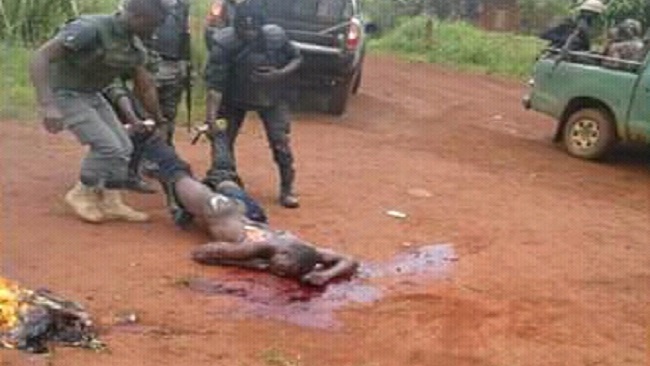
The killings in Dadi, Menka-Pinyin, Bekora in Ekondo Titi, Nguti, Belo, Mbalangi, Menji and Lewoh demonstrates the lack of strategy and reconciliation on the part of the 85 year old President Biya and his acolytes. There are widespread killings in every Southern Cameroon County; militias are emerging day-by-day roaming the Southern Cameroons territory. More than 200,000 Southern Cameroonians have been expelled from their ancestral home and they can’t go back because of the atrocities of the Cameroon government forces.
Minister Paul Atanga Nji has made the security situation in Southern Cameroons even worse by creating armed militia groups in the Northern Zone that are presently encouraging a lot of sectarian violence and every Ambazonia tribe have started to reflect on the idea of rallying behind the Interim Government. Cameroon government security forces relative control in places such as Mamfe, Kumba, Ekok, Wum, Batibo, Widikum, Muyuka, Bali is fast melting away as restoration forces are now targeting traitors within the struggle. Traditional leaders themselves are echoing these fears.
Southern Cameroonians and their Interim Government don’t have faith in the crime syndicate in Yaoundé. The reason is simple: The Biya regime didn’t make a mistake once or twice. They keep repeating the same mistake over and over and the government after 57 years is yet to deliver any of its promises to Southern Cameroonians till now.
The political situation too in French Cameroun is fragile. A majority of Francophones are simply waiting for a liberator to get rid of Biya and his gangsters. The demands of the Francophone army are no longer sustainable. Biya and his Francophone regime have used all its French tactics and have started adapting the Anglo-Saxon strategy to reduce the damage. Frankly speaking, French Cameroun is losing.
All attempts at trying to prevent Southern Cameroons from a further slide away from Cameroon government control have failed. The revolution has indeed restore Ambazonian control over Southern Cameroons mindful of the fact that the toll in blood and treasure has been high.
People in the know and some insiders say the Ambazonian Self-Defense Council Restoration Forces have retained strategic control over Manyu, Lebialem, Ndian, Meme, Mezam, Menchum, Kupe Muanenguba and Boyo. Cameroon Intelligence Report sources in these areas say many of the weapons seized from Cameroon government forces ever since the war started are stored in the forest.
Across the border in Nigeria’s Cross River State, the Buhari administration is already feeling the pain of its poor reading of the crisis in Southern Cameroons. Ekok, however, remains contested between the Manyu Warriors and Cameroon government army soldiers.
The horror which will come up after Biya finally falls from power in the October presidential elections will justify Washington Post claim that Africa’s next civil war may be Cameroon.
By Soter Tarh Agbaw-Ebai