
6, February 2018
Tensions Flare in Ambazonia 0
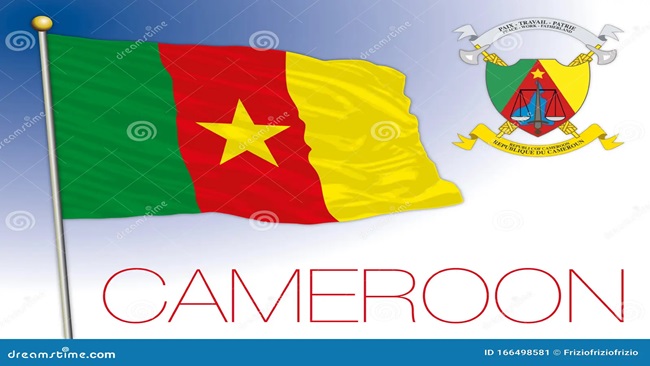
Tensions continue to climb in the Anglophone regions of Cameroon as separatist groups demand the release of their leader and 46 other prisoners extradited last month from Nigeria. The government has sought to reassure the population.
A woman and her husband cry at the Baptist Hospital mortuary in the English-speaking town of Mbingo, in northwestern Cameroon. The woman has just discovered the lifeless bodies of her younger brother and three others. She said they were arrested last Wednesday and accused of killing two gendarmes. She refused to grant an interview, but workers of the hospital told VOA the bodies were brought there by unidentified men.
The so-called Anglophone crisis began in Cameroon over a year ago, sparking bouts of deadly unrest and more recently, clashes between alleged separatist militants and security forces. The Anglophone community in Cameroon is protesting political and economic discrimination in the majority French-speaking country.
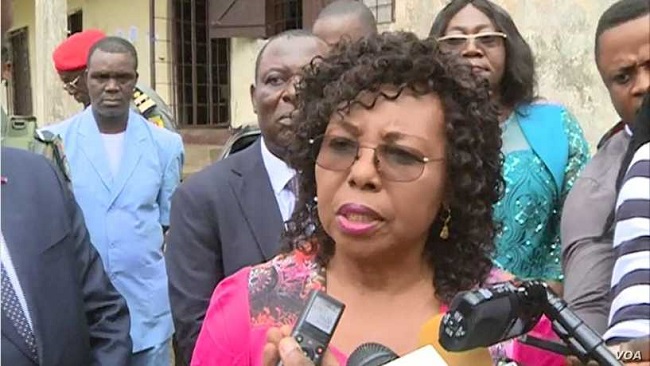
Joseph Banadzem, lawmaker from the northwest region, said the military is responding by violently cracking down on the population.
Colonel Didier Badjeck is a spokesperson for Cameroon’s military. He said the military is committed to preserving Cameroon’s territorial integrity.
He said the armed separatists are using mercenaries and carrying out abuses on the population, whom he said will very soon understand that they have to trust only the country’s military.
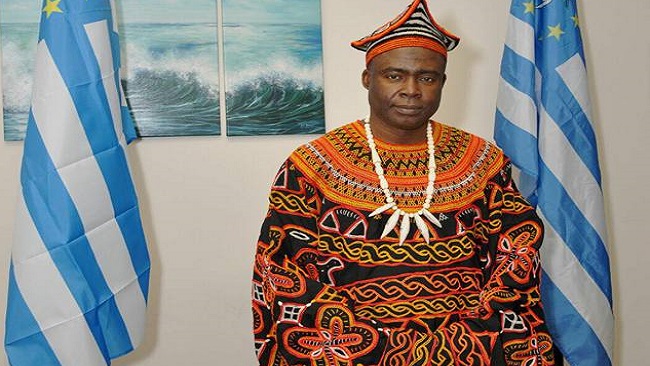
Violence has escalated since January when Nigeria detained and then extradited separatist leader Ayuk Tabe Julius and the 46 other alleged separatists to Cameroon.
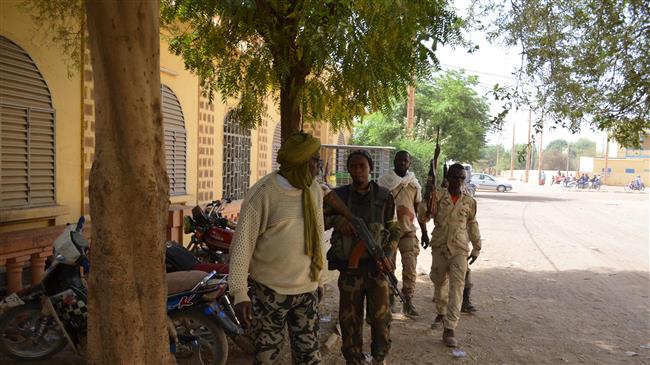
The separatist groups are demanding their leaders be released. At least four schools have been burned as of last Friday and at least 12 people have been killed, according to local media, which report unconfirmed casualties among both armed separatists and soldiers.
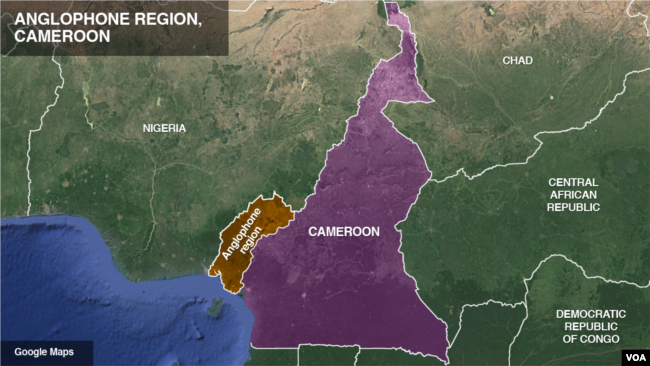
Many businesses remain closed in the two English-speaking regions amid fears of more violence.
The 47 detainees extradited from Nigeria have not been seen in public. International human rights groups warned against the extradition, saying the detainees could face torture or worse.
Nigeria is now also facing criticism from the U.N refugee agency, which said that most of those handed over to Cameroon had applied for asylum in Nigeria and their “forcible return” violated Nigeria’s international obligations.
On Friday, Cameroon government spokesperson Issa Tchiroma issued a press release saying the detainees are safe and would be appearing in front of the law courts soon. He did not comment on the charges they would answer.
Source: VOA














6, February 2018
Buhari pledges support to Biya over Southern Cameroons secession threat 0
Nigeria on Monday assured Cameroon that it is determined to deal with secessionist forces attempting to use its territory to destabilise its West African neighbour. Cameroonian forces have crossed into neighbouring Nigeria to conduct operations among citizens, where thousands of people have fled from Cameroon’s restive anglophone regions, local sources and state officials said January 31, 2018.
Last week, Nigeria extradited Sisiku Ayuk Tabe, leader of a Cameroonian anglophone separatist movement, and 46 of his supporters at Yaounde’s request, sparking condemnation from the United Nations refugee agency UNHCR. But Nigeria’s National Security Adviser Mohammed Monguno said at a trans-border security meeting in Abuja that extradition was ordered to preserve Cameroon’s unity and sovereignty.
“President Muhammadu Buhari assures you that we will take all the necessary measures, within the ambit of the law, to ensure that Nigeria’s territory is not used as a staging area to destabilise another friendly sovereign country,” Monguno told the meeting. He said both President Paul Biya and the entire people of Cameroon have the backing of Buhari in finding solution to the country’s internal crisis.
Monguno urged the Cameroonian authorities to engage in constructive dialogue to de-escalate tensions in the anglophone regions and facilitate the return of Cameroonian refugees who have crossed the border into Nigeria. At least 30,000 Cameroonian refugees are said to have fled to Nigeria following the crisis.
The UNHCR has accused Nigeria of breaching international agreements over the extradition of the separatist agitators who were arrested in Abuja on January 5. The UNHCR said most of the 47 sent back to Cameroon had submitted asylum claims in Nigeria.
Cameroon has called the 47 “terrorists” and said they will “answer for their crimes”, as tensions mount in the Southwest and Northwest Regions, home to most of the country’s English-speakers. The anglophones have complained about decades of economic inequality and social injustice at the hands of the French-speaking majority.
www.vanguardngr.com