19, March 2020
Coronavirus: where do we stand in the race for a vaccine? 0
As the world races to find a vaccine or a cure for the coronavirus, antimalarial drugs, HIV medications, flu vaccines and arthritis treatments are all being tested. FRANCE 24 takes a look at the latest medical efforts to combat the pandemic.
Teams of scientists across the world are working around the clock to either develop a new drug or repurpose an existing medication to halt the spread of the virus.
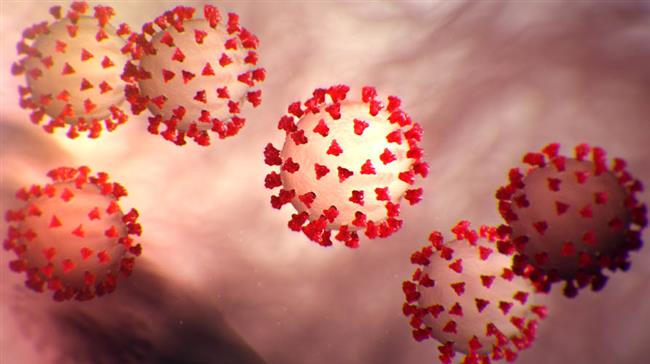
Viruses are tiny parasitic bits of genetic material that replicate inside another organism. Vaccines for viruses such as measles are typically made from a weakened form of the virus. But this process can take years.
Scientists are now fast-tracking results and sidestepping normal scientific steps, such as animal testing, to find drugs that will treat and kill the virus that causes COVID-19.
How close are we to a vaccine?
China:
The first country to experience the virus and also the first to start searching for vaccines and cures, China is understandably leading the field in the hunt for a vaccine. On December 31 last year, China alerted the World Health Organization (WHO) to several cases of unusual pneumonia in Wuhan, a port city of 11 million people in Hubei province. The virus was at that point unknown.
To create an original vaccine, the Chinese company Beijing Advaccine Biotechnology is working with a US biotech company called Inovio Pharmaceuticals. They are in the process of developing a “DNA vaccine” called INO-4800.
This vaccine is already in preclinical trial. It involves directly injecting genetic material into a person to trigger a stronger immune response, so they are better equipped to stop an infection.
Japan:
On January 16, Japan became the first country to confirm a coronavirus case outside China.
Fujifilm may be best known for its photographic products, but the Japanese company also makes a drug called Favipiravir (capitalized). This was initially intended to treat new strains of the flu. However, it appears to be proving effective in treating coronavirus patients, particularly those with lighter symptoms.
Europe:
Germany’s BioNTech has been one of the major players in European vaccine developments. It announced on Monday that it is developing an experimental vaccine, working with Fosun Pharma in China. On Tuesday, it confirmed a collaboration with America’s largest pharmaceutical company, Pfizer, to develop the drug outside of China. They hope to be in a position to start testing the new vaccine early next month.
Reuters reported on Sunday that the German government was trying to stop the US administration from persuading CureVac, another German drugmaker working on an experimental vaccine for the coronavirus, to move its research to the United States. This prompted German politicians to insist that no country should have a monopoly on any future vaccine.
Earlier, the Welt am Sonntag German newspaper reported that US President Donald Trump had offered funds to lure CureVac to the United States, and the German government was making counter-offers to tempt it to stay.
Responding to the report, the U.S. ambassador to Germany, Richard Grenell, wrote on Twitter: “The Welt story was wrong.”
US:
The first human trials of a potential vaccine called mRNA-1273 have already begun in the United States. Their vaccine has been made by biotechnology company Moderna Therapeutics.
Four patients received injections of the vaccine at the Kaiser Permanente research facility in Seattle, Washington, the Associated Press news agency reported.
The early-stage study of mRNA-1273 is being carried out by the US National Institutes of Health.
Instead of creating the mRNA-1273 vaccine from the coronavirus, scientists have copied a short segment of genetic code from the virus.
To test this new drug as fast as possible, they have sidestepped normal procedures such as initially testing on animals. The initial trial is expected to involve 45 healthy adult volunteers between the ages of 18 and 55 years over approximately six weeks. It could take 12 months before any concrete results are produced.
How close are we to a cure?
China:
By the end of January, China was already exploring how existing drugs might be repurposed to kill the virus.
One of the first drugs China explored with some success was an antimalarial drug called chloroquine phosphate. Speaking at a press conference on February 18, Sun Yanrong, deputy head of the China National Centre for Biotechnology Development at the ministry of science and technology, said this drug has already been under clinical trial in more than 10 hospitals in Beijing as well as in Guangdong Province and in Hunan Province.
According to Sun, patients treated with chloroquine saw a greater drop in fever, an improvement in their lung scans and required a shorter time to recover compared to parallel groups.
Among other drugs currently being tested in China is a Swiss-made anti-inflammation drug called Tocilizumab that suppresses overreactions by the immune system.
Another interesting advance has been made with a US antiviral drug called remdesivir, which has had impressive results in tests with more than 200 extremely ill patients.
Remdesivir was developed by Gilead Sciences to treat Ebola patients. It had good results in laboratories and with animals but was less successful with tests out in the field. Nevertheless, global health authorities deem it the most promising of possible treatments for people with severe cases of the virus.
Europe:
French pharmaceutical company Sanofi has announced it is ready to offer millions of doses of an antimalarial drug to French authorities after “promising” initial trials.
Sanofi said it could potentially treat 300,000 COVID-19 patients with the antimalarial drug Plaquenil, a spokesperson for the laboratory told AFP, adding that the group was ready to work with French health authorities “to confirm these results”.
Sanofi and its partner Regeneron Pharmaceuticals Inc have also started a clinical trial of their rheumatoid arthritis drug Kevzara as a treatment for the virus, the companies said on Monday.
Testing for patients with mid-to-severe stages of the virus will begin immediately, and the companies anticipate the trial will test up to 400 patients.
United States:
The United States may have had a slow start, but it has now sprinted ahead in the race for a vaccine.
A key development in the battle against the virus has emerged from the Quantitative Biosciences Institute Coronavirus Research Group, based out of the University of California. This team of hundreds of scientists has identified more than 50 drugs already in circulation that may effectively treat people infected with the virus.
The group has taken a different approach from many of their peers. Rather than find drugs that attack the virus itself, they are exploring drugs that will protect the proteins in our own cells that the coronavirus depends on to thrive and reproduce. With this type of treatment, our own systems will fight the virus.
Such a project would typically take a minimum of two years to achieve the results that this working group, which includes 22 laboratories across the US, has managed in a few weeks.
Another major development is the use of the HIV combination treatment lopinavir-ritonavari. This is currently being used in trials in America and other countries across the world, including India.
However, amid all the scientific developments, there are also unfounded rumours. In a statement published on Monday, Johnson & Johnson said there is “no evidence” that its HIV drug Prezista had any effect against the coronavirus in response to unsubstantiated reports that the drug might be a cure.
The company said it was aware that some HIV treatments are being considered as options to treat patients diagnosed with COVID-19.
Johnson & Johnson did say, however, that it was “partnering with multiple organizations to support the development of research programs and fast-track solutions for COVID-19”.
Culled from France 24
















19, March 2020
Southern Cameroons deepening aid crisis: “They don’t want external eyes there to see what is happening” 0
Humanitarian organisations are struggling to keep pace with the increasing needs of civilians as conflict between the government and pro-independence groups escalates in Cameroon’s anglophone regions.
Limited access to those driven from their homes, low levels of donor funding, and what aid workers have described as government “obstruction” means the majority of the 1.3 million people affected by the violence cannot be reached.
Since November 2019, there has been a surge in violence in the Northwest and Southwest regions – referred to collectively by pro-independence fighters as the Southern Cameroons or the Republic of Ambazonia.
Growing humanitarian needs
Nearly 900,000 people have been made homeless, and an additional 60,000 have fled into neighbouring Nigeria. The four-year conflict, triggered by the perceived marginalisation of the region from majority French-speaking Cameroon, has left at least 3,000 dead.
Needs include food, shelter, and psychosocial support as the government forces and pro-independence fighters routinely torch homes and, increasingly, entire villages, forcing people into the bush.
Residents of Bali waited for shelter kits from the UN after their homes were torched.
Over 600,000 children have been unable to regularly attend school following an education boycott ordered by the separatists to protest the creeping use of French in class and attacks on schools, teachers, and students to enforce the ban. As a result, just 19 percent of primary and secondary schools remain open in the conflict region.
The UN’s children’s agency, UNICEF, estimates that only 34 percent of health facilities are operating, causing a dip in life-saving immunisation and nutrition services.
Despite the humanitarian needs, the UN and its local partners were able to reach only 40 percent of affected civilians in 2019, Mobido Traore, head of the UN’s aid coordination body, OCHA, told The New Humanitarian.
Deepening insecurity
The insecurity, particularly in the Northwest – the centre of much of the violence – has had a significant impact on humanitarian operations.
In January, seven aid workers from two local NGOs – COMINSUD and the Martin Luther King Jr. Memorial Foundation – were kidnapped by pro-independence fighters. Although all staff were later released, the abductions resulted in several organisations restricting their area of operations.
Government security forces have also failed to respect humanitarian space. On 21 February, soldiers entered the St. Mary Soledad Hospital campus, a health facility supported by the medical charity Médecins Sans Frontières in the town of Bamenda, and shot and killed a civilian driver in his vehicle.
Stray bullets also hit an ambulance call centre, endangering the lives of patients and hospital staff, MSF said in a statement provided to TNH.
Aid agencies have increasingly relied on community and religious leaders to draw displaced civilians from their hiding places in the bush and to assemble them in “safe zones”, such as religious centres and former schools, where they can receive assistance.
But the military has raided “safe zones” and killed and arrested the displaced, and those who assisted in organising the aid distributions, according to internal incident reports by local aid NGOs seen by TNH, press statements, and interviews with several eyewitnesses and victims.
Government clamp down
The government has also clamped down more systematically on humanitarian access, imposing increasingly restrictive tracking and vetting procedures, aid workers say.
In June, it established Humanitarian Coordinating Centres in Bamenda and Buea – the capitals of the Northwest and Southwest regions – to assess incoming aid, provide guidance on distribution, and ensure traceability, government officials told local news media at the time.
All local and international aid organisations – including the UN – are required to apply to the coordinating centres for permission to carry out needs assessments and aid deliveries. Food and non-food aid must be hand inspected at the centres before delivery to beneficiaries.
“The process for vetting humanitarian assistance in Bamenda and Buea has been in place just to place more burden on humanitarian actors,” Traore said.
Local aid workers who asked to remain anonymous over safety concerns described the time-consuming procedures as a “crackdown on humanitarian organisations”.
Last week, the government moved the vetting process from the coordinating centres to the governor’s office in Bamenda.
It’s a step that not only politicises aid work, but will result in a “significant delay in aid reaching beneficiaries,” Traore said.
The governor’s office did not respond to requests from TNH to comment on the most recent developments.
Aid agencies accused of ‘collusion’
Government officials have also renewed their accusations that human rights and aid groups are colluding with the pro-independence groups, supplying them with weapons, and spreading false information that implicate the security forces in atrocities.
In a televised press conference, the head of Cameroon’s Ministry of Territorial Administration (MINAT), Paul Atanga Nji, charged Human Rights Watch, Amnesty International, the think tank International Crisis Group, and OCHA – among other organisations – of working to “destabilise state institutions”.
“Many NGOs have clearly revealed themselves as enemies of our country,” Nji said. They have “become laboratories of fake reports with the sole objective to tarnish the image of the country’s defence and security forces.”
The government was particularly incensed by the reports of a massacre in the village of Ngarbuh on 14 February, in which the security forces and allied militia were accused of killing at least 21 civilians. The UN demanded an impartial inquiry into the incident.
Rights groups and aid organisations have all denied Nji’s accusations.
“The statement is just a new chapter of the government smear campaign against [Human Rights Watch], other human rights organisations, human rights activists, and journalists,” Lewis Mudge, Central Africa Director for HRW, told TNH.
“The government is trying to jeopardise our work and tarnish our image,” Traore said. “They don’t want external eyes there to see what is happening.”
Funding woes
A persistent lack of funding has also hamstrung the humanitarian response. Donors have provided just over 40 percent of Cameroon’s aid appeal, but in the Northwest and Southwest regions, the figure is far lower – just 18 percent of the budget has been financed.
As a consequence, the UN has only “limited capacity to respond timely to increasing needs,” said Traore.
A high staff turnover also means the UN has struggled to build trust with communities and representatives of both sides of the conflict, noted an OCHA official, who asked to remain anonymous.
Another UN staff member was more critical. “This situation is unique because [this UN operation] is not very functional”, the person said, referring to the UN’s inability to provide assistance to the majority of those in need. “The UN’s reputation is plummeting. There is a failure to deliver.”
As the conflict widens in 2020, the UN predicts its funding needs will rise. Local and international aid groups are working to build capacity, especially in the troubled Northwest region, but it is an uphill struggle, they say.
“It is not a good situation,” one local aid worker told TNH. “It is not looking good for us.”
Culled from The New Humanitarian