29, February 2020
Guinea delays controversial referendum 0
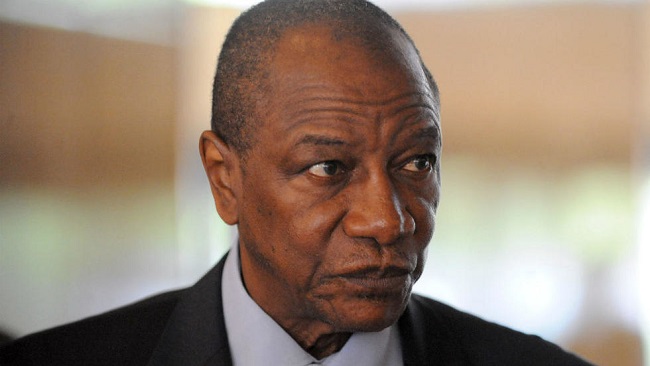
Guinea’s President Alpha Conde announced a “slight postponement” of Sunday’s referendum on whether to adopt a new constitution, following mounting international criticism over the poll’s fairness.
The government argues that the draft constitution would, among other things, codify gender equality and ban female circumcision and underage marriage in the West African state.
But the proposal has sparked huge protests since October over fears that the real motive is to reset presidential term limits — allowing Conde, 81, to run for a third spell in office later this year.
Speaking on national television, the president said on Friday it was “due to our national and regional responsibilities that we have accepted a slight postponement of the date of the elections”.
“This is not a capitulation or a step backwards,” he said, adding that “the people of Guinea will express their choice freely at the referendum”.
While Conde did not publicly announce a date for the new vote, a letter from the leader to the West African bloc ECOWAS, seen by AFP, said the new poll should take place within two weeks.
The poll had been scheduled for Sunday alongside parliamentary elections — also delayed in the poor but mineral-rich country of some 13 million people, which has a legacy of autocratic rule.
The long-running demonstrations over the constitution issue have sometimes turned violent, with at least 30 protesters and one gendarme killed to date.
Conde’s announcement followed criticism of the electoral process from the African Union, European Union and The International Organisation of La Francophonie (OIF), which gathers French-speaking states.
The OIF said this week it had problems with around 2.5 million of the 7.7 million names on the electoral roll, pointing to duplicate registrations and people who had died.
The African Union also cancelled an electoral observation mission to Guinea on Friday, citing a “major controversy” with the roll.
Meanwhile the EU said in a statement that a “lack of inclusiveness and transparency casts doubt on the credibility of the upcoming elections”.
Quiet streets
Sekou Conde, a cadre in the president’s Rally of the Guinean People (RPG) party, said the vote had been postponed purely for technical reasons.
“It has nothing to do with the electoral roll,” he said, adding that people had ransacked voting stations.
A Western diplomat, who declined to be named, said he thought the delay would make no difference anyway.
“This changes nothing,” he said, adding that there would be no credible change to the problems with the electoral roll within two weeks.
The streets of the capital Conakry were quiet on Friday evening after the announcement, despite months of protests.
Ibrahima Diallo, the operations manager for the National Front for the Defence of the Constitution — an alliance of opposition groups behind the protests — said that demonstrations would continue until Conde shelved the referendum.
Although both the current constitution and the proposed new text limit presidential terms to two, critics fear that passing a new constitution would reset presidential term limits to zero.
This would potentially allow Conde to run again when his second term runs out at the end of the year.
Conde was a longtime opposition figure who became the nation’s first democratically elected president in 2010 on promises to fight corruption. He was re-elected in 2015.
Source: AFP
















29, February 2020
Biya’s Continued Stay in Power: CPDM retains absolute majority after contentious election 0
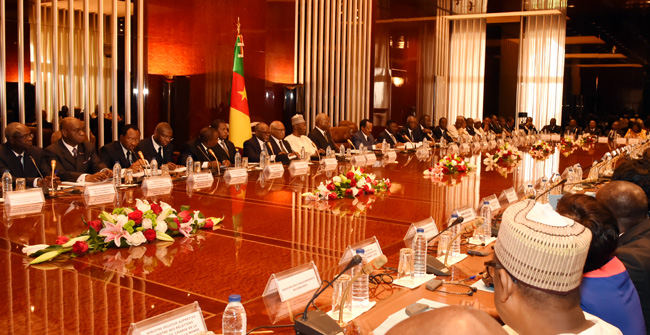
President Paul Biya’s party has retained an absolute majority in Cameroon’s parliament, the constitutional council announced Friday after the controversial February 9 vote.
His Cameroon People’s Democratic Movement (RDPC) won 139 out of 167 declared seats on “moderate” turnout of almost 46 percent, said the council’s president, Clement Atangana.
Elections were cancelled in 13 other seats, in Cameroon’s troubled anglophone regions, and are to be held at a later date.
In the outgoing parliament, elected in 2013, the RDPC had 148 seats.
Atangana said an RDPC ally, the National Union for Democracy and Progress (UNDP), won seven seats.
The biggest opposition party in the outgoing assembly, the Social Democratic Front, which had 18 seats in the outgoing assembly, has seen its share fall to just five.
Voting day in the Central African Republic was overshadowed by the crisis in two regions where anglophone separatists have declared independence from the majority French-speaking country.
Separatist fighters had called on people there to boycott the poll and issued threats to anyone who planned to vote.
More than 3,000 people have died and at least 700,000 have fled their homes in the 29-month-old unrest.
Rights monitors say abuses have been committed by both sides.
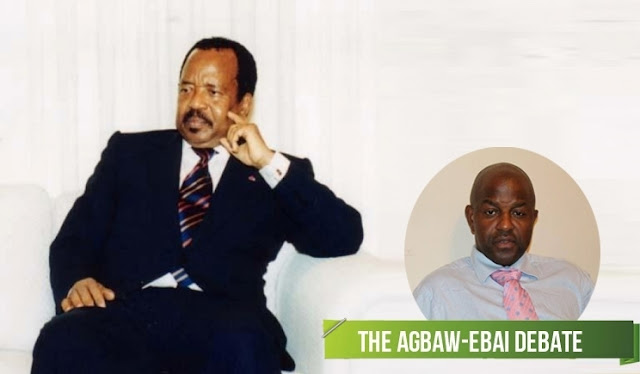
Biya, 87, who has ruled for 37 years, has ruled out demands by moderates for restoring Cameroon’s federal structure.
However, the government has lately decentralised some of its powers after a “national dialogue” on the anglophone crisis which was boycotted by the separatists.
The country’s Far North, a tongue-like region lying between Nigeria and Chad, has meanwhile been battered by Boko Haram jihadists crossing from Nigeria.
Source: AFP