
11, May 2026
Netanyahu vows to phase out US aid, blames social media for turning Americans against Israel 0
Israeli Prime Minister Benjamin Netanyahu has claimed that he plans to bring American financial aid to the Tel Aviv regime down to zero within the next decade, blaming social media platforms for “manipulating” the American public opinion towards Israel.
In an interview with CBS’s 60 Minutes aired on Sunday, Netanyahu was asked whether it was time for the Israeli regime to “reexamine and possibly reset” its financial relationship with Washington.
“Absolutely. I’ve said this to President Trump. I’ve said it to our own people. Their jaws drop,” he claimed.
“I want to draw down to zero the American financial support, the financial component of the military cooperation that we have,” the Israeli prime minister said, stating that the process should “start now” and be completed “over the next ten years.”
Netanyahu noted that he is well aware of declining support for Israel in the US.
The remarks come as a recent Pew poll revealed that six in ten Americans have a very or somewhat unfavorable view of Israel, up seven percentage points since last year and nearly 20 points since 2022.
The Israeli prime minister dismissed the notion that the regime’s genocidal war in Gaza might have “contributed to this negative impression of Israel,” blaming the shift almost entirely on social media.
“Israel is besieged on the media front, on the propaganda front, and we’ve not done well on the propaganda war,” he claimed.
“We have several countries that basically manipulated social media with bot farms with fake addresses, to break the American sympathy to Israel.”
Israel has imposed a crippling blockade on the Gaza Strip since 2007, leaving the territory’s 2.4 million people on the verge of starvation.
The Israeli army launched a brutal two-year offensive on Gaza in October 2023, killing more than 72,000 people, injuring over 172,000, and causing massive destruction across the besieged territory.
Netanyahu’s comments come irrespective of the fact that the Israeli regime remains the largest cumulative recipient of US foreign aid since World War II, having received more than $300 billion in economic and military assistance from Washington since 1948.
Under a ten-year agreement signed in 2016, the US committed $38 billion in military aid to Israel through 2028, including $5 billion for the so-called Iron Dome anti-aircraft missile system.
Overall, American assistance accounts for roughly 16% of the regime’s military budget.
US Senator Bernie Sanders filed three resolutions in March, seeking to block nearly $660 million in arms sales to Israel.
He pointed out that three-quarters of Democrats and two-thirds of independents oppose Washington sending weapons to the Tel Aviv regime.
Source: Press TV



















18, May 2026
Iran submits new 14-point proposal to US via Pakistan to end war 0
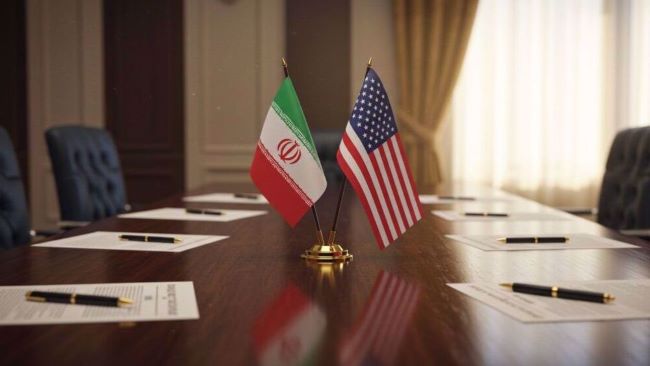
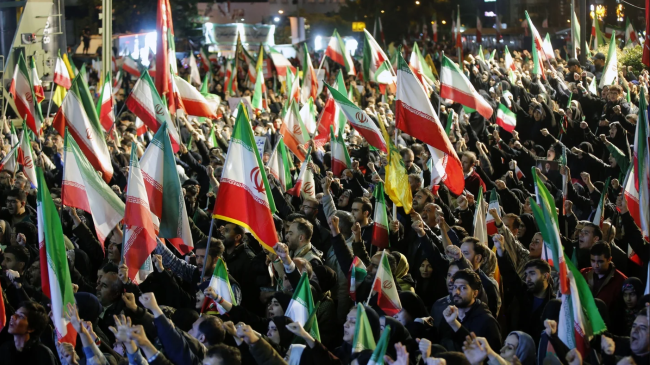
Iran has reportedly submitted its latest proposal in 14 points through the Pakistani intermediary for talks with the United States aimed at ending the illegal US-Israeli war of aggression against the Islamic Republic.
A source close to the Iranian negotiating team told Tasnim news agency on Monday that Pakistan will `deliver Iran’s new proposal to Washington.
The source said the proposal is focused on the subject of the negotiations and confidence-building measures by the American side.
The Americans had recently sent a text in response to Iran’s previous proposal, which was also presented in 14 points, the source added.
“In line with the recent practice of exchanging messages, Iran has also once again submitted its text in 14 points through the Pakistani mediator after making amendments,” the source explained.
On April 10, Iran submitted its response to the American side’s proposed text to end the war, which was later dismissed by Donald Trump, the president of the US, who said it was “totally unacceptable.”
Tehran maintains that at the current stage, negotiations will only focus on ending the war in the region and that other issues, including the nuclear program, may be discussed later.
Meanwhile, a Pakistani source told Reuters on Monday that Islamabad has shared with the United States a revised proposal from Iran to end the war in the region.
The source warned that Tehran and Washington “don’t have much time” to narrow their differences.
The source gave no details of Iran’s revised proposal but noted that the sides “keep changing their goalposts.”
“We don’t have much time.”
Iranian Foreign Ministry spokesman Esmaeil Baghaei also told reporters on Monday that despite the American side’s dismissal of the Islamic Republic’s previous peace proposal, Tehran received “a set of corrective points and considerations” from the Pakistani mediator.
“As announced yesterday, our points of view were presented to the American side in return. Therefore, the process continues through Pakistan,” he said.
On April 8, forty days into the US-Israel war, a Pakistan-brokered temporary ceasefire between Iran and the US took effect.
Negotiations ensued in the Pakistani capital, Islamabad, but stopped short of an agreement amid Washington’s maximalist demands and insistence on unreasonable positions.
Since then, Iran has demanded that the US lift an illegal blockade it has imposed on Iranian vessels and ports for the diplomatic process to resume.
Tehran says as long as the blockade is still in place, it has no intention of reopening the Strait of Hormuz.
Source: Press TV