
20, May 2025
Young Cameroonians face prospect of new bid by 92-year-old leader 0
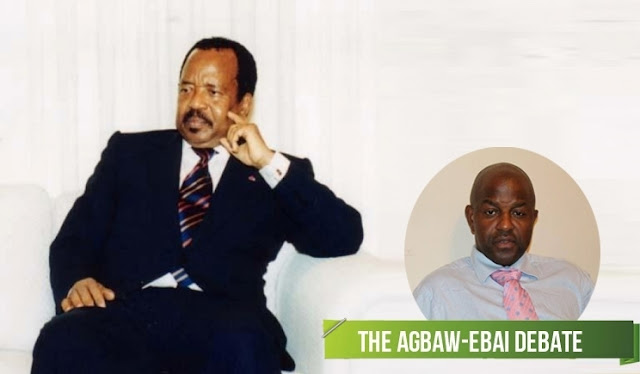
Young Cameroonian voters hoping for change in this year’s elections still face the possibility that 92-year-old President Paul Biya could announce a bid to extend his more than four decades in power.
Biya, who took the reins in 1982, has remained tight-lipped on whether he plans to stand again in October.
But with just a month to go before candidates have to officially register, some of the party faithful have been calling for him to do so.
Younger voters who have never known another leader in their lifetimes are sceptical about another mandate for the man who is already the world’s oldest head of state.
“It would be one candidacy too many,” said Ange Ngandjo, 35, a banking consultant.
“He’s given what he could. Our generation, trained and competent, also wants to build this country.”
Tweaking a motorbike engine at his workshop in Mokolo, a district of the capital Yaounde, 29-year-old Ibrahim Baba echoed the sentiment.
“A new term for Paul Biya? I don’t think so,” he said.
Law student Celestine Mbida, 24, who attends the University of Yaounde II, will be voting for the first time.
She stopped short of openly criticising the outgoing president but said: “This election represents a lot… It’s the future of the country that is at stake. I want to participate by giving my vote.”
Ruling party divided
After highly contested elections in 2018, Biya tightened his grip on power, cracking down on dissenting opinions with arrests and prison terms, rights activists say.
But even within his Cameroon People’s Democratic Movement (RDPC), of which he is national party president, support is no longer unanimous.
While some members have called for continuity, others complain that the party has not held a congress to choose its candidate since 2011.
Among them is Leon Theiller Onana, a municipal RDPC councillor for Monatele, a town north of Yaounde. He has lodged a legal complaint to contest the “legality and legitimacy” of his party’s ruling bodies.
Supporters of the president have sought to win over the younger generation.
A gathering under the banner “100,000 youth united behind Paul Biya in 2025” recently took place in the town of Maroua, a presidential stronghold in the poverty-hit Far North.
Organisers said the aim was to unite around Biya for “a resounding victory” in the forthcoming vote.
“He deserves our support,” said Mohamadou Atikou Kalda, coordinator of a regional youth platform.
Biya was behind several projects that supported development in the north, he added. “To continue on this path is essential.”
A ‘charade’
But not everyone is happy; some critics even accuse the organisers of stage-managing the event.
“They rounded up children to make people believe he still has support in the Far North,” one young man said in a video widely shared on social media.
“It’s false, it’s a charade,” he added.
Political analyst Aristide Mono of Yaounde II University said whoever wins the presidency faced high expectations from voters.
“Whether you’re young, old, a woman or a man, the concerns are the same,” he told AFP. “Persistent insecurity in the Far North, anglophone (separatist) crisis, high unemployment, cost of living, tribalism.”
“Young people, like other social groups, are asking themselves about the post-Biya era — because one day or another, in one way or another, Paul Biya will no longer be in power,” he added.
“So we have to anticipate and organise the succession to avoid succession crises that have often led to civil wars.”
‘Lack of succession plan’
The uncertainty weighs on Cameroon’s international standing.
In a November report, Fitch Ratings confirmed the country’s “B negative” rating, putting the chance Biya might run for another term in its “Political Risks” list.
“The lack of a succession plan and political divisions exacerbate the risk of a disorderly transition of power,” it noted.
At 71, Maurice Kamto, leader of the main opposition Movement for the Renaissance of Cameroon (MRC), is hardly the youth candidate, even if he has tried to appeal to them.
“If our country is to survive and achieve a certain rank tomorrow, the youth must be prepared,” he said.
In a country where 60 percent of the population is aged under 25 and youth unemployment is close to 74 percent, the vote will likely be decisive for a generation looking for opportunities and change.
Source: AFP

















23, May 2025
CPDM Crime Syndicate: ELECAM defends UN partnership amid interference allegations 0
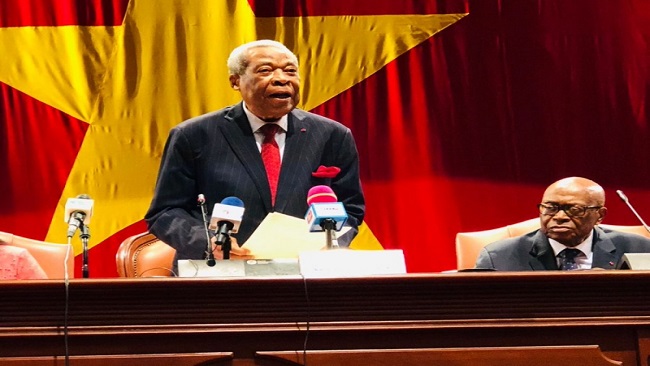
Elections Cameroon (Elecam) rejected calls from the Movement for the Rebirth of Cameroon (MRC) and the United Party for Social Renovation (PURS) to hand over election management to an outside group. Elecam signed a CFA3 billion technical assistance deal with the United Nations but insisted it will keep full control.
Enow Abrams Egbe, Chairman of Elecam’s Electoral Council, said, “It is important to specify that in Cameroon, electoral operations are entirely financed by the public treasury.”
The agreement, signed on May 9 in Yaoundé, aims to tap into the UN’s “proven electoral expertise.” It follows a recent African Union mission in Yaoundé from May 12 to 17 to explore electoral cooperation. Egbe explained that the UN assistance will involve six agencies, including UNDP, UN Women, and UNESCO. The support covers the 2025-2027 electoral cycle, which includes the presidential election, regional council elections, and the legislative and municipal polls.
The MRC and PURS sharply criticized the deal. On May 14, Maurice Kamto’s MRC called the initiative risky and warned of a repeat of the 2010 post-election crisis in Côte d’Ivoire. The party said, “Africans in general, and Cameroonians in particular, still remember the UN’s regrettable interference in the electoral process in Côte d’Ivoire in December 2010, which helped to accelerate one of the worst post-electoral crisis in Africa in the 21st century, resulting in thousands of deaths and the desolation of many Ivorian families.”
The MRC also condemned the secrecy around the agreement, noting, “several days after the signing, neither Elecam nor UN officials deemed it necessary to officially communicate on this event.” The party called the timing “unseemly,” especially as the presidential election campaign period approaches.
PURS, led by Serge Espoir Matomba, echoed the criticism. In a May 16 statement, the party “vigorously denounces the interference of the United Nations in Cameroon’s electoral process.” PURS warned that the move threatens national sovereignty. The party asked, “Why is the United Nations, which has never resolved an electoral crisis, intervening here and now?” It added, “How can we understand that in the 21st century, a sovereign country still accepts such foreign tutelage?” PURS called for “a Cameroonian electoral system that responds to the interests and respects the will of the Cameroonian people.”
Despite the backlash, Egbe stood firm. He signed the agreement alongside Issa Sanogo, the UN resident coordinator in Cameroon. Egbe urged Elecam’s mixed commission members to “become more involved in the implementation of the 2025-2027 electoral cycle.”
Source: Business in Cameroon