22, September 2024
Roman Catholic clerics urge support after devastating floods in West and Central Africa 0
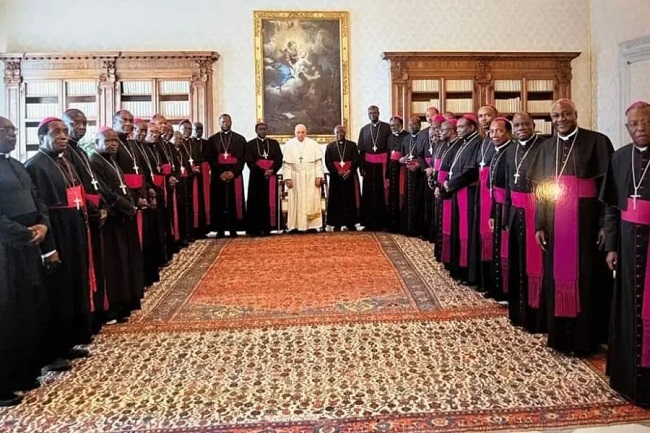
Catholic leaders across West and Central Africa are calling for assistance following unprecedented and deadly floods that have swept through the regions.
The catastrophic flooding in Nigeria, Cameroon, Niger, Chad, Mali, Ghana, and Liberia has triggered severe humanitarian crises, affecting an estimated four million people, most of whom are children.
As of 17 September, the United Nations Population Fund (UNFPA) said that at least 341 people had died due to the floods that have also affected nearly 1.5 million people.
Bishop Dominique Tinoudji of the Diocese of Pala in Chad has urged the population not to despair, reminding them that “God is still on the throne.”
In a September 8 Mass dedicated to the flood victims, the bishop noted that “the situation we face might lead us to question God’s presence, His protection, and His help; but even in the face of such a severe trial, we must not give up hope.”
The bishop called Christians to action, urging them to make sure the new shelters now called home by the millions displaced by the floods do not constitute a source of fresh problems for the people.
“We must safeguard hygiene to prevent disease and protect the vulnerable from the cold and malaria-carrying mosquitoes,” Tinoudji said.
“We are one body in Christ, and individually member’s one of another. Opening your hand to give a kilogram of rice, some maize, or a bar of soap can make a huge difference,” he continued.
He emphasized the importance of supporting local Caritas organizations to ensure a coordinated disaster response.
“Caritas is our way of putting charity into action. Unfortunately, in many parishes, Caritas is either inactive or absent. Even our diocesan Caritas is still in its early stages,” the bishop said.
The Catholic Church leader encouraged communities to take “practical steps in city planning to reduce future risks, particularly in flood-prone areas.”
“Our engineers must help us design cities that consider natural water pathways, flood-prone areas, and proper drainage systems,” the bishop said and reiterated his call to trust in God’s continued presence, saying, “Do not be afraid; be strong and keep your trust in the Lord.”
In Nigeria, at least 269 people are reported dead and more than 640,000 people displaced, according to the latest data from the country’s disaster management agency NEMA.
The flooding in Nigeria was caused by the collapse of a dam following heavy rainfall. There are also concerns that there will be even more flooding in the days ahead as Cameroon plans to release water from the Lagdo Dam in the country’s Far North Region.
Nigeria’s hydrological services agency has warned that 11 states would potentially be flooded as a result.
The Catholic auxiliary bishop of Maiduguri – located in Nigeria’s Borno state that has been most affected by the floods – has in a video message noted that “the city of Maiduguri has been engulfed with a devastating flood and over 40 percent of the city is under water.”
In comments to Crux, the Episcopal Secretary for Laity Affairs of the Catholic Secretariat of Nigeria, Josef Iorakpen Ishu, noted that “the flood regime in Nigeria is heartbroken.”
“The flood that is ravishing some parts of the country is compounding the hardship on the people. In fact, the metrology agency is predicting that more states will experience flooding in days and weeks to come, and the government is asking those living in such areas to vacate immediately,” he told Crux.
“The question is should people vacate where? Because the same government has not provided alternative homes or makeshift homes for the people,” he said.
“Even humanitarian agencies are overwhelmed by the situation. It is a huge challenge for us here,” Ishu added.
Then referencing the recent End Bad Governance Protest in Nigeria, Ishu said the government’s response to the floods is just further proof that it has “lost its relevance at all levels: Federal, state and local levels.”
“People are helpless and looking up to God for divine intervention,” he said.
“We are reaching out to our friends at Aid to the Church in Need for your prayers, especially at this difficult and challenging time,” the Bishop of Maiduguri said in a video message.
In Cameroon, where the UN says at least 17 people have died, the government has offered assistance in terms of basic items like blankets, soap, and buckets.
In Niger, over 137,000 people have lost their homes due to flooding since August. Almost 100 deaths have been recorded.
“The situation [in West and Central Africa] is devastating — people in the region are already grappling with rising hunger and alarmingly high malnutrition,” said Modou Diaw, the West Africa Vice President for the International Red Cross.
Climate change is now blamed for the floods, triggering calls for a response to the high cost Africa pays due to the issue.
“Africa is losing an estimated 2-5 percent of its GDP annually due to climate-related disasters,” said Dr. Richard Munang, Africa Regional Climate Change Coordinator at the United Nations Environment Program (UNEP) in comments to Crux.
“For instance, adaptation costs in sub-Saharan Africa are projected to reach $30-50 billion annually over the next decade,” he said.
Source: Crux















22, September 2024
Douala: Cameroon military and U.S. Africa Command host West Africa Logistics Conference 0
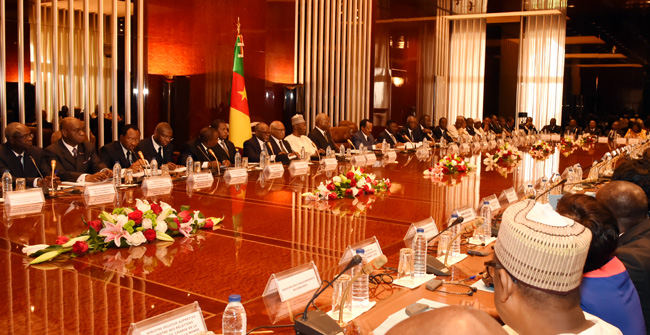
From September 18 to 20, U.S. Africa Command (AFRICOM) and the Cameroon Ministry of Defense organized the West Africa Logistics Conference, bringing together more than 50 military logistics leaders from West Africa and the United States. During the conference, participants discussed logistics challenges and identified opportunities for collaboration to improve interoperability and operational effectiveness.
Air Force Brig. Gen. George “Dutch” Dietrich, Director of Logistics for U.S. Africa Command, expressed his appreciation to the Cameroon Armed Forces for their close collaboration in hosting the event. He emphasized that WALC serves as a vital platform for regional cooperation, enabling military and civilian leaders to address common logistics challenges and find solutions to enhance interoperability and operational readiness.
In his opening remarks, U.S. Ambassador to Cameroon John C. Lamora noted, “WALC is a real opportunity to tackle a challenge that every military in the world faces. Logistics are a critical component of all operations, from peacekeeping to responding to humanitarian crises and natural disasters. By improving our collective understanding of regional challenges, we can better prepare to respond to future crises.”
This year’s conference was attended by representatives from Benin, Cabo Verde, Cameroon, Chad, Côte d’Ivoire, Gabon, Ghana, Guinea, Guinea-Bissau, Liberia, Mauritania, Nigeria, Sao Tome and Principe, Senegal, Sierra Leone, The Gambia, Togo, the African Union, and the Economic Community of West African States (ECOWAS).
Culled from the US embassy in Yaoundé