1, April 2024
DR Congo appoints Judith Suminwa Tuluka as its first female prime minister 0
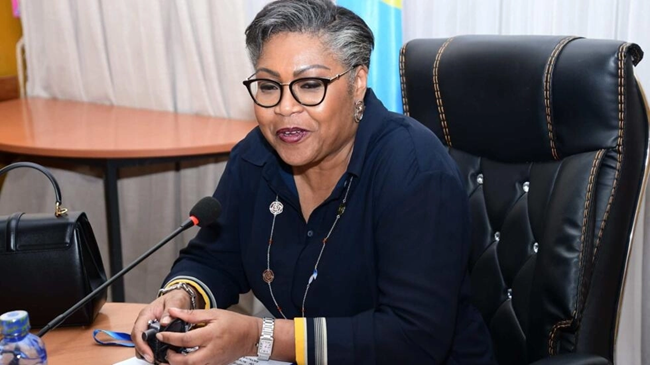
The Democratic Republic of Congo’s planning minister Judith Suminwa Tuluka was Monday appointed as the African nation’s first woman prime minister, state television announced.
An economist, she takes over as prime minister from Jean-Michel Sama Lukonde, following President Felix Tshisekedi’s sweeping re-election on December 20.
Tshisekedi officially triumphed with 73.47 percent and the vote passed largely peacefully in a country long torn by violence and instability.
The opposition branded the ballot a sham.
Voting was officially extended by a day due to logistical snarls and polls were open for days after in remote areas.
Parties supporting Tshisekedi garnered more than 90 percent of the seats in parliament, allowing him to legislate with ease.
The new prime minister will be tasked with pushing the president’s declared priorities of employment, youth, women and national cohesion for the nation of about 100 million people.
He first became president in 2019 promising to improve living conditions in the DR Congo—which boasts mineral riches but has a largely impoverished population—and put an end to 25 years of bloodshed in the east.
Tshisekedi failed to keep those promises but campaigned for a second term on his achievements such as free primary medication, asking for another mandate to “consolidate” the progress.
According to the United Nations, some seven million people have been internally displaced by conflict in the DR Congo, one of the world’s poorest countries.
The security situation has worsened in North Kivu province where a Rwanda-backed rebel group M23 has seized swathes of territory over the last two years.
Source: AFP











1, April 2024
Yaoundé: opposition says Senegal is example for fair elections, ousting entrenched leader 0
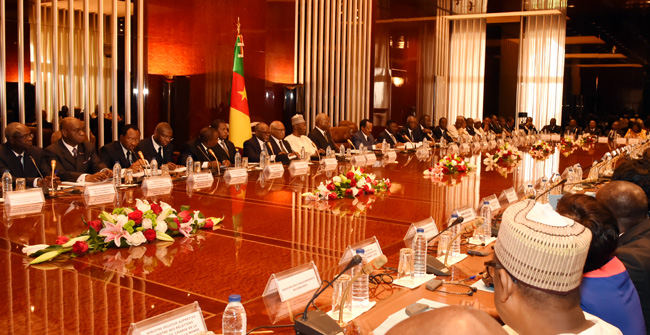
Members of Cameroon’s opposition parties are encouraging citizens to learn from Senegal, where a 44-year-old politician was elected last week as the youngest leader on the African continent. They say it’s time for change in Cameroon, where President Paul Biya, now in his 90s, has ruled for more than four decades and is preparing to run for re-election.
Nothing has generated debates on the streets, in offices, within political parties and in Cameroon’s media organs so much as Senegal’s March 24 elections.
Participants in a debate program aired by Equinox Television said civilians in central African countries, especially Cameroon, Chad, Equatorial Guinea, the Central African Republic, Congo and Gabon should emulate the example from Senegal and democratically oust leaders who keep a tight grip on power and rule with an iron fist.
Njamnsi Theodore is a 35-year-old teacher who hopes Cameroonians will get inspired by what just happened in Senegal.
“The results of the presidential election in Senegal and the entire process sends a very clear message to Cameroonians especially the youths,” he said. “Register and vote. If you don’t register, you wouldn’t vote and if you don’t vote you wouldn’t have that chance of getting the leaders that you really want, so register, that is the clear message, that is the lesson we get from the Senegalese situation.”
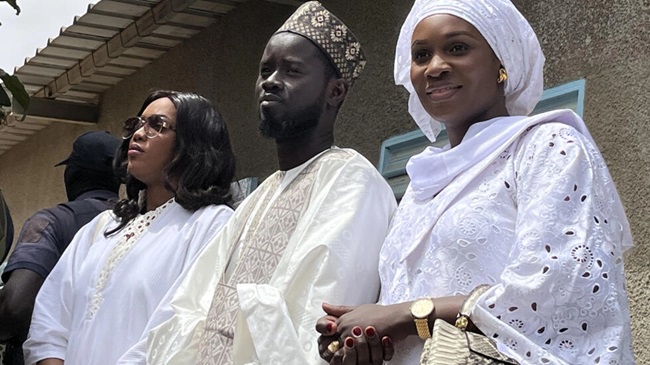
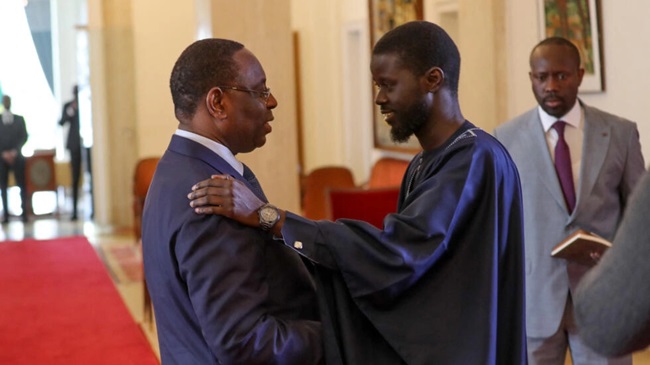
Opposition candidate Bassirou Diomaye Faye is now Senegal’s president-elect after winning a first-round victory fueled largely by young voters.
In Cameroon, opposition and civil society groups say voter apathy is high because elections are always marred by fraud.
Ninety-one-year-old President Paul Biya has won all presidential elections since the return of multiparty politics in Cameroon in 1990 and is preparing to run again next year.
The opposition says Senegal’s election shows it is possible to stop leaders from clinging to power. Senegal’s President Macky Sall attempted to postpone this year’s election but backed down after widespread protests.
Mbang Boniface is a member of Cameroon’s Renaissance Movement Party. He says youth can remove Biya from power if they register as voters, choose their candidate, vote and defend their votes if necessary after the polls.
He says Senegal’s youths massively voted for Bassirou Diomaye Faye because they believe only young people can effect changes needed on a continent where leaders are generally old and out of touch with the views and aspirations of the population.
“Of course, Senegal is sending a very strong message to Cameroon,” he said. “The Senegalese president is 44 years [old], meaning he is young and able to understand the problems of the youth. Here in Cameroon, we have a president who is 91 years. He started ruling when Faye was just born. Faye is able to understand the problems of the youths unlike here in Cameroon, where the youths will have to sort their problems by themselves.”
But Samson Websi, political analyst at Cameroon’s National Institute of Management and Technology says it will be difficult to oust Biya in an election.
He says unlike in Senegal where government institutions are independent, Biya has loyalists planted throughout the government.
“Senegal stands out as an example to what happens in Cameroon, where democracy is suffering from military involvement in politics,” he said. “Parliament in Cameroon is virtually at the beck and call of the executive. The judiciary in Cameroon is not independent. The president of the republic [Biya] is the head of the judiciary. He is the one who guarantees the independence of the judiciary, which means that democracy is in trouble.”
Cameroon’s government insists that its institutions are independent, while Biya’s Cameroon People’s Democratic Movement Party say the president has fairly won all elections.
They say Biya enables young people to participate in decision-making through bodies such as Cameroon’s National Youth Council. However, the opposition says Biya appoints only youths loyal to him to head the council.
Cameroon’s presidential elections are set for next year. President Biya will set the date.
Source: VOA