12, June 2023
CAF Champions League: Al Ahly wins record-extending 11th title 0
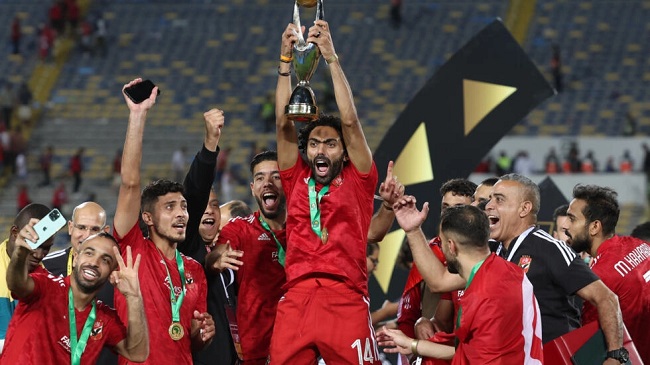
Defender Mohamed Abdelmonem equalised on the night as Al Ahly of Egypt drew 1-1 at Wydad Casablanca of Morocco on Sunday to win the CAF Champions League for a record-extending 11th time.
His goal cancelled the lead Yahia Attiyat Allah gave the defending champions and earned the Cairo club a 3-2 aggregate victory after building a 2-1 first-leg lead seven days ago.
Ahly scored 27 goals in 14 matches en route to continental glory and four of them came from Egypt centre-back Abdelmonem.
Defeat for Wydad ended a run of two final victories over Ahly, and they paid the penalty for concentrating on defending their fragile second-leg lead instead of seeking further goals.
Unlike Europe, away goals count double in African club competitions when sides finish level on aggregate and Wydad would have retained the trophy had they won 1-0.
Ahly pocketed a record four million dollars for winning and Marcel Koller became the first Swiss coach to win the premier African club competition.
It was the third Champions League triumph in four seasons for Ahly after victories over fellow Egyptians Zamalek in 2020 and Kaizer Chiefs of South Africa the following year.
Wydad made two changes to the side that began the first leg in Cairo last weekend with attackers Mohamed Ounajem and Saifeddine Bouhra replacing Reda Jaadi and Zouhair el Moutaraji.
Veteran Ounajem was part of the Wydad team to beat Ahly in the 2017 final while Bouhra scored last Sunday after coming on as a late substitute.
Ahly made one change with fit-again first choice goalkeeper Mohamed el Shenawy returning in place of Ahmed Shobeir.
The second leg was the 13th time the African club giants had met in the Champions League with Ahly holding a 5-3 lead and four matches drawn.
Special occasion
Among the capacity crowd in the 65,000-seat Stade Mohammed V was Patrice Motsepe, a South African billionaire and president of the Confederation of African Football (CAF).
For referee Bamlak Tessema Weyesa from Ethiopia it was a special occasion — his last match before retiring at the age of 42 after 14 years handling international fixtures.
As the first half got under way, an unfortunate feature of African football reared its ugly head again with green lasers pointed at visiting players to try and distract them.
Moroccan Ayoub el Amloud had the first clearcut chance just past the 10-minute mark, but after a dazzling dribble into the area, his tame, inaccurate shot posed no threat.
The Ahly strike force of Mahmoud Kahraba, South African Percy Tau and Hussein el Shahat had scored 15 Champions League goals before the second leg, but were unable to trouble Wydad early on.
Wydad broke the deadlock when an Attiyat Allah free-kick close to the touchline floated into the goalmouth, eluded El Shenawy, and landed in the far corner of the net.
Ahly made no headway before half-time as they tried to equalise and their frustrations led to yellow cards for Kahraba and El Shahat, while Bouhra was cautioned for time wasting.
Nobody was more relieved when a 51-minute opening half finished than the referee, who was battling to keep control of some bad-tempered Moroccans and Egyptians.
Midway through the second half smoke from flares restricted visibility leading to play being temporarily halted.
A set piece gave Wydad the lead and another one — a corner from Ali Maaloul — set up Abdelmonem to equalise with a glancing header into the far corner that stunned the crowd.
Ahly had plenty of second-half possession, but did not seriously threaten Wydad goalkeeper Youssef el Motie before levelling.
Source: AFP












12, June 2023
Yaoundé military deployments will never break Ambazonia resolve 0
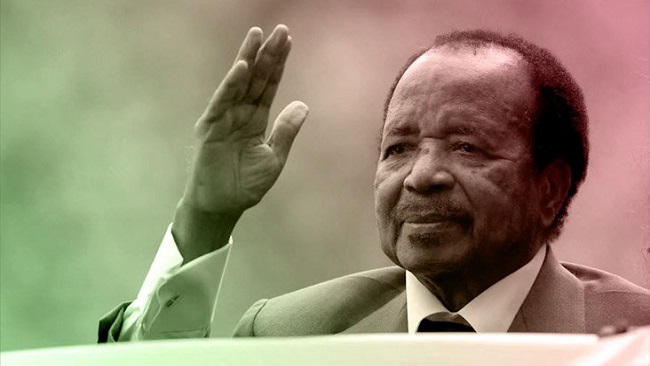
The Ambazonia Interim Government (IG) has lashed out at the Biya French Cameroun regime’s massive deployment of Francophone army soldiers in Southern Cameroons, insisting that it will not hinder the Federal Republic of Ambazonia’s resolve to gain complete and total independence.
Vice President Dabney Yerima declared in remarks on Saturday that Amba fighters ambushed a French Cameroun gendarmerie convoy at Mbessi and killed a serviceman identified as Ajoliva Akembe who moonlighted as Brigade Commander of the French Cameroun operated Mile 4-Nkwen Gendarmerie Brigade.
Yerima observed that Southern Cameroonians would never leave their homeland despite the cruel military deployments by the French Cameroun occupying regime in Yaoundé.
Army deployments into Southern Cameroons by the Biya French Cameroun regime have been on the rise recently, leading to the killing, injuring and detention of several Ambazonians.
Vice President Dabney Yerima further emphasized that Yaoundé has expanded its marginalization policy of retiring several highly placed Southern Cameroonians in the Francophone dominated Cameroonian public service including the military.
By Isong Asu with files from Chi Prudence Asong