16, January 2022
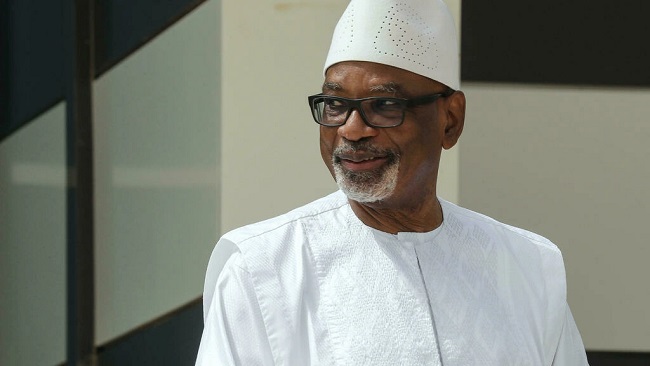
Former president of Mali Ibrahim Boubacar Keita dies at 76 0
Mali’s former president Ibrahim Boubacar Keita, who led the West African country from 2013 until he was ousted in a coup in 2020, died at the age of 76 in Bamako Sunday, his family said.
Keita was two years into his second five-year term when in 2020 he faced widespread street protests against his government and was toppled by the military, which is now under regional sanctions for failing to restore civilian rule.
“President IBK died this morning at 0900 GMT in his home” in Bamako, a family member told AFP, using the former leader’s initials; several other family members confirmed his passing.
The cause of Keita’s death was not given.
In the weeks before the 2020 coup, he had been struggling with protests fuelled by his handling of a jihadist insurgency and failure to turn around Mali’s floundering economy.
Snail-paced political reforms, decrepit public services and schools, and a widely shared perception of government corruption also fed anti-Keita sentiment, driving tens of thousands of protesters into the streets.
Keita was forced out of office on August 18, 2020 by young military officers who staged an uprising at a base near Bamako before heading into the city, where they seized Keita and other leaders.
Under pressure from the West African bloc ECOWAS, the junta that emerged from the rebellion released Keita on August 27 and returned him to his residence in Bamako, under surveillance.
He suffered a mini-stroke the following month, and was sent to United Arab Emirates for treatment.
Campaigning credentials
The ruling junta would stage another coup in May 2021.
ECOWAS this month agreed to sanction Mali after the junta proposed it would to stay in power for up to five years before staging elections – despite international demands that it respect a promise to hold the vote in February.
The son of a civil servant, Keita was born in the southern industrial city of Koutiala, the declining heartland of cotton production.
After studying literature in Mali, Senegal and France – his great-grandfather was a French colonial soldier who died in the Battle of Verdun in World War I – Keita became an adviser for the EU’s overseas development fund before heading a development project in northern Mali.
He campaigned against general Moussa Traore, Mali’s former president ousted in 1991 by a military coup.
He then rose through the ranks under Alpha Oumar Konare, the country’s first democratically elected president.
As a socialist prime minister between 1994 and 2000, he quelled a series of crippling strikes, earning a reputation as a firm leader and helping to set up his landslide election in 2013 – when he finally ascended to the presidency after losing runs in 2002 and 2007.
Source: AFP





16, January 2022
Africa Cup of Nations: Barrow converts late penalty to snatch draw for Gambia 0
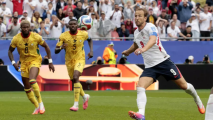
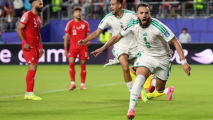
Musa Barrow converted a 90th-minute penalty for Gambia to snatch a 1-1 draw against Mali with the matchday 2 result set to take both teams through to the second round of the Africa Cup of Nations.
Mali went ahead after 79 minutes in Limbe when Ibrahima Kone scored from another penalty, both of which were awarded after the Moroccan referee watched replays on a VAR monitor.
The draw keeps Gambia and Mali level at the top of Group F with four points each. Pointless sides Tunisia and Mauritania meet later on Sunday and a win for either country will bring them into contention.
Group winners and runners-up after three matchdays qualify for the round of 16 along with the best four third-placed sides.
Brighton midfielder Yves Bissouma, who came off the bench in a matchday 1 win over Tunisia, was promoted to the starting line-up by Mali coach Mohamed Magassouba.
The other Premier League player in the Mali team, Southampton winger Moussa Djenepo, retained his place as the west African nation sought a ninth win in 19 matches in all competitions against Gambia.
In 32 degrees Celsius (90 Fahrenheit) early afternoon heat and 75 percent humidity at the 20,000-seat Stade Omnisport it was no surprise that the match began at a slow pace.
Mali were more impressive in the early exchanges with Bissouma firing a free-kick wide and Djenepo having a header saved by Modou Jobe, who plays in the South African second division.
After being on the back foot for 20 minutes, Gambia were awarded a 35-metre free-kick and Musa Barrow unleashed a thunderbolt that rattled the crossbar.
After two cooling breaks within eight minutes to enable the players to drink water, the woodwork came to the rescue of Mali again.
This time Ablie Jallow was the unlucky Gambian as his angled shot rebounded off a post to the relief of Mali goalkeeper Ibrahim Mounkoro.
Djenepo was harshly yellow-carded by the Moroccan referee as half-time approached, ruling him out of the final group match against Mauritania on Thursday as he was also cautioned against Tunisia.
After a slow start to the second half, the match burst into life with Mali having three scoring opportunities in quick succession and Gambia one.
Bissouma fired just over, Adama ‘Malouda’ Traore narrowly lost a chase for the ball with Jobe, who then blocked with his chest a close-range attempt by Traore.
A Gambian counterattack threatened to break the deadlock until they were dispossessed on the edge of the Mali box.
Then came the two penalties with Kone and Barrow holding their nerve to send the goalkeepers the wrong way.
Source: AFP