Cameroon Concord News
You Are What You Read
  • Home
  • News
    • Cameroon
    • Nigeria
    • Africa
    • Europe
    • World
  • Politics
    • Cameroon
    • Nigeria
    • Africa
    • Europe
    • World
  • Sports
    • Cameroon
    • Africa
    • Europe
    • World
  • Business
    • Africa
    • World
  • Life
    • Education
    • Health
    • Fashion
    • Entertainment
  • Religion
    • Cameroon
    • World
  • Contact
    • Online
    • Phone
    • Email
  • About
    • Us
    • Our Services
    • Advertising with Us

Categories

Recent Posts

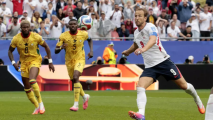
  • World Cup: England held by Ghana in goalless Group L stalemate
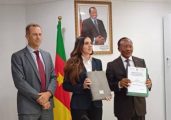
  • Cameroon, PROPAV Infrastructure Ltd sign MoU for construction of Bekoko-Limbe-Idenau road
  • Messi, Mbappé and Haaland lead World Cup Golden Boot race
  • Manyu Chieftaincy Disease: Is Ossing the next victim?
  • Owona Nguini’s attacks on Samuel Eto’o are becoming increasingly unconvincing

Archives

  • June 2026
  • May 2026
  • April 2026
  • March 2026
  • February 2026
  • January 2026
  • December 2025
  • November 2025
  • October 2025
  • September 2025
  • August 2025
  • July 2025
  • June 2025
  • May 2025
  • April 2025
  • March 2025
  • February 2025
  • January 2025
  • December 2024
  • November 2024
  • October 2024
  • September 2024
  • August 2024
  • July 2024
  • June 2024
  • May 2024
  • April 2024
  • March 2024
  • February 2024
  • January 2024
  • December 2023
  • November 2023
  • October 2023
  • September 2023
  • August 2023
  • July 2023
  • June 2023
  • May 2023
  • April 2023
  • March 2023
  • February 2023
  • January 2023
  • December 2022
  • November 2022
  • October 2022
  • September 2022
  • August 2022
  • July 2022
  • June 2022
  • May 2022
  • April 2022
  • March 2022
  • February 2022
  • January 2022
  • December 2021
  • November 2021
  • October 2021
  • September 2021
  • August 2021
  • July 2021
  • June 2021
  • May 2021
  • April 2021
  • March 2021
  • February 2021
  • January 2021
  • December 2020
  • November 2020
  • October 2020
  • September 2020
  • August 2020
  • July 2020
  • June 2020
  • May 2020
  • April 2020
  • March 2020
  • February 2020
  • January 2020
  • December 2019
  • November 2019
  • October 2019
  • September 2019
  • August 2019
  • July 2019
  • June 2019
  • May 2019
  • April 2019
  • March 2019
  • February 2019
  • January 2019
  • December 2018
  • November 2018
  • October 2018
  • September 2018
  • August 2018
  • July 2018
  • June 2018
  • May 2018
  • April 2018
  • March 2018
  • February 2018
  • January 2018
  • December 2017
  • November 2017
  • October 2017
  • September 2017
  • August 2017
  • July 2017
  • June 2017
  • May 2017
  • April 2017
  • March 2017
  • February 2017
  • January 2017
  • December 2016
  • November 2016
  • October 2016
  • September 2016
  • August 2016
  • July 2016
  • June 2016
Assassination of Senator Kemende: Africa Cup of Nations will end, but Southern Cameroons Crisis remain

14, January 2022

Assassination of Senator Kemende: Africa Cup of Nations will end, but Southern Cameroons Crisis remain 0

The killing this week of a prominent senator from Cameroon’s anglophone western region, while the country hosts the 2022 Africa Cup of Nations, has put a spotlight on a conflict the government has tried to paper over. While President Paul Biya hails the tournament as a symbol of unity, his government’s policies have exacerbated deadly divides.

On Tuesday night, hours before the coastal city of Limbé hosted its first match of the Africa Cup of Nations (AFCON, or CAN as it is called in French), Senator Henry Kemende left his house in Bamenda, a city further inland in the troubled English-speaking region in the country’s west.

He never returned home.

Hours later, the opposition politician’s body was found in his native Bamenda, capital of Cameroon’s war-torn Northwest Region, his chest riddled with bullets.

Kemende, a lawyer and lawmaker for the Social Democratic Front (SDF) party, one of Cameroon’s main opposition parties, was an outspoken human rights defender. He was also a leading representative of the country’s marignalised anglophone minority, who constitute around 20 percent of the country’s 28 million population.

His killing came as international sports journalists were making their way to Limbé for Wednesday’s match between Tunisia and Mali at the Omnisport stadium. The AFCON has seen the usual displays of national pride accompanied by choruses of buzzing vuvuzelas.The tournament kicked off on Sunday with the hosts beating Burkina Faso, setting of a burst of rapturous joy among Cameroonian football fans, many emblazoned in the green, red and yellow colours of the national flag.

But Africa’s premier football tournament this year has been overshadowed by serious security concerns.

Militants from a motley mix of armed groups fighting for a separate state – called “Ambazonia” – in the anglophone west have threatened to disrupt the games. Confronting a separatist insurgency in the west, a jihadist threat in the north and a pandemic across the world, the government nevertheless responded with a confident motto: “Safety will be guaranteed”.

But the Cameroonian state – led by 88-year-old President Paul Biya, who has been in power for four decades – has not been able to guarantee the security of its citizens in the western provinces over the past few years. The anglophone insurgency has claimed more than 3,000 lives and displaced nearly a million people over the past five years, with both sides accused of committing atrocities and abuses.

No one has claimed responsibility for Kemende’s killing so far. The Ambazonian Defence Force (ADF), one of the main anglophone separatist groups, has denied responsibility.

The group did however claim an attack on Wednesday, which killed a Cameroonian soldier in Buéa, a western city around 20 kilometres north of Limbé, where four Group F national teams – Mali, Gambia, Tunisia and Mauritania – are based.

The slaying of a prominent parliamentarian in the Northwest Region followed by a deadly attack in the Southwest Region has put a spotlight on a conflict the Cameroonian government has attempted to shield from the international community.

The hosting of the AFCON – which was postponed from 2021 due to the pandemic – has also raised questions over the use of major sports events by authoritarian leaders to project national unity while their policies exacerbate divisions – with deadly consequences.

A new killing, an old colonial problem

Kemende’s killing has exposed the intractable nature of a crisis amid fears that the moderate anglophone politician could have been assassinated by extremist Ambazonia militants, locally known as “Amba boys”.

With his legal background defending the rights of his constituents and his ability to speak truth to power, Kemende was a firebrand parliamentarian and a familiar figure on Cameroon’s English language TV stations.

For the many people who knew the SDF senator and worked with him, Kemende’s killing is both unfathomable and tragic.

“It’s a huge loss,” mourned Christopher Fomunyoh, senior associate for Africa at the Washington DC-based National Democratic Institute (NDI), in an interview with FRANCE 24.

“It’s a huge loss for his family of course. It’s a huge loss for the legal profession, given the role lawyers played in the beginning of this crisis and the role they stand to play in resolving the crisis. Nationally, it’s an enormous loss: A member of the Senate, a constitutional body, has been assassinated. And it’s a huge loss as the conflict continues and the gap between the anglophone population and the state widens.”

The crisis in Cameroon’s anglophone western region was sparked in October 2016, when lawyers took to the streets in Bamenda to protest the exclusive use of French in court and other state institutions.

The roots of the problem date back to the colonial era, when the central African region once colonised by Germany was split between Britain and France after World War I. With the withdrawal of the colonial powers, Cameroon became a federation under a 1961 constitution, with English and French designated official languages. Buéa became the capital of West Cameroom while Yaounde doubled as the federal capital as well as the capital of francophone East Cameroon.

Cameroon’s Northwest and Southwest regions are former British colonies while the rest of the country was colonised by France.

Cameroon’s Northwest and Southwest regions are former British colonies while the rest of the country was colonised by France. © Studio Graphique France Médias Monde

But English-speaking Cameroonians have long complained of discrimination, noting that the country’s top positions in government, as well as in the oil sector, have always been held by French speakers. Anglophone Cameroonians also complained that government documents were published only in French, enabling their exclusion from top civil service jobs.

The grievances were familiar and the protests peaceful – until a ferocious security crackdown fuelled support for separatism and the emergence of several separatist militias calling for a new state of Ambazonia.

The emergence of militias has plunged the already marginalised western region in a cycle of violence with dismaying familiarity. A militarised state response has seen hundreds of opposition party members and activists jailed and a populace living in fear of arbitrary arrests and crackdowns.

Meanwhile Ambazonia militants routinely target civilians accused of “collaborating” with the government in Yaounde and have enforced a school boycott, depriving hundreds of thousands of children of their education.

“It’s always the civilians, the ordinary people caught in the middle, who suffer,” said Rebecca Tinsley, a London-based activist with The Global Campaign for Peace and Justice in Cameroon. “The violence is just getting worse. In 2021, there were more than 80 IED [improvised explosive device] attacks in the anglophone region alone. Because of the violence, nearly a million children are not able to go to school and there’s very little security, making the lives of ordinary people very difficult.”

‘Just five days’ for talks

Two years after militants declared an independent Ambazonia in 2017, Swiss negotiators agreed to mediate talks between Cameroonian authorities and separatists in a bid to end the escalating violence.

The Swiss peace proposals however received no follow-up and the Cameroonian government instead launched a National Dialogue from September 30 to October 4, 2019, with much fanfare.

Following the talks in Yaounde, the government announced new measures, including the release of some political prisoners, the creation of regional assemblies and councils, as well as a $163 million special fund for the reconstruction of the English-speaking Northwest and Southwest regions.

But a year later, the western regions were still ungovernable and the violence had increased. While the special fund had received 10 percent of the promised $163 million, fighting had slowed the first phase of the reconstruction exercise.

“The National Dialogue was a piece of theatre for the benefit of the international community,” dismissed Tinsley. “It had no credibility because most of the anglophones were either not invited or afraid to go [to Yaounde] in case they got arrested.”

Most analysts agree the talks, which brought together representatives from Cameroon’s 10 provinces instead of concentrating on the aggrieved region, were a failure. “The National Dialogue was held for just five days – you can’t deal with grievances of over 50 years, diagnose the problems, find solutions, seek consensus and address implementation in five days,” said Fomunyoh. “They continue to insist this is an internal problem. They think they can just shoot their way out of the conflict or the crisis will burn itself out,” he dismissed.

Tournament will end, but ‘problems remain’

The hosting of the Africa Cup of Nations could have provided an opportunity to either reinvigorate a moribund peace process or better, evaluate failures and start afresh.

Football is politics in Cameroon, with the sport playing an important role in public life. Domestically, the sport “serves as a diversionary element in the country’s tightly controlled political system, whilst internationally, successful sports performance compensates for the country’s weak influence on other aspects of continental and global politics,” noted Joanne Clarke and John Sunday Ojo in their report, “Sport Policy in Cameroon”.

The Cameroonian president – with his advanced age, health problems and protracted stays in his Swiss luxury getaway – is the subject of private jokes and speculations about his mental agility. But even at 88, Biya has proved he instinctively understands the power of the game in his football-mad nation when he declared AFCON “a great moment of brotherhood” that would provide Cameroonians an opportunity to display “the rich cultural diversity that has earned our country the nickname, ‘Africa in miniature’”.

But aside from the spectacle of declarations, the Biya administration missed the moment to include all Cameroonians in a brotherhood that enables the inclusion of the country’s diversity in all political and economic sectors.

Fomunyoh lists four conditions for the resumption of an anglophone peace process based on established negotiation norms. These include the declaration of an immediate ceasefire to stop the cycle of violence, the release of political prisoners, the use of non-Cameroonian negotiators to facilitate dialogue between opposing sides, and finally, to “accept that the mediations should be held in another country outside Cameroon”.

None of the proposals were heeded, leaving Fomunyoh to view the current football circus as a metaphor for the country’s leadership style. “I feel this tournament and the debate around it captures how this government tackles issues. They’re so focused on the here and now, they don’t seem to be able to project into the middle or long term,” he noted. “In a few weeks, the tournament will be over, but the problems remain.”

The anglophone crisis, experts agree, requires a political – not military – solution. But for Cameroonians invested in a peaceful resolution to the conflict, Kemende’s killing leaves a deep vacuum. “He was one of the few anglophone elites who spoke out and who could talk to both sides,” mourned Fomunyoh. “Unfortunately, I don’t have any confidence that there will be a thorough investigation, that the perpetrators are found and put to trial, and that justice will be served.”

Source: France 24

Burkina Faso revolutionary leader Thomas Sankara ‘shot seven times’

14, January 2022

Burkina Faso revolutionary leader Thomas Sankara ‘shot seven times’ 0

Burkina Faso’s revolutionary leader Thomas Sankara, who was gunned down during a coup in 1987, was shot at least seven times by assassins using tracer rounds, experts have told a long-awaited trial into his killing.

Sankara was struck by “at least seven rounds” in the chest, one of which was fired from behind, anatomical specialist Robert Soudre told a military court in the capital Ouagadougou on Wednesday.

A police ballistics expert, Division Commissioner Moussa Millogo said the bullets came from tracer rounds, “because of burns on the remains of clothing” that Sankara was wearing at the time.

Tracer rounds are ammunition which ignite a burning powder that lights up. The rounds are designed for fighting at night, to help the shooter mark the target.

Several calibres of bullet were found on Sankara’s remains, including 7.62 and 9mm rounds, Millogo said.

Sankara was an army captain aged just 33 when he came to power in a coup in 1983.

A fiery Marxist-Leninist, he railed against imperialism and colonialism, often angering Western leaders but gaining followers across Africa and beyond.

Sankara and 12 of his colleagues were gunned down by a hit squad on October 15 1987 at a meeting of the ruling National Revolutionary Council.

Their assassination coincided with a coup that brought Sankara’s erstwhile comrade-in-arms, Blaise Compaore, to power.

He ruled for 27 years before being deposed by a popular uprising in 2014 and fleeing to neighbouring Ivory Coast.

Compaore is on trial in absentia, charged like his former right-hand man General Gilbert Diendere with harming state security, complicity in murder, concealing bodies and witness tampering.

Compaore has persistently denied entrenched suspicions among Burkinabe that he ordered Sankara’s killing, while Diendere has pleaded not guilty.

Diendere has been separately handed a 20-year term for his part in a 2015 plot to overthrow the post-Compaore transitional government.

The trial, and details of what happened on the day of Sankara’s assassination, are being closely followed in the landlocked West African country.

– ‘Violent death’ intended –

Sankara remains a revered figure for many and his brutal death cast a pall over the country for decades. The circumstances of his killing were taboo under Compaore’s reign.

Fourteen men, including Compaore, are on trial in the proceedings, which began on October 11.

Prosper Farama, a lawyer for the Sankara family, said Wednesday’s testimony was revealing.

“When you listen to the experts, the type of weapons were used for assault that intended to inflict a violent death,” he said.

“When you’re told that these are tracer rounds, which ignite on contact, you cannot say that these are the types of weapons which are used to carry out an arrest.”

Sankara’s body was hastily disposed of after the killing and the authorities issued a death certificate saying that he had died of “natural causes.”

In May 2015, Sankara’s presumed remains and those of his companions were exhumed in May 2015 at a cemetery in Ouagadougou.

Autopsy results released in October 2015 said that Sankara’s supposed remains were “riddled with bullets.”

Source: AFP
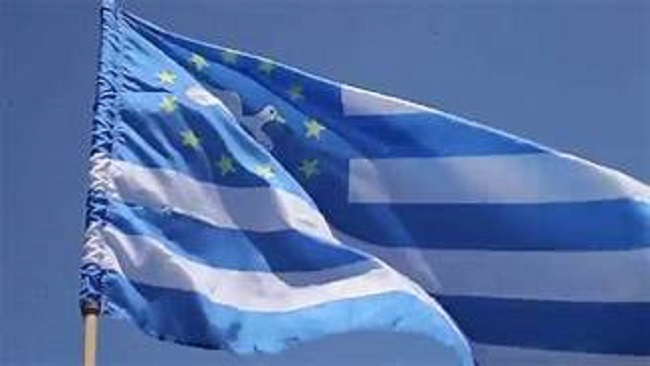
Southern Cameroons Africa Cup of Nations: Troops and Amba exchanged fire, Senator shot dead

14, January 2022

Southern Cameroons Africa Cup of Nations: Troops and Amba exchanged fire, Senator shot dead 0

Troops and armed men exchanged fire on Wednesday in the town of Buea in the Southwest region, leaving several injured.

Buea is a short drive from the coastal town of Limbe, which is hosting eight matches at the Cup of Nations including all games in Group F.

The teams in that group — Tunisia, Mali, Mauritania and Gambia — are using Buea as their training bases.

An opposition senator was also found shot dead in the region on Wednesday, when the road to Limbe from economic capital Douala — a distance of around 80 kilometres — was lined with elite soldiers and members of the police.

Wednesday’s match in Limbe between Mali and Tunisia was marred by controversy when Zambian referee Janny Sikazwe blew the final whistle before 90 minutes had been completed, with Mali 1-0 up.

Officials ordered that the teams would have to come back out to play three more minutes, but Tunisia decided not to bother returning, despite being furious with the referee.

The Confederation of African Football said on Thursday it was investigating the incidents.

On Friday, Senegal, Africa’s top-ranked national team, will look to make it two wins from two in Group B as they play Guinea in western city Bafoussam before Malawi take on Zimbabwe.

Morocco, another of the title contenders, play tournament debutants the Comoros in Group C in Yaounde, where Ghana face a Gabon side who could have star striker Pierre-Emerick Aubameyang back from Covid-19.

Source: AFP

Africa Cup of Nations in empty stadiums is something the CPDM Crime Syndicate is fighting against

14, January 2022

Africa Cup of Nations in empty stadiums is something the CPDM Crime Syndicate is fighting against 0

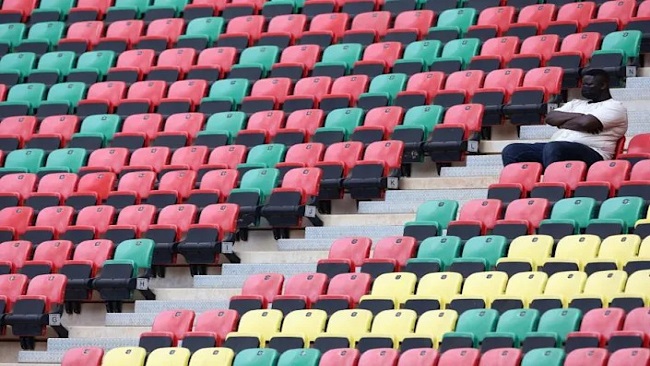
Africans are starting to get used to seeing football games played in empty stadiums, and as the Covid-19 pandemic continues to sweep across the black continent it seems there’s going to be a lot more of it – assuming football games are played at all. For players who are used to selling out every ground they play in, and fans used to being there to see them, this is all very strange.

Cameroon’s fine victory was played out in front of vast swathes of empty seats at the 60,000-capacity Olembe Stadium, with supporters in the football-mad country choosing to stay away from venues in large numbers.

“We hope there will be more people there for the third match,” said Toko-Ekambi.

Organisers have restricted crowds to 60 percent of capacity because of the pandemic, although for games involving Cameroon the limit is raised to 80 percent.

Nevertheless fans must also be vaccinated against Covid-19 and provide proof of a negative coronavirus test, enough to put off many in a country with a very low rate of inoculation.

Despite that Cameroonians are very much behind their team, while the country deals with separatist violence in its two anglophone regions, both of which straddle the Nigerian border in the west.

Faced with this first popular failure, the Minister of Communication, the government’s spokesperson, urged residents to go in droves to the stands to experience the matches live.

“The government, with my voice, urges all Cameroonians to continue to do everything, while strictly adhering to the rules that have been enacted to attend the various meetings in a spirit of fair play, discipline and brotherhood,” wrote Rene Emmanuel Sadi.

Reported by Camcordnews and AFP

Yaounde: Indomitable Lions light up Africa Cup of Nations to qualify for knockout stages

14, January 2022

Yaounde: Indomitable Lions light up Africa Cup of Nations to qualify for knockout stages 0

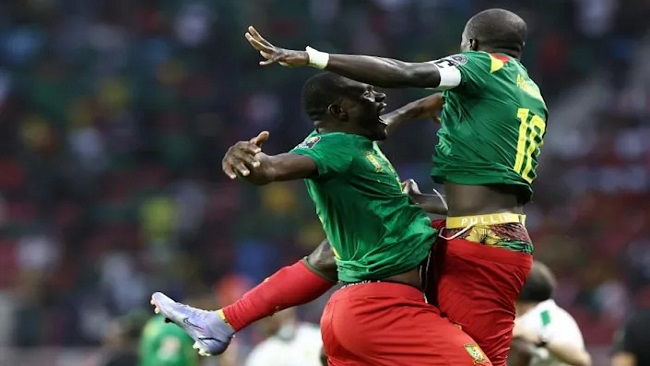
Hosts Cameroon became the first team to qualify for the knockout stages of the Africa Cup of Nations on Thursday as captain Vincent Aboubakar and Karl Toko-Ekambi both scored twice in a 4-1 demolition of Ethiopia in Yaounde.

It was a game that brought the tournament to life after a goal-shy first round of group matches saw a meagre total of just 12 in 12 encounters, four of which were penalties.

Cameroon had been the only team out of 24 at the tournament to score more than a single goal in their first match when a brace of Aboubakar spot-kicks saw them beat Burkina Faso 2-1 on Sunday.

Back at the same Olembe Stadium in the capital Yaounde they ran riot, although only after Dawa Hotessa gave Ethiopia a shock lead.

Lyon forward Toko-Ekambi quickly headed in the equaliser and then Aboubakar added a brace early in the second half before Toko-Ekambi completed the victory.

“We played well going forward but we still need to improve defensively. Things are only going to get tougher,” said Cameroon’s Portuguese coach Toni Conceicao.

Toko-Ekambi, Andre-Frank Zambo Anguissa and Collins Fai all also hit the woodwork for the Indomitable Lions, and the five-time African champions are now well-placed to finish top of Group A.

They are three points clear of both Burkina Faso and Cape Verde, who met in Thursday’s late game in Yaounde with the Stallions of Burkina Faso winning 1-0 thanks to a first-half goal by Hassane Bande, who belongs to Ajax.

Ethiopia, the 1962 champions, are left still looking for their first point and their first win at any Cup of Nations since 1976. This is their third appearance at the finals since then but they have now gone 10 matches without a win at the tournament.

Source: AFP

CPDM Crime Syndicate: Another  General Manager in Kondengui

13, January 2022

CPDM Crime Syndicate: Another  General Manager in Kondengui 0

He is accused of financial misappropriation by the so-called Special Criminal Court. The French Cameroun political elite has been held in pre-trial detention since January 5 at the Kondengui  Maximum Security Prison.

This week in Yaounde, pro Biya state prosecutors questioned Jean Claude Atanga Bikoe the general manager of a CPDM creation known as Road Fund dedicated to the financing of road maintenance and direct payment to private companies for services provided under contracts awarded after competitive bidding.

Cameroon Intelligence Report correspondent covering the Special Criminal Court reported that Jean Claude Atanga Bikoe was arrested on the basis of several damning reports which is still to reveal the exact amount  stolen by the GM.

The pro Biya regime judges also accused the former GM of complicity in the misappropriation of public property, forgery and use of forgeries in public writing, in the context of the financial management of the Road Fund.

The presidential decree that created the Road Fund as a public administrative establishment in 1996 stipulates that its general manager ensures its daily management by collecting and transferring financial resources into the Fund’s bank accounts or public treasury. Hon. Jean Claude Atanga Bikoe was installed at the head of the Road Fund in 2012.

Jean Claude Atanga Bikoe’s arrest comes in the wake of the presidential speech at the end of the year. The 88-year old Paul Biya announced, among other things, the resumption of the fight against misappropriation of public funds.

Depicting the Special Criminal Court established to prosecute alleged corrupt government officials and the several Alibabas responsible for pilfering from the public treasury as President Biya’s court is no misnomer. Cameroon Concord News Group calls it the President’s court because it is one instrument of power through which Biya is reining in on perceived opponents from within his CPDM power conduit.

 An attribute of a genuine court is the fairness of the trial proceedings in cases which are brought before the court for trial. It is not the number of convictions entered against accused.  A court is legitimate and recognized as such because of its exercise of judicial, executive, legislative and administrative independence.  A court that is independent must be accessible to all citizens after all, is equality before the law, not a constitutionally protected value? The Special Criminal Court is lacking in these attributes of impartiality, judicial independence and accessibility.  It is perceived more as President Biya’s Court than a Court of Justice.

Establishing this court was President Biya’s way of saving himself the embarrassment of being humiliated during his perennial trips abroad as the President of the most corrupt country in the world.  This ranking of the country as the most corrupt or one of the most corrupt countries had a potential to hamper President Biya’s personal pecuniary interests far from the borders of Cameroon.  There was therefore a personal interest need to establish the court.  Another personal interest need was to avail himself of a legal tool under his direct control to consolidate absolute power, blackmail potential rebels and competitors within the system and to stifle any form of institutional opposition. He perceived the court as a tool with which to whitewash his more than thirty-eight years of corrupt governance and the rape of the economy.

With the war against Boko Haram and the war in Southern Cameroons, the fight against corruption using the Special Criminal Court has afforded Paul Biya justification contest in the next institutionally flawed elections in order to eternalize power purportedly to direct the war against so-called terror and the war against corruption.  True to the name the President’s Court, the President has exclusive preserve in referring cases to the Special Court and the power to terminate them. He decides who will be arrested, who will be investigated and who will serve time and who will not.

In one instance, he ordered a detained late Minister Bapes Bapes released from remand custody at Kondengui when a warrant was issued for his arrest without the presidential fiat.

By Soter Tarh Agbaw-Ebai with files from Rita Akana

Tennis: Djokovic included in Australian Open draw despite visa saga uncertainty

13, January 2022

Tennis: Djokovic included in Australian Open draw despite visa saga uncertainty 0

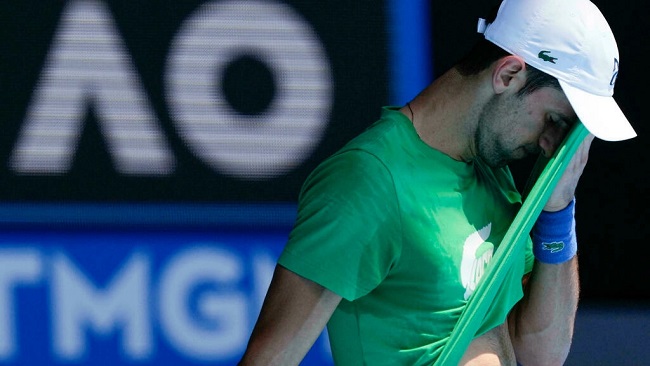
Tennis world No.1 Novak Djokovic was included in the Australian Open official draw on Thursday, although uncertainty remained about whether the government will cancel the top seed’s visa for a second time.

Immigration Minister Alex Hawke is weighing exercising his discretionary power to revoke Djokovic’s visa over concern about the star’s medical exemption from Australia’s COVID-19 vaccination requirements.

The 34-year-old defending champion, who was out practicing at the Rod Laver Arena earlier on Thursday, drew unseeded fellow Serb Miomir Kecmanovic for his opening round match, expected to be played on Monday or Tuesday.

The controversy has assumed an importance that goes beyond tennis: it has intensified a global debate over the rights of the unvaccinated and become a tricky political issue for Prime Minister Scott Morrison as he campaigns for re-election.

Australia is due to hold an election by May, and while Morrison’s government has won support at home for its tough stance on border security before and during the pandemic, it has not escaped criticism over the botched handling of Djokovic’s visa.

Morrison declined to comment on Djokovic’s visa on Thursday.

Organiser Tennis Australia had delayed the official draw for more than an hour, without saying why.

Djokovic, a vaccine sceptic, fuelled widespread anger in Australia last week when he announced he was heading to Melbourne for the Australian Open with a medical exemption from requirements for visitors to be inoculated against COVID-19.

On his arrival, Australian Border Force officials decided his exemption was invalid and he was held alongside asylum-seekers at an immigration detention hotel for several days.

A court on Monday allowed him to stay on the grounds that officials had been “unreasonable” in the way they handled his interview in a seven-hour process in the middle of the night.

The government, which has won support at home for its tough stance on border security before and during the pandemic, must now decide whether to let Djokovic remain and bid for a record 21st major title.

Mistakes Made

Djokovic’s cause was not helped by a mistake in his entry declaration, on which a box stating he had not travelled abroad in the two weeks prior to leaving for Australia was ticked.

In fact, he had gone to Spain from Serbia.

Djokovic, 34, attributed the error to his agent and acknowledged he also should have rescheduled an interview and photoshoot for a French newspaper on Dec. 18 while infected with COVID-19.

Fans, including many Serbian Australians, gave him noisy support when he was detained. Anti-vaxxers have hailed him as a hero and his family have portrayed him as a champion of individual rights.

But Djokovic may face hostility from the crowd if and when he walks out on court.

There is widespread anger over the saga among Australians, who have a 90% vaccination rate among adults after enduring some of the world’s longest lockdowns aimed at curbing the pandemic.

Crowds at the Open’s main arenas will be capped at 50% capacity and masks will be mandatory for all spectators under updated COVID-19 restrictions announced on Thursday as authorities battle a surge of cases caused by the Omicron variant.

“I don’t like his arrogance,” Teyhan Ismain, a Melbourne resident, said on Wednesday. “It does seem that he’s been telling a few fibs too. So I think he should just probably go back.”

There may also be resentment in the dressing room, where all but three of the top 100 men are inoculated.

Tennis great Martina Navratilova told Australian television Djokovic should “suck it up” and return home.

“The bottom line is, sometimes your personal beliefs have to be trumped by what’s good for the greater good, for those around you, for your peers,” she told Seven’s Sunrise programme. “You have two choices, get vaccinated or just don’t go play.”

Source: REUTERS

Africa Cup of Nations: Lethal Max Gradel gives Ivory Coast 1-0 victory over Equatorial Guinea

13, January 2022

Africa Cup of Nations: Lethal Max Gradel gives Ivory Coast 1-0 victory over Equatorial Guinea 0

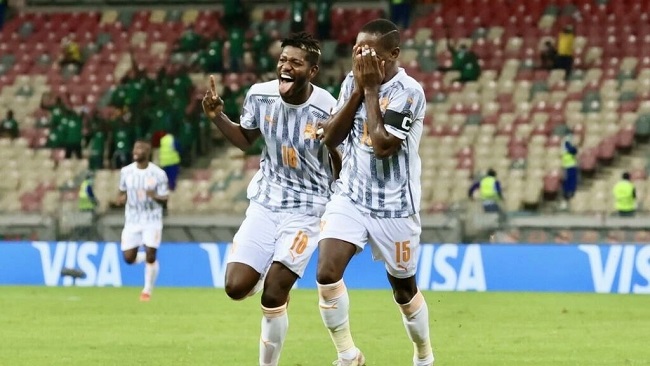
Ivory Coast reminded everyone why they were favourites to win the Africa Cup of Nations when they beat Equatorial Guinea on Wednesday with a sterling Max Gradel goal in the sixth minute. Equatorial Guinea were hard to break down for the rest of the match, but Ivory Coast never looked in danger of throwing away their lead.

It was a brilliantly ruthless strike from Gradel that put Ivory Coast ahead – he reacted in a split-second when sloppy defending gave him the ball on the edge of the box, smashing a piledriver into the back of the net.

Ivory Coast didn’t look back. Equatorial Guinea were pertinacious – getting men back effectively and constantly attempting to counter-attack. But Ivory Coast kept pulling together beautiful strings of midfield passes and frequently converted them into attacking menace with darting runs towards the box.

They have long been one of the most impressive African national teams – boasting one of the continent’s greatest players of all time, Chelsea striker Didier Drogba, and winning CAN in 1992 and 2015.

Drogba is long gone – as are most of the players who won that Africa Cup of Nations trophy six years ago, such as Yaya Touré and Kolo Touré. But fresh talent has poured in to the Ivory Coast ranks. In addition to Gradel, they have Sébastian Haller, the Champions League top scorer so far this season, and Crystal Palace’s Wilfried Zaha, one of the Premier League’s best strikers.

Source: France 24

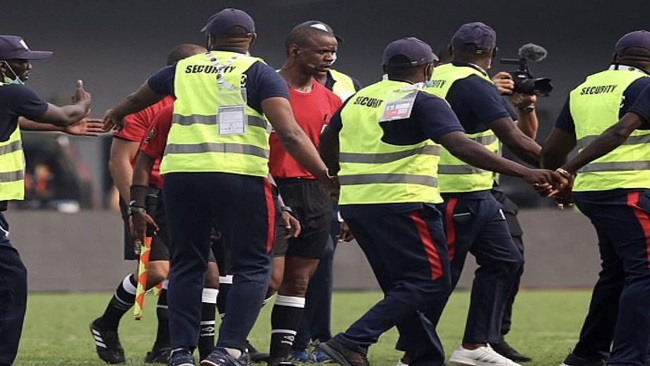
Africa Cup of Nations: Referee blows up 5 minutes early, gets VAR calls wrong, is escorted from the pitch in Limbe

13, January 2022

Africa Cup of Nations: Referee blows up 5 minutes early, gets VAR calls wrong, is escorted from the pitch in Limbe 0

The Africa Cup of Nations tournament descended into farce on Wednesday afternoon, thanks to an incredibly inefficient performance from the referee in the Group F match between Tunisia and Mali.

Zambian man-in-the-middle, Janny Sikazwe, had officiated reasonably okay until the match was in its final stages, and then all hell broke loose.

As ESPN journalist, Dale Johnson, noted on his Twitter account, a penalty was given (that was missed) after a VAR review and then Sikazwe blew for full time with only 85 minutes on the clock.

If that weren’t bad enough, play was eventually restarted and the official sent off a player whom VAR then advised shouldn’t have seen a red card.

After rejecting the VAR review for the sending off, he then blew again for full-time on 89 minutes and 40 seconds.

The farcical nature of Sikazwe’s officiating still hadn’t run its course. Video shows the officials after the game, perhaps realising the mistake, deciding what to do and then deciding that the final few minutes did indeed need to be played.

With supporters filing back into the stadium, Tunisia seemingly refused to come out and complete the game, so it was officially ended in their absence.

Source: One football

Africa Cup of Nations: In the face of empty stadiums, Minister Sadi urges residents to go and fill the stands

13, January 2022

Africa Cup of Nations: In the face of empty stadiums, Minister Sadi urges residents to go and fill the stands 0

It was announced that it is a popular meeting in Cameroon, the country of football, the final stage of the 33rd Africa Cup of Nations is being played in hollow stadiums.

It started on January 09, 2022 at the Yaounde Olympic Stadium, and the first day will end on Wednesday January 12, 2022 at the Limbe Sports Stadium and at the Douala Jaboma Sports Stadium.

But stadiums with scattered fans are the first lesson that can already be learned three days after the grand celebration of African football kicked off.

Aside from an Olympic bunker where organizers recruited high school students and other supporters of President Paul Biya to rally, spectators did not turn out in droves for matches elsewhere. Why are the spectators waiting in the stadiums with the absence of the participants?

“There is first of all this famous requirement of compulsory vaccination. Vaccination does not go well with some conservative peoples; the time of some matches: two in the afternoon when everyone steps in and the referee completes his reports. It is difficult to muster them; the stadium is not in Bafoussam, but In Kouekong.More than 8 km from the city and getting there is not easy, as no taxi makes the line.Kouekong is not a populated area but an area on the Bafoussam – Foumbot road;The Zimbabwean and Senegalese communities in Bafoussam are not overcrowded.It will be the same with exceptions Few other games that do not include the indomitable lions. Even the Ahmadou Ahidjo omnisports stadium matches bear the same fate.” I tried to explain this the day after the Senegal-Zimbabwe match (1-0) Alan Roosevelt Tedjo, deputy and activist of the ruling political party.

No facilities were provided to allow Cameroonians to go to the stadium during the days of the CAN. For example, allowing employees of public and private departments to work daily until 12 noon; Establishment of public transportation (shuttle buses) to and from the city halls at low cost and strong communication on this (different points and times of departure and return); Increase the number of free tickets and invitations. These few measures can improve attendance at our stadiums during the CAN,” added Maurice Kimjang Fuse, President of the Littoral Regional Lawn-Tennis League.

Faced with this first popular failure, the Minister of Communication, the government’s spokesperson, urged residents to go in droves to the stands to experience the matches live.

“The government, with my voice, urges all Cameroonians to continue to do everything, while strictly adhering to the rules that have been enacted to attend the various meetings in a spirit of fair play, discipline and brotherhood,” wrote Rene Emmanuel Saadi.

Source: awanireview

«< 429 430 431 432 433 >»

Featured

  • Owona Nguini’s attacks on Samuel Eto’o are becoming increasingly unconvincingOwona Nguini’s attacks on Samuel Eto’o are becoming increasingly unconvincing
  • Dr Joachim Arrey speaks of drugs and teenage girls lured into forced sex in ManyuDr Joachim Arrey speaks of drugs and teenage girls lured into forced sex in Manyu
  • Cameroon to expire in DecemberCameroon to expire in December
  • Iran deal: the cards are now in Tehran’s favourIran deal: the cards are now in Tehran’s favour
  • Exam leaks in CPDM Cameroon: A symptom of a deeper corruption crisisExam leaks in CPDM Cameroon: A symptom of a deeper corruption crisis

Most Commented Posts

  • 4 Anglophone detainees killed in Yaounde4 Anglophone detainees killed in Yaounde
    18 comments
  • Chantal Biya says she will return to Cameroon if General Ivo Yenwo, Martin Belinga Eboutou and Ferdinand Ngoh Ngoh are sackedChantal Biya says she will return to Cameroon if General Ivo Yenwo, Martin Belinga Eboutou and Ferdinand Ngoh Ngoh are sacked
    13 comments
  • The Anglophone Problem – When Facts don’t LieThe Anglophone Problem – When Facts don’t Lie
    12 comments
  • Anglophone Nationalism: Barrister Eyambe says “hidden plans are at work”Anglophone Nationalism: Barrister Eyambe says “hidden plans are at work”
    12 comments
  • Largest wave of arrest by BIR in BamendaLargest wave of arrest by BIR in Bamenda
    10 comments

Latest Tweets

→ Follow me

Featured

  • World Cup: England held by Ghana in goalless Group L stalemate

    World Cup: England held by Ghana in goalless Group L stalemate

  • Cameroon, PROPAV Infrastructure Ltd sign MoU for construction of Bekoko-Limbe-Idenau road

    Cameroon, PROPAV Infrastructure Ltd sign MoU for construction of Bekoko-Limbe-Idenau road

  • Messi, Mbappé and Haaland lead World Cup Golden Boot race

    Messi, Mbappé and Haaland lead World Cup Golden Boot race

  • Manyu Chieftaincy Disease: Is Ossing the next victim?

    Manyu Chieftaincy Disease: Is Ossing the next victim?

  • Owona Nguini’s attacks on Samuel Eto’o are becoming increasingly unconvincing

    Owona Nguini’s attacks on Samuel Eto’o are becoming increasingly unconvincing

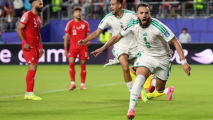
  • Football: Algeria beats Jordan 2-1 to clinch its first World Cup win since 2014

    Football: Algeria beats Jordan 2-1 to clinch its first World Cup win since 2014

  • Iran says no visit scheduled for UN nuclear inspectors

    Iran says no visit scheduled for UN nuclear inspectors

Log In

  • Register
  • Log in
  • Entries feed
  • Comments feed
  • WordPress.org
© Cameroon Concord News 2026

We are using cookies to give you the best experience on our website.

You can find out more about which cookies we are using or switch them off in .

Powered by  GDPR Cookie Compliance
Privacy Overview

This website uses cookies so that we can provide you with the best user experience possible. Cookie information is stored in your browser and performs functions such as recognising you when you return to our website and helping our team to understand which sections of the website you find most interesting and useful.

Strictly Necessary Cookies

Strictly Necessary Cookie should be enabled at all times so that we can save your preferences for cookie settings.

3rd Party Cookies

This website uses Google Analytics to collect anonymous information such as the number of visitors to the site, and the most popular pages.

Keeping this cookie enabled helps us to improve our website.

Cookie Policy

More information about our Cookie Policy