22, July 2021
Southern Cameroons Crisis: The CPDM government is coming to terms with reality! 0
The Southern Cameroons crisis is into its fifth year and the government is gradually coming to terms with the fact that there will never be any military victory.
The unfortunate situation, which started as a protest by teachers and lawyers in 2016 in the country’s two English-speaking regions, could have been avoided if the government had prioritized dialogue over military violence.
Government officials, negotiating for the government, had not noticed that the wall of fear had crashed and most Southern Cameroonians had had enough of a system that had brought them more pain than happiness.
One of the demands of the protesting lawyers was the restoration of the federal system to ensure that the English educational and legal systems were preserved, but the government which is used to addressing issues through brutality and intimidation, resorted to its old ways, thinking that it could easily call off the bluff in a couple of days.
Little did it know that a determined people, no matter how poorly organized, could give a military a good run for its money. A war the government thought would last for a few days is now in its fifth year and it has resulted in the deaths of more than 10,000 Cameroonians – both civilians and soldiers.
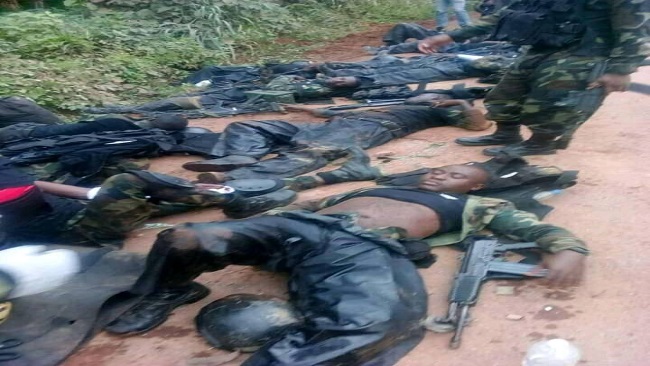
Over the last two months, the country’s military has recorded some of the most ridiculous setbacks, as Southern Cameroonian fighters have changed their tactics. The fighting, which initially looked like conventional warfare where government forces had a clear advantage, has become a hit-and-run operation wherein Southern Cameroonian fighters are dictating the terms.
The fighters who started with machetes in 2016 have morphed into experienced strikers, using some of the most sophisticated war machines the continent can afford. Over the last four years, they have grown in experience and are, indeed, a few slices above the country’s soldiers whose mastery of the terrain is at best mediocre.
With bombs and other remote devices, Southern Cameroonian fighters are inflicting significant damage on the country’s military and this new situation is causing a change of mind in the corridors of power in Yaoundé.
Federalism that used to be a crime can now be discussed openly. Government ministers are now open to such discussions and they are even seeking ways to get their message across to the fighters in the bushes and the Southern Cameroonian Diaspora which is more interested in total independence than in the fake federalism that is being dangled by a government that is wont to speaking from both sides of its mouth.
Speaking to the Cameroon Concord News Group correspondent in Washington, a separatist leader who elected anonymity said that both the fighters on Ground Zero and the Diaspora will not accept anything short of total independence.
“We cannot settle for any fake federalism that will in future create us brand new problems. We have lived in this union for more than five decades and we now know how Francophones think. We are culturally different, and it will be wise for us to go our separate paths. Their perspective of governance and leadership is diametrically different from what we know. Leaders are supposed to be accountable to the people, but this is not what obtains in the United Republic of Cameroon. We are still determined to fight, and we now know we can beat the Cameroon military,” the separatist leader said in a phone interview on Wednesday.
“The Yaoundé government has killed thousands of our people, and this makes it hard for us to be in any union with a bunch of people who have no regard for the rule of law and human rights. Those who have been killed by the forces of occupation are martyrs and we will never forget them. If we opt to remain in this union, then we have betrayed the thousands of young men and women whose lives have been cut short by a brutal government that should be listening to its citizens. We have done our best to live with our Francophone brothers, but we must point out that it is hard to live with them under any political dispensation,” the hardcore separatist leader underscored.
“We must continue to turn the heat on those poorly trained soldiers until their masters ask them to withdraw. This war should not have taken place if the Yaounde government had prioritized dialogue over military violence. Complaining should never be a crime. It should instead be a channel through which issues that can create conflicts could be discussed and solutions found. In Cameroon, we seem to be cohabiting with animals who think that they can dictate everything to their citizens. We are not settling for any short of independence and anybody who will negotiate for federalism will be viewed as an enemy and he will be dealt with accordingly,” he stressed.
From every indication, there is no end in sight. The separatists seem to be frozen in their position and this clearly implies that more blood will continue to flow in the towns and villages in Southern Cameroons.
However, members of the country’s ruling party, the CPDM, hold that something can still be done. In their view, all is not lost. Speaking to the Cameroon Concord News Group correspondent in Yaounde on Monday, a senior CPDM member said that news outlet such as the Cameroon Concord News Group which have clearly aligned with the separatists should change their editorial policy and help to deliver a message of peace and hope to all Cameroonians who are desirous of peace in the country.
“We know a lot of mistakes have been made by the government. The war should not have happened. The government thought old ways would be able to bring back peace to the country, but it is discovering that as more people die and with the passage of each day, it is becoming very hard to envisage a military victory. We know many people have been killed. We also know that many soldiers have been killed, but after all the destruction, we all should start beating the drums of peace so that we can start to rebuild our country and that starts with the media that is inimical to the government. We should change our narrative and editorial policies so that the notion of federalism can be given a chance for it to become popular,” the senior CPDM member who elected anonymity said in Yaoundé.
“Who does not make mistakes? We should understand that the state will always be the state and if we must walk away from the mess that is claiming many lives, we must start to talk about reconciliation and negotiations. The country is bleeding money, and it is losing its soldiers and equipment. There is fear all over Yaoundé, fear that the military might one day rebel against the government and this could result in a much bigger disaster as our country’s institutions may not survive such a tough stress test,” he underscored.
“We are seeking ways of reaching out to some of the toughest separatist leaders so as to sell our proposal of federalism to them. The government is ready to meet Southern Cameroonians halfway. Decentralization has failed and it will be preposterous to continue to put it on life support. Its rightful place is in the cemetery. Our country does not need it anymore. It has brought a lot of pain and enmity in our country. We all must learn the lessons of history. The world has changed, and the government is slowly acknowledging that it had erred, and it is willing to make amends so that things can get back to normal. The war is expensive financially. The human cost is inestimable. We cannot continue to let some of those little differences to continue to divide us. We know the Cameroon Concord News Group can help spread the word. The government has a message for Southern Cameroonians. It wants to discuss with the leaders of the rebellion and federalism will be on the agenda. After close to five years of senseless killings, we must agree that war will not address any issues. We must try something new,” he said, adding that it is necessary for Ambazonian leaders to accept the hand of peace the government is stretching out.
The government is gradually coming out of its arrogance and confusion. Many people had advised it to prioritize dialogue over war, but full of itself, it felt it could wrap up things in a few days. It is finally acknowledging that other methods could have delivered better results, but it is still ashamed to come out openly to apologize and call for peace. How easy will it be to negotiate with people it had branded as terrorists? Pride goes before a fall and the current situation in Cameroon clearly underscores the adage.
It is up to the government to seek better ways to sell its ideas. It has a lot of questions to answer. How will it justify the killing of thousands of innocent civilians in a war that could have been avoided? How will it look at the families of those falling soldiers and tell them that it is sorry for such a grave error that has robbed them of their loved ones? These are just some of the questions the government will have to answer if and when those negotiations take place.
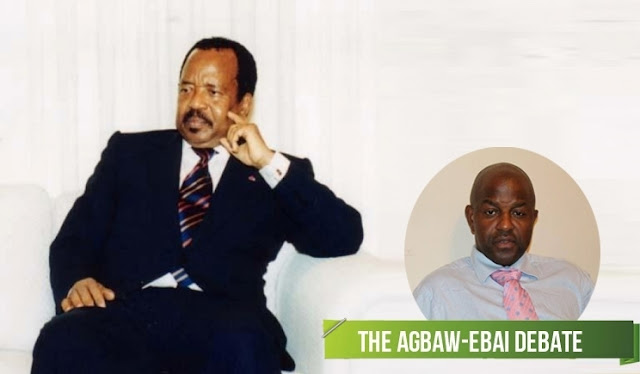
By Soter Tarh Agbaw-Ebai


22, July 2021
Southern Cameroons Crisis: Church schools targeted in Ambazonia 0
Schoolchildren are deliberately attacked, abducted and killed in Cameroon’s increasingly violent Anglophone crisis. An independent investigation has verified 13 recent attacks using satellite images, finding both government soldiers and armed separatist groups responsible. Catholic and Presbyterian-run institutions are among the schools targeted by all sides in the conflict. It is thought that two hundred schools have been attacked or set on fire since 2018.
In 2016, the Francophone-dominated government of President Paul Biya tried to impose a French curriculum on English-speaking schools, while demanding that the French legal system replaced English Common Law in courts in the Anglophone regions of North West and South West.
In response, armed groups demanding an independent Anglophone nation called Ambazonia called for a boycott of schools and a weekly “ghost towns” that shuttered the economy. A warning from the Ambazonian Restoration Forces appeared on Facebook in August 2019, telling parents not to send their children to school, saying, “You will have only yourselves to blame.”
After the attacks began, parents withdrew their children, forcing education in the Anglophone regions to cease. The UN estimates that one million youngsters (out of a total Anglophone population of six million adults and children) have been out of school for almost four years. The Cameroon ministry of basic and secondary education recently announced that 70,000 children have now returned and 400 schools have reopened. However, it is understood that those schools are in towns and cities, whereas institutions in more remote areas are reluctant to reopen for fear of attack.
The Bellingcat report draws on years of research by the Cameroon Anglophone Database of Atrocities, working with the Berkeley Human Rights Center. Many of the attacks have taken place in the diocese of Bamenda which is twinned with the UK diocese of Portsmouth. St Augustine’s Secondary College in Kumbo was attacked in May 2020; in October 2020, men on motorcycles armed with machetes and guns killed seven children and wounded a dozen at Mother Francisca International Bilingual Academy in Kumba; and in January 2021, the Presbyterian secondary school in Mankon, Bamenda was torched.
A Presbyteran school in Nkwen near Bamenda was subject to two attacks in 2018 during which almost 100 teachers and children were abducted, interrogated and held for ransom. They were eventually released unharmed. In November 2020, the students and teachers at Kulu memorial College were forced to strip and then run into the bush before the building was burned. In the North West region, the wing of a Catholic school in Kambe was burned in February 2021.
Bellingcat is an independent international collective of researchers, investigators and citizen journalists. It’s report, “How Schoolchildren became Pawns in Cameroon’s Anglophone Crisis,” is based on painstaking work by volunteers at the Cameroon Anglophone Crisis Database of Atrocities and the Berkeley Human Rights Center, videos posted on social media by civilians, soldiers and armed groups, and opensource material and satellite imagery.
The Bellingcat report quotes teachers who “walk a thin line” between the armed separatists enforcing the boycott and the government security services which are trying to end the ban. In addition, teachers say they are targeted by criminal gangs extorting money. The Voice of America quotes Nji Samuel Kale of the Presbyterian Church in Cameroon, saying, “The community and the Christians help us run the schools. The teachers, we must attest, they have been enduring a lot. They have shown a lot of resilience.”
Most of the separatist leaders live overseas, meaning that their children are not missing school. They refuse to back down unless they are seen to win concessions from the government. Meanwhile the Swiss Centre for Humanitarian Dialogue continues to offer to host inclusive peace talks. Both the government and armed separatist groups have declined to participate.
Before he died earlier this year, Cardinal Christian Tumi warned that violently enforcing the schools boycott was turning the Anglophone population against the separatists. He mentioned a girl whose hand was amputated by separatists as she went to sit her exams. Cardinal Tumi was kidnapped and interrogated by an armed Anglophone group in November 2020. He was later released unharmed but died in April 2021, age 90.
Historically, the Catholic Church, as well as Anglican and Presbyterian missions, have run schools and clinics across Africa in the absence of comprehensive, good quality education and health provision by governments. In addition, faith-based entities are estimated to provide between 30% and 70% of health services. There are no reliable figures for how many schools are provided by faith groups on the continent.
Source: Independent Catholic News