18, September 2021
Francophone dominated army says 15 soldiers killed in Amba Bamessing ambush 0
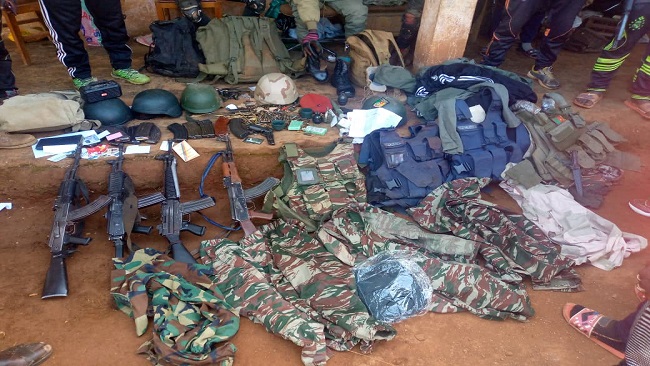
Ambazonia Restoration Forces killed at least 15 Cameroon government army soldiers after they ambushed their convoy in the North West region, the army confirmed on Friday.
Earlier reports from sources said nine soldiers were killed in the attack but an official security report from the army in the region stated that the death toll was 15.
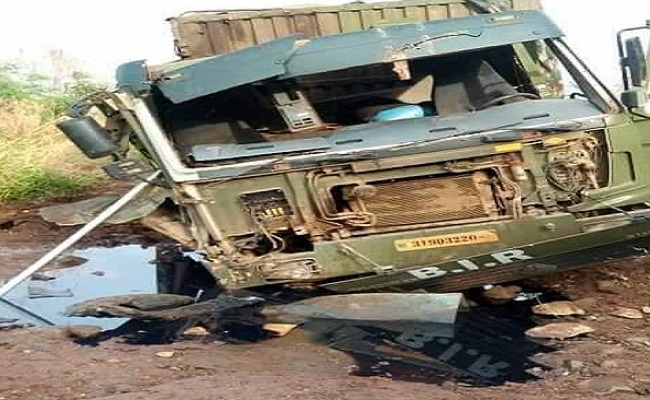
According to the army, Amba fighters ambushed and attacked the convoy that was transporting members of Cameroon elite force, Rapid Intervention Battalion (BIR), on Thursday in Bamessing, a locality in the region.
The armoured cars transporting the soldiers were shattered with explosive devices.
Early on Friday, Marines of Bambalang, a Southern Cameroons group in the region claimed responsibility for the ambush and shared gruesome images of the attack on social media.
The attack was the deadliest attack in the region since July last year, according to security reports.
Violence erupted in Cameroon’s two Anglophone regions of Northwest and Southwest in 2017 after the leader of the Ambazonian nation President Sisiku Ayuk Tabe declared “independence” of the two regions.
Source: Xinhuanet with additional editing












19, September 2021
Guinea’s junta rules out exile for ousted president 0
Guinea’s ruling junta on Saturday ruled out exile for detained former president Alpha Conde and said transition towards civilian rule would be done in accordance with “the will of the people”.
The statement from the ruling council came in defiance of international pressure for Conde’s release and a six-month timetable for elections after a coup on September 5 sparked global condemnation.
It also followed the visit on Friday of a mission from ECOWAS led by two heads of state from the 15-member West African bloc.
Mamady Doumbouya, the colonel who led the coup, told the visiting delegation that “it was important for ECOWAS to listen to the legitimate aspirations of the people of Guinea,” said a junta spokesman, Colonel Amara Camara, at the ruling council’s first news conference on the six-month deadline.
Doumbouya stressed the need not to repeat the “mistakes of the past”, recalling that national consultations to outline the transition had begun on Tuesday and that “only the sovereign people of Guinea will decide its destiny”, Camara said.
“It is also clear to all parties that the former president will remain in Guinea,” he added.
‘Frank and fraternal talks’
During their visit, the Ghanaian head of state Nana Akufo-Addo, whose country holds the rotating presidency of ECOWAS, and his Ivorian counterpart Alassane Ouattara, presented the junta with the organisation’s demands for elections within six months.
They also insisted on the release of Conde.
“We had very frank, fraternal talks with Colonel Doumbouya and his associates and collaborators and I think that ECOWAS and Guinea will find a way to walk together,” Akufo-Addo said at the end of the visit.
The ruling council, which now designates Doumbouya as “president of the republic and head of state”, said that consultation sessions scheduled for Friday with banks, insurance companies and unions would be held on Saturday.
The consultations will continue next week, it said, including Monday meetings with cultural actors, press associations and those within the informal sector.
The military has already held talks with political parties, religious leaders, and the heads of mining companies, key players in this poor but resource-rich country, and other figures.
Local rights groups, including the Guinean Organisation for the Defence of Human Rights (OGDH), put out a statement voicing their concern over “respect for democratic principles and the rule of law” and called on the ruling junta to “communicate as soon as possible a roadmap for the transition that takes into account all the proposals arising from the consultations”.
Activists return from exile
Public discontent in Guinea had been brewing for months before the coup over the leadership of Conde, 83.
A former opposition figure, Conde became Guinea’s first democratically elected president in 2010 and was re-elected in 2015.
But last year, he pushed through a controversial new constitution that allowed him to run for a third term in October 2020.
The move sparked mass demonstrations in which dozens of protesters were killed. Conde won the election but the political opposition maintained the poll was a sham.
On Saturday four activists against Conde serving a third term returned to the country from exile and were met by cheering crowds at Conakry airport.
“Honour to the patriots” read one placard on display among the hundreds who waited hours for the exiles to return.
Some in the crowd were wearing the red t-shirts of the opposition FNDC coalition, which led the protest against a third mandate for Conde. Others sported the red, yellow and green of the Guinean flag.
“We never doubted for a moment that we would win this fight,” said Ibrahima Diallo, one of those returning.
“We want to accompany the process of democratic transition that will lead to credible and transparent elections so that Guinea can turn towards development,” he added.
Fellow returning activist Sekou Koundouno, expressed his relief that the people of Guinea “have rid themselves of the despot Alpha Conde who had taken the institutions and the army hostage”.
Source: AFP