12, June 2021
Dabney Yerima: French Cameroun killing of Ambazonians is state terrorism 0
Southern Cameroons Vice President Dabney Yerima has denounced as an act of state terrorism the fatal shooting of more than ten children, including three elderly women by Cameroon government forces in the North West region.
The Southern Cameroons Broadcasting Cooperation (SCBC) cited Yerima as saying in a press statement that the killing in the North West region now being denied by the French Cameroun regime in Yaoundé was an act of organized state terror and would have serious consequences for the occupying French Cameroun troops.
The Ambazonia Interim Government (IG) announced late on Friday that pro French Cameroun armed militias known as Atanga Nji Boys have blocked the main road linking Bamenda to Wum preventing the flow of food and medicine. The IG also said the Atanga Nji Boys were harassing the sick and the elderly and putting the blame on Ambazonia Restoration Forces.
Several Southern Cameroons activists have also reported that the Bafut passage that links Bamenda to Menchum Division is now under the control of the Atanga Nji Boys with support from Yaoundé.
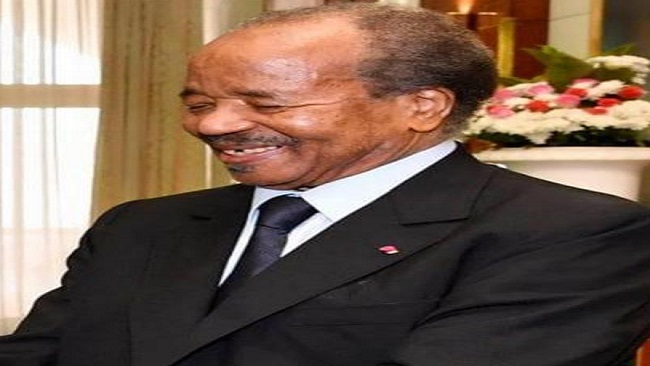
Vice President Yerima described the latest deadly violence in the Northern Zone of Southern Cameroons as an attempt by the 88-year-old corrupt French Cameroun leader Paul Biya to elicit reactions that would enable him to transfer power to his ill equip and poorly educated son Franck Biya in his final days of his grip on power in French Cameroun.
The exiled Southern Cameroons leader called for an urgent intervention of the United States and the European Union to stop the killings going on in Southern Cameroons and to condemn the French Cameroun genocidal campaign.
Dabney Yerima also offered his condolences to all suffering Southern Cameroons families and wished a speedy recovery for the wounded Amba fighters.
By Chi Prudence Asong with files from Fon Lawrence






13, June 2021
Three Ivory Coast military killed after their vehicle ran over explosive device 0
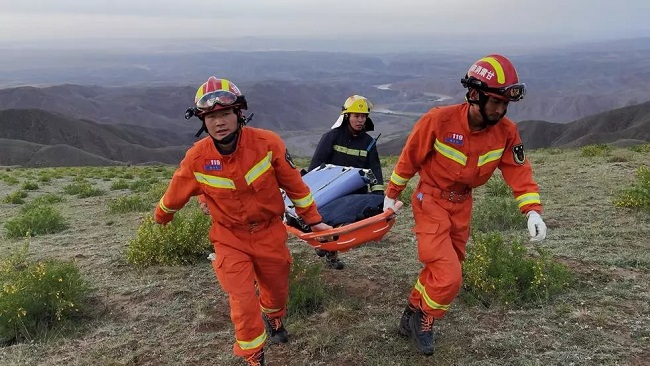
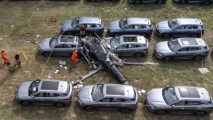
Two soldiers and a police officer were killed when their vehicle hit an explosive device in northeast Ivory Coast near the border with Burkina Faso, the military said Sunday.
Army chief of staff General Lassina Doumbia said that at around 7:00 pm (1900 GMT) on Saturday a reconnaissance patrol “was the subject of a complex attack” in the restive region.
“It was an ambush using an improvised explosive device which caused one of the vehicles to blow up,” he said in a statement.
“The detachment’s response were able to secure the area and provide assistance to the injured,” he said, adding that three people were killed and four injured.
The chief of staff also reassured the population that defence and security forces would “continue to act for their protection” and called on them to cooperate.
A security source had earlier told AFP that three were killed in the ambush, which came a week after another attack by suspected jihadists killed an Ivorian soldier in Tougbo town a few kilometres (miles) from the border.
It also comes just two days after Ivory Coast and France inaugurated a counter-terrorism academy near Abidjan intended to ramp up the Sahel region’s ability to counter a widespread jihadist threat.
Security experts have warned that the area’s bloody jihadist insurgency could spread southwards to countries on the Gulf of Guinea.
It was the fourth attack in the west African region in just over two months.
The latest spate of assaults dates back to March, when dozens of suspected Islamists killed three members of the Ivorian security forces in a twin raid on army positions near the border with Burkina.
“Three terrorists” were killed and four were arrested, the army said.
These attacks have been blamed on jihadists who are active in Burkina Faso, as well as neighbouring Mali and Niger.
French drawdown
The Sahel insurgency sprang up in northern Mali in 2012 before advancing into Niger and Burkina Faso in 2015.
Ivory Coast was first hit in a jihadist attack in March 2016, when 19 people died in a raid on Grand-Bassam, a seaside resort near Abidjan.
In June 2020, 14 soldiers were killed in an attack on Kafolo.
“Northern Ivory Coast along the border with Burkina Faso is coming under the heel of jihadist groups. This region constitutes an important security aspect for the Ivorian state,” Ivorian anti-terrorism expert Lassina Diarra told AFP recently.
On Thursday, Ivorian Prime Minister Patrick Achi and French Foreign Minister Jean-Yves Le Drian attended the formal inauguration of the International Academy for the Fight Against Terrorism just outside Abidjan.
Ivorian Defence Minister Tene Birahima Ouattara said the academy would be “a focal point of regional competence in the anti-terror fight to benefit the stability of our states and the security of our populations.”
Former colonial power France already plays a strategic role in the region with a 5,100-strong military presence at the head of Operation Barkhane.
But French President Emmanuel Macron on Thursday announced a troop drawdown and a new international task force, promising “a profound transformation of our military presence in the Sahel”.
Details of the pullback have yet to be made public, but Macron said several hundred French troops would remain in the region as part of the so-called Takuba international task force.
Source: AFP