10, March 2021
Assessing Biya’s 38 years in power: Cameroon is now a no-go country in many respects 0
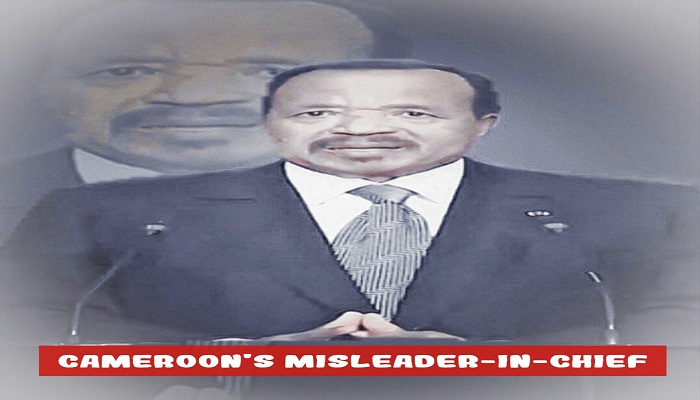
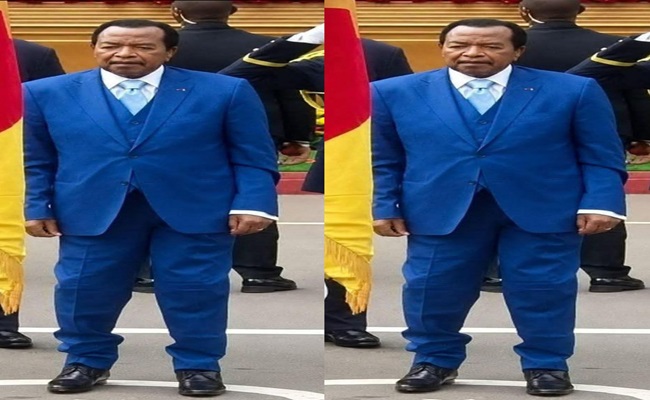
Cameroon’s President Paul Biya celebrated his 88th birthday recently, making him the oldest president in Africa. He has been in power for 38 years. Birthday celebrations held across the country were met with protest by the opposition, demanding that he step down. So, how has he acquitted himself in office, and what has been his legacy for Cameroon?
Cameroonians welcomed Biya when he became president in November 1982. The peaceful transfer of power by his predecessor Ahmadou Ahidjo won Cameroon praise as an example to emulate in Africa, where leaders either held on to power for too long, through duplicity and violence, or were forced out.
Ahidjo was ruthless, authoritative, and vicious. He ruled by intimidation. Under him rivals were hunted down, tortured, killed, or forced into exile. He was the “source of all power in the state”.
Biya was seen as a breath of fresh air, and he stepped in saying the right things to different groups. He visited the nation’s Anglophone regions, spoke in English, and even referred to Bamenda, a major city in the Northwest region, as his “second home”. It was a marked difference from his predecessor, whose policies severely undermined English as a major part of the nation’s bilingualism.
Biya’s early actions were received with cheers. He pledged a “new deal” to restore integrity and eliminate corruption. He also announced that although he was of the Beti/Bulu ethnic group, he was born a Cameroonian and would govern as such.
His policies extended elementary and secondary education to rural areas. He allowed press freedom. In his book Communal Liberalism he emphasised the importance of creating a “more open, more tolerant and more democratic political society”.
But those promises and pronouncements were short-lived.
Hopes dashed
By the end of Biya’s first year in office, he had reverted to his predecessor’s tactics, a practice which intensified after the attempted coup in 1984.
He remade the nation’s only political party, Cameroon National Union, in his image, renaming it the Cameroon People’s Democratic Movement. He packed his administration with people from his ethnic group and drove a solvent economy into insolvency.
His policies targeted and undermined groups like Bamilekes, Anglophones and Northerners.
He changed the name of the country from the United Republic of Cameroon to the Republic of Cameroon, a clear indication that Anglophone concerns did not matter.
He went to the World Bank and International Monitory Fund for help to revive an ailing economy. But, after three decades of intervention by these institutions, the economy remains on the brink of collapse.
The nation’s currency was devalued on his watch in 1994, bringing misery to many.
Corruption became endemic. Cameroon is often ranked as being among the most corrupt countries in the world.
Biya circumvents the country’s multiparty political system at will. He has repeatedly amended the constitution to tighten his grip on power. One amendment, in 2008, was to eliminate presidential term limits.
As a response to protests against excessive centralisation of decision making in Yaounde, Biya signed a decentralisation decree in 1996 to empower regional and local authorities. But 25 years later, that initiative has not been realised. Another failed initiative was the National Commission for the Promotion of Bilingualism and Multiculturalism created in 2017 in response to the Anglophone protest. After billions of francs CFA were squandered, the commission has achieved nothing substantive.
Biya’s Achilles heel is the ongoing Anglophone crisis. He has overstayed his term in office, using underhand manoeuvres to cling to power.
His nearly four decades’ rule has robbed Cameroon of its credibility as a stable and peaceful country. Nations such as the US have repeatedly imposed advisory travel bans on Cameroon.
The true test of leadership
Four years ago, a peaceful protest against the marginalisation of English-speaking people turned violent as Biya’s military responded with arrests and torture.
Some responded with a call for secession of the Anglophone regions and created a virtual Ambazonia Republic. They formed a military wing, Ambazonia Defence Force, and used it to attack Biya’s military and disrupt economic and social services in the region.
My work in Cameroon brings me to the conclusion that the Anglophone crisis degenerated into violence because of miscalculations by Biya’s regime. The resulting crisis has devastated entire communities. The region’s economy has also been crippled, resulting in a wave of crime, and burning of businesses and public facilities.
Cameroon is now a no-go country in many respects.
Foreign policy success
My research shows that Biya’s most enduring achievement has been in his conduct of foreign policy. He remains influential in the African Union, and maintains good relations with France, the US and China.
Cameroon was part of the multinational joint task force which conducted military operations to contain Boko Haram. Biya was key in convincing major powers that Boko Haram posed a global threat.
He settled Cameroon’s conflict with Nigeria over the Bakassi Peninsula and placed relations between the nations on a good footing.
Biya also diversified foreign policy from a focus on France to expanding relations with China (though by 2007 he had begun to regret China’s economic domination in Cameroon). He has encouraged American businesses in Cameroon too.
Even after Cameroon was excluded from the African Growth and Opportunity Act, a programme that allows African nations to export their goods to the US duty free, for human rights violations, US-Cameroon military collaboration continued.
Turning the tide
Given Biya’s unwillingness to step down from power, the global community needs to exert pressure on him to solve the Anglophone crisis.
The crisis exposes the hypocrisy and weaknesses of the current global system. The major powers make noises about human rights, yet fail to stop abuses by Biya’s government.
What happens with the Anglophone crisis may turn out to be the most significant determinant of Biya’s legacy.
Culled from The Conversation












10, March 2021
Samuel Eto’o at 40: Pep Guardiola bust-up, “s***” Jose Mourinho claim and 13-club career 0
Samuel Eto’o enjoyed a glittering playing career which spanned 13 clubs and a whopping 22 years – but it wasn’t without its controversy.
The Cameroon superstar is best known for his trophy-laden spell with Barcelona, helping the Spanish giants to win three La Liga titles and two Champions League triumphs.
After five years at the Spanish giants, he joined Inter Milan in 2009 where he won the coveted European crown for a third time – this time under the guidance of Jose Mourinho.
Short spells in the Premier League soon followed, with Chelsea and Everton among the 13 professional teams Eto’o represented during his memorable career before he retired in 2019.
And so, to celebrate Eto’o’s 40th birthday on Wednesday, Mirror Sport takes a look back on his incident-filled career…
Guardiola bust-up – and sensational Messi claim
Eto’o has never shied away from speaking out – and he previously aimed a sensational dig at former Barcelona colleagues Pep Guardiola and Lionel Messi.
With Guardiola at the helm between 2008-2012, the Catalan club were considered arguably the greatest club side of the modern era, winning three La Liga titles, two Champions Leagues and countless other honours.
But Cameroonian striker Eto’o felt his own role in their stunning run was underestimated and declared himself the man who “made Barcelona win”.
In an astonishing swipe at his former boss, the ex-Chelsea man blasted Guardiola for not understanding his squad and said Messi was far from the player he is today.
“Pep Guardiola has lived his whole life in Barcelona, but in the years I spent there he didn’t understand the squad. He didn’t live the life of our group,” Eto’o told beIN Sports.
“I said to Guardiola: ‘you’ll apologise to me because it’s me that will make Barcelona win – not Lionel Messi’.
“It was the situation back then. Messi would come later.
“You can ask Xavi, Andres Iniesta and all the others – that was my era. It was me that made Barcelona win and Guardiola would ask me for forgiveness.”
The criticism of Guardiola doesn’t stop there, either.
Eto’o helped Guardiola win his first Champions League as a coach in 2009, scoring the opening goal in the 2-0 win over Manchester United.
But the striker was ultimately forced out after just one season playing under the Spaniard – and it seems there was no love lost between the pair.
“I first of all reminded Guardiola that he’d never been a great player,” he said in an interview with beIN Sports .
“As a coach he had proven nothing, he didn’t even know the story of the dressing room.”
“S***” Mourinho criticism
The Eto’o and Mourinho friendship is a strange one.
Before leaving Barcelona, the Cameroon star claimed he would never play under the Portuguese manager – only to then join him at Inter Milan a matter of months later.
The pair had an infamous bust-up following Barca’s 4-2 second leg defeat by Mourinho’s Chelsea in the last-16 of the Champions League in 2005.
After the defeat, Eto’o is believed to have told the boss: “I know you are a great person and a great coach. But in truth you are just a s***!”
But a respect soon blossomed between the pair and the striker played a starring role in Inter’s historic Treble-winning 2009/10 season, which included a memorable Champions League win.
Eto’o has since spoken of how he preferred Mourinho’s more personal touch as a manager over the approach of Guardiola.
The Cameroon legend is one of the few footballers fortunate enough to say that they played for both legendary bosses, turning out for Guardiola at Barcelona and later Mourinho at both Inter Milan and Chelsea.
When it comes to Mourinho, Eto’o said that the Portuguese is a much warmer figure than he is often portrayed as.
“Jose is, firstly, a friend,” said Eto’o.
“He’s a person who’s upfront and when he doesn’t like something, he tells you. We both have strong temperaments and we understood each other well.
“He’s one of the best people I have found in football. People try to present him as controversial, but it’s a lie. What happens is that life, and football, is hypocritical and they prefer that to having honest people.
“Mou is a top guy. The other thing is that he only cares about the result. It’s his way of seeing football and in that sense he is the number one. Beating him at his game is impossible, you can never beat him.
“He’s a winner and a born leader. He spoke to you with the right words. He’s great.”
A 13-club career
Few have enjoyed a worldwide tour like Eto’o.
Beginning his professional career with Real Madrid in 1997, the striker failed to make the desired impact at the Bernabeu and was shipped out on loan to Leganes, Espanyol and Mallorca.
A permanent move to Mallorca followed in 2000, after an impressive loan stint, and it was there where he showed off his goalscoring prowess on a consistent basis.
Barca soon took notice and swooped for the Cameroon star – and he became a influential figure in a team which featureed the biggest stars in world football including Thierry Henry and Messi.
He then left Spain for the first time in his professional career, moving to Italy with Inter, before a switch to Russian side Anzhi Makhachkala followed two years later.
Eto’o then fulfilled a lifelong dream by moving to the Premier League, first to join Chelsea in 2013, before a one-year stint with Everton.
He then left England to return to Italy with Sampdoria, before ticking another country off his list by moving to Turkey to spend three years with Antalyaspor and a further season with Konyaspor.
The striker eventually brought the curtain down on his career with a final hurrah with Qatar SC.
Thirteen clubs in six countries, not bad going for a striker who is widely regarded as one of the greatest African footballers of all time.
Not only did the striker enjoy a memorable club career, but he also starred for his country.138225411899
After earning his first cap for Cameroon one day before his 16th birthday, he went on to score 56 goals in 118 appearances for his nation.
He helped his country win Olympic gold at the 2000 Games in Australia, while also starring as they won the Africa Cup of Nations the same year and two years later.
Eto’o was voted African Player of the Year four times, a joint-record he holds with Manchester City legend Yaya Toure.
Culled from Irish Mirror