Cameroon Concord News
You Are What You Read
  • Home
  • News
    • Cameroon
    • Nigeria
    • Africa
    • Europe
    • World
  • Politics
    • Cameroon
    • Nigeria
    • Africa
    • Europe
    • World
  • Sports
    • Cameroon
    • Africa
    • Europe
    • World
  • Business
    • Africa
    • World
  • Life
    • Education
    • Health
    • Fashion
    • Entertainment
  • Religion
    • Cameroon
    • World
  • Contact
    • Online
    • Phone
    • Email
  • About
    • Us
    • Our Services
    • Advertising with Us

Categories

Recent Posts

  • Cameroon looks to Tunisia’s textile model to develop its cotton value chain
  • Trump marks 80th birthday with White House UFC spectacle
  • Ex-Israeli PM Ehud Barak says Netanyahu must be removed ‘with sticks and stones’
  • US denies visa to Palestine football chief for World Cup attendance
  • YaoundĂ©, Abu Dhabi explore new trade and investment framework

Archives

  • June 2026
  • May 2026
  • April 2026
  • March 2026
  • February 2026
  • January 2026
  • December 2025
  • November 2025
  • October 2025
  • September 2025
  • August 2025
  • July 2025
  • June 2025
  • May 2025
  • April 2025
  • March 2025
  • February 2025
  • January 2025
  • December 2024
  • November 2024
  • October 2024
  • September 2024
  • August 2024
  • July 2024
  • June 2024
  • May 2024
  • April 2024
  • March 2024
  • February 2024
  • January 2024
  • December 2023
  • November 2023
  • October 2023
  • September 2023
  • August 2023
  • July 2023
  • June 2023
  • May 2023
  • April 2023
  • March 2023
  • February 2023
  • January 2023
  • December 2022
  • November 2022
  • October 2022
  • September 2022
  • August 2022
  • July 2022
  • June 2022
  • May 2022
  • April 2022
  • March 2022
  • February 2022
  • January 2022
  • December 2021
  • November 2021
  • October 2021
  • September 2021
  • August 2021
  • July 2021
  • June 2021
  • May 2021
  • April 2021
  • March 2021
  • February 2021
  • January 2021
  • December 2020
  • November 2020
  • October 2020
  • September 2020
  • August 2020
  • July 2020
  • June 2020
  • May 2020
  • April 2020
  • March 2020
  • February 2020
  • January 2020
  • December 2019
  • November 2019
  • October 2019
  • September 2019
  • August 2019
  • July 2019
  • June 2019
  • May 2019
  • April 2019
  • March 2019
  • February 2019
  • January 2019
  • December 2018
  • November 2018
  • October 2018
  • September 2018
  • August 2018
  • July 2018
  • June 2018
  • May 2018
  • April 2018
  • March 2018
  • February 2018
  • January 2018
  • December 2017
  • November 2017
  • October 2017
  • September 2017
  • August 2017
  • July 2017
  • June 2017
  • May 2017
  • April 2017
  • March 2017
  • February 2017
  • January 2017
  • December 2016
  • November 2016
  • October 2016
  • September 2016
  • August 2016
  • July 2016
  • June 2016
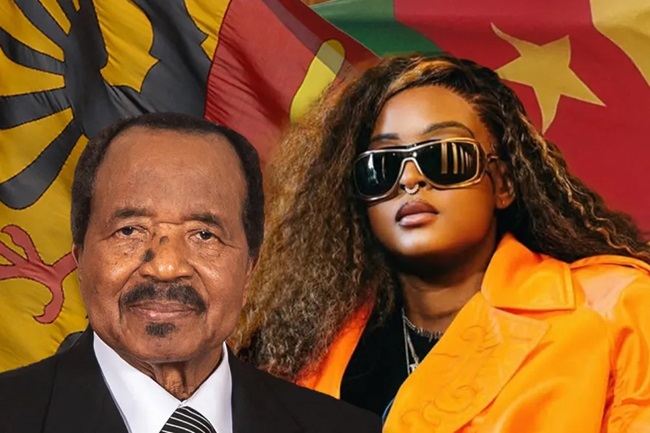
Yaoundé: Father of Cameroonian musician Lydol arrested for fatal stabbing of 6-year-old

13, May 2025

Yaoundé: Father of Cameroonian musician Lydol arrested for fatal stabbing of 6-year-old 0

A deeply disturbing incident has shaken the Ngoa Ekelle neighborhood in Yaoundé. The father of renowned Cameroonian musician Lydol has been arrested after allegedly stabbing a 6-year-old child to death.

According to eyewitness accounts, the incident followed a physical altercation between Lydol’s father and the child’s father. In a shocking and horrific act of revenge, he is reported to have turned his anger on the innocent child, resulting in the child’s death.

The victim was rushed to the Yaoundé Military Hospital but tragically succumbed to his injuries.

Following the incident, bystanders who witnessed the gruesome act attacked the suspect before he was taken to the hospital for treatment. He has since been arrested by authorities.

Alarming Developments: There are unconfirmed reports suggesting that this may be the second murder involving the suspect within the span of two weeks. He is reportedly under investigation for another violent incident that occurred last week.

The case has sparked widespread outrage and grief, especially given the suspect’s close relation to a public figure. Cameroonians are calling for justice for the young victim and a thorough investigation into all allegations.

By Alain Agbor Ebot

Archbishop of Garoua says Fr Mbaibarem is still in the hands of the kidnappers

13, May 2025

Archbishop of Garoua says Fr Mbaibarem is still in the hands of the kidnappers 0

“Father Mbaibarem is still in the hands of the kidnappers. From time to time, they contact some locals to demand a ransom for his release,” Archbishop Faustin Ambassa Ndjodo of Garoua in northern Cameroon told Fides. Father Valentin Mbaibarem, parish priest of the Church of St. John the Baptist in Madingring, was kidnapped on May 7, on the road between Guidjiba and TchollirĂ©.

“The road between Guidjiba and TchollirĂ© is a dangerous stretch of road, as there have been several cases of kidnappings with the aim of extorting travelers, but this is the first time a priest has been kidnapped on this road,” said Bishop Ambassa Ndjodo. Northern Cameroon has been plagued by kidnappings for years. According to local newspapers, several teachers were taken hostage on this road a few days before Father Mbaibarem’s kidnapping.

The gendarmerie began a search of the area, which led to the release of a hostage who had been kidnapped on May 10 in a village near Garoua. As a sign of solidarity and spiritual support, the Archbishop asked all parishes of the archdiocese to offer a special prayer for Father Mbaibarem on Sunday, May 11. He also invoked the intercession of the Virgin Mary for the priest’s speedy release.

Source: Agenzia Fides
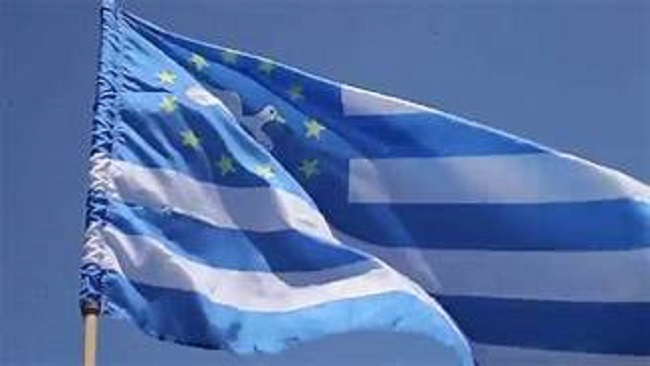
Southern Cameroons Crisis: The Situation Report

13, May 2025

Southern Cameroons Crisis: The Situation Report 0

The situation in the North-West and South-West regions (NWSW) remains dire with multiple incidents of violence directly targeting civilians and leading to displacements in certain circumstances. On 11 March, over 710 people temporarily fled their homes in Owe village in the SW, seeking refuge in nearby bushes and villages following clashes between non-State armed groups (NSAGs) and State security forces (SSFs).

The situation is exacerbated by farmer-grazer conflicts within the NWSW, as well as between local and some predominantly grazer communities from Nigeria. On 18 March, herdsmen reportedly moving from Nigeria attacked Benabinge village, destroying farmlands and houses, and displacing around 180 people. At the beginning of the year, similar clashes with herdsmen from the same country led to the loss of human lives and the displacement of over 3,500 persons in Akwaya sub-division in the SW.

Civilian population’s movement restrictions continue to be enforced by various parties for diverse reasons. The Monday ghost town imposed by NSAGs in NWSW, banning movement and economic activities, remains in effect. Following a NSAG attack on a SSF position in Ndu town (NW region) during the early hours of 10 March, authorities issued a communiqué prohibiting movement and business operations in the town between 9:00 p.m. and 6:00 a.m until further notice. The violence and the proliferation of illegal checkpoints across the two regions further hinders the movement of goods and people including humanitarian aid and personnel. Approximately 290 people reportedly had their identification documents seized at NSAG checkpoints in the NWSW. In the NW, some partners’ convoys faced security challenges due to exchange of gunfire.

The recent funding cuts/suspension has led to budget and staff downsizing among partners, affecting the humanitarian response in the NWSW.

Despite these challenges, partners remain committed to providing lifesaving assistance. In addition to existing response activities, partners were able to respond to urgent needs of IDPs displaced from Besoro Balue village to Kumba in Meme division and Ballin Court area in Akwaya sub-division in the SW. In Kumba, 168 displaced persons, representing 45 households, received multi-purpose cash assistance, medical aid, protection case management, and child protection kits. In Ballin Court area, 3,682 persons, representing over 560 households, received assistance in protection, education, WASH, health, nutrition, food security, and shelter/NFI.

Source: unocha.org

Brenda Biya convicted in Geneva

13, May 2025

Brenda Biya convicted in Geneva 0

The daughter of the president of Cameroon has been convicted in Geneva. The case sheds new light on the presidential family’s unofficial second home in a Geneva hotel.

When Brenda Biya, the daughter of the Cameroonian president, was taken to court, the trial was held in Geneva. She had insulted the Cameroonian-Nigerian singer Dencia on social media, calling her a “scammer”, a “dope dealer” and a “lil coke whore”. The background to all this was a dispute over the authorisation of beauty products. The singer sued the president’s daughter, who was found guilty of defamation, slander and insult.

The journalist François Pilet, who also works for SWI swissinfo.ch, revealedExternal link the penal order on the online portal Gotham City. “The case is more than a dispute between two public figures. It proves that the daughter of the Cameroonian president lives part-time in Geneva,” Pilet says.

Who foots the hotel bill?

The public prosecutor’s office was able to prove that Brenda Biya was staying in Geneva when she posted the messages on social media. It concluded from its questioning that the accused had long been a regular guest at the luxury InterContinental hotel, where a room is reserved for her all year round. Biya herself admitted, according to the penal order, that she had been travelling back and forth between Cameroon and Switzerland since the age of 12.

“This was long suspected to be the case and has now been confirmed,” says Pilet, calling it a scandal. “It can be assumed that the hotel stays are paid for from the Cameroonian state coffers; just like the Geneva visits of President Paul Biya, which have long been publicly known.”

Pilet was the co-author of a documentary by Swiss public television, RTS, in 2018 entitledGeneva, A Dictator’s ParadiseExternal link, which traced Paul Biya’s visits to Geneva. According to the report, the Cameroonian president travels to Geneva by private jet at least twice a year to stay at the InterContinental hotel for several months. He does not travel alone – but with an entourage of around 60 people, who occupy an entire floor.

Paul Biya has been in power for over 42 years, and human rights organisations point to growing repressionExternal link in the country. According to research by the Organized Crime and Corruption Reporting Project (OCCRP)External link, between taking office in 1982 and 2018 he has spent around four-and-a-half years on private visits abroad, mainly in Geneva. In the process, he is reckoned to have spent at least CHF150 million ($177 million), with hotel stays amounting to some CHF40,000 a night. According to former employees of the hotel, he always pays for everything in cash and gives out generous tips. “Given these sums, the state treasury is very unlikely to be spared,” says Pilet.

The president’s luxurious stays in Switzerland have long been a thorn in the side of many Cameroonians. A Cameroonian journalist, who wishes to remain anonymous for security reasons, said on enquiry: “It is unacceptable for the majority of the population that their president lives in the lap of luxury abroad, while his country is battered by economic crises, food shortages and internal conflict.”

In the journalist’s mind there is no doubt that the funds for Brenda Biya’s hotel stays in Geneva also come from state coffers. “It is unclear where the president’s daughter is working at the moment,” the journalist said. She refused to disclose any of her finances to the Geneva public prosecutor’s office. But, although many Cameroonians suspect misuse of public money, precise information is hard to obtain, the journalist said. Press freedom in the country is severely curtailed. Several investigative journalists have been tortured or murderedExternal link in custody in recent years.

At 92, Paul Biya is the oldest president in the world; he plans to stand for re-election in October. He has ruled Cameroon since 1982, amid accusations of electoral fraud, clientelism and embezzlement. The country ranked 140th out of 180 in Transparency International’s 2024 Corruption Perceptions Index.

Political tensions have been escalating for several years. In the west of the country, separatists are demanding the independence of two mainly English-speaking regions. The conflict has claimed more than 6,500 lives so far, and the national army is accused of massive human rights violations and war crimes. Protest movements against the long-time ruler have been growing, although public criticism in Cameroon is suppressed.

Conflicts at home, luxury in Geneva

The Cameroonian diaspora, meanwhile, stage regular protests. Whenever Cameroonian exiles learn that the president has arrived in Geneva, they organise demonstrations in front of the InterContinental hotel. Among them is Francis Awudu, president of the English-speaking Cameroonian Society of Switzerland, who supports the separatists’ demands for independence. He accuses Switzerland of protecting a “genocidal dictator”. “We demonstrators have repeatedly been intimidated and attacked by Biya’s security detail,” he says. “Switzerland should denounce this.”

It is not the first time that the Biyas have run into trouble with the law in Geneva. In 2019, six of the president’s bodyguards were convicted of physically assaulting a journalist from Swiss public broadcaster, RTS.

In response, a group led by Awudu and Sylvain Thévoz, Social Democrat member of the Geneva cantonal parliament, launched a petitionExternal link calling on the cantonal legislature to declare Paul Biya “persona non grata” in Geneva. In other words, the city should ban him from visiting and call on the federal government to do likewise countrywide.

The petition was rejected by the centre-right majority in the cantonal parliament. “One member of parliament openly stated that Geneva could not afford to lose the Biyas,” Awubu says. He is convinced that the authorities are “part of the problem”.

Meanwhile, Thévoz says: “The regular presence of the Cameroonian president is a slap in the face for human rights defenders and an embarrassment for Geneva. Why do we continue to roll out the carpet for a dictator who breaks the law?”

When contacted on the matter, the Swiss foreign ministry stated that it does not comment on private visits by foreign heads of state to Switzerland. However, “a head of state and their family members sojourning in Switzerland are subject to the same regulations as all other foreigners.”

The ministry further noted that “international law grants heads of state immunity from jurisdiction, even during private visits”, but this does not generally apply to their family members.

Presidential children thick on the ground

The president’s daughter seems not to have reckoned with all this. The penalty order quotes an exchange of messages between the two women. In it, Brenda Biya claims she is not afraid of being sued and that her father has “connections in Switzerland”.

In this case at least, this did not help: Brenda Biya was sentenced to a monetary penalty of 60 daily units of CHF200 each, suspended for three years, and a CHF2,400 fine. The defence lawyers for the plaintiff, Dencia, spoke positively to Gotham City: “We welcome the fact that the Swiss judiciary did not hesitate to punish the defendant, despite her status as the daughter of the president of the Republic of Cameroon.”

Paul Biya is not the only foreign ruler who enjoys prolonged stays in Geneva. In recent years, cases have repeatedly emerged in which potentates have purchased entire villas on Lake Geneva. These include the clans of the former presidents of KazakhstanExternal link and Uzbekistan, whose respective daughters have been the subject of investigationsExternal link.

Culled from Swissinfo

French Cameroun: MNJTF Force Commander commissions St. Joseph Nursery School in Mora

12, May 2025

French Cameroun: MNJTF Force Commander commissions St. Joseph Nursery School in Mora 0

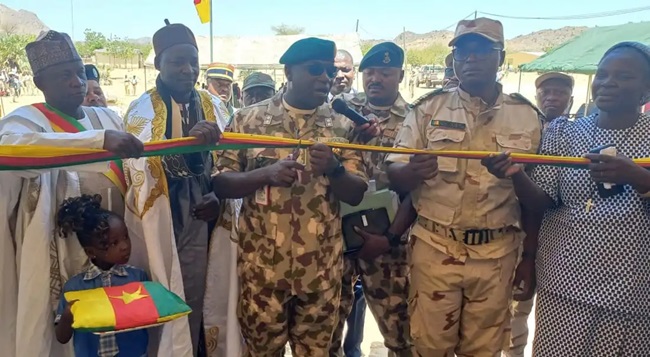
In a significant boost to educational development in the Lake Chad Basin, the Force Commander of the Multinational Joint Task Force (MNJTF), Major General Godwin Mutkut, has commissioned the newly constructed and fully equipped St. Joseph Nursery School in Mora, Cameroon. The project forms part of the MNJTF’s Civil-Military Cooperation (CIMIC) initiative aimed at promoting education and rebuilding community infrastructure in conflict-affected areas.

The newly inaugurated facility features two modern classrooms and a staff room, designed to provide a safe and conducive environment for early childhood learning. Speaking at the commissioning ceremony, Major General Mutkut emphasized the central role of education in fostering long-term peace and development.

“Education is not just a priority—it is a necessity,” he declared. “We must lead by example and invest in our children’s future to counter the narratives of those who oppose learning. Without education, there can be no progress.”

General Mutkut also highlighted the MNJTF’s broader efforts in implementing quick-impact projects across the Lake Chad region. These initiatives are intended to alleviate the suffering of communities impacted by terrorism and insurgency, while fostering stronger ties between the military and local populations. He called on the Mora community to take full ownership of the new facility and ensure its proper care and maintenance.

In her remarks, the Director of the school, Ms. Justine Suke, expressed profound appreciation to the MNJTF and the African Union for making the project a reality. “This school will lay a solid foundation for the future of children in Mora and neighboring communities

Source PRNigeria

Fitch affirms Cameroon at ‘B’; outlook negative

12, May 2025

Fitch affirms Cameroon at ‘B’; outlook negative 0

Fitch Ratings has affirmed Cameroon’s Long-Term Foreign-Currency Issuer Default Rating (IDR) at ‘B’ with a Negative Outlook.

Key Rating Drivers

Ratings Affirmed; Negative Outlook: Cameroon’s ratings are supported by resilient GDP growth, a manageable debt maturity schedule and our expectations that moderate debt levels will be supported by non-oil revenue mobilisation and spending restraint. This is balanced against low GDP per capita, weak governance indicators and persistent security challenges. The Negative Outlook reflects political risks related to potential succession issues and structural weaknesses in public finance management (PFM), evidenced by weak liquidity management, late external debt payments and accumulation of domestic arrears.

Political and Potential Transition Risks: Fitch assumes the 92-year-old President Paul Biya, in power since 1982, will win the presidential election, scheduled for October 2025, guaranteeing political and policy continuity (which underpin bilateral support). Nevertheless, social and political tensions could increase in the run-up to the election, increasing concerns about political stability. The lack of a succession plan and political divisions and rivalries within the ruling party increase the risk of an eventual disorderly transition of power.

Persistent PFM Challenges: PFM weaknesses weigh on the rating, as evidenced by recurrent late external debt service payments (although settled within grace periods). It was revealed in July 2024 that Cameroon was late in making external debt payments to one commercial creditor in March 2024. Fitch understands that there have since been additional delays in non-commercial external debt payments, all of which were cured within the grace periods. Moreover, the World Bank’s budgeted financing for 2024 (USD200 million, 0.4% of GDP) was postponed to 1Q25 due to delays in implementing structural reforms.

Domestic Arrears: The authorities have made some progress in reducing domestic arrears, clearing XAF732 billion (2.3% of GDP) in 2024 using an Afreximbank loan (0.5% of GDP) and external commercial borrowing (1.9% of GDP in 2024, from 0.1% in 2023). Total arrears stood at XAF342 (1.1% of GDP) at end-2024, comprising entirely of longer-dated arrears (90 days or over), which are incorporated in our domestic debt figures. In 2023, longer-dated arrears stood at only 0.5% of GDP. We see continued risk of arrears accumulation, given weak public finance management.

Tight Financing Flexibility: The regional market remains tight, with Congo (CCC+) and Gabon (CCC) recently implementing local-currency debt exchanges to lengthen maturities in a context of liquidity pressures. Cameroon’s market access remains stronger than other countries in the regional market and it faces an easier amortisation profile. In 2024, Cameroon’s regional local-currency marketable debt was 6.1% of GDP in 2024, unchanged from 2023, with only 1.6% of GDP amortising within one year

We expect Cameroon’s funding needs will be covered through the IMF programme, ending June 2025, and official creditor support tied to the completion of the reviews (including the World Bank loan). Our baseline assumes strong support from official creditors will continue over the medium term, with a potential new IMF programme in 2026, the lack of which is a key risk for the financing plan.

Manageable Maturity Schedule:We estimate fiscal financing needs will decline to 4.7% of GDP in 2025 (from 5.7% of GDP in 2024), owing to a narrower cash deficit and lower arrears repayment. We project fiscal financing needs will increase to 5.4% of GDP in 2026 as domestic debt amortisation will amount to 2.6% of GDP from 2.1% in 2024. External debt amortisation will increase from 2.0% of GDP in 2024 to 2.1% in 2025 and 2.2% in 2026, including Eurobond payments at 0.1% of GDP per year.

Oil Revenue Drops: The fiscal deficit on a commitment basis deteriorated to 1.4% of GDP in 2024, from 0.6% in 2023, on a drop in oil revenue, from 2.9% of GDP in 2023 to 2.1% in 2024. We expect the fiscal deficit will remain at around 1% in 2025-2026. In our baseline, oil revenues will continue to decline due to lower oil prices and production, but non-oil revenues will gradually improve through revenue mobilisation measures, tax exemptions reduction, and improvement in tax and customs administrations.

Larger Cash Deficits: The fiscal deficit on a cash basis widened from 0.4% of GDP in 2023 to 3.5% in 2024, on a larger commitment fiscal deficit and net repayment of arrears. We expect the cash deficit will stabilise at 1.5% of GDP in 2025 and 2026, below the forecast 3.2% ‘B’ median, although the pace of net repayment of arrears casts uncertainty on the fiscal trajectory. There are risks of fiscal slippage from security and election-related spending over the forecast period.

Debt Lower Than Peers: We project government debt will continue to decline, although at a slower pace than in our previous forecast. We project government debt will decline from 41.7% in 2024 to 40% of GDP in 2026, below the ‘B’ median forecast of 50.6%. Our debt metrics include arrears (1.1% of GDP at end-2024), public guaranteed debt (less than 0.02% of GDP), and the debt of SONARA (1.9% of GDP).

Resilient Economic Growth: Real GDP growth increased to 3.9% in 2024 from 3.2% in 2023, and we forecast it will remain broadly stable at 3.9% in 2025 and 4.1% in 2026 (‘B’ median forecast of 4.6%), driven by agriculture, construction, and the coming on-stream of infrastructure and electricity projects. Downside risks to growth stem from geopolitical uncertainties, leading to renewed commodity price volatility, and inflationary pressures. The 2025 presidential election threatens reform implementation and increases security and social risks.

Narrowing CAD: We forecast the current account deficit (CAD) will continue to narrow to 3% of GDP in 2025 and 2026, from 4.1% in 2023 and an estimated 3.4% in 2024, owing to higher cocoa prices supporting exports. In 2025-2026, the decline in oil production will be offset by the implementation of the import substitution policy, while exports will increase thanks to stronger agricultural production.

ESG – Governance: Cameroon has an ESG Relevance Score (RS) of ‘5’ for both Political Stability and Rights and for the Rule of Law, Institutional and Regulatory Quality and Control of Corruption. These scores reflect the high weight that the World Bank Governance Indicators (WBGI) have in our proprietary Sovereign Rating Model. Cameroon has a low WBGI ranking at the 16th percentile, reflecting the absence of a recent track record of peaceful political transitions, weak institutional capacity, uneven application of the rule of law, a high level of corruption and persistent security issues.

Culled from Fitch

Canada: Southern Cameroons protesters demand end to Biya regime

12, May 2025

Canada: Southern Cameroons protesters demand end to Biya regime 0

The killings in Southern Cameroons might be subsiding but the anger against the Biya regime is not going away anytime soon.

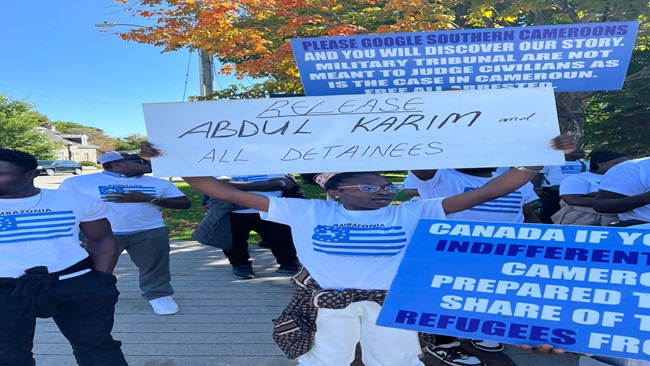
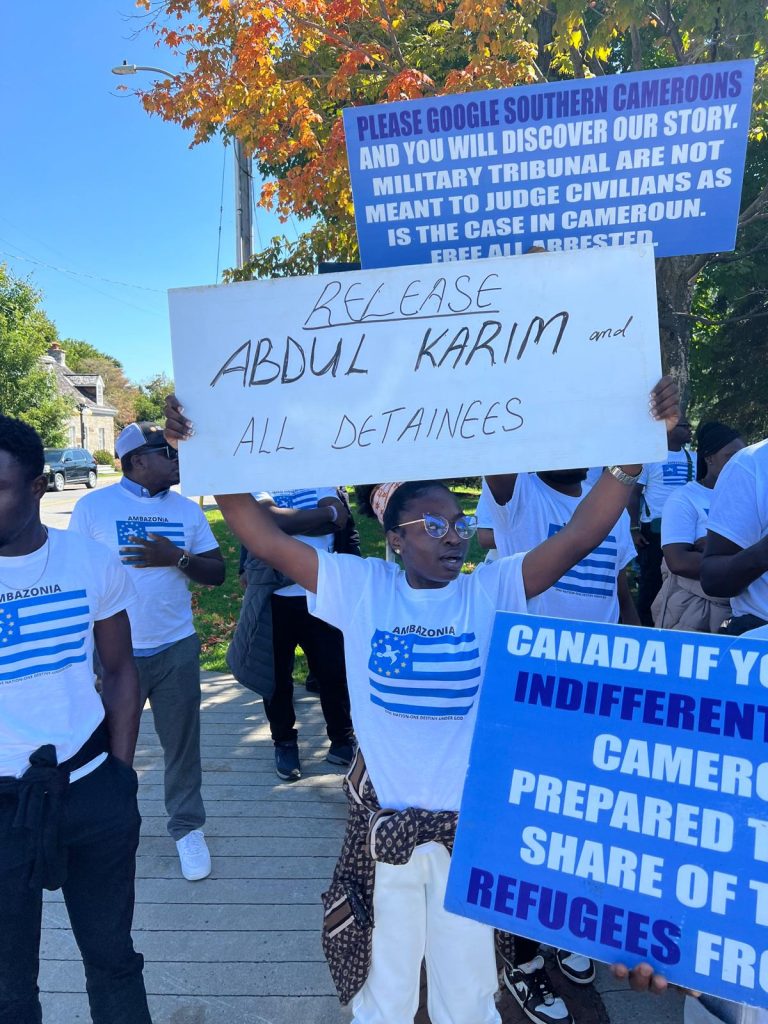
On May 9, 2025, a significant protest took place in Ottawa, Canada, organized by the Southern Cameroonian Diaspora. The event, attended by many Southern Cameroonians, began with a heartfelt worship song, expressing gratitude for the pleasant weather and safe travels for those who came from Toronto.

The head of the Ottawa branch of the protest commission addressed the crowd, emphasizing the importance of loyalty, resilience, and unity among Southern Cameroonians. He urged the protesters to remain steadfast in their efforts until the Biya regime acknowledged their plight and liberated Southern Cameroonians from what he described as modern-day slavery and marginalization. He reiterated that the struggle was not solely for the Ambazonian liberation forces but for all of Southern Cameroons.

The speaker called for urgent action, stating that the corrupt and tyrannical regime of President Paul Biya must heed the voices of the Southern Cameroonians and must seek a lasting solution to the crisis that has plagued the region since 2016. He expressed hope for a future where the oppressive regime was dismantled, whether through political change or other means.

Additionally, he demanded the release of all freedom fighters and leaders who have been imprisoned since the onset of the crisis. The protest concluded with the singing of the Ambazonian Anthem, as participants raised placards and flyers bearing messages such as “500k people in the bushes is an abuse” and other slogans highlighting the inhumane killings, abuses, and marginalization occurring in Cameroon.

The rally was a powerful reminder of the ongoing struggle for justice and freedom in Southern Cameroons, with calls to the international community to take notice of the situation.

The event took place on Sussex Drive in Ottawa where the Cameroon high commission is located and left a lasting impression on all who attended.

By Alain Agbor Ebot in Canada

Serious questions of credibility surround coverup allegations against new pope

10, May 2025

Serious questions of credibility surround coverup allegations against new pope 0

After the historic election of Cardinal Robert Prevost as history’s first American pope, old allegations of coverup and mishandling of abuse cases have bubbled up, but which contain serious doubts in terms of their credibility.

The cases in question, published by the Survivors Network of Those Abused by Priests (SNAP), involve a group of women in Chiclayo who say they were sexually abused by two priests and who have said that Prevost mishandled the investigation into their claims, and the transfer of an accused priest to an Augustinian community house near a school.

Chiclayo allegations

In the case of the Chiclayo victims, the allegations in question were crafted in part by a former priest and canon lawyer who briefly represented the women, but who last December was defrocked for sexual abuse and barred from practicing canon law, and who had a historic axe to grind with Prevost.

Ricardo Coronado, the former priest in question, also has close ties to a Peruvian group, the Sodalitium Christiane Vitae, that Pope Francis formally suppressed prior to his death, after having expelled a prominent archbishop belonging to the society along with 14 other members last fall.

The women claim to have experienced sexually inappropriate conduct on the part of two priests in the Diocese of Chiclayo in Peru prior to Prevost’s arrival, but they did not make a formal complaint to church authorities until 2022, during his tenure.

Among other things, these women allege that after coming forward, Prevost failed to open a preliminary investigation and did not inform civil authorities about their complaints, and they also claimed they were not offered counseling services. They later filed a civil complaint.

The Diocese of Chiclayo has denied these accusations, issuing a 10-point statement Sept. 10, 2023, saying Prevost had launched an inquiry, prohibited the priest from ministry, and had sent the results of the investigation to the Dicastery for the Doctrine of the Faith (DDF) in Rome.

The DDF and civil authorities ultimately opted to close the case in 2023, with civil authorities citing a statute of limitations and the DDF a lack of evidence, but it was later reopened by the apostolic administrator of Chiclayo, who took over leadership when Prevost left, when one of the victims went public with her complaint. The case is still pending in the DDF.

Last year a Vatican official told Crux on background that, “the matter was examined, and Prevost was not found to have covered up. He acted in accordance with the regulations in force at the time.”

Other sources in Peru familiar with the case said the women were, in fact, offered counseling when they were referred to the diocesan listening center after lodging their complaint, and one of them took advantage of the counseling services.

The source also said Prevost had mentioned the possibility of a civil complaint to the women, but had warned that it likely would not be carried forward due to the statue of limitations, as was later the case.

The assertions against Prevost in the Chiclayo case were emerged only after Coronado stepped on as the women’s canon lawyer. A former Augustinian, he represented the women from May until August 2024, when he was barred by the Peruvian bishops from practicing canon law due to allegations of sexual misconduct.

Coronado publicized his defrocking himself on his Facebook page just before Christmas 2024, stating that he had been forcibly expelled from the priesthood. Though he didn’t explain why, he was accused last year of an unspecified “crime against the sixth commandment” by his Diocese of Cajamarca in Peru.

In Catholic legal jargon, a “crime against the sixth commandment” implies some form of sexual misconduct.

Coronado said he was also barred in the same decree from acting as a lawyer, asserting that the aim was to “shield some very eminent prelates.” In a subsequent Facebook post, Coronado said, “please, do not consider the dismissal promoted by a cardinal who covered up is a matter of disgrace. It is a distinction. I feel very honored.”

The references were taken by most observers as alluding to Prevost, with whom Coronado is said to have political and personal differences dating back to Coronado’s own time in the Augustinians.

Various sources familiar with both men told Crux last year on background that Coronado harbored resentment against Prevost in the past, in part over the growth of liberation theology in Peru and Coronado’s belief that the Augustinian order had become too progressive, accusing Prevost of being part of a progressive camp that needed to be reformed.

Three individuals with firsthand knowledge of Coronado dating back to the early 1990s, when he led the Augustinian formation house in LurĂ­n, Peru, told Crux about his personal resentment of Prevost and his historic ties to the SCV, as well as what they said was rampant sexual misconduct on the part of Coronado.

Each of the men spoke on the condition of anonymity for fear of reprisals from Coronado.

“He [Coronado] despised Prevost very, very strongly, because he said that Prevost embodied progressivism in the Church, and this is modernism and such. There was always a lot of attention against Prevost, [Coronado] openly despised him,” one of the men said.

Two of the individuals who were in formation under Coronado recounted an extremely competitive attitude with regard to the formation house in Trujillo, which at the time was led by Prevost.

Coronado, the men said, saw Prevost and the Trujillo house as overly progressive, calling the seminarians there “homosexuals.”

These two individuals described a formation house environment under Coronado as being dominated by strict rules, favoritism, and constant sexual innuendo, with Coronado doling out humiliating punishments and normalizing sexual connotations such as nudity and dirty jokes. They alleged a pattern of sexually inappropriate and aggressive behavior by Coronado, directed towards adult seminarians under his supervision.

A separate individual who was not in the formation house with Coronado, but who visited often and observed the same behaviors, said he had contact with Coronado some 20 years later, and that Coronado’s conduct had not changed.

One individual who was in formation under Coronado also underscored his links with the now-suppressed SCV, saying he was personal friends of many members, and that while he led the Lurín formation house, for at least a year he went monthly to serve as a confessor at the SCV formation house in San Bartolo, where various alleged physical abuses occurred, reportedly with the approval of the SCV’s founder, Luis Fernando Figari.

Coronado wanted to turn the Lurín house into “another San Bartolo,” he said.

The other individual who was in formation with Coronado voiced his belief that Coronado’s decision to accuse Prevost publicly of coverup is likely due to the presumption that Prevost had acted against a prominent SCV archbishop, who was ousted from leadership as part of the Vatican’s investigation of the group, which was conducted by a Special Mission assigned by the pope, and composed of two officials of the DDF.

No mention had been made of Prevost until Coronado stepped in as the women’s lawyer, he said, saying, “The victims are not accusing Prevost, they are asking for help. The way of smearing, dirtying Prevost,” is something that came from Coronado, he said.

Coronado has filed multiple lawsuits against individuals he has accused of defamation, including one for remarks made during a group sharing session as part of an internal healing process. He has also sued Bishop James Golka of Colorado Springs.

After leaving the Augustinians in 2001, following complaints to his superiors about his conduct, Coronado received permission from Bishop Michael Sheridan in Colorado Springs to come work as a canonist, serving there as judicial vicar for nearly 20 years.

He left this post in 2022, apparently over differences with Golka, but with the understanding that he was still a priest in good standing and could thus celebrate the sacraments while visiting.

However, last year Coronado filed a lawsuit against Golka and his former vicar general, Monsignor Robert Jaeger, for allegedly breaking a memorandum of understanding in which the parties had agreed not to go public, after Jaeger issued a June 2023 statement saying he had been made aware of “certain allegations” regarding Coronado’s conduct, and that Coronado was no longer a priest in good standing.

That lawsuit was subsequently dismissed by the District Court of El Paso County. Coronado has appealed that decision.

A spokesperson for the Diocese of Colorado Springs declined a Crux request for comment when Coronado was defrocked, citing ongoing litigation.

Coronado declined a Crux interview request, however, his canonical lawyer, Lucia Musso, said they were both “surprised by the decision to remove him from the clerical state because there was no evidence of a crime.”

“The decision signed by the Holy Father cannot be modified and my client does not consider it appropriate to make any kind of statement,” Musso said, saying Coronado is preparing a book that will offer a “detailed account of the events in which he was involved, and until it is published there will be no further statements.”

Some observers believe that given Coronado’s apparent historic distain for Prevost and his close ties to the SCV, which Pope Francis suppressed earlier this year and while Prevost would have been familiar with given his many years in Peru, were possible motives for fabricating the allegations.

Chicago case

One involves claims of endangerment of children over the placing of a priest accused of abuse and removed from ministry by the Archdiocese of Chiclayo, at a friary located near a school, during the time when Prevost was the provincial superior.

Prevost served as Prior General of the Augustinian order from 2001-2013, before being appointed to Chicago in 2014. He was named prefect of the Dicastery for Bishops by Pope Francis in January 2023.

An Augustinian from Chicago told Crux on background earlier this year that the archdiocese had asked the order for permission for Father James Ray to be placed in that house after being removed from ministry because its superior was a licensed counselor who served as supervisor of a safety plan imposed on Ray, and therefore Ray would be under a more watchful eye.

The Augustinian said the location of a school two blocks away was not considered a risk at the time, given that a safety plan was in place, and the criteria of not placing accused priests near schools was a product of the 2002 Dallas Charter, which had not yet been issued when the decision on Ray was made.

This decision, they said, was an agreement between the archdiocese and the superior of the friary, but which Prevost had to formally sign off on, since it was an Augustinian community house.

In a statement to Crux with supporting documentation, Michael Airdo, lawyer for the Augustinian province of the Midwest, said that the decision to place Ray in St. John Stone Friary from 2000 until 2002 “was an accommodation to the late Cardinal Francis George” as archbishop of Chicago.

When Ray moved into the friary, “he was subject to restrictions stemming from his previous allegations of abuse,” and while staying at the friary, he was overseen by its prior, who ensured that Ray complied with the restrictions on his ministry.

The prior of the friary, Father James Thompson, was a professional counselor, Airdo said, who had served as Coordinator of Continuing Care at Southdown Institute in Ontario, Canada, a mental health treatment center that assists the church in treating ministers and fostering safe environments.

Thompson “was especially qualified to supervise individuals like Ray who were subject to restrictions. There have been no allegations that Ray committed any acts of abuse while residing at St. John Stone Friary,” Airdo said.

According to Ray’s personnel file, published by the Archdiocese of Chicago, the approval for his residence at the friary was granted by the Archdiocese of Chicago, and the initial placement of Ray there was done before the 2002 Dallas Charter of the United States Conference of Catholic Bishops, which stipulates that proximity to a school is a prohibition for placement of accused clergy.

However, Airdo said an archdiocesan Professional Fitness Review Administrator determined that there was “no school in the vicinity,” and therefore recommended Ray’s placement, which Cardinal George subsequently approved as archbishop.

Airdo also provided a list of Prevost’s efforts in child protection during his time leading the Augustinians, noting that as provincial prior from 1999-2001, “in cases where established accusations against an Augustinian were brought to him, he applied precautionary measures to remove the accused friar from active ministry, placing him in a setting where there would be no risk to minors.”

After his election as prior general in 2001, then-Father Prevost helped the Augustinian order put into place a requirement that a set of protocols be established for every circumscription of the order to guide members in child protection and responding to cases, “years before it became the general law of the Church.”

Prevost, Airdo said, as prior general also organized a course for all major superiors of the Augustinians during the Intermediate General Chapter of 2010 addressing the issue of safeguarding and best practices for responding to victims.

In 2012, Prevost participated in the inauguration of the Center for Child Protection at the Pontifical Gregorian University in Rome, and he also participated in the first safeguarding course offered to the superiors general of religious orders and congregations.

Despite it being the responsibility of major and provincial superiors, Prevost as prior general, Airdo said, “became directly involved in several cases…when victims reached out to the Prior General for whatever reason.”

“He has taken steps to protect minors and vulnerable adults in numerous countries, always seeking to protect the innocent and offer healing to victims, while removing offenders from ministry,” Airdo said.

As bishop of Chiclayo, an appointment he received in 2014, Prevost took an active role in both the diocesan and national bishops’ conference’s child protection policies, helping draft protocols “that had never been completed or published in Peru.”

Prevost, Airdo said, formed the first national commission within the bishops’ conference for the protection of minors and vulnerable adults and served as its first coordinator, organizing training courses for church personnel and personally accompanying victims.

Source: Crux

The Diocese of Buea celebrates 75 years of enduring faith

10, May 2025

The Diocese of Buea celebrates 75 years of enduring faith 0

Seventy-five years ago, the Diocese of Buea was established in Cameroon’s South West region, marking a historic milestone as the country’s first diocese.

Now, seven decades later, thousands of Christians gathered at the Divine Mercy Co-Cathedral in Buea on May 7 to celebrate this enduring legacy of faith.

“The faith that has been passed down to the people, nurtured within communities, and continues to sustain us is what we celebrate today,” said Bishop Michael Miabesue Bibi of the Buea Diocese.

However, the history of the diocese story stretches even further back. It was part of the Apostolic Prefecture of Cameroon in 1890, became an Apostolic Prefecture in 1923, and was later designated an Apostolic Vicariate in 1939. On April 18, 1950, it officially became Cameroon’s first diocese.

Successive bishops played a crucial role in its growth, founding religious congregations and establishing new parishes.

In 2019, Michael Bibi was appointed Bishop of Buea, and in 2021, and officially became its 5th residential bishop. Today, the Diocese of Buea continues to flourish, with 37 parishes serving its community.

Archbishop Andrew Nkea Fuanya, President of the Cameroon Bishops’ Conference, described the diocese as “the mother” of Cameroon’s 26 Catholic dioceses.

Like all the Church in Cameroon, the Diocese of Buea has endured a turbulent history — surviving the hardships of two world wars, the struggle for independence, and, today, the ongoing separatist crisis affecting the country’s English-speaking North West and South West regions.

Throughout the celebration, speakers subtly referenced the current crisis as they reflected on years of unwavering faith.

Nkea urged Church leaders in Buea to “continue to give hope to the hopeless, especially in this time in the history of our country.”

While the archbishop did not explicitly define “this time in the history of our country,” anyone familiar with Cameroon’s challenges would recognize his reference to the ongoing separatist crisis in the country’s two English-speaking regions.

Since 2016, these regions have been embroiled in a separatist war, fueled by long-standing grievances over the marginalization of Anglophones by the Francophone-dominated government.

The crisis reached a boiling point eight years ago when teachers and lawyers in the two English-speaking regions took to the streets, protesting what they saw as the imposition of French in Anglo-Saxon schools and courts.

The government’s military crackdown on these peaceful protests only escalated tensions. In response, a separatist movement emerged, demanding secession and the creation of a new nation called Ambazonia.

Since then, the conflict has taken a devastating toll — at least 6,500 people have lost their lives, and over a million more have been displaced.

While the crisis was not directly addressed during the 75th anniversary of the Diocese of Buea, its effects were undeniable. In an interview with Crux, Grace Ngong, a catechist at Bojungo — Cameroon’s oldest parish — acknowledged the deep impact of the conflict on the church.

Ngong fled to the South West region when violence intensified in her hometown of Wumin the North West region, where she had also been serving as a catechist.

“When I arrived in Bojungo, I continued my work as a catechist,” she told Crux.

“I have been serving there for six years,” she added, though she declined to comment further on the ongoing crisis.

Felicia Motia, a programs analyst at Carita Buea was more forthcoming.

“Seeing the entire Christian community of the Diocese of Buea, along with other guests, come together to celebrate the 75th anniversary is truly significant to me. This feeling is even stronger when I consider the ongoing Anglophone crisis affecting the region, particularly in the Southwest, where the diocese is located. Given these challenges, the church’s efforts — especially in my own department — have been crucial in providing support to vulnerable people,” she told Crux.

“It is truly meaningful that Caritas, the charitable arm of the church, is working closely with the church to support vulnerable people in various ways—through education, emergency assistance, and more,” Motia said.

Acknowledging the ongoing crisis and the internal struggles within the Church, the Apostolic Nuncio to Cameroon and Equatorial Guinea, Archbishop José Avelino Bettencourt, called for unity, urging the people of God to stand together and work in harmony with their Bishop.

“Unity is important,” Bettencourt said. He used the metaphor of a rope to illustrate the strength and importance of unity.

“Consider a single thread — fragile, easily broken with the slightest pressure. Snap! It is gone. But a rope is different. A rope is made of many weak threads woven together into a strong, unbreakable bond. That is unity,” he said.

“Similarly, unity binds people together, making them stronger, more resilient, and able to withstand challenges. Just like the intertwined threads of a rope create durability, individuals united in faith, purpose, or community form a powerful force,” Bettencourt told Crux.

“Your unity to your bishop guarantees the universal church’s support for you,” he added.

He talked up the 75th anniversary celebrations, noting that “the faith of the Catholic Church was kept alive thanks to your parents and your grandparents and to the tribes, which kept the faith alive, even when priests were not allowed to minister. So today is a celebration of faith.”

Bibi noted that the celebration should not blind the Christian community to the various challenges it still faces and announced that a diocesan synod will be convened in the near future to assess what has been done and what remains to be done.

“Together with members of Christ’s lay faithful, the religious, the priests, and myself, we are going to sit and have an evaluation of the state of the diocese. Of course, there are things that exist in the diocese that are good, that we have to maintain. There are also certain things that we may need to take some decisions on, and get proposals on how we can live, and live better, in a united way, in communion with one another,” the bishop told Crux.

Source: Crux

Pope Leo says Church must illuminate ‘dark nights of this world’ in first Mass

9, May 2025

Pope Leo says Church must illuminate ‘dark nights of this world’ in first Mass 0

Pope Leo XIV is celebrating his first Mass, the day after being elected pontiff.

He tells the cardinals gathered in the Sistine Chapel that he hopes his election can help the Catholic Church bring light to the “dark nights of this world”

The Pope has said the church must do more work in places where there is a “lack of faith” as part of its mission.

“Even today, there are many settings in which the Christian faith is considered absurd, meant for the weak and unintelligent,” he tells the Cardinals.

He adds that areas where “technology, money, success, power or pleasure” are preferred are “where our missionary outreach is desperately needed”.

“I know I can rely on each and every one of you to walk with me as we continue as a Church, as a community of friends of Jesus, as believers, to announce the good news, to announce the Gospel,” he says.

Source: BBC

«< 82 83 84 85 86 >»

Featured

  • Exam leaks in CPDM Cameroon: A symptom of a deeper corruption crisisExam leaks in CPDM Cameroon: A symptom of a deeper corruption crisis
  • Biya is already in Hell as YaoundĂ© unravelsBiya is already in Hell as YaoundĂ© unravels
  • What does President Biya really want? Money, women or cigarettes?What does President Biya really want? Money, women or cigarettes?
  • Biya, how long must the nation wait for the government it was promised?Biya, how long must the nation wait for the government it was promised?
  • Cameroonians in Leicester: funeral contributions must never become a marketplace for corruptionCameroonians in Leicester: funeral contributions must never become a marketplace for corruption

Most Commented Posts

  • 4 Anglophone detainees killed in Yaounde4 Anglophone detainees killed in Yaounde
    18 comments
  • Chantal Biya says she will return to Cameroon if General Ivo Yenwo, Martin Belinga Eboutou and Ferdinand Ngoh Ngoh are sackedChantal Biya says she will return to Cameroon if General Ivo Yenwo, Martin Belinga Eboutou and Ferdinand Ngoh Ngoh are sacked
    13 comments
  • The Anglophone Problem – When Facts don’t LieThe Anglophone Problem – When Facts don’t Lie
    12 comments
  • Anglophone Nationalism: Barrister Eyambe says “hidden plans are at work”Anglophone Nationalism: Barrister Eyambe says “hidden plans are at work”
    12 comments
  • Largest wave of arrest by BIR in BamendaLargest wave of arrest by BIR in Bamenda
    10 comments

Latest Tweets

→ Follow me

Featured

  • Cameroon looks to Tunisia’s textile model to develop its cotton value chain

    Cameroon looks to Tunisia’s textile model to develop its cotton value chain

  • Trump marks 80th birthday with White House UFC spectacle

    Trump marks 80th birthday with White House UFC spectacle

  • Ex-Israeli PM Ehud Barak says Netanyahu must be removed ‘with sticks and stones’

    Ex-Israeli PM Ehud Barak says Netanyahu must be removed ‘with sticks and stones’

  • US denies visa to Palestine football chief for World Cup attendance

    US denies visa to Palestine football chief for World Cup attendance

  • YaoundĂ©, Abu Dhabi explore new trade and investment framework

    Yaoundé, Abu Dhabi explore new trade and investment framework

  • Southern Cameroons Crisis: 2 gov’t soldiers killed in Ambazonia ambush

    Southern Cameroons Crisis: 2 gov’t soldiers killed in Ambazonia ambush

  • Indomitable Lions: HervĂ© Renard set to replace David Pagou

    Indomitable Lions: Hervé Renard set to replace David Pagou

Log In

  • Register
  • Log in
  • Entries feed
  • Comments feed
  • WordPress.org
© Cameroon Concord News 2026

We are using cookies to give you the best experience on our website.

You can find out more about which cookies we are using or switch them off in .

Powered by  GDPR Cookie Compliance
Privacy Overview

This website uses cookies so that we can provide you with the best user experience possible. Cookie information is stored in your browser and performs functions such as recognising you when you return to our website and helping our team to understand which sections of the website you find most interesting and useful.

Strictly Necessary Cookies

Strictly Necessary Cookie should be enabled at all times so that we can save your preferences for cookie settings.

3rd Party Cookies

This website uses Google Analytics to collect anonymous information such as the number of visitors to the site, and the most popular pages.

Keeping this cookie enabled helps us to improve our website.

Cookie Policy

More information about our Cookie Policy