
3, August 2018
Southern Cameroons War: IG condemns Biya-Ekema Patrick-led carnage 0
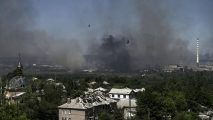
The Southern Cameroons Interim Government has strongly condemned recent killings by the Francophone army in Buea, Mamfe, Ekona, Ndop and Muea. A Cameroon government military attack ordered by defense minister Beti Assomo killed scores of people throughout Southern Cameroons. The Ambazonian Secretary of Communications, Hon. Chris Anu described the killings by French Cameroun troops as a continuation of French Cameroun’s horrifying genocide against the people of Southern Cameroons.
French Cameroun soldiers are slaughtering on a daily basis dozens of innocent Southern Cameroons citizens including several members of Igbo extraction from Nigeria who are part of the business community in Southern Cameroons by attacking civilian targets to make up for Yaoundé frustration and defeats on the battleground. Chief Barrister Charles Taku of the International Criminal Court says the killings in Southern Cameroons orchestrated by the Biya regime is a serious war crime.
The leadership of the Christian churches including the Holy Roman Catholic Church is maintaining a kind of silence of the lamb. However, the continuation of the atrocities of the Francophone army in the face of the silence of the international community has worryingly aggravated the situation in Southern Cameroonians.
The Francophone dominated army has been attacking Southern Cameroons towns and villages since 2017. The Southern Cameroons war has killed more than a thousand, and placed the country on the edge of outright civil war.
By Chi Prudence Asong




















3, August 2018
Southern Cameroons Crisis: The frustration is manifest 0
In less than two months, the Southern Cameroons crisis that has put the country in the spotlight for all the wrong reasons will be two years old and despite criticism by the international community, the Yaounde government’s ferocious brutality is still going on. Indeed, there is no sign that the government is thinking of any other solution that can result in a peaceful resolution of the conflict that has already killed some 3,000 civilians and about 1,000 military men.
Despite the government’s radio silence over what is happening in the two English-speaking regions of the country, there are indications that the government is losing sleep over the situation. Instead of seeking peace, the government is still prepared to take military action that might only make matters worse. The government’s arrogance and greed are to blame for the deterioration of the situation in the English-speaking regions of the country and it has been working hard to disguise its frustration.
But it is always challenging to hide frustrations and issues. Speaking recently during a press conference in Yaounde, the country’s communication minister, Issa Tchiroma, struck a different note. While insisting that Cameroon was one and indivisible, he urged Cameroonians – Anglophones and Francophones – to remain united so as to face an imaginary foreign attack.
Mr. Tchiroma who has been very uncompromising when it comes to the Southern Cameroons crisis, insinuated that the ugly fighting playing out in the North West and South West regions of the country was the handiwork of foreign countries and agents whose sole interest is to have a grip on the country’s gold, oil, diamond and other natural resources.
But his message is not getting through. It is clearly falling on deaf ears. Southern Cameroonians will surely not be listening to those stories from a man who has worked so hard to ensure Southern Cameroonians get killed for their resources. The South West region, in particular, is a receptacle of God’s blessings for the country. The country’s oilfields are located in Ndian Division and there are huge gold deposits in Mbonge. Manyu Division has huge expanse of forest that is the envy of the world and it is alleged that this division, noted for its learned people, is sitting on huge oil deposits. There was some exploratory work in the region before the conflict broke out. This will surely continue when the guns stop spreading death.
The region’s waters are also home to large fish stocks. Its forest is home to unimaginable fauna and flora and it is not in error that the world also knows the country because of the Korup National Park which straddles Manyu and Indian Divisions. The South West region is also known for its fertile volcanic soil and this explains why agriculture is one of the many activities that have been yielding huge foreign earnings to the country. Many of the country’s neighbors have their food supply from the south west region.
Unfortunately, this region is one of the poorest in the country. Its people are still living in abject poverty and what passes for medical, school and road infrastructure clearly belongs to another epoch. The South West deserves better, but years of marginalization have left the region in dehumanizing poverty.
While the country has been raking in millions of dollars from the region’s oil, the residents of the region have been tied up in degrading poverty. The country’s lone refinery (SONARA) is located in Southern Cameroon, precisely in the Southwest port city of Limbe formerly known as Victoria, but the natives of the region have been reduced to sorry spectators of events in their own region.
The Southern Cameroons crisis is also born of this injustice. More than 90% of the refinery staff are Francophones and to add insults to injury, staff of the refinery have their own neighborhoods that are well designed and very clean. Besides, petroleum products are more expensive in the South West region than in any other region of the country.
This economic apartheid that has been around since 1977 when oil was discovered in Ndian Division is one of the many reasons why Southern Cameroonians hold that a clear break with East Cameroon will be the ideal solution and they are willing to sacrifice their lives so that future generations will not have to deal with the same issues.
They want to walk away from this ‘political marriage’ that has brought them more pain than gain. Though it will take time to achieve such an outcome, Southern Cameroonians back home, now known as Ground Zero, hold that it better to die trying than to sit and watch other people enjoy their God-given wealth.
If they succeed to walk away, then Cameroon will be losing about 60% of its wealth. Southern Cameroons is blessed with enormous wealth and the Yaounde government holds that it is by terrorizing the people that it will succeed to keep them in the dark of what is happening to their resources.
For almost 50 years, the Rio Del Rey estuary in the South West region has been the source of more than 90% and at times 100% of all the country’s hydrocarbons, specifically oil. Since 2014, Cameroon has exported more than US$5.88 billion worth of products, of which more than US$2.65 billion, about CFAF 1,650 billion, has been from crude oil alone. This is a significant amount of money and the Yaounde government cannot afford to lose such revenues.
The government is not only frustrated, it is scared, as the possibility of secession is there. All its efforts to lay the matter to rest have been futile. Its divide-and-rule strategy has simply fallen apart as North westerners and South westerners clearly understand that they are united for a cause that will bring them happiness and prosperity. Not even the government’s military violence has succeeded to take the wind out the fighters’ sail. The more the government kills, the more determined the fighters become.
The government had underestimated the will of the people of Southern Cameroons to right the wrongs of the past. For many of them, their fate is worse than death and they have very little time to be around this planet. They want to establish their own country and even ensure that future generations do not deal with such time-consuming and energy-sapping challenges.
And they are receiving huge support from the Diaspora that has transformed this issue into an opportunity for its strength and influence to be felt. With some 4 million Southern Cameroonians out of the country, it is likely that more money will be flowing to Cameroon to feed the war that has rushed many young men and soldiers to an early grave.
The government had never thought the Southern Cameroonian Diaspora could be this influential. It had also underestimated the anger of those living abroad. Southern Cameroonians started living the country as far back as 1965 when the country’s first president, Amadou Ahidjo, displayed his huge appetite for dictatorship. For many Southern Cameroonians, it was better to live abroad a free man than to live at home in invisible chains.
Today, that Diaspora has reduced the Yaounde government into a symbol of mockery. The Diaspora is financing the war in the country and it is willing to bring down the entire country. Gradually, the Francophone Diaspora is also joining in. Francophones now know that if the current system is not brought down, their own children will be caught up in a pretty mess, as Southern Cameroonians already have a foot out of the fake union that was put together by Ahidjo, Foncha and Muna who are all dead and gone.
Cameroon seems to have been caught up in a terrible mess. 2018 may be the year the country might implode. With presidential elections scheduled for October, it is clear that things might spiral out of control, especially as the country’s ailing and aging president, Paul Biya, is running in an election, many observers say, will never be free and fair.
Mr. Biya has ruled the country for 36 years and he has nothing to show for the time he has led the country. The country’s roads have become death traps, its hospitals have been reduced to consultation clinics, its schools clearly belong to another era and its people are suffering from all types of ailments. Today, the country is beset by many diseases that have been eliminated in other parts of the world. Cholera is killing many people in the nation’s capital, Yaounde, due to poor water supply and sanitation. The roads in the city are clearly begging for an extreme makeover, but the government has clearly run out of money.
The Southern Cameroons crisis has hit the Yaounde government like a ton of bricks. The country’s economy is suffering. Its Automatic Teller Machines (ATM) seem to be out of service. State corporations located in Southern Cameroons are already feeling the heat. Pamol, a palm oil production corporation located in Lobe, a small town in Ndian Division, has finally shut its doors as the fighting between Southern Cameroonian fighters and army soldiers takes a turn for the worse. This revenue stream has stopped flowing and Yaounde is really ill-at-ease.
Pamol’s closure is bad news for the government. More than three thousand Pamol workers are today unemployed and living in permanent fear, as the fighting between the warring factions rages on. Schools and courts in the region have been closed for almost two years and it is increasingly obvious that the Yaoundé government has lost control of certain parts of the two English-speaking regions.
But it is not only Pamol’s closure that is causing the government nightmares. The Cameroon Development Corporation (CDC), one of the country’s major employers, is also going through a rough patch. Some of its factories have closed shop, while the fighters have deliberately set some of its infrastructure ablaze as part of their economic sabotage campaign. Malende, a small town located some 6 km from Muyuka, has witnessed huge unemployment rates. The corporation’s rubber factory was set ablaze sometime last month by some unidentified men and this has hit CDC like a ton of bricks.
In other plantations, many workers have simply deserted. The fighting is disrupting economic activities in those plantations and many workers hold that it is better to quit than be caught up between the devil and the deep blue sea. The fighting, coupled with the derisory salaries the corporation pays to its workers, has made CDC unattractive and this is gradually eroding the government’s tax base.
Similarly, government revenue has taken a nosedive, as the national oil refinery located in the Southwest region is also facing some major challenges. While falling global oil prices are spreading pain and suffering among oil exporters, the declining oil output and constant attempts by Southern Cameroonian fighters to bring down the country’s lone oil refinery are leaving the government in a huge messy economic quandary. The crisis is a true nightmare to this once-upon-a-time oasis of peace. It is indeed a millstone around the government’s neck.
The government is gradually recognizing that declaring a war on its own people was a big mistake, as the impact of the war is spreading into East Cameroon. With a large influx of internally displaced people into East Cameroon, housing and food have become very expensive in those cities receiving the internally displaced. Douala and Yaounde have been home to most of this internally displaced people and these two cities lack the proper infrastructure to handle such situations.
Declining oil revenues and falling production of some of the country’s major employers like CDC and Pamol implies that the government is heading for a financial squeeze. This is exactly what is causing frustration within the government and the frustration is now manifest.
While the government is putting on a brave face in public, it is indeed worried that Southern Cameroonians might walk away from the union that was stitched together in 1972 between West and East Cameroon. Southern Cameroonians hold that the union has been predicated upon lies right from the beginning and that a review of the system is long overdue.
Reports from international rights groups such as Transparency International, Amnesty International (AI) and The International Crisis Group (ICG) have clearly indicted the Yaounde government and this is already hurting. The government has always been very critical of Amnesty International and the ICG, but this week, its spokesperson and communication minister, Issa Tchiroma, revealed that The International Crisis Group will never be allowed to set foot in the country. This is prove of its frustration and guilt. Instead of seeking to get it right, the government seems to be chasing the wrong shadows.
Cameroon is indeed at the crossroads. With elections around the corner and the fighting in the English-speaking regions raging on, it is clear that a disaster is lurking somewhere and before long the country could be transformed into an inferno. The frustration in East Cameroon is also mounting, as many people fall into abject poverty. It is becoming increasingly clear that Mr. Biya is not the man to lead the country to the land of promise. His time is up and there is a consensus around the world that he has overstayed his welcome.
It is time for him to bow out if he does not want the country to sink into a bitter civil war; the type that has destroyed many African countries ruled by dictators. The scourge of war seems to be advancing towards Cameroon and many people around the world are worried that if the Sword of Damocles descends on Cameroon, the entire sub-region might be pushed into unprecedented chaos. Tempers are already flaring in the country. For 36 years, Mr. Biya has only favored people from his own region. Though the center and south regions constitute less than 10% of the country’s population, they make up 80% of the country’s government; a situation that is hurting many Cameroonians from other regions of the country.
The world has to jump in right now. There is still time to fix a few things. If Mr. Biya stays in power, the country will never be stable. If he dies in power, Cameroon will never be a peaceful country again, as there will be revenge killings all over the country. The world cannot be blind to this unfortunate situation that has reduced the country into a ticking time bomb. There is still time to defuse this bomb. The world will have itself to blame if things really fall apart in Cameroon.
By Kingsley Betek and Irene Nanyongo