21, August 2018
FIFA says Nigeria will no longer be suspended 0
Global football governing body FIFA on Monday announced that Nigeria will no longer be suspended over a long-running court case focusing on the disputed leadership of its federation.
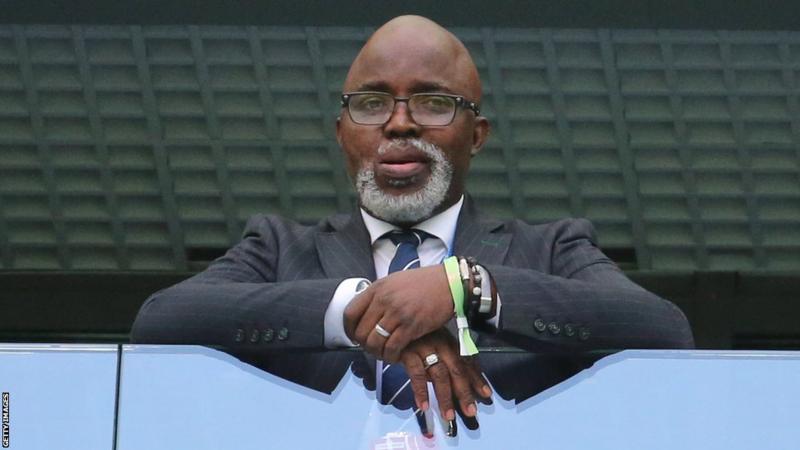
FIFA said it had received confirmation that the Nigerian Football Federation (NFF) had restored control of the body and its offices to its president Amaju Pinnick and secretary-general Mohammed Sanusi.
“In view of these circumstances, FIFA deems that the conditions set by the decision of the Bureau of the FIFA Council have now been met and consequently the suspension of the NFF will not take effect,” FIFA said in a statement.
FIFA made its ruling after a spokesman for acting President Yemi Osinbajo said Pinnick and his executive committee were recognised as the leadership of football in Nigeria.
FIFA’s strict non-interference rules
Last week, FIFA threatened to suspend Nigeria and Ghana over if their governments intervened in resolution of leadership and corruption stalemates respectively.
The governments of the two African football powerhouses had intervened in the management of the football federations.
FIFA do not accept third-party interference in its member federations and in the case of Nigeria, warned that it would suspend Nigeria if the NFF was not led by its elected president, voted in 2014.
Nigeria put itself on a collision course with FIFA in July when the government’s sports ministry directed the NFF to comply with a court order to overturn Pinnick’s election and recognise Chris Giwa as its head.
A FIFA ban would have immediately meant that Nigeria would not honour a 2019 Africa Cup of Nations qualifier in Seychelles next month, while they would also have been disqualified from the under-17 African zonal qualifiers in Niger, which kick off on September 2.
Ghana settles with FIFA
Last week, the government of Ghana reached a deal with FIFA to work together to clean up football administration in the country, shelving plans to dissolve the corruption stained federation.
Ghana’s attorney general had taken steps towards dissolving the embattled Ghana Football Association (GFA) after an explosive documentary in June showed officials allegedly soliciting bribes worth millions of dollars.
In both cases, FIFA had its way and will continue to strictly enforce its regulations.
“FIFA will continue to closely monitor the situation in order to ensure that FIFA’s rules and regulations are fully adhered to,” it added.
Source: Africa News











21, August 2018
Fru Ndi’s next-of-kin blames Biya for Anglophone crisis 0
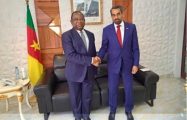
The main opposition party candidate in Cameroon’s October scheduled elections on Monday said, President Paul Biya is ‘‘the only one responsible’‘ for the conflict in the English-speaking regions of the country.
Joshua Osih, is himself a native of the North and Southwest regions in Cameroon, which have been plagued by a political crisis since 2016.
By the end of 2017, the crisis degenerated into a conflict between armed forces and English-speaking separatists, killing dozens, including at least 80 soldiers and police. 200,000 people were also forced to flee their homes.
“We have a problem with the system and this system has meant that we do not have simple political solutions to simple problems. We have a president who does not understand what is happening in Cameroon, who spends most of his time abroad and who thinks that sending the army as he did in the 1960s with the UPC can solve this problem. He can’t, Osih said.
Anglophone effect on October election
The shadow of this conflict hangs over the organization of the October 7 presidential election in the English-speaking zone, in which Osih and seven other candidates will face 85-year old Paul Biya.
This is the first time he’s running on the ticket of the Social Democratic Front, the main opposition party that was previously represented by its historic leader, John Fru Ndi.
Unlike other candidates, Osih says he is “against” a probe into charges of alleged abuses committed by the army in English-speaking areas, saying he believes, “there is a political responsibility that is far superior to the responsibility of mere military “.
AFP