18, June 2018
Cameroon: Electoral Uncertainty amid Multiple Security Threats 0
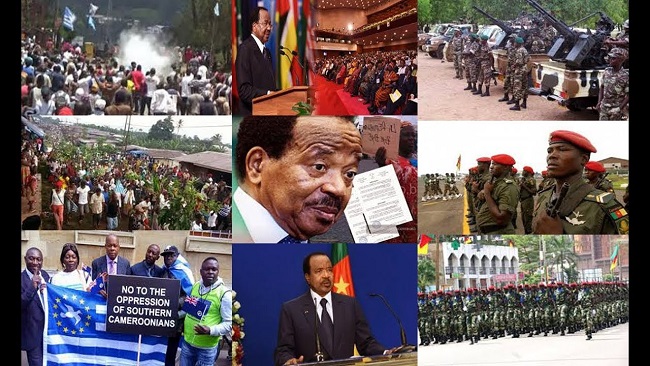
Cameroon’s governance and security problems for many years have attracted little outside attention. But the country now faces violence in three regions: the Far North, where Boko Haram continues to mount small-scale attacks, as well as the Northwest and Southwest, where an incipient Anglophone insurgency emerged in 2017. Added to this ambient insecurity is a refugee crisis in the East and Adamaoua, to which 236,000 people from the Central African Republic have fled militia battles. Elections scheduled for October 2018 will be a major test, as will the eventual transfer of power away from President Paul Biya, now 85. 2018 is a crucial moment for the international community, and in particular the EU and its member states, to engage in early action and prevent further escalation.
Boko Haram: still a threat to a neglected region
Boko Haram, active in Cameroon’s Far North since 2014, has killed about 1,800 civilians and 175 soldiers, kidnapped around 1,000 people and burned and looted many villages, while the conflict has displaced some 242,000 and badly disrupted the local economy. Some 91,000 Nigerians have fled Boko Haram-related violence in Nigeria to Cameroon. Though battered by security forces and riven by internal divisions, Boko Haram remains a threat in the Far North: in 2017 the group has killed at least 27 soldiers and gendarmes, as well as 210 civilians. It could regain strength if Cameroonian authorities neglect the crisis.
The war against Boko Haram has strained local communities, given rise to humanitarian crises and highlighted the need for longer-term development.
Boko Haram fighters and associates have surrendered in increasing numbers. Dozens of former militants have been sent home, after swearing on the Quran they would not rejoin the group. About 80 others are being held at a military camp in Mayo Sava. To encourage more such surrenders, authorities should avoid blanket stigmatisation and differentiate between hard-core fighters and others. The government also needs to develop a clear plan to counter the appeal of the jihadist ideas that some of the Boko Haram fighters that have given themselves up or been captured continue to espouse. Effective justice and reintegration mechanisms are lacking. Hundreds of supposed Boko Haram members are currently in pre-trial detention, a situation that risks fuelling their further radicalisation; their status should be resolved as swiftly as possible. Authorities also should seek to implement flexible, locally-informed mechanisms to facilitate the social reintegration of former Boko Haram fighters and encourage new surrenders. Leaving this to the whims of ad-hoc local efforts is inadvisable: given the destruction wreaked by the insurgency, communities are highly resentful, and poorly conceived reintegration schemes could sow the seeds of future problems. This is in contrast to neighbouring Chad, where local communities seem to be integrating former militants somewhat successfully on an informal basis. The EU should encourage national authorities, both in Yaounde and in regional capitals, to elaborate and implement their own plans to manage the demobilisation of former Boko Haram members.
The war against Boko Haram has strained local communities, given rise to humanitarian crises and highlighted the need for longer-term development. In 2018, Cameroon’s international partners, including the EU, should provide further humanitarian assistance in the Far North, focused on strengthening support to displaced persons and host families as well as supporting the voluntary return of Nigerian refugees. Where required, emergency operations should continue, but humanitarian efforts should also evolve into a more sustainable development approach.
The challenge is to stimulate the local economy without filling the coffers of Boko Haram, which taxes local trade and whose recruitment efforts in the past have been facilitated in part by offering small business loans and other financial incentives. Achieving the right balance will be difficult. But European support for small businesses within the formal and informal economies could help undercut local backing for Boko Haram. Separately, while Yaounde has long controlled the Far North by co-opting local notables, Boko Haram’s spread into Cameroon was partly facilitated by tapping into anger at local elites, thereby demonstrating the limits of that approach. Instead, Cameroon’s partners should encourage the state to reassert its presence in the north in a participatory and inclusive manner rather than through proxies, including via development projects that boost local earning potential.
The Anglophone crisis: an insurgency in the making
The crisis in the Anglophone regions (the Northwest and Southwest), which started as a sectoral protest, is rapidly developing into an armed insurgency, following the Cameroonian security forces’ violent repression on 22 September and 1 October. While there are hardliners among the militants, the government bears a large share of the responsibility for the conflict. It failed to recognise the legitimacy of Anglophone grievances; its security forces committed widespread abuses; and it imprisoned many peaceful activists in early 2017.
Several small “self-defence” groups (the Tigers, Ambaland forces and Vipers, to name a few) now operate alongside two armed militias: the Ambazonia Defence Forces (ADF) and the Southern Cameroons Defence Forces. Since November 2017, these groups have launched low-intensity attacks that have killed at least 22 and injured 25 among soldiers and gendarmes. An unknown number of separatist fighters have died in these clashes. The military crackdown also exacted a large humanitarian toll and involved significant human rights violations. The violence has left at least 90 civilians since October 2016. Around a thousand have been arrested, with 400 still in jail. More than 30,000 Anglophones are refugees in Nigeria and tens of thousands have been internally displaced.
Given that the crisis is rooted in historically grounded identity-based grievances, notably the strong sentiment among Anglophones that they have been politically and economically marginalised, there will be no easy resolution. The government will need to change course and negotiate in good faith. The government’s refusal to launch a dialogue with peaceful Anglophone leaders has corroded the community’s trust in state institutions and provoked escalating violence. The crisis also illustrates the limits of the country’s centralised governance model, which show signs of atrophy. Discontent is still mounting in Anglophone areas. Reports suggest that some members of the security forces are joining the insurgency.
A direct dialogue between the government and Anglophone community leaders is critical to de-escalate the crisis, particularly ahead of the October elections. A wider conversation, which should include discussion of different models of decentralisation and federalism, is also important, given the failings of the current model. The EU and its member states should take advantage of the government’s concern about its international image and desire to preserve cooperation with them to nudge it toward direct talks and a national dialogue.

Uncertainties ahead
Most of the country’s security threats stem, at least in part, from bad governance and an over-centralised political system. While the 2018 elections are likely to see the ruling party retain power, a vote perceived as manipulated or unfair could further diminish its legitimacy, making it even more remote from citizens and feeding greater levels of violence. Election season will be an especially risky time if, as appears likely, Anglophone militants attempt to disrupt the balloting in the Northwest and Southwest regions, and possibly elsewhere.
More broadly, while many local activists and international actors see an eventual transition from President Biya, whose party dominates the government, as a prerequisite for improvements in governance, they also fear that his departure could trigger instability. European and other foreign powers should start laying the groundwork for a peaceful transfer of power; the longer the situation deteriorates, the harder it will be to pick up the pieces. They have two opportunities to do so in 2018: first, by supporting dialogue between the Biya government and Anglophone leaders, as described above; and, second, by working with Cameroon’s electoral body (ELECAM) and pressing the government to permit, and then deploy, election observers to protect the integrity of the vote, as best possible, and thus build confidence in the electoral system. Even small gains in these areas would help mend the frayed contract between the Cameroonian state and its citizens.
Culled from the International Crisis Group






















18, June 2018
After the Fall of African Dictatorships 0
What happens to Africa after the mud walls of dictatorship come tumbling down and the palaces of illusion behind those walls vanish? Will Africa be like Humpty Dumpty who “had a great fall” and could not be put back together by “all the king’s horses and all the king’s men”? What happens to the dictators?
When the people begin to beat their drums and circle the mud walls, Africa’s dictators will pack their bags and fly off like bats out of hell. Some will go to Dictators’ Heaven in Saudi Arabia where they will be received with open arms and kisses on the cheeks (Ben Ali of Tunisia, Idi Amin of Uganda, Nawaz Sharif of Pakistan found sanctuary in Saudi Arabia, as will Hosni Mubarak of Egypt and Omar al-Bashir of the Sudan and soon.) Others will hide out in the backyards of their brother dictators (Mengistu Haile Mariam of Ethiopia has been holed up in Zimbabwe for the last 20 years; Hissen Habre of Chad remains a fugitive from justice sheltered in Senegal; Mohammed Siad Barre of Somalia lived out his last days in Nigeria as did Zaire’s Mobutu Sese Seko in Morocco). The rest will fade away into the sunset to quietly enjoy their stolen millions. But few will meet the fate of Jean-Bedel Bokassa, the self-proclaimed Emperor of the Central African Republic (CAR) who found sanctuary in France only to return to CAR, face trial and be convicted of murder; or Charles Taylor of Liberia who found refuge in Nigeria before he was handed over to the International Criminal Court and is now standing trial for crimes against humanity and war crimes.
The fact is that the morning after the fall of Africa’s dictators, the people will be stuck with a ransacked economy, emptied national banks, empty store shelves, torture chambers full of political prisoners and dithering and power-hungry opposition leaders jockeying for position in the middle of political chaos.
Who Could Put Africa Together After the Fall?
Where are the “king’s men and the king’s horses” who will put Africa together after the mud walls come tumbling down? Who are Africa’s Knights in Shining Armor who will ride to the rescue? Unfortunately, there have been few African knights and a lot of armor with one general or self-proclaimed rebel leader replacing another to lord over the people. Africa has been a victim of a recurrent case of old dictator out, new dictator in. In 1991, after the fall of the military dictatorship (Derg) in Ethiopia led by Mengistu Haile Mariam, a malignant dictatorship replaced it with Meles Zenawi at the helm. Zenawi and his crew came to power promising democracy and ended up establishing a kakistorcatic kleptocracy (a government of incompetents whose mission is to use the state apparatus to steal from the people and enrich themselves and their cronies). Two decades later, the country’s economy is in shambles with galloping inflation and jails full of businessmen and merchants who are made the fall guys for the country’s economic problems.
Laurent Gbagbo succeeded Ivory Coast’s military dictator Robert Guei in a democratic election in 2000. After losing a democratic election by a 9-point margin to Alassane Ouattara recently, Gbagbo refuses to step down and continues to cling to power despite pleas by his own election commission, the African Union, the U.N., the U.S. and the European Union. In 1997, rebel leader Laurent-Désiré Kabila overthrew Mobutu Sese Seko in Zaire, named himself president the day after Mobutu fled, suspended the constitution, renamed the country to the Democratic Republic of the Congo, moved into Mobutu’s palace and continued Mobutu’s ongoing enterprise of massive human rights abuses and corruption without skipping a beat. A week after Kabila was assassinated by his own bodyguard in 2001, his 30-year-old son Joseph was anointed president. Lansana Conté replaced dictator Ahmed Sékou Touré in Guinea in 1984, until he was overthrown by another military dictator in December 2008. Omar al-Bashir seized power in the Sudan in 1989, immediately suspended political parties and introduced Sharia law on a national level, a major factor that contributed to the recent breakup of the Sudan. In 1999, he disbanded the parliament, suspended the constitution, declared a state of national emergency and began ruling by presidential decree. Today al-Bashir is a fugitive from justice sought by the International Criminal Court for crimes against humanity and war crimes. When Siad Barre’s military dictatorship fell in Somalia in 1991, the warlord Mohamed Farrah Aidid and his rebel group took over Mogadishu but were unable to consolidate their power throughout the country, triggering bloody clan wars that have left Somalia as the ultimate completely failed state.
Learning From History: Preparing for Change
It is said that “those who do not learn from history are doomed to repeat it”; but there is much to be learned from the history of African dictatorships. Africa’s dictators have methodically and systematically wiped out their strongest opposition by demonizing, jailing, intimidating, torturing and outlawing them. They have neutralized rivals even with their own ranks. Zenawi jailed the entire leadership of the opposition, journalists, civil society leaders and human rights advocates in one fell swoop in 2005. The dictators have created their own political institutions and doctored their constitutions to allow for change to come only through the auspices of their own parties and allies. Both Ben Ali and Mubarak amended their constitutions so that no opposition leader or party could run for the presidency or other national office and have a chance to win in a fair and free election. Because African dictators live in an echo chamber, they are self-delusional. They convince themselves that they have popular support. Mubarak believes he has the full support of the people, and by reshuffling his cabinet and appointing his army buddies to top posts, he could continue his 30-year-old dictatorial rule. Zenawi declared that his 99.6 percent victory in the parliamentary election in May 2010 represented a “mandate” from the people to his party in gratitude for his great leadership and the “double digit” economic growth he had brought the country. African dictators are so arrogant that they believe they can save the day by making a few superficial concessions and grandstanding promises of democratization, reorganization and reconciliation. Robert Mugabe of Zimbabwe and Mwai Kibaki of Kenya agreed to a make-believe “unity government” to prolong their dictatorships. Without the support of the West, no dictatorship in Africa could survive even a single day. That is why Mubarak, Zenawi, Kibaki, Musevini and the rest of them shake in their boots when the West angles their collective boots towards their rear ends. The West will throw them under a steamroller at the first sign of unrest. President Obama was quick to “applaud” the Tunisian people for overthrowing Ben Ali. He warned Mubarak that unless he takes “concrete steps that advance the rights of the Egyptian people,” there will be cuts in the billions of dollars of U.S. handouts to Egypt.
On the other hand, many opposition leaders and parties opposing dictatorships in Africa have been disorganized, fractious, confused, haphazard, self-righteous and duplicitous. Regrettably, there are far too many opposition leaders in Africa who are driven by the singular desire to grab power than are interested in bringing about real change. Truth be told, many African opposition leaders have little faith in the courage and resourcefulness of the people; and the people prove them wrong every time. As Egypt’s Mohamed El Baradei recently observed on the Egyptian popular uprising: “It was the young people who took the initiative and set the date [for the uprising] and decided to go. Frankly, I didn’t think the people were ready… [but what the youth have done] will give them the self-confidence they needed.” Once opposition leaders seat themselves in the saddles of power, they become the mirror images of the dictators they fought to remove. In the eyes of the people, many of these leaders have proven to be wolves in sheep’s clothing; they want to grab power to make sure “it is their turn to eat, their turn at the trough.” That is the reason why people in many parts of Africa have little faith in the opposition leaders or their parties. Laurent Gbago, who fought dictator Félix Houphouët-Boigny and years later led his supporters into the streets toppling General Robert Guei is today the reincarnation of Houphouët-Boigny-Guei. Yoweri Museveni of Uganda and Paul Kagame of Rwanda are no different. Further evidence in support of the assertion that many opposition leaders are driven by a hunger for power is their inability to present to the people concrete and comprehensive proposals to address the structural problems of poverty, unemployment, inflation, corruption, oppression and human rights violation in their countries. In short, many opposition leaders have no plans to clean up the mess the dictatorships always leave behind, and have failed to become beacons of hope to guide their people out of despair. That is what we seem to be witnessing today in Tunisia, Egypt, Jordan and elsewhere.
An African Charter Against Dictatorship (Charter 2011)
The history of the human struggle for freedom offers many lessons. One of the great lessons of the past two decades is that political changes that ensure lasting peace and guarantee freedom and human rights do not come as a result of military or palace coups, rebel victories or the efforts of opposition parties and leaders, but through simple acts of civil disobedience, passive resistance and the spontaneous actions of ordinary people and youth in the streets fed up with corruption, poverty, unemployment and human rights abuses. Who could have imagined that the match young Mohamed Bouazizi lit to burn himself protesting dictatorship in Tunisia would now be torching decades-old dictatorships in Egypt, Yemen, Algeria, Jordan? Could one reasonably doubt that the winds of change will not carry the embers of freedom from Tunisia and Egypt to other countries in the region?
In the current context of civil disobedience and mass resistance and the absence of organized parties and leaders to lead peaceful popular uprisings in many African dictatorships, it seems that there is a great role to be played by individuals, small groups, civic society and other informal institutions dedicated to the defense and protection of human rights and the rule of law in Africa. Africans must look to civil society institutions and grassroots organizations to spearhead real change and take charge of their destiny. The first step towards that end is for ordinary Africans committed to nonviolent peaceful change to take a stand against dictatorship openly and defiantly. It has been done before successfully a number of times. The struggle of the Czechoslovakian dissidents who signed the Charter 77 petition is one instructive example of how individuals without political partisanship, affiliation or ideology — but committed to human rights and freedom — were able to change history by simply standing up for their beliefs and defying dictatorships.
In November 1989, riot police violently suppressed student demonstrations in Prague, which in turn triggered a massive popular uprising and a general strike against the communist regime. As a result, Czech president Gustav Husak resigned in early December; and by the end of 1989 a non-communist government was in place. Within a few months, the much vaunted communist system in Czechoslovakia was dismantled completely. The “Velvet Revolution”, as it came to be known, had roots in the tireless efforts of a few hundred Czech dissidents committed to the principles of “Charter 77”, a human rights document prepared in the from a petition demanding respect for basic human rights guaranteed to Czech citizens in their Constitution and other international human rights conventions. The Charter demanded the right to freedom of expression, freedom of association, a stop to politically-motivated prosecutions, humane treatment of political prisoners and other basic rights. Charter 77 was not an organization nor did it have any formal membership. Those who signed it consisted of “a loose, informal and open association of people of various shades of opinion, faiths and professions united by the will to strive individually and collectively for the respecting of civic and human rights in our own country and throughout the world.” Anyone who agreed with the ideas of the Charter and was willing to propagate and participate in its pursuit could take ownership. When the Charter was finalized in 1977, approximately 300 individuals had the courage to sign it. Many avoided openly endorsing the document or showing support for it fearing retaliation, harassment and persecution by the communist regime. When communism fell in 1989, fewer than two thousand Czechs had signed the Charter. Most importantly, during the turbulent days of the “Velvet Revolution”, it was the members of Charter 77 who played a pivotal and decisive role in the transition of Czechoslovakia from totalitarianism to democracy. Member of Charter 77 ensured not only the dismantlement of communism but also became the bulwarks against the rise of another dictatorship. An African Charter Against Dictatorship is long overdue!
Palace of Illusions and Fortress of Freedom
When the mud walls of African dictatorships come tumbling down, the palaces of illusion behind those walls will vanish without a trace. If Africans are to have hope of a better future and fulfill their destiny to become one with all free peoples in the world, they will need to build a fortress of freedom impregnable to the slings and arrows of civilians dictators and the savage musketry of military juntas. African dictators should heed these words: “Those who make peaceful change impossible, make a violent revolution inevitable.”
Culled from Huffingtonpost