5, April 2018
CPDM crime syndicate “wins” 90% of elective senate seats 0
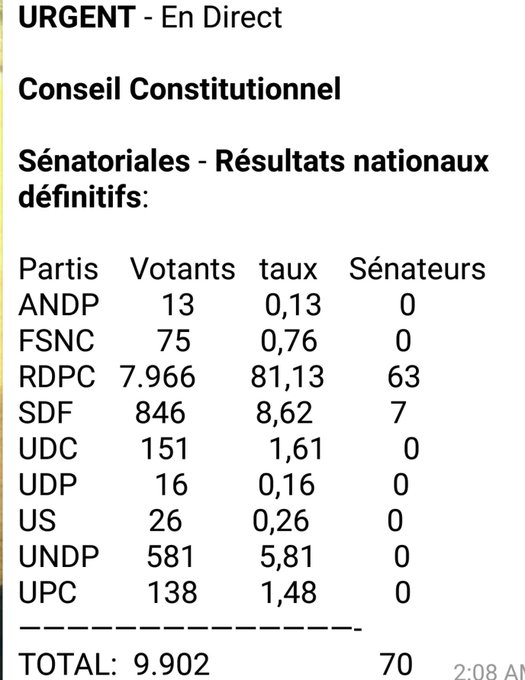
Cameroon People’s Democratic Movement (CPDM), the country’s ruling party has swept an overwhelming majority of seats in the senate after the March 25 polls.
According to official results from the elections body, ELECAM, CPDM won 63 out of the 70 seats available. The remaining seven seats went to the main opposition, Social Democratic Front (SDF).
CPDM won in nine out of the ten regions of the central African country with the SDFwinning only in one of the Anglophone regions – the North West. Seven other parties failed to win a seat.
Cameroon’s parliamentary system caters for 100 senators out of which 70 are to be elected by municipal councillors across the country. The remaining 30 slots are the prerogative of the president.
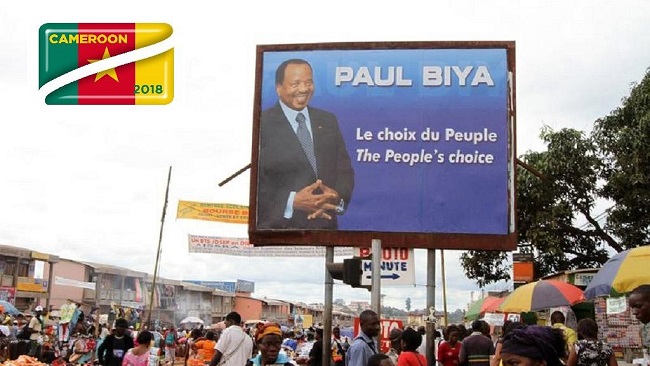
President Paul Biya is expected to seek another term in office after over three decades in charge. The country is currently riled by secessionist elements in the Anglophone regions – northwest and southwest regions.
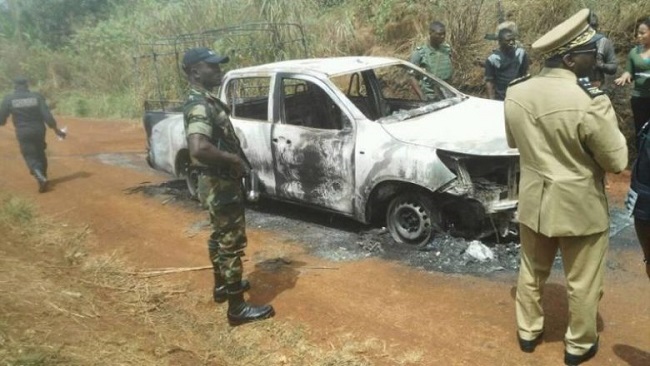
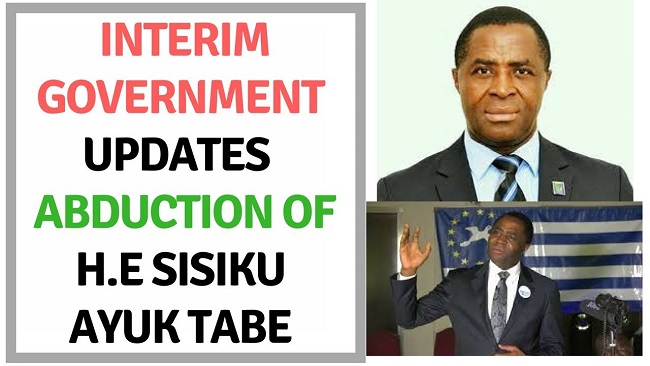
The secessionists have entered an armed phase of a struggle for independence. About twenty five security forces have so far been killed in guerilla style attacks. Government received over 40 separatist members deported from Nigeria, they included leader Sisuku Julius Ayuk Tabe.
Culled from Africa News










6, April 2018
Yaounde: CPDM gov’t bans the sale of arms and ammunition in six regions 0
Cameroon has banned the sale of arms and ammunition in six regions of the country, including the two English-speaking regions where a deep socio-political crisis has played out for over a year, the authorities announced Thursday.
The Minister of Territorial Administration, Paul Atanga Nji, has decreed “the prohibition, until further notice, of the sale of hunting and protection weapons and their ammunition in the Adamaoua, Central, Littoral, West, North-West and South-West regions”, according to a statement.
“To date, the number of firearms in circulation far exceeds the number of authorizations duly granted by the competent authorities,” the minister said in the text.
Cameroon has ten regions. Among these, the two English-speaking regions (Southwest and Northwest) have been at the center of a political crisis since the end of 2016 awhile their neighbouring regions (Littoral, West) are also affected by the ban.
For more than three months, the Anglophone crisis has turned into an armed conflict of low intensity, where an armed branch of the Anglophone separatists, who are agitating for secession from Cameroon and the creation of a new state, “Ambazonia”, is fighting the security forces deployed in numbers by Yaoundé.
English-speaking separatists have killed 28 members of the security forces since late 2017, according to an AFP compilation based on official statements. Other observers in Yaoundé speak of a higher toll.
In addition, the Amadoua region affected by the ban is neighbouring the Central African Republic, where state authority is weak in provinces where armed groups fight for control of resources and influence.
According to the text, the armouries of the six regions concerned will have to be closed and an inventory of the weapons which are there will have to be drawn up.
The minister has asked holders of unauthorized weapons to turn them over to local authorities and those with legally recognized weapons to register.
In November and February, the authorities in the south-west and north-west respectively banned the sale of arms in their regions on a temporary basis.
Presidential elections are scheduled to be held later this year, even as the ruling party Cameroon People’s Democratic Movement (CPDM) won 63 out of the 70 senate seats in local elections held on March 25.
AFP