1, May 2021
Football: Maradona was left to die, say medical experts 0
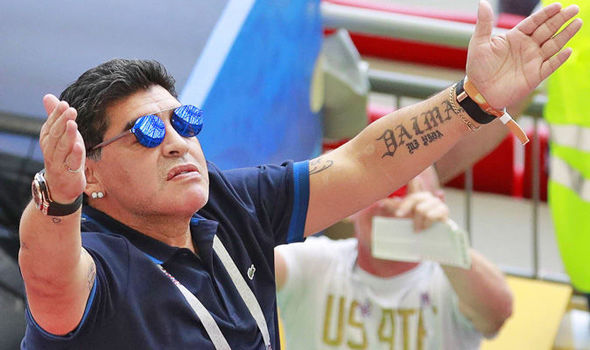
Argentine football icon Diego Maradona received inadequate medical care and was left to his fate for a “prolonged, agonizing period” before he died last year, an expert medical panel concluded Friday.
In a 70-page document, the panel stated that Maradona, who succumbed to a heart attack on November 25 at the age of 60, “started to die at least 12 hours before” the moment he was found dead in his bed.
Maradona died just weeks after undergoing brain surgery on a blood clot.
A panel of 20 experts was convened by Argentina’s public prosecutor to examine the cause of death and to determine if there had been any negligence.
Maradona’s neurosurgeon Leopoldo Luque, psychiatrist Agustina Cosachov and psychologist Carlos Diaz are under investigation as well as two nurses, a nursing coordinator and a medical coordinator.
The finding could result in a case of wrongful death, and a prison sentence of up to 15 years if convicted.
The legal proceedings were prompted by a complaint filed by two of Maradona’s five daughters against Luque, whom they blamed for their father’s deteriorating condition after the brain operation.
Maradona underwent surgery on November 3, just four days after he celebrated his 60th birthday at the club he coached, Gimnasia y Esgrima.
However, he appeared in poor health then, and had trouble speaking.
‘Deficiencies and irregularities’
Maradona had battled cocaine and alcohol addictions during his life.
He was suffering from liver, kidney and cardiovascular disorders when he died.
Two of the football great’s daughters have accused Luque of responsibility in Maradona’s deteriorating health.
The panel concluded that Maradona “would have had a better chance of survival” with adequate treatment in an appropriate medical facility.
He died in his bed in a rented house in an exclusive Buenos Aires neighborhood, where he was receiving home care.
Maradona did not have “full use of his mental faculties” and should not have been left to decide where he would be treated, the experts said.
They also found that his treatment was rife with “deficiencies and irregularities” and the medical team had left his survival “to fate”.
Sebastian Sanchi, a former spokesman for Maradona, told AFP, “it is clear that the panel says that things were not done right.”
Maradona is an idol to millions of Argentines after he inspired the South American country to only its second World Cup triumph in 1986.
An attacking midfielder who spent two years with Spanish giants Barcelona, he is also loved in Naples where he helped Napoli win the only two Serie A titles in the club’s history.
Source: AFP
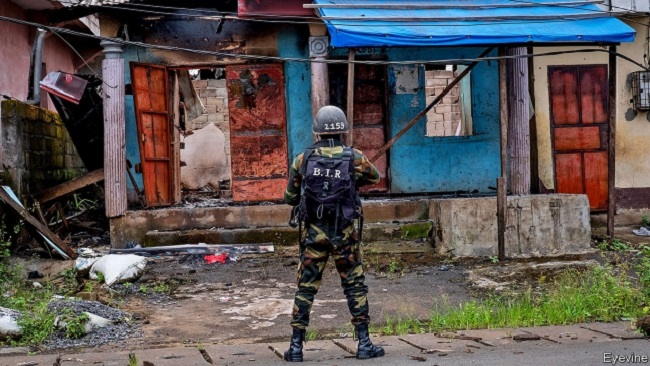
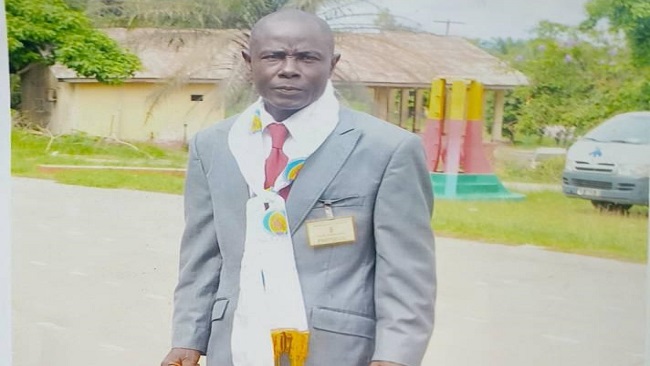
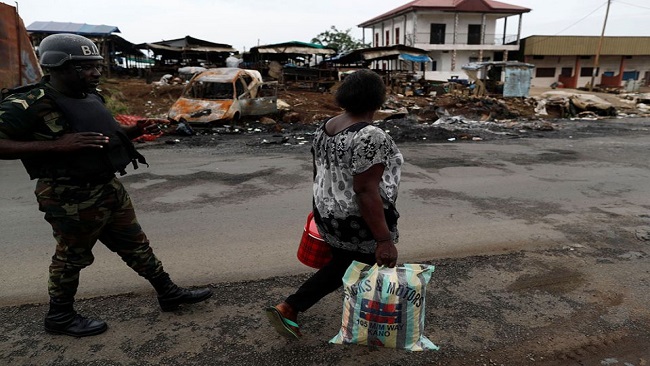
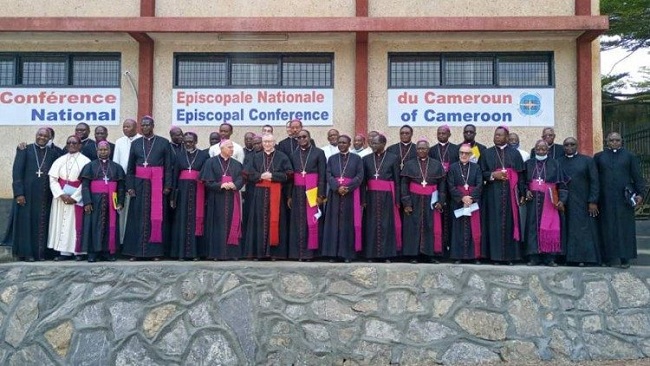
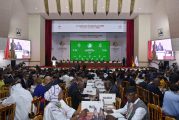
 The conflict had erupted in Cameroon’s Northwest and Southwest regions earlier in 2017 when protests against new government-appointed judges in the regions turned violent. As government forces responded with lethal force, tensions mounted and many English speakers in the predominantly French-speaking country started asking for independence. The ensuing conflict between separatist fighters and government forces has killed at least 3,000 civilians, according to Human Rights Watch. The Internal Displacement Monitoring Centre estimates that at least 460,000 have been forced to flee the affected areas, with tens of thousands seeking refuge in neighboring Nigeria. The Catholic bishops said the government has been too violent in its response to those seeking to form an English-speaking state. Esua said Biya’s 2017 pledge effectively made clear that “anybody who identified himself with the Anglophone cause was considered a terrorist.” After two years of fighting between the two sides, Biya called for a one-week “Major National Dialogue,” held Sept. 30-Oct. 4, 2019. However, the president said the dialogue would not only consider the insurgency but also “issues of national interest such as national unity, national integration and living together.” Bishop George Nkuo, who has headed the Kumbo Diocese in the Northwest Region since 2006, said that approach was wrong because it didn’t address the urgency of the Anglophone problem. Nkuo said the forum should have been used to discuss the Anglophone problem and not all the problems of the nation. He said it was necessary to use that dialogue to revisit the root causes of the conflict as the only possible way of bringing forth a sustainable solution. And the causes of the problem, he said, are rooted in Cameroon history. Initially colonized by Germany in 1884, Cameroon would be divided between Britain and France after the defeat of the Germans in World War I. Britain got one-fifth of the formerly German territory, which it administered as part of Nigeria until 1961 — when through a plebiscite, the British Southern Cameroons (as the British administered entity of Cameroon was then called) voted to reunite with the part formerly administered by France (which had gained its independence in 1960). The two entities went into a federal structure of government, with each entity allowed to freely run its affairs in line with the systems inherited from the colonial powers. But in recent years, some people in the English-speaking regions had accused the central government of trying to quash their traditions.
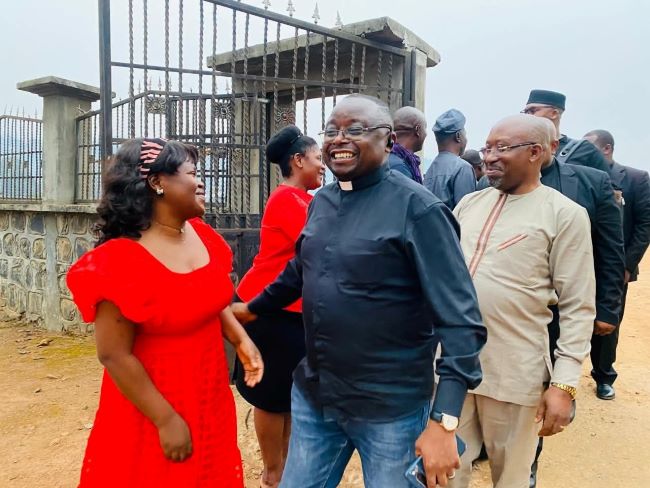
 A view of the Catholic cathedral of Kumbo, in Cameroon’s English-speaking Northwest Region In 2016, four Catholic bishops in the English-speaking regions accused Biya’s government of trying to strangle their culture. “Anglophone Cameroonians are slowly being asphyxiated as every element of their culture is systematically targeted and absorbed into the Francophone Cameroon culture and way of doing things,” they wrote at the time. Nkuo said the 2019 dialogue should have revisited these historical perspectives to come up with the right answers to the problem. The current archbishop of Bamenda, Andrew Nkea Fuanya, criticized the format of the dialogue, saying it didn’t involve the appropriate representatives of the English-speaking regions. “That wasn’t a dialogue at all,” Fuanya told NCR. Esua was invited to participate in the dialogue. “To be frank, it was a monologue,” he said. “In a dialogue, you take two people to dialogue. And in a dialogue, you have different opinions. You have to listen to the other person and the other person listens to you, and gradually you come to an agreement.” “Ninety percent of the participants at the National Dialogue were all government people, or people with government allegiance, but the real persons with whom you had to dialogue were not there,” said Esua. Separatist leaders weren’t part of the dialogue. Sesseku Ayuk Tabe, the recognized leader of the movement to form a new country of Ambazonia, was arrested in 2018 and is now serving a life sentence. “You couldn’t talk of a dialogue if these people weren’t there,” Esua said of the separatist leaders’ absence at the negotiating table. Nevertheless, the dialogue came up with a number of recommendations, including the adoption of a special status for the two Anglophone regions, the immediate relaunch of certain airport and seaport projects in the regions, the rapid integration of ex-combatants into society, and a hastening of decentralization of power away from the central government.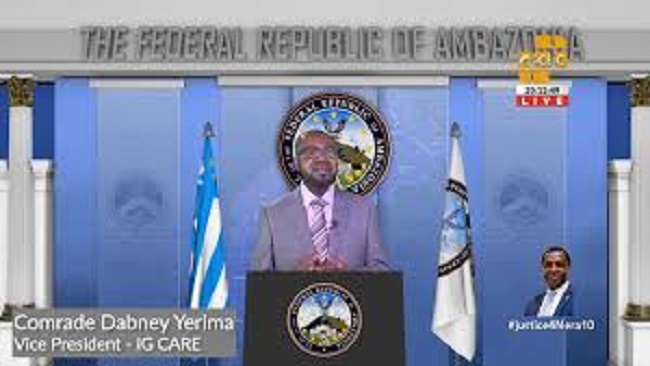












1, May 2021
Bodies of three Europeans killed in Burkina Faso arrive in Spain 0
The bodies of three Europeans killed in Burkina Faso were flown to Spain on Friday, with Madrid pledging to keep up a “relentless” fight against the jihadist insurgency raging in Africa’s Sahel region.
The two Spanish journalists and an Irish wildlife activist were ambushed during an anti-poaching patrol in the impoverished West African nation which has been struggling with a surge in Islamist attacks since 2015.
Journalists David Beriain and Roberto Fraile were with Rory Young, head of the Chengeta Wildlife group, in the Arly National Park in eastern Burkina Faso when the attack occurred on Monday.
They were with a group that included soldiers and forest rangers when the assailants turned up in pickup trucks and on motorbikes, with the three Europeans initially reported missing.
The Burkina authorities said they had been “executed by terrorists”, becoming the latest victims of the ruthless Islamist insurgency gripping one of the poorest countries in the world.
Spanish Foreign Minister Arancha Gonzalez Laya and Defence Minister Margarita Robles were on the tarmac at Torrejon de Ardoz airbase as three wooden coffins were carried off the plane by 24 air force officers.
“These are the heroes of the day: David and Robert, who have done so much to give a voice to those who do not have one, who have done so much to shed light on the realities that surround us and that are sometimes invisible,” Gonzalez Laya said.
The pair had been working on a documentary on conservation in Burkina Faso.
The Irish ambassador to Spain, Sile Maguire, was also at the airbase.
Young’s body was to be flown back to Ireland later on Friday, the Spanish foreign ministry told AFP, without giving further details.
‘We will be relentless’
Hailing the pair for “doing so much to give a voice to the voiceless,” Gonzalez Laya said the government was posthumously awarding them the Order of Civil Merit “for their work in pursuit of a journalism that enhances our democracy”.
The violence had highlighted the importance of Spain’s continued involvement in “efforts for peace and stability” in the war-torn Sahel region, she said.
Extending condolences to the families who were also at the airport but not on the tarmac, Robles said Spain would do “everything possible to find out who was behind these appalling acts”.
She vowed that Spain would press ahead with efforts to help those fighting the Islamist insurgency in the region.
“The fight against terror in these areas is not going to stop, we will be relentless,” she said.
Hotbed of lawlessness
Burkina, Chad, Mali, Mauritania and Niger have joined forces in a French-backed alliance called the G5 Sahel to fight jihadism on the southern edge of the Sahara, with the initiative also backed by Spain, Germany and Italy.
In a joint statement on Friday, Spain, France, Germany and Italy pledged continued security support for nations in the Sahel region which stretches from Senegal to Sudan and has turned into a hotbed of lawlessness over the past decade.
“We will continue existing initiatives to support the armies of the region, as well as the gendarmerie and internal security forces in their operations, training and capacity building,” they said.
Since 2015, more than 1,300 people have been killed and one million have fled the violence in Burkina Faso, which has ravaged this land-locked nation’s once-vibrant tourist industry
(AFP)