14, June 2021
Cameroon Albinos Ask for Greater Attention, Care 0
International Albinism Awareness Day on June 13 has been observed in Cameroon, with albinos asking for more government and community care and protection. Those living with this hereditary genetic condition that reduces melanin pigment in skin, hair and eyes, say stigma, violence, superstition and killing have greatly lessened, but abuses have not been eliminated.
One hundred and sixty albinos and their family members assembled at the World Association for Advocacy and Solidarity of Albinos office in Cameroon’s capital, Yaounde, to mark International Albinism Awareness Day.
Among them is 16-year-old albino Ronald Essi, who said he was abandoned because of his condition.
Essi said he wants to become a police officer to defend his country Cameroon and punish civilians who abuse albinos’ rights. He said his mother abandoned him when he was two years old. He said his grandmother resisted family pressure to kill him. He said he has been living in the streets since 2015, when his grandmother died.
Essi said a Catholic priest rescued him from the street and sent him to a school in Yaoundé.
Essi is one of the about 2,200 albinos the government says live in Cameroon.
This year Cameroon reported that prejudice and discrimination against albinos in employment and social life had lowered drastically. The government said hunting down albinos for their body parts has been eliminated from many communities.
Witch doctors who claim that albinos bring wealth and good luck to people who have access to their body parts are disappearing. In many communities, albino babies are no longer considered signs of misfortune and buried alive or starved until they die.
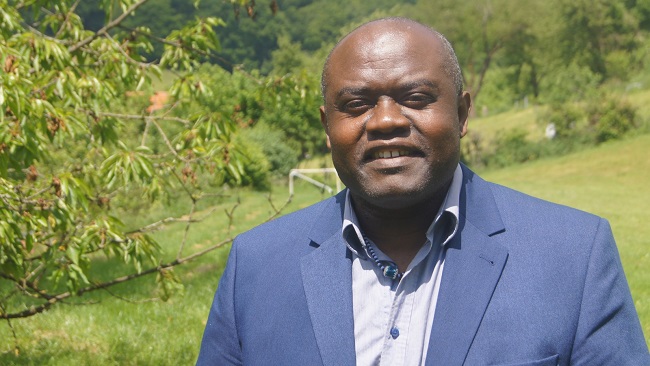
Jean-Jacques Ndoudoumou, the founding president of the World Association for Advocacy and Solidarity of Albinos, says albinos are gradually being accepted by communities.
He said the association he leads is happy, as people are increasingly accepting albinos as normal human beings. He said many albinos have graduated from universities and are using the knowledge they acquire to contribute to developing Cameroon. He said complaints of stigma and violence on albinos have greatly declined and there are now marriages between albinos and people without the condition.
Ndoudoumou said his association has instructed all its members to continue teaching people albinos are normal human beings who need special assistance.
Gregoire Amindeh is member of The Association for the Promotion of the Rights of Albinos.
Amindeh said that although Cameroon’s government has done a lot, albinos still urgently need special reading glasses and handheld magnifiers to stop their high school dropout rate from low vision. He said they need subsidies to be treated in hospitals since their skin is extremely sensitive to the sun and can develop cancer. He said skin cancers remain a major cause of death in African albinos.
Pauline Irene Nguene, Cameroon’s minister of social affairs, says albinos are placed in the group of people with special protection needs. She said Cameroon ensures the socio-economic integration and protection of albinos, and immediately intervenes to protect albinos whenever cases of abuse are reported.
She said in 2020, staff of her ministry visited more than a hundred villages where abuses of the rights of albinos were reported. She said civilians in the villages were taught in their local languages to respect the health, education and social rights of albinos. She said the government has continued to lobby for private enterprises, schools and outside organizations not to reject albinos looking for positions in their institutions.
Nguene said 60 government offices created in Cameroon’s administrative units receive complaints and immediately help albinos in need.
International Albinism Awareness Day is observed by the United Nations on June 13 every year. This year’s theme, “Strength Beyond All Odds,” according to the U.N. highlights the achievements of people with albinism all over the world.
Source: VOA


14, June 2021
Southern Cameroons War: Fighting continues around Muyuka, Ikata and Muea 0
Fighting between Francophone Beti Ewondo troops loyal to the Biya regime in Yaoundé and Ambazonia Restoration Forces has continued today in Fako County with heavy artillery fire focusing on the strategically important towns of Muyuka, Muea and Ikata. Muyuka which sits on the only major road that links Buea the historic capital of Southern Cameroons to Meme, Ndian, Lebialem, Kupe Muanenguba and Manyu has seen fierce exchange in recent days as the Francophone Cameroon government forces attempt to gain control of the road.
The developments come as the conflict now in its fourth year is showing no signs of ending. The War in Southern Cameroons has already claimed at least 40 000 lives, almost all of them civilian children, men and women, murdered by Cameroon government troops in a series of targeted killings, organized massacres, and killings by fire in over 400 villages burnt down to ashes. Over half a million people have been forcibly displaced as refugees living in various countries and especially in refugee camps in Nigeria. Over another half a million people have become IDPs hiding in forests, caves and hills due to forced displacement. Additionally, over 1.5 million people are facing a humanitarian disaster. The Biya French Cameroun regime is yet to release casualty statistics for its armed forces, although military officials have reported that some 3000 Cameroon government army soldiers have died and hundreds more have been injured.
Further clashes in and around Buea are highly likely over the near term. Fighting along the main road linking Mamfe to Ekok and Bamenda to Wum cannot be ruled out in the coming days. A heightened Cameroon government security presence and disruptions to transportation have rocked the entire Southern Cameroons territory.
The latest round of hostilities erupted today when Ambazonia Restoration Forces reportedly carried out strikes on settlements in Muyuka and Muea including Ikata following attacks by Cameroon government troops. Ambazonia Restoration Forces launched what it claimed to be a ‘counter-offensive’ in response. Cameroon Intelligence Report understands that both Amba fighters and Cameroon government forces made extensive use of heavy weapons during the clashes, including artillery and loitering munitions.
The Southern Cameroons was one of the territories set for decolonization in the context of the UN decolonization agenda. Britain’s devious handling of it and the British wheeling and dealing at the UN in 1959 and 1960 caused a great historical injustice to the people of the Southern Cameroons. That injustice continues to cry out for redress. British action resulted in the unconscionable imposition of an unnecessary and precipitated plebiscite with dead-end alternatives. Speaking through Lord Perth, Britain shamefully said the Southern Cameroons and its people were “expendable”.
The plebiscite was imposed in the teeth of opposition by the leadership of the trust territory. It offered a Hobson’s choice of ‘joining’ either Nigeria or French Cameroun. The internationally-prescribed political status option of sovereign independence was deliberately excluded. There was no good reason for doing so. On 11 February 1961, a skewed plebiscite was foisted on the people of the Southern Cameroons. Faced with the Hobson’s ‘choice’ that was forced down their throat, the people opted for independence in political association with Republique du Cameroun. It was agreed in writing between the two countries and to the knowledge of Britain and the UN, that the political association would take the form of an aggregative federation of two states, equal in status.
Western governments generally advise their citizens against all travel to areas of conflict but have maintained a kind of deliberate silence ever since the crisis in Southern Cameroons started four years ago.
By Soter Tarh Agbaw-Ebai and Isong Asu