21, April 2021
Emilia Lifaka: A victim of her own super spreader event 0
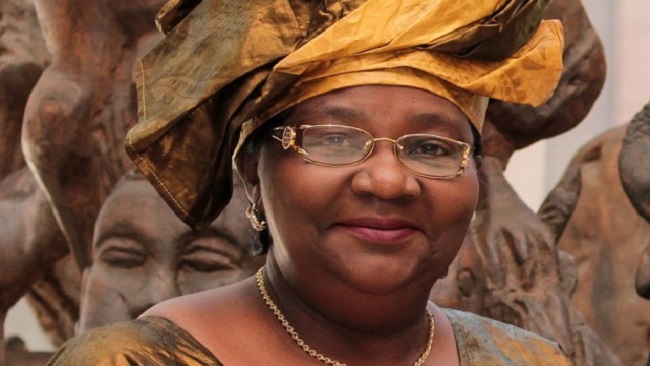
When the Member of Parliament for Fako in the Southwest region, Emilia Lifaka Monjowa, organised a birthday party to celebrate her 62th birthday, little did she know that her birthday party would double as a farewell party.
As a parliamentarian, she was supposed to have known that it was preposterous to organize parties as such parties only turn out to be COVID-19 super spreader events.
The party was mostly attended by women of size, most of them very rich in butts and stomachs that could contain large quantities of food and drinks.
Lifaka and her admirers wanted to defy COVID-19 which has been the real lawmaker for close to two years.
Its rules are clear. No large crowds and no parties. But Lifaka thought COVID-19 was a respecter of persons and her poor judgement has sent her to an early grave.
COVID-19 is just a finisher. Lifaka was a huge woman and she had become a colony of diseases over the years.
From people like her and Prof. Mendo Ze, it is very easy to figure out that government money can turn a slim person into a mammoth.
Lifaka had allowed multiple diseases such as high blood pressure, diabetes and asthma to converge on her body, transforming it into a modern conference centre for illnesses that have no pity for people who are reckless and careless.
While her supporters are seeking to hide the real cause of her sudden death, hospital sources have intimated that she was a victim of COVID-19. Diabetes, high blood pressure and asthma had outsourced the final phase of their project to COVID-19 and it did a professional job. In this case, COVID-19 seemed to have been a student of the Rapid Results College. It brought the MP down so fast that many people are worried.
It is being speculated that she might have picked up the South African variant that is very violent and hates fat people.
Her death has triggered a wave of fear and all those who attended her super spreader event are all over Cameroon looking for ways to save their lives.
In Fako Division, garlic, lemon and ginger are all in short supply as these ingredients have become the tea of choice for those who defied COVID-19 rules just to attend the party.
For most of them, attending a party organized by the Deputy Speaker of the House was indeed a status symbol, but many of them are trembling in their pants, especially those who have diabetes and cardiovascular disorders.
The deputy speaker should have known better and she should have been anti-covid-19 advocate, but she insisted on organizing a party that did not have any raison d’être. Many of those who attended the party are now cursing her for dragging them into that “party of death.”
A lady from Limbe who has elected anonymity and who attended the party because of her connection to Ms. Lifaka has lost sleep ever since she heard that COVID-19 was to blame for the quick disappearance of a speaker who will no longer be speaking, as there is no Cameroon-type parliament wherever she is gone to.
“I hate myself for attending that party. I went there reluctantly because I do respect the Deputy Speaker of the House. I live with eight people in my house and we are all trembling. We will be going to the hospital to get the COVID-19 test just to be on the safe side,” the desperate reveler told the Cameroon Concord News Group correspondent in Fako.
“We are no longer at ease. COVID-19 is an uncomfortable inconvenience, but the death of the Member of Parliament has left us in the most unsettling situation. Until, we receive our test results in a few days time, we will not be happy. I am a real wreck for now. I am scared. I feel I might die and leave my children helpless. A few hours of pleasure are today spreading pain and suffering in Fako,” she regretted.
The colonial Southwest regional governor, Okalia Bilai, is well aware of the tragic death of the Deputy Speaker. He was duly briefed by the Buea Regional hospital director, Dr. Matin Mokake, who advised him that Ms. Lifaka was a victim of COVID-19, adding that she was a perfect candidate for such death because she was immuno-compromised and obese.
Arrangements are underway to give her a befitting burial but there is panic across the country given that she has been brought down by the insidious and uncompromising Coronavirus.
By Soter Tarh Agbaw-Ebai











22, April 2021
UN: Southern Cameroons lives should matter too 0
The treatment of black people, particularly by law enforcement, has become a principal point of protest in the western world. But little is said about the millions of black Africans mistreated by the ruthless security forces of authoritarian African regimes. If black lives matter regardless of where they are in the world, then it’s time to challenge the immensely privileged black African ruling elite that clings to power by persecuting its often-voiceless black African citizens.
The numbers tell the story. An estimated 5.4 million people or eight percent of the Democratic Republic of Congo’s population died in the 1997-2003 conflict at the hands of government security forces and non-state armed militia. DRC’s violence continues today, barely rating a paragraph in newspapers.
In Sudan, at least 12 percent of the population has died, mostly killed by the security forces of governments recognized and financially supported over the decades by wealthy nations (Two million in Sudan 1983-2005; 400,000 in Darfur; 382,000 in the South Sudan civil war). In Mozambique and Ethiopia, eight percent of the population at the time probably died in each country during the Cold War and its aftermath. In Uganda, Obote and Amin consigned seven percent of their people to a premature death. These are estimates because black African lives matter so little to those in charge, or the international community, that in most cases, no one is keeping count.
Now, it is the turn of Cameroon to be ignored. The Norwegian Refugee Council has described the devastation in this central African nation as the world’s most neglected displacement crisis for the second year running.
Cameroon has been ruled by President Paul Biya, age 88, since 1982. He continues to win elections that no international monitor considers free and fair. His country is ranked among the world’s most corrupt and repressive by Transparency International and Freedom House, respectively.
In 2016, Biya’s Francophone-dominated regime tried to impose French-speaking judges and teachers on the English-speaking regions, representing 20 percent of the population. The peaceful protests of Anglophones, proud of their Anglo-Saxon courts and schools, were crushed with what impartial human rights groups described as ‘disproportionate force’.
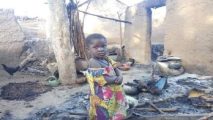
So many villages have been burned that the UN estimates 700,000 civilians (out of six million Anglophones) have fled to the bush and beyond. UNICEF says more than a million children are out of school. Local civil society groups believe 5,000 people have been killed, although the International Crisis Group, University of Toronto Database of Atrocities and other impartial sources have no accurate casualty numbers. Meanwhile, hundreds of opposition figures are imprisoned without due process.
After the brutal suppression of non-violent Anglophone demonstrations, armed militias emerged, demanding a sovereign country called ‘Ambazonia’. Rights monitors believe all sides behave with impunity, with unarmed civilians caught in the crossfire. The Biya regime held a meeting between the different sides in 2019, but it was dismissed by most Anglophones as a gesture to appease diplomats. This year, the Vatican offered to mediate peace talks, as has Switzerland’s Centre for Humanitarian Dialogue, but Biya pursues a military strategy, at huge cost to civilians.
On January 1, the US Senate endorsed the need for targeted sanctions on those implicated in human rights abuses. Yet, the UK and France, Cameroon’s former colonial powers, offer toothless appeals to obey international humanitarian law.
The developed nations must not hold back from criticizing African leaders such as Biya. The tiny, privileged African elite has little concern for its citizens. There will be no justice while the rich world panders to repressive tyrants, giving aid and signing deals with leaders who persecute their populations, trapping people in injustice, poverty and fear. We can hardly be surprised if bright, ambitious Africans leave these countries, heading for opportunity in Europe.
If the death of George Floyd matters, then we must listen to brave black African civil society groups and enforce international human rights laws — such as the ‘responsibility to protect’, a legal doctrine endorsed by Cameroon and most of the international community.
The UK and France must work with partners like the US and Canada to apply diplomatic pressure on the Biya regime. The aim should be inclusive peace talks, mediated by a third party, such as the Swiss and the Vatican.
When my African friends suggest there is a global conspiracy allowing African rulers to commit human rights abuses, I offer a harsher truth; the global north just doesn’t care. Support for Black Lives Matter is meaningless if the wealthy white world averts its eyes from the suffering of persecuted black Africans like those in Cameroon’s Anglophone regions and across the continent.
Source: Spectator.us