2, March 2023
French interference in Africa ‘well over’, President Macron says during four-nation tour 0
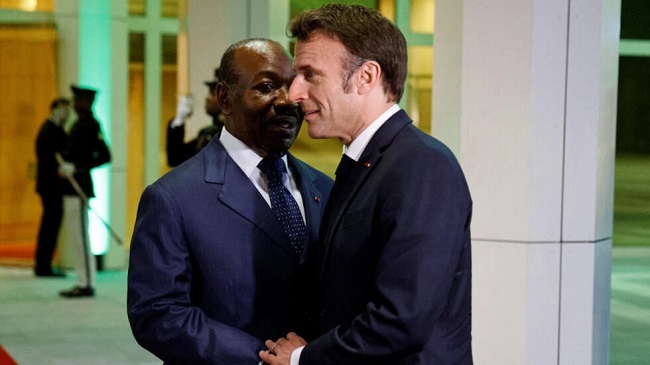
President Emmanuel Macron on Thursday said the era of French interference in Africa was “well over” as he began a four-nation tour of the continent to renew frayed ties.
Anti-French sentiment runs high in some former African colonies as the continent becomes a renewed diplomatic battleground, with Russian and Chinese influence growing in the region.
Macron said France harboured no desire to return to past policies of interfering in Africa ahead of an environment summit in Gabon, the first leg of his trip.
“The age of Francafrique is well over,” Macron said in remarks to the French community in the capital Libreville, referring to France’s post-colonisation strategy of supporting authoritarian leaders to defend its interests.
“Sometimes I get the feeling that mindsets haven’t moved along as much as we have, when I read, hear and see people ascribing intentions to France that it doesn’t have.”
“Francafrique” is a favourite target of pan-Africanists, who say that after the wave of decolonisation in 1960 France propped up dictators in its former colonies in exchange for access to resources and military bases.
Macron and his predecessors, notably Francois Hollande, have previously declared that the policy is dead and that France has no intention of meddling in sovereign affairs.
Military revamp
Ahead of his visit, Macron on Monday said there would be a “noticeable reduction” in France’s troop presence in Africa “in the coming months” and a greater focus on training and equipping allied countries’ forces.
France has in the past year withdrawn troops from former colonies Mali, Burkina Faso and the Central African Republic.
The pullout from Mali and Burkina Faso, where its soldiers were supporting the Sahel nations battle a long-running jihadist insurgency, came on the back of a wave of local hostility.
In his remarks on Thursday, Macron insisted the planned reorganisation was “neither a withdrawal nor disengagement”, defining it as adapting to the needs of partners.
More than 3,000 French soldiers are deployed in Senegal, Ivory Coast, Gabon and Djibouti, according to official figures.
Another 3,000 are in the Sahel region of West Africa, including in Niger and Chad.
Forest protection drive
Macron landed in Libreville on Wednesday and will later head to Angola, Congo-Brazzaville and the neighbouring Democratic Republic of Congo.
His comments came before several heads of state were due to attend the One Forest Summit in Libreville, which will focus on preserving rainforests that play a vital role in the global climate system.
The forests of the vast Congo River basin represent the planet’s second-largest carbon sink after the Amazon.
They are also home to huge biodiversity including forest elephants and gorillas, and bear traces of the settlement of early humanity.
But they face threats such as poaching, deforestation for the oil, palm and rubber industries, and illegal logging and mineral exploitation.
Macron spoke of the challenges of mobilising international finance as he and Gabonese Environment Minister Lee White toured the Raponda Walker Arboretum, a protected coastal area north of Libreville.
“We always speak of billions in our summits, but people see little of it on the ground because the systems are imperfect,” he said.
His schedule included meeting scientists, NGOs and private sector actors at the presidential palace.
Other presidents expected to attend the summit are host Ali Bongo Ondimba of Gabon; Denis Sassou Nguesso of Congo-Brazzaville; Faustin Archange Touadera of the Central African Republic; Chad’s Mahamat Idriss Deby Itno; and Teodoro Obiang Nguema Mbasogo of Equatorial Guinea.
The gathering kicked off on Wednesday with exchanges between ministers, civil society representatives and experts.
Macron heads to the former Portuguese colony of Angola on Friday, where he is set to sign an accord to develop the agricultural sector as part of a drive to enhance French ties with anglophone and Portuguese-speaking Africa.
He then stops in the Republic of Congo, another former French colony, where Sassou Nguesso has ruled for a total of almost four decades, and neighbouring Democratic Republic of Congo.
Source: AFP













3, March 2023
Yaoundé: Senator Rebecca Ankie dies few days before elections 0
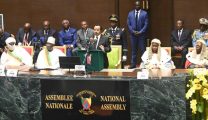
The President of the Senate, Marcel Niat Njifeji, announced the death of Senator Rebecca Ankie Affiong on March 1 in Yaoundé following an illness.
She was a senator for the Cameroon People’s Democratic Movement in the South West region. She was on the CPDM list of candidates for the March 12 senatorial election.
The ruling CPDM maintained their veteran candidates in the South West region where it is the only party in the senatorial contest.
The Electoral Code is silent on the death of a candidate in a senatorial election. The text speaks only on the death of an elected official in office.
According to Article 155 of the electoral code, when such a situation arises, by-elections are organized in the district of the deceased representative in order to replace the candidate. However, this election only takes place if the vacancy occurs at least one year before the end of the legislature. This is not the case at present. The CPDM could therefore enter the Senate in the new term with one less seat in the South West region.
Source: Journal du Cameroun