17, September 2021
Canada: Conservative challenger O’Toole takes aim at stumbling Trudeau as nation votes 0
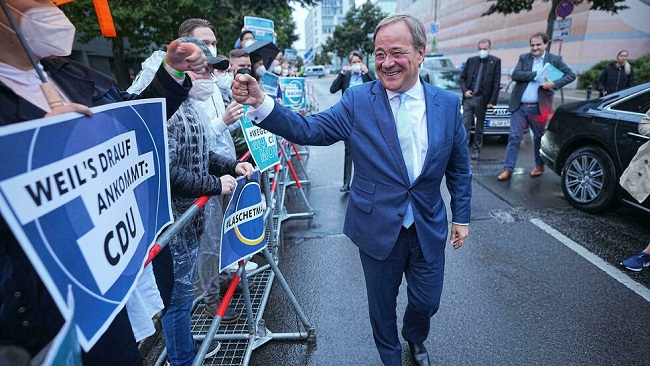
Erin O’Toole is closer to becoming Canada’s next prime minister than any Conservative Party leader has been since 2015, when rockstar candidate Justin Trudeau swept a dour three-term incumbent into the history books under a wave of Trudeaumania. O’Toole is no rockstar – his vibe is closer to affable-roadie-turned-band-manager. But a tone-deaf act of hubris by Canada’s flashy frontman could yet score O’Toole the top gig.
When Liberal Party leader Trudeau called these snap September 20 legislative elections back in August, the task looked simple on paper. Reliant on making nice with other factions in the House of Commons since losing his majority (not least due to an embarrassing blackface photo scandal) in 2019 – way back in the Before Times – Trudeau hoped to parlay widespread approval of his handling of Canada’s Covid-19 crisis into votes, a stable majority and a fresh five-year term coming out of the pandemic.
After all, Canada has enjoyed a G7-leading vaccine rollout, escaped abject disaster with the second-lowest Covid-19 fatality rate among G7 nations, and has so far recouped some 95 percent of the jobs lost during the pandemic, outshining its basket-case neighbours to the south on all counts. And through it all, Trudeau was there at the mic – relatably shaggy, bearded and working from home – providing regular updates on the pandemic in progress. (Meanwhile, the hot-button nitty-gritty was being hashed out elsewhere: Healthcare and schools are provincial responsibilities in Canada, not federal ones.)
So as a leader just 15 seats short of a majority in Canada’s 338-seat lower house, why not brazenly call an election two years early? With Monday’s election now strikingly tight, Canada’s political observers have been counting the ways why not.
The consensus suggests Trudeau miscalculated: 1) how little appetite there was (particularly among his own Liberal supporters) for a pandemic election amid a Delta-fuelled fourth wave; 2) progressives’ impatience with lofty Trudeau promises after six years in power, with his ethics woes still close to mind and a creeping suspicion (even among Liberals) that the feminist, Pride-parading modern leader they elected is a cynic at heart; 3) the single-minded loathing Trudeau inspires on the right; 4) the indelicate optics of calling an election on August 15, the very day Kabul fell; and 5) just how primed his rivals were across the board to pull the plug on Trudeau.
Enter stage right, Erin O’Toole.

In the year or so since O’Toole won the Conservative Party leadership, the burly 48-year-old father of two reportedly shed 35 pounds by lacing on his running shoes daily. But he has also shed a significant number of the hardline “blue Tory” stances that won him that Conservative primary, successively dropping pledges against a carbon tax and an assault-weapon ban, to take a run at Trudeau’s job.
Born in Montreal in 1973, O’Toole moved as an infant to Bowmanville, Ontario, now a far-flung suburb in Toronto’s eastern sprawl, after his father took a manager’s job at the General Motors plant nearby. Erin and his two younger sisters lost their mother to breast cancer when he was nine. O’Toole credits his mother’s work sponsoring a family of Vietnamese refugees, thousands of whom were welcomed to Canada in 1979 under Conservative prime minister Joe Clark, with instilling in him a sense of service.
O’Toole doesn’t have the spectacular political pedigree of Trudeau – who was born in 1971 to a sitting prime minister, the charismatic Liberal iconoclast Pierre Elliott Trudeau, and grew up in the limelight.

But the senior O’Toole, too, introduced his son to the heady buzz of the campaign trail, holding local office before serving five terms as a Conservative in Ontario’s provincial legislature.
At 18, O’Toole enrolled at military college and became an officer in the Royal Canadian Air Force four years later, flying as a tactical navigator on workhorse Sea King military search and rescue helicopters and rising to captain. He has quipped about his teen dreams of Top Gun and ultimately settling for the wingman role. “I walked into the recruiting centre thinking I was going to be Maverick. And not only was I not Maverick, I was Goose. And I was on an old, antiquated helicopter,” O’Toole told Canadian newsmagazine Macleans last year.
O’Toole, who is younger than Trudeau but looks older with his thinning white hairline, has leaned on his armed forces service to drive home his party’s character message about Trudeau. “When Mr. Trudeau was partying – and we’ve all seen the photos – I was doing search and rescue missions in the military,” O’Toole told a crowd as a chippy last week of campaigning began. “Every Canadian has met a Justin Trudeau in their lives – privileged, entitled and always looking out for number one,” he went on. “He’ll say anything to get elected, regardless of the damage it does to our country.”
Canada’s Globe & Mail newspaper has noted that if elected O’Toole would be the country’s first prime minister in more than 50 years with military experience. He served in the regular forces of a peacetime military until 2000, when he moved to the reserves to study law in Halifax. He worked as a corporate lawyer in Toronto, notably for Procter & Gamble, and founded a charity for veterans called True Patriot Love, after a lyric in Canada’s national anthem.
When a Conservative federal legislative seat opened up on his old stomping grounds in 2012, O’Toole leapt at the opportunity and won the by-election. Re-elected three times as MP, he would serve briefly as veterans affairs’ minister in 2015, three years as shadow foreign affairs minister, and stand twice for the Conservative leadership before winning on his third try last year.
In his bid to update his party and bring Conservatives back to power in Ottawa, O’Toole has torn a page from the playbooks that brought success to his conservative contemporaries in Britain and the United States. He’s been vocal in his pro-choice and pro-LGBTQ views, echoing compassionate conservatism à la David Cameron. He’s made a play for working-class votes, mining for disillusioned Liberals like Boris Johnson poached support from old Labour Party bastions. And he’s engaged in sloganeering – “Canada First”, “Take back Canada” – that openly mirrors Donald Trump. O’Toole similarly lobbied to cancel “cancel culture”, mocking “woke” campaigns to re-dedicate public buildings named for founders of the notorious Residential Schools system that brutally oppressed generations of indigenous Canadians, before walking back his comments amid accusations of race-baiting.
Not that grassroots Conservatives are always along for O’Toole’s ride. At a party convention in March, the rookie leader backed a resolution to add “climate change is real” to the Conservative policy book. Delegates rejected it. When a Liberal bill to ban LGBTQ conversion therapy was tabled in the House of Commons in June, O’Toole backed it – but the Conservatives’ deputy leader voted against.
O’Toole, who tested positive for Covid-19 last year, has himself been vaccinated against the coronavirus. But while Trudeau required Liberal candidates to get the jab before campaigning, O’Toole declined to mandate vaccines for his own candidates, even as they knocked on voter doors and visited senior care homes. The Conservative said he preferred rapid testing and calls health decisions a matter of personal choice. As a result, Trudeau, who is seeking to mandate vaccines for public servants and domestic travel, has painted O’Toole as beholden to anti-vaxxers and unequipped to lead a party within which more radical views appear to thrive.
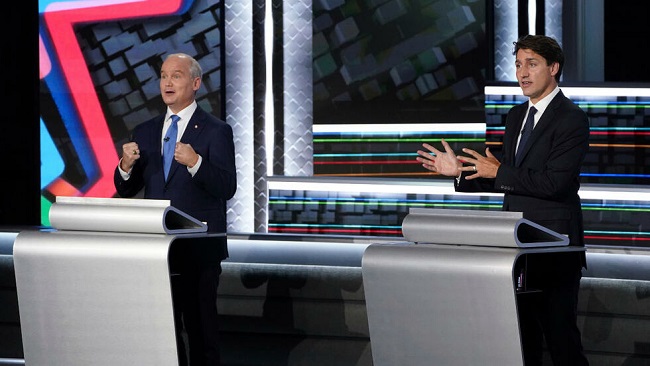
“He can’t even convince his own candidates to get vaccinated,” goaded Trudeau during a televised debate this month. “Mr. O’Toole can’t even convince his party that climate change is real.”
“I’m driving the bus,” O’Toole shot back.
Smiling in button-down shirts and sneakers on the trail, O’Toole hasn’t looked the part of the stuffy humourless Tory leader of old. His pledge to deploy more than $50 billion in new spending over five years, too, is a far cry from Conservative doctrine. Pandemic spending has seen Trudeau run Canada’s highest budget deficit since World War II, easy pickings for a fiscal conservative. But O’Toole’s platform only pledges to balance the budget within ten years and “without cuts”.
“We’re not your dad’s Conservative party anymore,” O’Toole told voters during a campaign stop on Wednesday.
Statistical tie
Down the home stretch, pollsters say Trudeau and O’Toole are in a statistical tie ahead of Monday’s vote. Canada being a parliamentary democracy, there are practical limitations to popular vote polling. The election isn’t a one-horse race – it’s 338 horse races, one in each district – and Trudeau’s and O’Toole’s names only feature on ballots in their own Montreal and greater Toronto ridings, respectively. In 2019, Conservative candidate Andrew Scheer won the popular vote yet still fell 36 seats short of Trudeau’s Liberals. But this time, pollsters say, it’s different.

Under O’Toole’s big-tent rejig, the Conservatives are losing some support in Western Canada, but they can afford to shed votes there and still retain their seats. Meanwhile, NDP leader Jagmeet Singh, the TikTok-savvy 42-year-old progressive who has pointedly claimed the sunny hopey-changey mantle from Trudeau after keeping his minority government afloat, looks to be plying key votes away from the Liberals in key Ontario battlegrounds. Trudeau’s fate is squeezed between the two.
“The consensus (seat projection) seems to be a Liberal minority, because of the more efficient distribution of Liberal support compared to Conservatives’ support (which has big wins in the West),” Nanos Research founder Nik Nanos told FRANCE 24. “For the Liberals to win a majority, we would need NDP support to switch to the Liberals in the close of the campaign. It is still possible but unlikely today,” added Nanos, the Ottawa-based firm’s chief data scientist.
Others are more circumspect. In Toronto, Ipsos Global Affairs CEO Darrell Bricker says a majority appears off the table for any party. But as to who will lead Canada’s next minority government, “It’s true suspense,” Bricker told FRANCE 24. “I will genuinely say, on the record and off, I don’t know.”
When Trudeau called the election in August, Bricker said, “I think most political observers couldn’t believe he was doing it.” Ipsos polling showed 56 percent of voters didn’t want an election, with Liberal voters those least in favour. “I don’t know how he missed that… The only people who wanted an election were opposition voters, particularly Conservatives,” he said. Trudeau “didn’t understand how Canadians would view the Machiavellian aspects of this – and his position with Canadians, from being this beacon of goodness and light into being just another politician, and potentially even more cynical than other politicians,” Bricker said. Trudeau’s unwelcome election call “kind of played into all that. It just blew up on him and exploded. And he hasn’t been able to shake it.”Trudeau criticized at debate for calling Canadian election

If the election call itself made the election a referendum on Trudeau, Conservatives were happy to oblige. And the social conservatives among them, at least for now, seem happy enough to look the other way to oust a long-loathed nemesis.
“O’Toole is only rising because people are so upset with Justin Trudeau. So he’s going up basically as the alternate choice,” said Bricker. “He hasn’t offended anybody. He’s become an acceptable option, as opposed to… building any momentum like Trudeau did in 2015.”
The pollster explains that in Canadian politics of late, progressives need to adore a candidate. “They need to feel that they’re voting for hope, they need to plug into emotion around a political leader. The right doesn’t,” Bricker explained. “For the left, it’s like American Idol (or Canadian Idol or Eurovision). For the right it’s like a job interview…. If you look like you can do the job, you’re okay.” The upshot is that, for now at least, O’Toole equivocating on policy doesn’t matter. “Because it’s not about him.”
“The Conservative vote is about one thing right now and that’s Justin Trudeau gone,” Bricker said. “So they are willing to put a lot of stuff away for that,” he said, adding the data shows the biggest motivation for fully half of Conservative voters is removing Trudeau. “I’ve never seen that before,” the pollster said.

Nanos, for his part, says the Conservatives pivoted to casting the ballot question as one of character. “This has been more about O’Toole exceeding very low expectations,” the data scientist said, downplaying the effect of the Conservative’s fluctuating policy. “His steady performance and more progressive and spending platform compared to previous Conservative campaigns has helped inoculate him and the Conservatives from Liberal fear-mongering,” Nanos said.
Caught between a rockstar and a hard place?
Now comes the tense wait. After polls close across Canada’s six time zones on Monday, counting an unusually high number of mail-in ballots requested amid the pandemic could delay the final calls in tight races.
Much of what follows is down to convention. If Trudeau’s Liberals don’t win the highest number of seats on Election Day, he is within his rights as the incumbent to delay conceding the race while he tries to form a government. If Trudeau does make good on late projections and salvage his minority government with a plurality of seats, he may yet emerge a wounded leader, his rivals left and right given a proverbial shot in the arm by a vote of the Liberal’s own making that spun out of his grip.
And what if the rookie O’Toole ekes out a win? “O’Toole’s problem is that he’s got a party that doesn’t necessarily agree with him,” said Bricker, making the business of heading a minority government a particular challenge. The Conservative “sugar high” of ousting Trudeau, as he called it, would be short-lived with a pandemic to manage. From O’Toole’s perspective, Bricker quipped, “the old analogy is the dog that caught the car: ‘I’ve got it. What am I going to do with it?’
Source: France 24














19, September 2021
Guinea’s junta rules out exile for ousted president 0
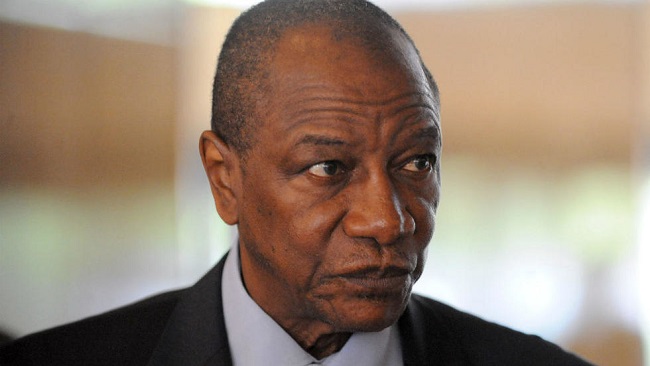
Guinea’s ruling junta on Saturday ruled out exile for detained former president Alpha Conde and said transition towards civilian rule would be done in accordance with “the will of the people”.
The statement from the ruling council came in defiance of international pressure for Conde’s release and a six-month timetable for elections after a coup on September 5 sparked global condemnation.
It also followed the visit on Friday of a mission from ECOWAS led by two heads of state from the 15-member West African bloc.
Mamady Doumbouya, the colonel who led the coup, told the visiting delegation that “it was important for ECOWAS to listen to the legitimate aspirations of the people of Guinea,” said a junta spokesman, Colonel Amara Camara, at the ruling council’s first news conference on the six-month deadline.
Doumbouya stressed the need not to repeat the “mistakes of the past”, recalling that national consultations to outline the transition had begun on Tuesday and that “only the sovereign people of Guinea will decide its destiny”, Camara said.
“It is also clear to all parties that the former president will remain in Guinea,” he added.
‘Frank and fraternal talks’
During their visit, the Ghanaian head of state Nana Akufo-Addo, whose country holds the rotating presidency of ECOWAS, and his Ivorian counterpart Alassane Ouattara, presented the junta with the organisation’s demands for elections within six months.
They also insisted on the release of Conde.
“We had very frank, fraternal talks with Colonel Doumbouya and his associates and collaborators and I think that ECOWAS and Guinea will find a way to walk together,” Akufo-Addo said at the end of the visit.
The ruling council, which now designates Doumbouya as “president of the republic and head of state”, said that consultation sessions scheduled for Friday with banks, insurance companies and unions would be held on Saturday.
The consultations will continue next week, it said, including Monday meetings with cultural actors, press associations and those within the informal sector.
The military has already held talks with political parties, religious leaders, and the heads of mining companies, key players in this poor but resource-rich country, and other figures.
Local rights groups, including the Guinean Organisation for the Defence of Human Rights (OGDH), put out a statement voicing their concern over “respect for democratic principles and the rule of law” and called on the ruling junta to “communicate as soon as possible a roadmap for the transition that takes into account all the proposals arising from the consultations”.
Activists return from exile
Public discontent in Guinea had been brewing for months before the coup over the leadership of Conde, 83.
A former opposition figure, Conde became Guinea’s first democratically elected president in 2010 and was re-elected in 2015.
But last year, he pushed through a controversial new constitution that allowed him to run for a third term in October 2020.
The move sparked mass demonstrations in which dozens of protesters were killed. Conde won the election but the political opposition maintained the poll was a sham.
On Saturday four activists against Conde serving a third term returned to the country from exile and were met by cheering crowds at Conakry airport.
“Honour to the patriots” read one placard on display among the hundreds who waited hours for the exiles to return.
Some in the crowd were wearing the red t-shirts of the opposition FNDC coalition, which led the protest against a third mandate for Conde. Others sported the red, yellow and green of the Guinean flag.
“We never doubted for a moment that we would win this fight,” said Ibrahima Diallo, one of those returning.
“We want to accompany the process of democratic transition that will lead to credible and transparent elections so that Guinea can turn towards development,” he added.
Fellow returning activist Sekou Koundouno, expressed his relief that the people of Guinea “have rid themselves of the despot Alpha Conde who had taken the institutions and the army hostage”.
Source: AFP