
12, February 2025
CPDM Crime Syndicate: at 92, Biya seeking re-election after 42 years in power 0
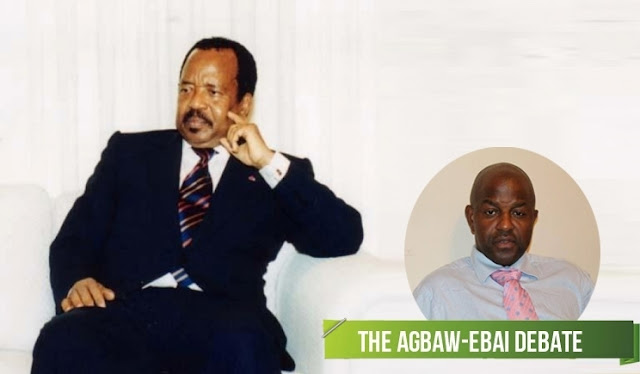
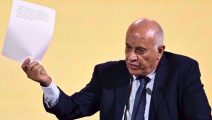
President Paul Biya, the world’s oldest head of state, turns 92 years old on Thursday after more than four decades in power but remains tight-lipped on whether he will run for another term in elections this year.
Many people including the deeply divided opposition are in little doubt that the leader, who first won election in 1982, will stand for an eighth term in the October vote.
After highly contested elections in 2018, Biya further toughened his autocratic grip on power, with dissenting opinions firmly met with repression, arrests and prison terms, human rights activists say.
“The president has already said that he will make known whether or not he is a candidate in this election at the appropriate time,” government spokesman and Communication Minister Rene Emmanuel Sadi said last month.
Biya has refrained from picking a successor and the subject of who would replace him remains taboo.
“In the current context, even if he were lying on a stretcher, candidate Biya will be re-elected,” said former minister Garga Haman Adji in an interview with the daily Mutations in July.
Concerns about Biya’s health grew last year when he disappeared from public view for several weeks.
Persistent rumours prompted authorities to release a statement saying Biya was in Switzerland, where the leader has regularly spent long periods staying at luxury holiday resorts.
The government then formally banned local media from discussing the state of his health.
Since his return to the country on October 21, Biya’s public appearances have been limited — a few official photos at the presidential palace, a regional summit in the capital Yaounde and a handful of speeches broadcast on television.
As in previous election years, voices from across society are calling on him to again stand for office.
“My determination to serve you remains intact and is strengthened on a daily basis, given the scale of the challenges we face,” Biya said in his end-of-year address, welcoming a “massive support”.
In January, traditional leaders expressed their “total and unwavering” support. On Facebook, some supporters said Biya was “still strong” and can withstand two more terms.
– ‘Cries of distress’ –
Biya and his government are regularly accused by international human rights organisations of repressing opposition.
The long-serving president was re-elected for a seventh term seven years ago after a contested vote that sparked a wave of political repression.
Few openly call for him to relinquish power.
“In recent times, the anxieties of the vast majority of Cameroonians have increasingly transformed into cries of distress in the face of the misery they are experiencing and the degradation of our beautiful country,” Catholic bishops at an episcopal conference said.
They also criticised the “corruption”, unemployment and deadly violence that plagues parts of the country.
Since 2009, the far north of Cameroon has suffered attacks from Boko Haram jihadists and the Islamic State West Africa Province (ISWAP).
In the west of the country, a deadly conflict has pitted armed independence groups against security forces in two English-speaking regions since 2016.
Biya, for his part, praised in his last speech “the tremendous progress seen in recent years”.
In a hoarse, wheezy voice, he hinted at “the next electoral deadline” and called on young people “not to listen to the sirens of chaos that some irresponsible people are sounding”.
The government has not been reshuffled since January 2019 and the seats of four ministers who died in office are still vacant.
More than a dozen lawmakers — out of 180 — and five of the 100 senators have also not been replaced after their death.
Source: AFP











12, February 2025
Ambazonia Crisis: Biya regime strengthens army footprint in Southwest 0
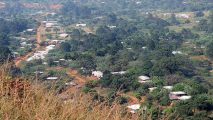
The Rapid Intervention Battalion (BIR) has strengthened its military footprint in the conflict-ridden Southwest region with the construction and inauguration of two new military camps on February 7. The new installations are located in Ekona, within the Muyuka district, and Ombe, in the Tiko district, both in Fako Division.
According to the army, these camps are part of efforts to bolster security in an area frequently targeted by armed separatist groups fighting against the Cameroonian military, which remains loyal to the central government in Yaoundé.
These new deployments add to previous reinforcements in the region. In November 2024, the BIR had already set up two camps in Nguti and Alou. Similarly, the elite force has been expanding its security presence in the Northwest region, which faces the same crisis. In May 2024, the BIR established a command post in Bui, a department known as a stronghold of separatist militias. The army has conducted several military offensives in this area, known as “Operation Bui Clean.”
The security crisis in Cameroon’s Southwest and Northwest regions began in 2017 when separatist armed groups launched attacks against defense and security forces, as well as civilians. The deployment of the BIR, the best-trained and best-equipped unit in the Cameroonian military, has so far helped to contain the insurgents.
According to United Nations data, the conflict in the country’s two Anglophone regions has resulted in nearly 6,000 deaths, displaced more than one million people internally, and forced over 35,000 refugees to flee to Nigeria.
Source: Sbbc