Cameroon Concord News
You Are What You Read
  • Home
  • News
    • Cameroon
    • Nigeria
    • Africa
    • Europe
    • World
  • Politics
    • Cameroon
    • Nigeria
    • Africa
    • Europe
    • World
  • Sports
    • Cameroon
    • Africa
    • Europe
    • World
  • Business
    • Africa
    • World
  • Life
    • Education
    • Health
    • Fashion
    • Entertainment
  • Religion
    • Cameroon
    • World
  • Contact
    • Online
    • Phone
    • Email
  • About
    • Us
    • Our Services
    • Advertising with Us

Categories

Recent Posts

  • American musician Oliver Tree killed in mid-air helicopter collision in Brazil
  • Cameroon looks to Tunisia’s textile model to develop its cotton value chain
  • Trump marks 80th birthday with White House UFC spectacle
  • Ex-Israeli PM Ehud Barak says Netanyahu must be removed ‘with sticks and stones’
  • US denies visa to Palestine football chief for World Cup attendance

Archives

  • June 2026
  • May 2026
  • April 2026
  • March 2026
  • February 2026
  • January 2026
  • December 2025
  • November 2025
  • October 2025
  • September 2025
  • August 2025
  • July 2025
  • June 2025
  • May 2025
  • April 2025
  • March 2025
  • February 2025
  • January 2025
  • December 2024
  • November 2024
  • October 2024
  • September 2024
  • August 2024
  • July 2024
  • June 2024
  • May 2024
  • April 2024
  • March 2024
  • February 2024
  • January 2024
  • December 2023
  • November 2023
  • October 2023
  • September 2023
  • August 2023
  • July 2023
  • June 2023
  • May 2023
  • April 2023
  • March 2023
  • February 2023
  • January 2023
  • December 2022
  • November 2022
  • October 2022
  • September 2022
  • August 2022
  • July 2022
  • June 2022
  • May 2022
  • April 2022
  • March 2022
  • February 2022
  • January 2022
  • December 2021
  • November 2021
  • October 2021
  • September 2021
  • August 2021
  • July 2021
  • June 2021
  • May 2021
  • April 2021
  • March 2021
  • February 2021
  • January 2021
  • December 2020
  • November 2020
  • October 2020
  • September 2020
  • August 2020
  • July 2020
  • June 2020
  • May 2020
  • April 2020
  • March 2020
  • February 2020
  • January 2020
  • December 2019
  • November 2019
  • October 2019
  • September 2019
  • August 2019
  • July 2019
  • June 2019
  • May 2019
  • April 2019
  • March 2019
  • February 2019
  • January 2019
  • December 2018
  • November 2018
  • October 2018
  • September 2018
  • August 2018
  • July 2018
  • June 2018
  • May 2018
  • April 2018
  • March 2018
  • February 2018
  • January 2018
  • December 2017
  • November 2017
  • October 2017
  • September 2017
  • August 2017
  • July 2017
  • June 2017
  • May 2017
  • April 2017
  • March 2017
  • February 2017
  • January 2017
  • December 2016
  • November 2016
  • October 2016
  • September 2016
  • August 2016
  • July 2016
  • June 2016
Football: Man City beat Sevilla on penalties to win UEFA Super Cup

16, August 2023

Football: Man City beat Sevilla on penalties to win UEFA Super Cup 0

Manchester City won the UEFA Super Cup for the first time on Wednesday but needed penalties to beat Sevilla after a 1-1 draw in Athens.

Youssef En-Nesyri’s towering first-half header gave the Spaniards the lead.

European champions City were far from their slick best, but hit back to force the game to penalties through Cole Palmer’s header.

City were then perfect from the spot and prevailed 5-4 in the shootout after Sevilla defender Nemanja Gudelj smashed against the bar.

Pep Guardiola has bemoaned his side’s lack of preparation for the new season and it showed under the baking heat in the Greek capital.

City badly missed the creative presence of Kevin De Bruyne and Bernardo Silva through a combination of injury and illness.

A four-month absence for De Bruyne due to a serious hamstring injury has exacerbated the loss of firepower offered by Ilkay Gundogan and Riyad Mahrez since last season.

West Ham’s Brazilian international Lucas Paqueta has been linked with a move to the Etihad and this performance may serve as further proof City need to strengthen before the end of the transfer market.

Sevilla began their La Liga season with a disappointing 2-1 home defeat to Valencia.

But just as they did last season in lifting a seventh Europa League despite a 12th-placed league finish, they rose to the big occasion.

Sevilla goalkeeper Yassine Bounou was playing what is expected to be his final game for the club before a move to Saudi side Al Hilal.

The Moroccan international denied City a perfect start when he clawed away Nathan Ake’s powerful header that was destined for the bottom corner.

But Guardiola’s men soon became ponderous in possession and were punished on 25 minutes.

Gvardiol start

Josko Gvardiol was making his first start for City since a 90 million euro ($99 million) move from RB Leipzig.

The Croatian international was beaten to Marcos Acuna’s cross by En-Nesyri, who bulleted a header in off the post.

City’s sluggishness was in evidence again at the start of the second-half when Lucas Ocampos skipped past Kyle Walker’s desperate lunge to set up En-Nesyri with a golden chance to double Sevilla’s lead.

The Moroccan striker was one-on-one with Ederson but fired straight into the Brazilian goalkeeper’s legs.

Sevilla were left to rue that miss as City hit back against the run of play on 63 minutes.

Mahrez’s departure has opened the door to City academy graduate Palmer to the first-team and the England under-21 international, who also scored against Arsenal in the Community Shield, is taking his chance.

Rodri was City’s hero with the only goal in the Champions League final against Inter Milan and the Spaniard this time provided the assist with a perfectly measured cross for Palmer to cushion a header past Bounou.

En-Nesyri was guilty of another wasted one-on-one moments later as Ederson flew off his line to make a block.

Erling Haaland had scored twice in all of his previous three appearances against Sevilla, but the Norwegian barely got a sight of goal before the spot-kicks.

Instead, City’s best chance to win the game in normal time fell to Ake as the Dutchman’s downward header was tipped over.

However, there was no perfect ending for Bounou as Haaland, Julian Alvarez, Mateo Kovacic, Jack Grealish and Walker all held their nerve to score in the shootout.

Source: AFP

Roger Milla weighs in on CAF-Eto’o affair

15, August 2023

Roger Milla weighs in on CAF-Eto’o affair 0

While the Confederation of African Football has announced the opening of an investigation against the President of the Cameroon Football Federation over allegations of inappropriate conduct, Samuel Eto’o is receiving support from a number of Cameroonian soccer players, including Indomitable Lions legend Roger Milla.

The CAF vs Eto’o split is likely to occupy the media landscape of African soccer, and Cameroon in particular, for a long time to come. Following concerns raised by Cameroonian soccer stakeholders, FECAFOOT president Samuel Eto’o is facing an investigation opened by CAF into “allegations of inappropriate conduct”. A wave of support for Cameroon has risen up to oppose CAF’s decision.

While Samuel Eto’o defended himself in a statement issued by his lawyer, castigating the accusers and expressing indignation at CAF’s stance, an Indomitable Lions legend came to the rescue of the Cameroon national team’s all-time top scorer. Roger Milla doesn’t beat about the bush when it comes to attacking CAF. As far as I’m concerned, they (CAF) don’t have the right,” raged the 1976 and 1990 African Ballon d’Or winner. We’re not playing in an African Cup. This is a national championship.They can’t come and investigate Cameroonian soccer.What do they give to Cameroonian soccer to allow themselves to carry out an investigation? Nothing at all! So let’s not exaggerate, we don’t need an investigation here”.

Comex comes to Samuel Eto’o’s rescue

In addition to the Cameroon soccer legend, Samuel Eto’o has also received the support of the Executive Committee of the Cameroon Football Federation. In a statement published on its official website on Saturday August 12, 2023, the Comex said: “The Cameroon Football Federation is surprised and outraged by such an approach adopted by the apex body of continental soccer, which, having received complaints from so-called ‘Cameroonian soccer players’ denouncing ‘reprehensible behavior’ did not see fit to officially refer the matter to it. Such an attitude violates the principles of adversarial proceedings, respect for fairness and sporting ethics, which are essential in the resolution of disputes” we read.

Source: Sportsnewsafrica
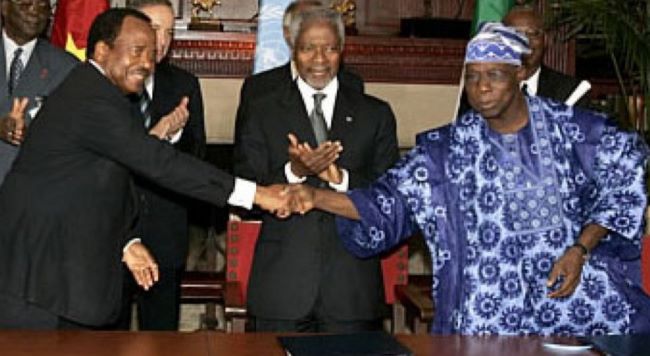
Olusegun Obasanjo heading to Yaoundé with Bakassi transfer on his agenda

15, August 2023

Olusegun Obasanjo heading to Yaoundé with Bakassi transfer on his agenda 0

Former Nigerian President Olusegun Obasanjo is expected in Yaoundé for the celebrations of the 15th anniversary of the transfer of the Bakassi peninsula to Cameroon by Nigeria.  The arrival is announced in a letter sent on July 31 by Felix Mbayu, Minister Delegate to the Minister of External Relations, to Paul Atanga Nji, Minister of Territorial Administration. “I am pleased to inform you that the eve of the celebration of the 15th anniversary of the transfer of the Bakassi peninsula to Cameroon by Nigeria (…) will be marked by the presence of the former Nigerian Head of State, Olusegun Obasanjo, as a guest of honor of the Head of State Paul Biya…,” wrote Felix Mbayu.

The letter provides no further details on this forthcoming event. The subject of the letter is an incident involving Nigerian fishermen. According to the letter, on July 25 the Mouanko subdivisional officer, Roland Ngah Koa, temporarily suspended the Nigerian community of Mbiako from all fishing activities on the grounds that they boycotted the preparations for the 51st National Day (May 20, 2023).

For Felix Mbayu, this decision is likely to disrupt the celebrations marking the 15th anniversary of the transfer. According to Mbayu, the decision “is bound to give rise to speculation as to the treatment reserved for the Nigerian community living in Cameroon.” He, therefore, asked the Minister of Territorial Administration to take steps to “preserve social cohesion and harmony in this administrative unit“.

The Nigerian army left the Bakassi peninsula in the South-West region on August 14, 2008. This followed a judicial marathon that culminated in October 2002 with the International Court of Justice’s decision to recognize Cameroon’s sovereignty over this oil-rich part of the territory. The shared management of Bakassi -home to many Nigerians- came to an end on August 14, 2013, and the Greentree agreements were implemented with Cameroon becoming the sole authority in that peninsula.  Olusegun Obasanjo, President of Nigeria from May 29, 1999, to May 29, 2007, greatly contributed to the peaceful resolution of this dispute.

Source: Stopblablacam

West Africa military chiefs to discuss Niger crisis this week

15, August 2023

West Africa military chiefs to discuss Niger crisis this week 0

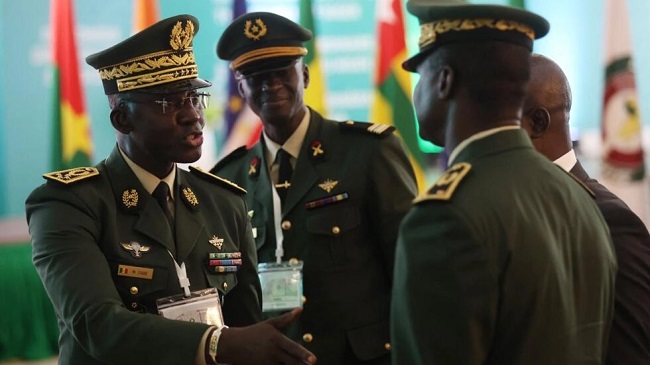
Military chiefs from the West African bloc ECOWAS will meet in Ghana this week to discuss a possible intervention in Niger, a spokesperson for the regional group has confirmed.

The meeting on Thursday and Friday – originally scheduled for last weekend but then postponed – comes after ECOWAS leaders last week approved deployment of a “standby force to restore constitutional order” in Niger, whose president was toppled on July 26.

Their summit, held in the Nigerian capital Abuja last Thursday, also reaffirmed the bloc’s preference for a diplomatic outcome.

Source: France 24

Biya is 90: Whether or not he runs for another term in 2025, succession is clearly an inevitable question

14, August 2023

Biya is 90: Whether or not he runs for another term in 2025, succession is clearly an inevitable question 0

Since 2016, the conflict in Cameroon between armed separatists and government forces has killed more than 6,000 people and displaced over 500,000 in the country’s north west and south west regions, where 2.2 million people need humanitarian assistance. The government’s hybrid approach to the crisis, combining political and security measures, has failed to appease local aspirations for autonomy, federalism, or even secession.

Compounding the problem, Cameroon – which has long been a stable authoritarian regime – looks poised to enter a process of leadership change that will make it more challenging to find a negotiated solution for the conflict.

Breakdown of federalism

English-speaking Cameroonians make up approximately 20 percent of the country’s population. To understand the causes of the conflict with the predominantly Anglophone population of the country’s Northwest and Southwest, one must examine both remote and immediate causes.

The crisis, like most similar clashes across the continent, is a product of the artificial borders drawn by colonial powers, along with the failures of decolonization and post-independence state-building. In Cameroon, as elsewhere, these failures were exposed by ethnic, tribal, and cultural cleavages that fueled resistance to a centralized state – making ethnicity a root cause and accelerator of political conflict.

The situation became clear in the 2018 presidential campaign, when incumbent President Paul Biya defeated Maurice Kamto in a free but not fair election. The ballot’s aftermath exposed the ethnic dimension of tensions between the Bamileke and Bamoun, who inhabit western Cameroon, and the Bassa, perceived by many as the country’s hegemonic ethnic group, buttressed by a centralized political structure viewed by much of the populace as illegitimate.

In the 19th century, present-day Cameroon was a German protectorate. After World War I, it was divided by a League of Nations mandate into two unequal parts – British Cameroon and French Cameroon – under the administration of those two colonial powers.

By the late 1950s, as decolonization in Africa accelerated, the newly independent states tried to use these inherited administrative structures to forge national identities in a continent fragmented along multiple ethnic, religious and geographic divides, and constrained by the arbitrary colonial-era borders.

French Cameroon gained independence in 1960, becoming the Republic of Cameroon. Inhabitants of the Trustee Territory of Southern Cameroon were given a choice: they could join recently independent Nigeria as a federated state or combine with the Republic of Cameroon, also as a federation. In a United Nations plebiscite organized in 1961, the latter option was chosen, transferring sovereignty to the Federal Republic of Cameroon. Many in the Anglophone states, however, accused French Cameroon of ignoring the principles of federalism, instead maintaining the centralized practices set forth by the unitary Constitution of 1960.

Escalating crisis

Federalism was formally overturned in 1972, under President Ahmadou Ahidjo, who changed the name of the country to the United Republic of Cameroon. In 1984, President Biya went one step further and truncated the official designation to the Republic of Cameroon, reverting to the original term under French administration. Anglophones reacted by challenging the decision in the courts.

Resentment and grievances generated by the failure of the federal principle resurfaced in 2016, triggered by the imposition of French as the language of education, the courts and administration. Since the Constitution grants equal status to the English and French languages, Anglophones perceived the imposition of French-speaking teachers, lawyers and judges as a form of marginalization. Initially, discontent came in the form of peaceful protests and strikes, with calls for the restoration of federalism.

The turning point in the crisis, starting its inexorable escalation into an armed conflict, came in January 2017, when the Cameroon Anglophone Civil Society Consortium, an umbrella of civil society organizations, started to organize a stay-at-home boycott campaign called Operation Ghost Town Resistance. In October, secessionist groups declared the independence of the Federal Republic of Ambazonia in Cameroon’s Northwest and Southwest regions. The declaration stated that Anglophone Cameroon had been recolonized rather than decolonized and was a case of black-on-black colonization.

The declaration started a shift in which civil society actors were replaced by political actors, demands for autonomy were dropped in favor of independence, and armed struggle became a viable option. The Ambazonia Defense Forces, as the armed wing of the separatist movement called itself, took control of portions of the territory. President Biya deployed the army in the Anglophone regions, promising to crush the rebellion.

Hybrid approach

To overcome the crisis, the Cameroonian regime has resorted to a mixture of political and security measures. The strategy is to appease groups demanding more autonomy, while militarily defeating the separatists.

After the 2017 strikes, the government established a National Commission to promote bilingualism and multiculturalism. In 2019, President Biya launched a national dialogue on unity and peace. More importantly, at least from a formal standpoint, in 2019 the parliament granted the Northwest and Southwest special status. Based on “their linguistic particularity and historic heritage,” these areas were given more autonomy to run local affairs, while receiving funds earmarked from the central government for local and regional governments.

In theory, the devolution of more power, responsibility and resources to regional bodies could be a remedy for the crisis. In practice, however, the decentralizing initiative failed. Firstly, the central government did not follow through on its 2019 promise to provide the funds and autonomy for real local government. Spending decisions still depended on approval from the capital, while centralization continued to rule even mundane aspects of people’s lives (for example, students completing their degrees claim they are forced to travel to Yaounde to get an official certificate).

Secondly, a political radicalization had taken place, as many Anglophones internalized secessionist denunciations of Yaounde’s “annexationist” impulses and came to believe that autonomy was no longer enough, leaving formalized federalism or independence as the solution.

The Cameroonian regime also took hard measures to address the crisis. In 2017, the government imposed a 90-day internet ban on the Anglophone region, which bruised an already fragile economy and inflamed feelings of marginalization. The government also deployed the Rapid Intervention Battalion – an elite internal security unit of the Cameroonian army that reports directly to the president – to fight the separatist forces.

Crisis accelerators

A convergence of factors suggests that finding a negotiated, sustainable solution to the current crisis may be difficult.

The first is that Cameroon’s Anglophone regions are endowed with significant natural resources, including timber, oil and fertile land. While the competing political claims for autonomy and independence are historically rooted, the competition for resources often acts as a grievance “accelerator,” as can be seen in other separatist regions in Africa where economic self-determination is salient.

A second factor is the political and regional divisions within the Anglophone regions themselves. While in 2016 various groups united behind the goal of defending their common Anglophone identity against the central state, differences regarding the means and ultimate ends are now evident. While some would accept the autonomy granted under special status, others want a return to the two-state federation and a third group insists on the armed struggle to win independence. Moreover, there are now multiple separatist militias operating in the region, feeding an escalating spiral of violence against civilians by both militias and security forces.

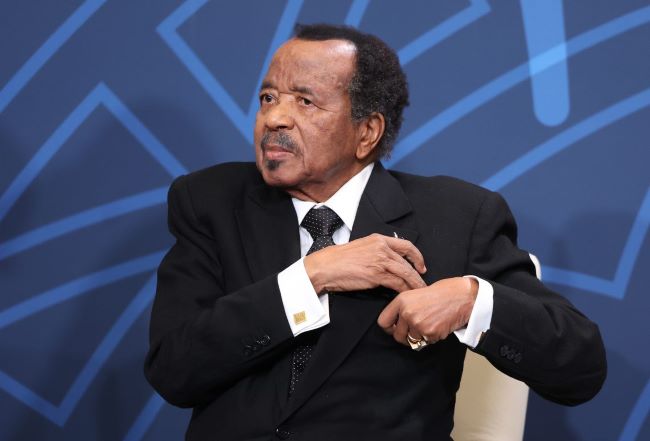
Paul Biya

During his 41 years in power, authoritarian President Paul Biya has moved the country toward further centralization, despite promises of autonomy for Anglophone minority regions. He is now 90 years old, and the transfer of power to his successor is likely to be bumpy. © Getty Images

A third factor is the regional context. The security outlook in West Africa has deteriorated over the past decade, amid a vicious cycle of terrorism, organized crime, food insecurity and displacement. In Cameroon and Nigeria, terrorist groups are active in the northern regions, while separatist militias operate in areas immediately to the south. Some have begun to cooperate among themselves, as seen by the 2021 alliance between the Ambazonia Defense Forces and the armed wing of the Indigenous People of Biafra, a Nigerian-based separatist movement.

Finally, social media are playing a growing role in the conflict, as parties turn to the digital sphere to air their grievances and spread information or disinformation. Digital platforms are particularly important for the interaction they allow with diaspora communities, which are key sources of intellectual and financial support. However, social media should be treated as a vehicle or medium, rather than as a root cause of conflict.

The end of stable authoritarianism

The Anglophone crisis must also be analyzed in the context of Cameroon’s political system, which is a case study of stable authoritarianism. Since winning independence more than six decades ago, the country has only had two presidents. President Biya, who came to power in 1982, is Africa’s longest-tenured leader after Teodoro Obiang, who has ruled Equatorial Guinea since 1979.

As in other African countries, Cameroon’s authoritarianism survived the so-called third wave of democratization, which took place in the 1990s. While the country formally adopted multipartyism, the Cameroon People’s Democratic Movement (CPDM) retained its hegemony and Mr. Biya has continued to win every presidential ballot since he came to power.

Not surprisingly, the consolidation of personalized and resilient authoritarianism went hand in hand with centralization. In 1982, as mentioned, the president used his power to establish a unitary and more centralized state. At the epicenter of power was the presidency, where President Biya exercised the direct power of appointment for all senior posts. Presidential term limits were removed from the Constitution in 2008, a year marked by violent protests over high food and fuel prices, which Mr. Biya seized upon as a pretext to stay in power indefinitely. A clause granting regions the power to elect governors was also deleted from the country’s constitution.

Even had President Biya behaved more moderately, the very nature of Cameroon’s regime – especially its dependence on dense patronage networks – was not conducive to decentralization, let alone federalism. Decision-making powers and funds have been tightly concentrated in national governing bodies, to the detriment of regional and municipal governments.

Scenarios

The Anglophone crisis is a cautionary tale about the centralized state model that has prevailed across Africa since independence. That model often ignores the importance of ethnic, cultural and religious identities. When these identities are perceived as being threatened – in Cameroon’s case, through fears of cultural marginalization in the educational, judicial and administrative systems – they generate local resentment of central authority and autonomic or separatist claims, which in the Anglophone regions are based on historically rooted notions of a common identity and territory.

Moreover, Cameroon’s regional crisis of legitimacy is now being reproduced at the national level. President Biya is 90 years old. Whether or not he runs for another term in 2025, succession is clearly an inevitable question. This outlook makes it more challenging to find a negotiated and peaceful solution to the Anglophone crisis. Periods of leadership transition (and the struggles they trigger) under resilient and personalized authoritarian regimes are often unpredictable. Given the several failed attempts at international mediation, and in light of widespread Anglophone skepticism about the government’s commitment to decentralization, the conflict seems bound to continue.

Source: gist report online

What Difference Does Jesus Christ Make? (Part Three)

14, August 2023

What Difference Does Jesus Christ Make? (Part Three) 0

We ended our previous section by pointing out that human brokenness, or existential wretchedness, could often time serve as the raw material thanks to which the need for God enters into the drama of human existence. As disheartening as the state of sin is, when we have the courage to turn to God, human sinfulness becomes a graced opportunity of encounter from which good fruits, such as patience with the faults of others; tolerance; a more understanding heart; a more God-like charity, the discovery of my dependence on God; et cetera, could ensure. Additionally, we pointed out that even from the midst of human misery, suffering and sin, God is never out of the picture, for the grace of the light of faith is enriched by the grace of the light of glory, albeit that, like Moses, we can only see God’s back and not his Face – that which we would have really loved to see!

As we intimated, the request for Moses to see the Face of God persisted throughout Israel’s history: It is your Face O Lord that I seek, do not hide your Face from me (Psalm 27:8-9). Moses’ quest remained unfulfilled and was kept as a promise of hope, hope for a future in which the greatest longing of the human heart would ultimately be met, in spite of human brokenness. In the Christian tradition, this sense of hope borne from the longing for God, what St Benedict referred to as the Quaerere Deum, has often resulted opening up a new perspective in terms of how we see the human being and the drama of sin in human existence. Augustine of Hippo captured this sense of hope borne from the midst of human sinfulness when he declares in his characteristic quotable fashion: every saint had a past; and every sinner has a future. In effect, the silver lining in my sinfulness is the hope that I can become different. I can become better. I can start all over at any point in time. The Lord is continuously calling me and never gives up on me to come work in his vineyard (Matthew 20:1-16). In the final analysis, Christian hope reminds me that even my best can become better in Christ Jesus the Lord.

Returning to the figure of Moses, in Deuteronomy 18:15, we read: A prophet like me will the Lord, your God, raise up for you from among your own kindred; that is the one to whom you shall listen. And again, we read: I will raise up for them a prophet like you from among their kindred and will put my words into the mouth of the prophet; the prophet shall tell them all that I command. (Deuteronomy 18:17). As Ratzinger explains, a curious melancholy hangs over the conclusion of the Book of Deuteronomy: “The promise concerning ‘a prophet like me’ has not yet been fulfilled. And it now becomes clear that these words do not refer simply to the institution of prophecy, which in fact already existed, but to something different and far greater: the announcement of a new Moses. It had become evident that taking possession of the land in Palestine did not constitute the chosen people’s entry into salvation; that Israel was still awaiting its real liberation; that an even more radical kind of exodus was necessary, one that called for a new Moses.” (Ratzinger, Jesus of Nazareth, Vol. 1, p. 3). In effect, what is outstanding and enduring about the figure of Moses are not the mighty deeds performed, curial as these were to Israel’s liberation. What serves as the capstone of the life of Moses was him pointing to the face of God as that which ultimately meets the desires of the human heart, that which finally resolves the wedge between willing and willed, between desire and fulfillment, as explained by Maurice Blondel in his philosophy of human action.

In this light, the Deuteronomistic Promise thereby opens the door to the leitmotif of a new Moses that would finally unveil the Face of God to the world, bringing to realization the greatest longing of the human heart. This is the unfinished business of Moses that the new Moses had to accomplish. As Ratzinger again explains, “Israel is allowed to hope for a new Moses, who has yet to appear, but who will be raised up at the appropriate hour. And the characteristic of this ‘prophet’ will be that he converses with God face-to-face, as a friend does with a friend. His distinguishing note will be his immediate relation with God, which enables him to communicate God’s will and word firsthand and unadulterated. And that is the saving intervention which Israel – indeed, the whole of humanity – is waiting for.” (Ratzinger/Benedict XVI, Jesus of Nazareth, Vol. I, 5). In this life, Moses, and together with him the faith of Israel, can only go so far, as far as seeing the back of God (Exodus 33:23). But as we pointed out in part two of this series, the human heart is not contented with the back of God. The human heart wants more. And herein arises the need for a new Moses.

This figure of a new Moses, thereby, sets the stage for that is genuinely novel and consummating, for the meeting of the more of the human heart. Anything less would not satisfy the greatest aspirations of the human heart. In this light, the new Moses must therefore be granted what was denied the first, if this new Moses is to resolve the impasse that characterizes human existence, the distraught that continues to mark human life. The new Moses must therefore be greater than the first Moses, capable of going beyond the back of God to the face of God. As Ratzinger further teaches, “this is the context in which we need to read the conclusion of the Prologue to John’s Gospel: ‘No one has ever seen God; it is the only Son, who is nearest to the Father’s heart, who has made him known’ (John 1:18). It is in Jesus that the promise of the new prophet is fulfilled. What was true of Moses only in fragmentary form has now been fully realized in the person of Jesus: He lives before the face of God, not just as a friend, but as a Son; he lives in the most intimate unity with the Father” (Ratzinger/Benedict XVI, Jesus of Nazareth, 6).

At this point, it becomes obvious that the event of the Transfiguration as recorded in Mathew 17:1-13, take on a much more profound meaning for the Christian. While it is true that Jesus obviously wanted to strengthen the resolve of the apostles before the scandal of the Passion, it is likewise true, and even more so, that with the event of the Transfiguration especially when read via Jewish hermeneutics as embodied in the figures of Moses and Elijah, we are dealing with the zenith of Israel’s religious struggle, and hopefully, ours as well. (To be continued).

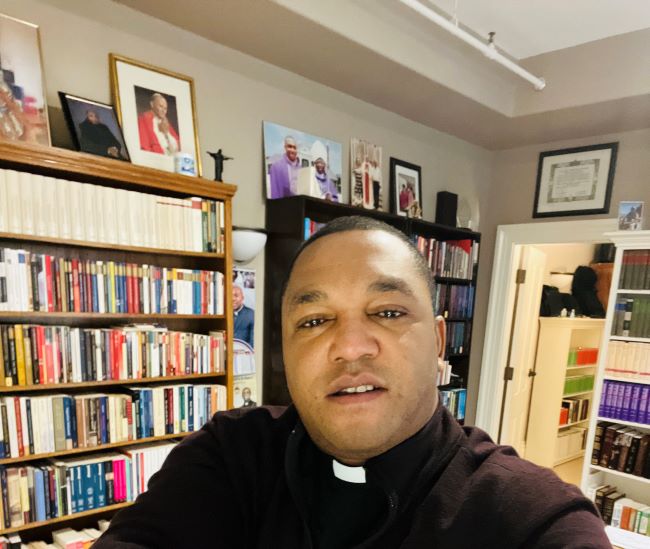
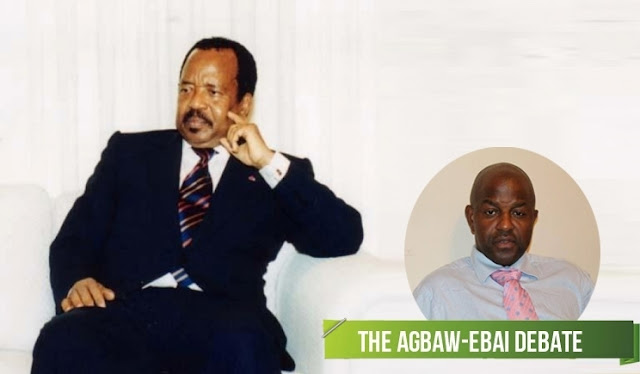
By Maurice Agbaw-Ebai

Indomitable Lions: Swansea confirm departure of midfielder Olivier Ntcham

14, August 2023

Indomitable Lions: Swansea confirm departure of midfielder Olivier Ntcham 0

Swansea have confirmed the departure of Cameroon midfielder Olivier Ntcham.

The 27-year-old joined Swansea on a free transfer in September 2021 following a four-year spell at Celtic and scored 12 goals in 82 appearances.

“All regulatory paperwork required to be submitted by Swansea City regarding the player’s exit has now been completed,” the Sky Bet Championship club said in a statement.

Samsunspor posted pictures on their social media channels on August 8 announcing that Ntcham had signed a three-year contract at the Turkish Super Lig club.

Source: Nation.cymru

Pope Francis prays for peace in Cameroon

13, August 2023

Pope Francis prays for peace in Cameroon 0

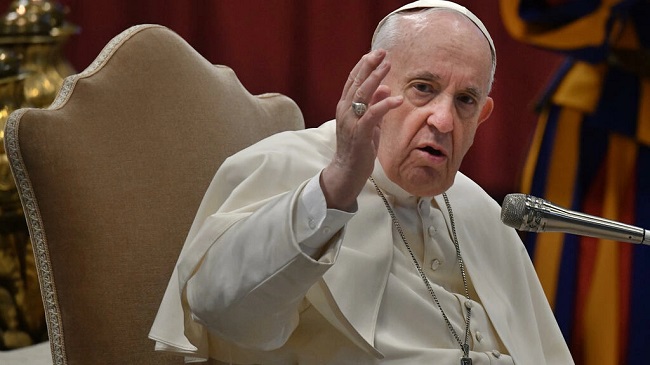
During Sunday’s Angelus, the Holy Father Pope Francis prayed for dialogue and peace in Cameroon.

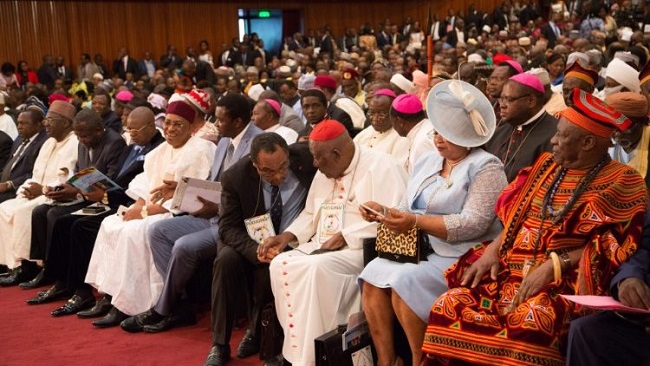
In his greetings following the recitation of Sunday’s Angelus, Pope Francis revealed that tomorrow on the eve of the Solemnity of the Assumption of the Blessed Virgin Mary, a peace pilgrimage will take place in Bafoussam, Cameroon, a nation still suffering from violence and war.

“Let us join in prayer with our brothers and sisters in Cameroon so that, through the intercession of the Blessed Virgin Mary, God may sustain the hope of the people who have been suffering for years and open ways of dialogue to reach harmony and peace” the Holy Father said.

At the same time, the Pope asked everyone to continue to pray for the battered nation of Ukraine, suffering greatly due to the war.

Source: Vatican News

Southern Cameroons Crisis: Rest in Peace Grand National Dialogue

12, August 2023

Southern Cameroons Crisis: Rest in Peace Grand National Dialogue 0

The Yaoundé initiative that was designed to resolve the crisis in Southern Cameroons, officially known as the Grand National Dialogue, is now, for all practical purposes, dead. Just like the Tripartite in the days of the late Ni John Fru Ndi and the SDF, this deal is no more. It has gone to meet its maker. This is a former deal.

To be sure, the undertaker, significantly, was none other than the senile character currently impersonating as father of the Cameroonian nation.

His name may be Paul Biya, but the 90-year-old Francophone dictator is in fact a combination of different things whose only job is mimicking the words whispered to his earpiece by his young and inexperienced wife Chantal Biya.

Biya’s acolytes say the Grand National Dialogue deal is dead and gone with Cardinal Tumi but Yaoundé is not willing to announce it!  

When he was relatively less senile in the 90s, on his campaign trail, Biya promised that he would personally supervise the construction of the Bamenda ring road.

But the prominent and successful failure has played the spoiler role to perfection and today Cameroon is in chaos.

Now with the numerous coups in Francophone Africa, it is evidently clear that only an intense and productive discussion with the NERA 10 headed by President Sisiku Ayuk Tabe will guarantee peace and prosperity in the Sub Saharan geopolitical chessboard. Russia’s Wagner has reduced France in Africa to an outsize satrapy.

Correspondingly, Dion Ngute’s recent trip to Buea is simply La Republique playing for time before coming up with renewed mischief. Ferdinand Ngoh Ngoh, Minister-Secretary General at the presidency himself has revealed, on record, that the Grand National Dialogue in Yaoundé was nothing but a gigantic farce.

The Ambazonia Interim Government though never fell into the trap. President Sisiku Ayuk Tabe and Vice President Dabney Yerima saw through it from the start: never trust La Republique du Cameroun.

Sisiku Ayuk Tabe and his deputy Dabney Yerima intuitively knew that no one deep within the Francophone dominated government in Yaoundé would respect the outcome of the Grand National Dialogue.

Biya and his gang have never made an effort to implement anything positive that came out of the Grand National Dialogue.  The unspoken mantra was to keep the Ambazonia Interim Government down.  

If Biya and his Francophone Beti Ewondo government were really interested from the start in achieving peace with the people of Southern Cameroons, the straightforward path would have been to ditch the current fake unitary system of government and go for federalism.

Instead, they have been using their corrupt pro Yaoundé Southern Cameroons political elites to demand more troops’ deployment to Ambazonia and making a mockery of the Canadian peace initiative.

Ngute’s latest trip to Buea without any Francophone CPDM baron in his delegation is an indication that the Grand National Dialogue is not a priority anymore.

Hence the Blame Ambazonia Game reaching a fever pitch all over in La Republique du Cameroun: Amba Boys are killing innocent people, Amba Boys are involved in kidnapping and extortion and Amba Boys are responsible for the suffering in Southern Cameroons. 

At least now it’s in the open: the only thing that matters for the Biya regime is to dish-out bribes to weak Southern Cameroons leaders and fighters and also to bribe as many traditional rulers as possible forcing them to denounce the Ambazonia uprising.

Nobody will miss the Grand National Dialogue. But what we of the Cameroon Concord News Group want the people of Southern Cameroons to take home is that the decaying Biya regime is an eminently untrustworthy entity.

By Soter Tarh Agbaw-Ebai

Grand National Dialogue: Dion Ngute in Buea with same old rhetoric

12, August 2023

Grand National Dialogue: Dion Ngute in Buea with same old rhetoric 0

The war in Southern Cameroons is demonstrating that there appears to be widespread concerns that something fundamental is wrong with the union with French Cameroun not only in terms of perceived political marginalization, but also in terms of socio-economic exclusion and ensuring justice in all spheres.

Few including Prime Minister Dion Ngute and the Minister of Territorial Administration, Paul Atanga Nji maintain that nothing is wrong with the Republic of Cameroon and that all what is required is attitudinal change on the part of the political leadership.

For Southern Cameroonians, the United Republic of Cameroon experience simply needs a rebirth, a fundamental rebirth. While there appears to be widespread consensus about the need for separation in Ground Zero, there is a lack of consensus on the type of rebirth and the process of bringing about the desired change that will keep the two Cameroons together. Convening a Grand National Dialogue was advocated as one of the steps to be taken towards an attempt at fixing the problem with the two Cameroons.

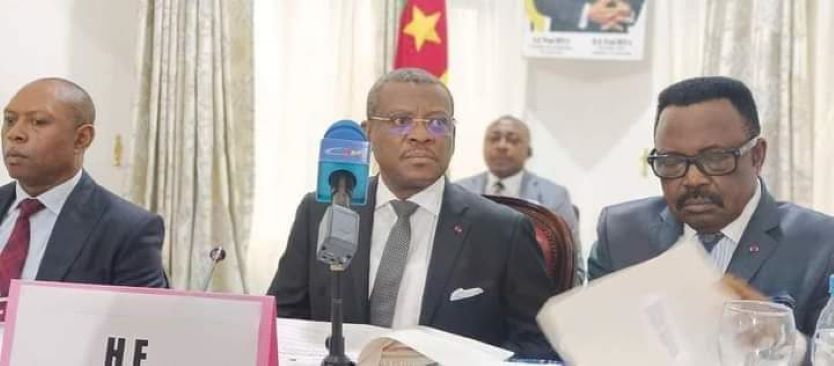
Prime Minister, Chief Dr Joseph Dion Ngute now thinks that much progress has been made in the implementations of the recommendations of the Grand National Dialogue.

The pro Yaoundé Southern Cameroons political elite was addressing members of the committee charged with the follow-up of the implementations of recommendations of the Grand National Dialogue during their fifth session on August 11, 2023 in Buea.

According to Mr. Dion Ngute, President Biya has signed a couple of decrees and implemented many recommendations of the National Dialogue.

Dion told members of the corrupt CPDM committee that “Basic infrastructures are being rehabilitated; special funding was allocated in the 2023 finance law for the construction and development process. The funds were increased following the recent amendment of the said law signed by the Head of State. Major infrastructures such as the Limbe Deep Sea Port are ongoing; a lot of work has been done there.”

On a lighter note, Dion Ngute recommended that; “We therefore have to continue in our efforts towards a complete return to normalcy by maintaining our focus and believing on the commitments, to fulfill the aspirations of our people.”

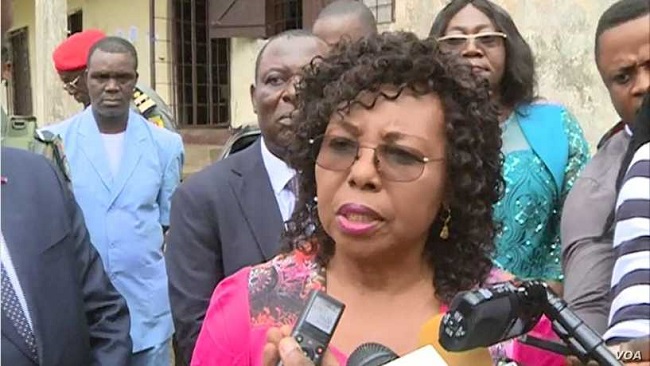
The secretary general of the committee, Felix Mbayu, spoke on what has been achieved in terms of infrastructural development, employment and agricultural productivity.

The Grand National Dialogue can never be an automatic solution to the problems in Southern Cameroons. It remains a Francophone scheme designed to attract ordinary Southern Cameroonians to relate with Yaoundé.

We of the Cameroon Concord News Group think that Prime Minister Dion Ngute is part of the French Cameroun retrogressive force using the so-called Grand National Dialogue to take Southern Cameroonians backwards.

Prime Minister Dion is indeed a good example to demonstrate that practice does not make perfect.

By Asu Isong

London Bureau Chief

Cameroon Concord News Group

«< 232 233 234 235 236 >»

Featured

  • Exam leaks in CPDM Cameroon: A symptom of a deeper corruption crisisExam leaks in CPDM Cameroon: A symptom of a deeper corruption crisis
  • Biya is already in Hell as Yaoundé unravelsBiya is already in Hell as Yaoundé unravels
  • What does President Biya really want? Money, women or cigarettes?What does President Biya really want? Money, women or cigarettes?
  • Biya, how long must the nation wait for the government it was promised?Biya, how long must the nation wait for the government it was promised?
  • Cameroonians in Leicester: funeral contributions must never become a marketplace for corruptionCameroonians in Leicester: funeral contributions must never become a marketplace for corruption

Most Commented Posts

  • 4 Anglophone detainees killed in Yaounde4 Anglophone detainees killed in Yaounde
    18 comments
  • Chantal Biya says she will return to Cameroon if General Ivo Yenwo, Martin Belinga Eboutou and Ferdinand Ngoh Ngoh are sackedChantal Biya says she will return to Cameroon if General Ivo Yenwo, Martin Belinga Eboutou and Ferdinand Ngoh Ngoh are sacked
    13 comments
  • The Anglophone Problem – When Facts don’t LieThe Anglophone Problem – When Facts don’t Lie
    12 comments
  • Anglophone Nationalism: Barrister Eyambe says “hidden plans are at work”Anglophone Nationalism: Barrister Eyambe says “hidden plans are at work”
    12 comments
  • Largest wave of arrest by BIR in BamendaLargest wave of arrest by BIR in Bamenda
    10 comments

Latest Tweets

→ Follow me

Featured

  • American musician Oliver Tree killed in mid-air helicopter collision in Brazil

    American musician Oliver Tree killed in mid-air helicopter collision in Brazil

  • Cameroon looks to Tunisia’s textile model to develop its cotton value chain

    Cameroon looks to Tunisia’s textile model to develop its cotton value chain

  • Trump marks 80th birthday with White House UFC spectacle

    Trump marks 80th birthday with White House UFC spectacle

  • Ex-Israeli PM Ehud Barak says Netanyahu must be removed ‘with sticks and stones’

    Ex-Israeli PM Ehud Barak says Netanyahu must be removed ‘with sticks and stones’

  • US denies visa to Palestine football chief for World Cup attendance

    US denies visa to Palestine football chief for World Cup attendance

  • Yaoundé, Abu Dhabi explore new trade and investment framework

    Yaoundé, Abu Dhabi explore new trade and investment framework

  • Southern Cameroons Crisis: 2 gov’t soldiers killed in Ambazonia ambush

    Southern Cameroons Crisis: 2 gov’t soldiers killed in Ambazonia ambush

Log In

  • Register
  • Log in
  • Entries feed
  • Comments feed
  • WordPress.org
© Cameroon Concord News 2026

We are using cookies to give you the best experience on our website.

You can find out more about which cookies we are using or switch them off in .

Powered by  GDPR Cookie Compliance
Privacy Overview

This website uses cookies so that we can provide you with the best user experience possible. Cookie information is stored in your browser and performs functions such as recognising you when you return to our website and helping our team to understand which sections of the website you find most interesting and useful.

Strictly Necessary Cookies

Strictly Necessary Cookie should be enabled at all times so that we can save your preferences for cookie settings.

3rd Party Cookies

This website uses Google Analytics to collect anonymous information such as the number of visitors to the site, and the most popular pages.

Keeping this cookie enabled helps us to improve our website.

Cookie Policy

More information about our Cookie Policy