13, February 2023
Ernest Obama in SED: How Amougou Belinga surrounds himself with an elite team of snipers 0
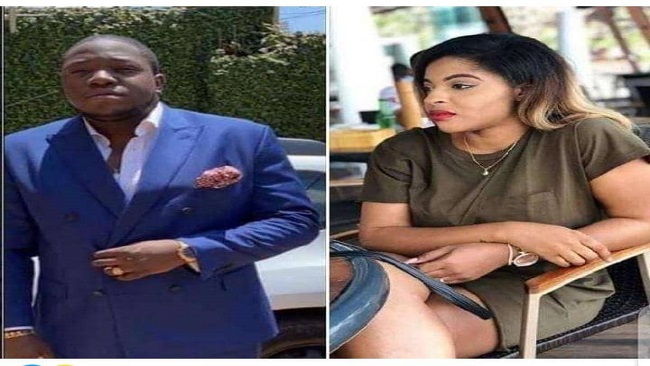
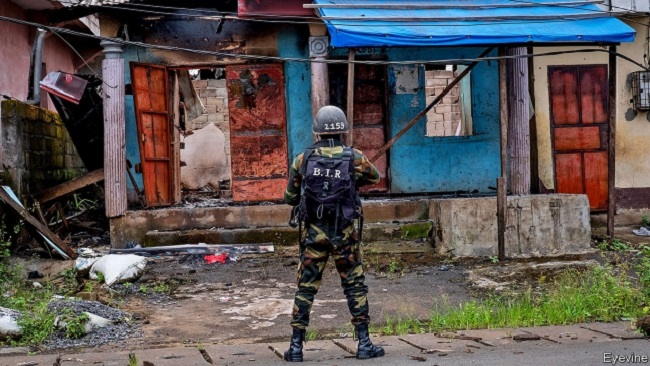
The mystery of who killed Brian Fombor, a young man stabbed to death by unknown assailants on June 2020 in the Omnisport district in Yaoundé while in the company of his girlfriend, Ivana Essomba suspected of being the mistress of Jean Pierre Amougou Belinga took a new twist this week when investigators announced they have summoned Ernest Obama, Jean Pierre Amougou Belinga’s right-hand man at the time of the murder.
Cameroon Intelligence Report understands that investigators are trying to untangle the skein to know the role that Ernest Obama would have played in this tragic case.
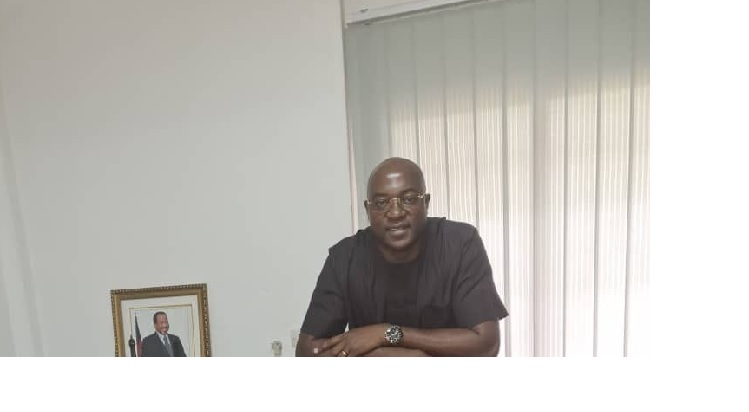
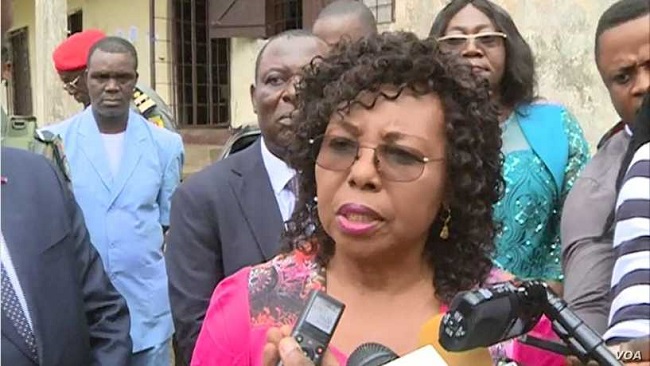
Ivana Essomba seen here on photo attached to this report became on December 2022, the wife of Bruno Bidjang a young journalist Amougou Belinga recently appointed as General Manager of his privately-owned television channel, Vision 4.
Senior security officials in Yaoundé have hinted Cameroon Intelligence Report that Brian Fombor’s alleged killers were part of a Vision 4 group led by Ernest Obama.
Ernest Obama who now moonlights as spokesperson for the Cameroon Football Federation is wanted in SED after a tip-off following the arrest of Belinga Amougou the owner of the L’Anecdote media group and Raymond Thomas Etoundi Nsoe, a retired colonel and former commander of the presidential guard.
The Francophone mafia boss and business tycoon including his top aide Bruno Bidjang are still being questioned. But Cameroon Intelligence Report has some intelligence that would suggest they have knowledge, perhaps some culpability on the murder of Brian Fombor.
Our Yaoundé city reporter said there was a high probability that Ernest Obama, an anti Anglophone extremist was the masked man who teleguided the murder of Brian Fombor.
Amougou Belinga, Paul Atanga Nji and Laurent Esso have been in the business of killing for decades and it is evidently clear that this time around state security apparatus appear to have done a poor job of protecting this CPDM gang.
The Amougou Belinga-Martinez Zogo affair is extremely sensitive, with news of more arrests emerging.
By Soter Tarh Agbaw-Ebai










13, February 2023
Biya’s 90th birthday marked by cocktail of woes 0
Edith Kah Walla was at the front of a crowd of students that welcomed Cameroon’s new president Paul Biya on a tour of the United States in 1984, full of hope that the young leader would bring stability and democracy, and end corruption.
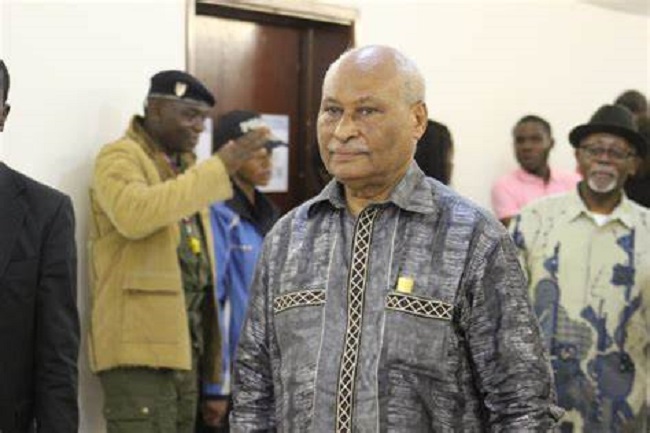
Four decades on, Biya, now the world’s oldest leader, turns 90 on Monday. When he cuts a large cake, as he usually does on his birthday, Kah Walla, who was one of Biya’s challengers in the 2011 presidential election, will not be celebrating.
Her support for Biya evaporated over the years as economic progress stalled, dissenting voices were silenced, and the oil-producing country of 27 million people became split by a separatist uprising that has killed thousands, and Boko Haram attacks in the north.
At 90, Biya should spend his days playing with his grandchildren, she said.
“We live in a violent, brutal dictatorship. Over the past 40 years it has gotten more and more violent and brutal,” said Kah Walla, now a civil society activist. “These 40 years are a huge setback for Cameroon.”
HANDPICKED IN 1982
Biya has repeatedly defended his record in the past and says that the government has made strides to return peace to the minority English-speaking regions where separatists are trying to form their own state.
He touts his Vision 2035 plan as a blueprint to boost development over the next 12 years.
Biya was born in Mvomeka’a, a village in the southern equatorial forest, in 1933, the year prohibition ended in the United States and Adolf Hitler became Chancellor in Germany.
After studying in Paris, he returned to Cameroon in 1962 as a top civil servant and quickly rose to become the Prime Minister in 1975. He was hand-picked as successor after the country’s first post-independence president Ahmadou Ahidjdo decided to resign suddenly in November 1982.
In Africa, only President Teodoro Obiang of Equatorial Guinea has ruled longer.
Millions still support Biya, although international observers have raised doubts about the fairness of elections that he routinely wins with ease. He spends long stretches in comfortable European hotels with his wife Chantal, frustrating many at home who believe the country’s crises require closer attention.
In 2020, he was not seen in public for weeks, prompting speculation that he had died of COVID-19.
Biya has ruled with openness and tolerance, said former minister Elvis Ngolle Ngolle. Old age, he said, has its advantages.
“The more you add up the age, the wiser you become – the more experienced, tolerant, logical you become,” Ngolle said.
AGE OLD WOES
Popular journalist and whistleblower Paul Chouta disagrees. Chouta, an outspoken critic of Biya, has been repeatedly beaten and tortured in recent years. He lives in fear: just the sound of his floorboards creaking sends him into a panic.
On March 9 last year, unknown assailants bundled him into the back of a car and drove him to an isolated spot near Yaounde airport. They beat him with stones and batons and left him for dead, he said.
Chouta is one of several reporters who have been beaten or killed. Two journalists were killed in the last month, prompting condemnation from the United Nations.
“If he (Biya) loves Cameroonians, let him fix things and go. The woes are deep,” Chouta told Reuters.
It is not only well-known reporters who are wary.
Kouam Yves, a motorcycle taxi driver, last week stood at a newspaper stand discussing the news headlines with colleagues. He struggles to make a living and is critical of Biya and what he describes as rampant corruption. But he paused as he spoke, worried about who might be listening.
“I can’t celebrate the Head of State’s birthday. For more than 20 years, I have not seen anything which we have executed in this country that went well like in other countries,” he said.
Source: Reuters