Cameroon Concord News
You Are What You Read
  • Home
  • News
    • Cameroon
    • Nigeria
    • Africa
    • Europe
    • World
  • Politics
    • Cameroon
    • Nigeria
    • Africa
    • Europe
    • World
  • Sports
    • Cameroon
    • Africa
    • Europe
    • World
  • Business
    • Africa
    • World
  • Life
    • Education
    • Health
    • Fashion
    • Entertainment
  • Religion
    • Cameroon
    • World
  • Contact
    • Online
    • Phone
    • Email
  • About
    • Us
    • Our Services
    • Advertising with Us

Categories

Recent Posts

  • Kremlin says US mediation role in Russia-Ukraine negotiations on hold
  • Football: Bayern Munich eye €50m move for Yann Bisseck
  • Southern Cameroons Crisis: Suspected Ambazonia fighters kill two students in Bambui
  • Biya is already in Hell as Yaoundé unravels
  • Child Benefit: Biya regime audit families after 55% jump in declared children

Archives

  • June 2026
  • May 2026
  • April 2026
  • March 2026
  • February 2026
  • January 2026
  • December 2025
  • November 2025
  • October 2025
  • September 2025
  • August 2025
  • July 2025
  • June 2025
  • May 2025
  • April 2025
  • March 2025
  • February 2025
  • January 2025
  • December 2024
  • November 2024
  • October 2024
  • September 2024
  • August 2024
  • July 2024
  • June 2024
  • May 2024
  • April 2024
  • March 2024
  • February 2024
  • January 2024
  • December 2023
  • November 2023
  • October 2023
  • September 2023
  • August 2023
  • July 2023
  • June 2023
  • May 2023
  • April 2023
  • March 2023
  • February 2023
  • January 2023
  • December 2022
  • November 2022
  • October 2022
  • September 2022
  • August 2022
  • July 2022
  • June 2022
  • May 2022
  • April 2022
  • March 2022
  • February 2022
  • January 2022
  • December 2021
  • November 2021
  • October 2021
  • September 2021
  • August 2021
  • July 2021
  • June 2021
  • May 2021
  • April 2021
  • March 2021
  • February 2021
  • January 2021
  • December 2020
  • November 2020
  • October 2020
  • September 2020
  • August 2020
  • July 2020
  • June 2020
  • May 2020
  • April 2020
  • March 2020
  • February 2020
  • January 2020
  • December 2019
  • November 2019
  • October 2019
  • September 2019
  • August 2019
  • July 2019
  • June 2019
  • May 2019
  • April 2019
  • March 2019
  • February 2019
  • January 2019
  • December 2018
  • November 2018
  • October 2018
  • September 2018
  • August 2018
  • July 2018
  • June 2018
  • May 2018
  • April 2018
  • March 2018
  • February 2018
  • January 2018
  • December 2017
  • November 2017
  • October 2017
  • September 2017
  • August 2017
  • July 2017
  • June 2017
  • May 2017
  • April 2017
  • March 2017
  • February 2017
  • January 2017
  • December 2016
  • November 2016
  • October 2016
  • September 2016
  • August 2016
  • July 2016
  • June 2016
Violence in Southern Cameroons takes high civilian toll

2, April 2021

Violence in Southern Cameroons takes high civilian toll 0

Worsening violence in Cameroon’s Anglophone regions is taking an increasingly heavy toll on civilians, with renewed attacks against schools and a spate of incidents involving improvised explosive devices (IEDs) and extrajudicial killings documented in recent months.

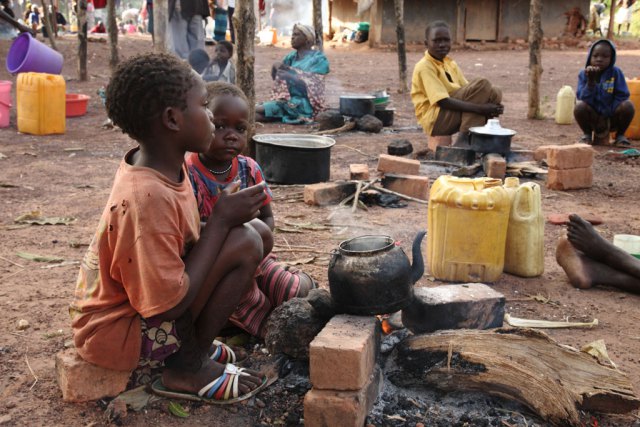
These attacks are the latest escalation in the nearly five-year conflict between government security forces and armed separatists which has displaced more than 700,000 civilians and forced another 63,800 across the border to Nigeria, according to a United Nations report this week.

Overall, the UN estimates three million of the four million people in Cameroon’s Northwest and Southwest have been impacted.

The Anglophone conflict began in late 2016 when government security forces used lethal force to put down peaceful marches by lawyers and teachers protesting against perceived marginalisation by the country’s majority Francophone government.

In response, more than 30 armed separatist groups formed to fight for an independent nation they called Ambazonia. A self-declared Interim Government of Ambazonia also emerged and is run largely by Anglophone Cameroonians living in Europe and the United States.

Separatists are known locally as “the boys” and consider themselves “restorationists” or “freedom fighters”. Representatives from the Cameroonian government refer to them as “terrorists” in public statements.

At least 4,000 civilians have so far been killed in the Anglophone regions, a toll that surpasses that of the country’s Far North region where Boko Haram has been waging an armed campaign since 2014.

Shifting conflict dynamics

In the first years of the conflict, there was a clear “cycle of violence”, according to Chris Fomunyoh, a senior associate and regional director for Central and West Africa at the National Democratic Institute.

“Every time the armed groups attacked the military and someone in uniform was killed, then the military goes into that vicinity or that neighbourhood ‘in pursuit of the boys’ and mows down civilians”.

However, during the past year, the number of clashes between separatist groups and security forces has declined while there has been an uptick in attacks against civilians, according to data collated by the United Nations and the Armed Conflict Location and Event Data (ACLED) Project.

“The [conflict] dynamics keep changing every day,” said Esther Njomo, a human rights advocate based in the Southwest region. Separatist groups, in particular, have intensified targeted attacks against civilians and aid workers, Njomo said.

Since January 2021, separatists have been accused of abducting a local physician, burning down public infrastructure, such as markets and post offices, and killing at least five civilians, according to media reports and NGOs.  On February 13, suspected separatists killed three traditional village leaders and kidnapped 30 civilians.

In the same timeframe, separatists have also carried out at least 27 attacks involving IEDs in 13 towns across the two regions, more than all previous years of the conflict combined, according to UN reports and ACLED data.

Attacks with IEDs usually target military personnel, convoys, and buildings. Twelve documented attacks occurred in Bamenda, the capital of the northwest region. At least 10 government security personnel have been killed and four civilians wounded in these attacks.

Fombat Forbah Dieudonne, a spokesperson for the Ambazonia Restoration Forces, a separatist group linked to the interim government, denied that any groups involved in the separatist movement have carried out abductions or killed civilians.

“As concerns the IED[s], I have no knowledge of our people being capable of manufacturing such. However, we shall defend using any means possible, according to international law, ourselves for as long as this colonialism and genocide continues,” Dieudonne said.

Government security forces have also faced accusations of raiding villages, burning homes and arbitrarily arresting and killing dozens of civilians, according to local and international NGOs.

In January, military forces raided Mautu village in the southwest region and killed nine civilians, including a woman and a child, Human Rights Watch said. A month later, a video of government security forces brutally beating the brother of a suspected separatist in a town called Ndu circulated on social media.

Widespread condemnation of the video led to the Cameroonian government arresting eight officers involved.

A spokesperson for the Cameroonian military declined to comment on the continuing crisis.

Renewed attacks against schools

In October 2020, the lifting of school closures related to the COVID-19 pandemic sparked renewed attacks targeting learning institutions.

Between October and December 2020, the UN recorded 35 attacks on schools including the “killing, torture and abduction of students and teachers, as well as arson of education facilities”, according to an internal report provided to Al Jazeera.

Of those attacks, 30 were carried out by separatist groups resulting in 10 civilian deaths and 67 abductions.

The five other incidents involved government security forces including the “accidental discharge of weapons” near schools and resulted in five civilian injuries.

Schools have been a main point of attack since the beginning of the conflict when separatists called for a boycott on education to draw attention to the increased use of French in the classroom and reliance on monolingual French-speaking teachers.

Human Rights Watch previously documented that separatists set fire to schools and attacked students and staff who did not comply with the ban.

Dieudonne denied that separatists ever banned school attendance. “We have continually said that the security situation does not provide the enabling environment for schooling.”

He also denied that any groups tied to the separatist movement have ever attacked schools.

Towards a ‘fragile state’

Once considered a beacon of stability in Central Africa, Cameroon is now facing three protracted humanitarian crises.

In addition to the Anglophone conflict, Cameroon is struggling to respond to an influx of more than 200,000 refugees to its East, Adamawa, and Northern regions from neighbouring Central African Republic.

In the Far North region, there has been a spike in attacks carried out by Boko Haram. The United States, a main defence partner to Cameroon, has reduced its funding for military assistance due to continuing human rights violations in the country for the past two years.

The International Crisis Group has also documented “rising ethno-political tensions” after controversial 2018 presidential elections pitted ethnic Bulus, to which long-running President Paul Biya belongs, and the closely related Beti people against the Bamileke people, to which Biya’s main opposer, Maurice Kamto, belongs.

“The state of fragility of Cameroon as a state has grown exponentially for five years,” Fomunyoh said. “I don’t see an easy outlet in the short-to-medium term unless a political settlement is arrived at soon.” SOURCE: AL JAZEERA

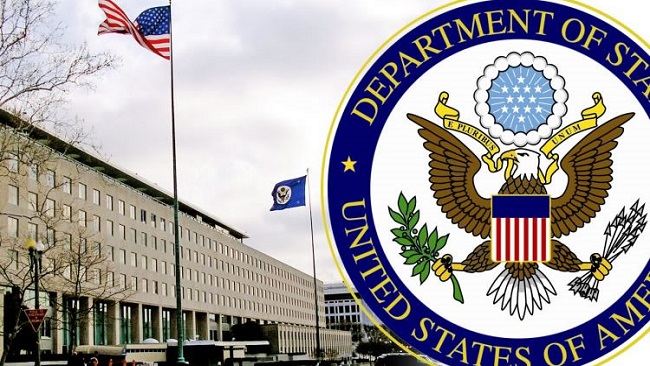
US Department of State releases 2020 Country Reports on Human Rights Practices in Cameroon

2, April 2021

US Department of State releases 2020 Country Reports on Human Rights Practices in Cameroon 0

Cameroon is a republic dominated by a strong presidency. The president retains power over the legislative and judicial branches of government. The ruling political party, the Cameroon People’s Democratic Movement, has remained in power since its creation in 1985. The country held legislative elections on February 9, which were marked by irregularities. The ruling party won 152 of 180 National Assembly seats. Paul Biya has served as president since 1982. He was last reelected in 2018 in an election marked with irregularities.

The national police and the national gendarmerie are responsible for internal security. The former reports to the General Delegation of National Security and the latter to the Secretariat of State for Defense in charge of the Gendarmerie. The army is primarily responsible for external security and shares some domestic security responsibilities; it reports to the minister delegate at the presidency in charge of defense. The Rapid Intervention Battalion reports directly to the president. Civilian authorities at times did not maintain control over security forces. Members of security forces committed numerous abuses.

In July jailed separatist leader Julius Sisiku Ayuk Tabe announced he talked with the government regarding the prospects for peace in the Anglophone regions. The government, however, denied Ayuk Tabe’s announcement, and other separatists opposed the talks. Cameroon Renaissance Movement president Maurice Kamto urged Cameroonians to stage nationwide peaceful protests on September 22 to demand a resolution to the crisis in the Anglophone regions and for electoral reform before the December 6 regional elections. Hundreds of protesters were arrested, including journalists, and Kamto was placed under unofficial house arrest.

Significant human rights issues included: unlawful or arbitrary killings, including extrajudicial killings by security forces, armed Anglophone separatists, Boko Haram, and ISIS-West Africa; forced disappearances by security forces; torture and cases of cruel, inhuman, or degrading treatment or punishment by the government, Cameroonian peacekeepers deployed to UN missions, and nonstate armed groups; harsh and life-threatening prison conditions; arbitrary arrests; political prisoners or detainees; politically motivated reprisal against individuals located outside the country; serious problems with the independence of the judiciary; arbitrary or unlawful interference with privacy; serious restrictions on freedom of expression, the press, and the internet, including violence, threats of violence, or unjustified arrests or prosecutions against journalists, censorship, and criminal libel laws; substantial interference with the right of peaceful assembly and freedom of association; serious restrictions on freedom of movement; inability of citizens to change their government peacefully through free and fair elections; restrictions on political participation; serious acts of corruption; lack of investigations and accountability for violence against women; unlawful recruitment or use of child soldiers; trafficking in persons; crimes involving violence or threats of violence targeting lesbian, gay, bisexual, transgender, or intersex persons; and the existence or use of laws criminalizing same-sex sexual conduct between adults.

Although the government took steps to identify, investigate, prosecute, and punish officials who committed human rights abuses, it did not do so systematically and rarely made the proceedings public. Some offenders continued to act with impunity.

Culled from U.S. Department of State
Bundes Fußball: Loew faces calls to go now after lose to North Macedonia

1, April 2021

Bundes Fußball: Loew faces calls to go now after lose to North Macedonia 0

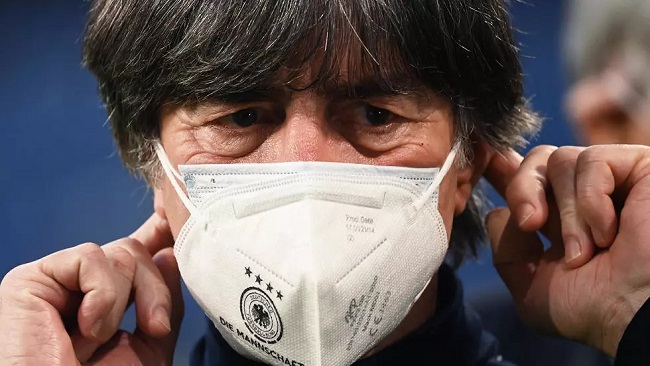
Four-time World Cup winners Germany’s defeat to North Macedonia sparked calls on Thursday for coach Joachim Loew to stand down instead of waiting till after this summer’s European Championship.

Goran Pandev had put North Macedonia ahead in Wednesday’s 2022 World Cup qualifier just before half-time and although Ilkay Gundogan equalised from the penalty spot early in the second half, the minnows snatched victory when Eljif Elmas scored a late winner in Duisburg.

Loew, who led Germany to glory at the 2014 World Cup but has suffered a string of poor results almost ever since, had announced last month that he will stand down after Euro 2020.

Bild, Germany’s most-read newspaper, said that decision should be reversed after the loss to the world’s 65th-ranked team.

“It’s over Jogi,” it said in its headline. “The magic that Loew conjured up during the World Cup (in 2014) has unfortunately disappeared. His achievements for German football cannot be questioned but his time has gone,” the paper said.

Loew has tried to forge a young new team without veteran stars such as Thomas Mueller and Jerome Boateng that he discarded after early Germany’s early elimination from the 2018 World Cup in Russia.

Kicker magazine said the rebuilding project was not working.

“This newly formed German national team is still looking for direction and trying to find its way… both in the players’ legs and heads,” it said.

Kicker said Loew’s explanation that his players were “tired” simply “does not stand up… against opponents of that level”.

And Sport1 website said the team had “dishonoured itself”, and was particularly critical of Chelsea forward Timo Werner who missed an open goal.

“Some players are not reaching their usual level,” the website said.

The performance will only add fuel to the argument that 31-year-old Mueller, who is again in good form this season after leading Bayern Munich to victory in the 2020 Champions League, be recalled for the Euro finals this summer when Germany face a tough first-round group of reigning champions Portugal, World Cup holders France and Hungary.

The loudest calls came from Uli Hoeness, Bayern’s honorary president.

“Mueller should be in the team, he can still score goals and he can help any team in the world to get out of difficult situations,” Hoeness said.

Loew meanwhile insisted he had not lost faith in his team for the Euro — and he urged Germans not to either. “We must not lose belief,” Loew said. “In the coming days and weeks we will check over everything once again.”

Source: AFP

Tears as prominent Manyu Sisiku dies in Yaoundé

1, April 2021

Tears as prominent Manyu Sisiku dies in Yaoundé 0

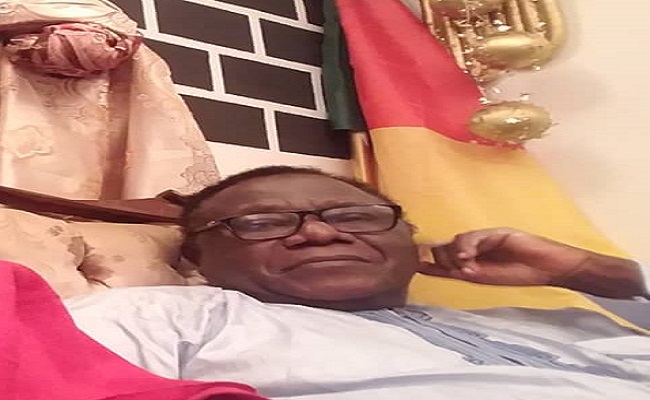
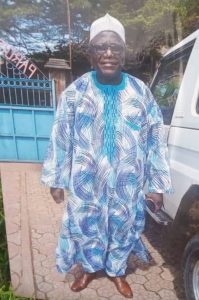
The people of Nchang village, a community in the Mamfe Central Sub Division in Manyu have been plunged into mourning following the death of Sisiku Tarkang Philip.

According to Cameroon Concord News Yaoundé Bureau Chief, the much respected Manyu traditional and political figure passed away on Sunday.

Although no formal announcement has been made of his demise, a UK based Manyu Royal; Prince Julian Ebai confirmed the death of the Sisiku and added that according to the tradition of the Manyu people, some necessary rites have to be performed before the official declaration and burial.

Sisiku Tarkang Philip moonlighted as Technical Director at the Ministry of Post and Telecommunications in Yaoundé and was also head of the ruling CPDM Central Committee Delegation to Mamfe Central.

He retired voluntarily from the Ministry of Post and Telecommunications following a financial scandal that rocked the establishment under the late Minister Mouchipou Seydou.

He was the head of the Mamfe Central Family Meeting in Yaoundé and was also a patron of the Manyu Solidarity Foundation.

By Rita Akana in Yaoundé with additional reporting from Soter Agbaw-Ebai

Biya regime rolls out cholera vaccination campaign after outbreak

1, April 2021

Biya regime rolls out cholera vaccination campaign after outbreak 0

Cameroon has begun vaccinating people against Cholera. The waterborne disease recently resurfaced in the central African country after going several months without reporting a single case.

Since last March, at least 1,890 cases of the disease have been detected. The ministry targets to vaccinate 33,600 people – mostly urban dwellers.

Cholera outbreaks are recurrent in Cameroon’s slums and neighborhoods which lack proper water drainage infrastructure and sanitation facilities.

“Concerning the epidemiological situation of cholera in Cameroon, you know that this disease is a permanent threat in our country, and at the moment several regions are declared at high riskt,” said James Longsi, a public health specialist.

Teams from the ministry of health are visiting suburbs to conduct sensitization before handing out the oral vaccines.

In the Youpwe district of Douala, vaccinations teams have been greeted by a reluctant public, with some people questioning whether the vaccines are not repackaged Covid-19 jabs.

Cameroon’s port city has reported over a dozen cases and one death from Cholera.

“Yes, it is understandable that with Covid19, people are reluctant to be vaccinated. But this vaccination in Cameroon is not the first. The greater North of Cameroon has experienced campaigns that have had no consequences on the health of the population, on the contrary we have had a decrease in cholera cases since the implementation of this campaign (…) And it must be said, the vaccine used in this campaign is safe and effective,” said Longsi.

Cameroon normally registers Cholera cases during and after its rainy season.

The vaccine is being given to women, men and children aged one year and over.

Cholera is a serious acute infectious disease characterized by watery diarrhea, vomiting and can kill a person within hours.

Source: Africa News

Ivory Coast: ICC appeals court upholds acquittal of President Gbagbo

31, March 2021

Ivory Coast: ICC appeals court upholds acquittal of President Gbagbo 0

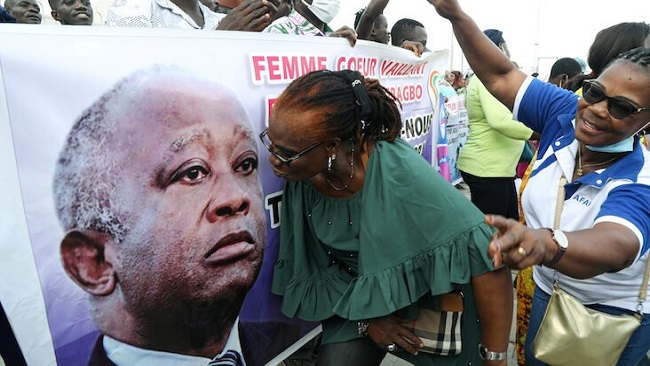
International Criminal Court appeals judges have upheld the acquittals of former Ivory Coast president Laurent Gbagbo and former minister Charles Ble Goude on charges of involvement in deadly post-election violence.

Both were acquitted in 2019 of responsibility for crimes including murder, rape and persecution following disputed elections in 2010, with judges saying prosecutors failed to prove their case. The decision halted the trial before defense lawyers had even presented their evidence.

Wednesday’s appeals panel decision to reject the prosecutors’ appeal against the acquittal ends proceedings against both men.

Supporters of Gbagbo hugged and cheered outside the court building after the decision.

(AP)

There are reasons why Biya and his acolytes should be charged for Covid-19 related fraud

31, March 2021

There are reasons why Biya and his acolytes should be charged for Covid-19 related fraud 0

The International Monetary Fund (IMF) initially pledged to use its US$1 trillion lending capacity to help countries cope with the most serious health and economic crisis in recent history. It has approved only 10 per cent of this amount, in part due to technical restrictions as well as many countries’ mounting debt. Recent developments in the G20 and G7 are likely to help boost countries’ reserves, and the G7 has specifically pledged to “work with the IMF to make progress on enhancing transparency and accountability.”

Moreover, the US$100 billion the IMF has spent thus far has disproportionately targeted just a few countries. According to Transparency International’s analysis, 80 per cent went to 10 countries, including Cameroon, Egypt and Nigeria, as of 23 July 2020, at which point the majority of these loan agreements had already been approved.

Transparency International and Human Rights Watch have assessed the effectiveness of the IMF’s approach during the pandemic by analysing how well – Cameroon carried through on the measures included in the loan agreement. Between January and March 2021, Transparency International and Human Rights Watch analysed documents published by the Biya Francophone regime, as well as loan agreements and other documents published by the IMF.

An in-depth analysis of Cameroon found mixed results in meeting the IMF’s transparency commitments. There remained inconsistencies in the types of measures to which the corrupt regime in Yaoundé committed its implementation, and the role of the IMF in ensuring compliance. The transparency commitments in the emergency loans spurred the Biya government to produce information about its spending and contracts that it would have otherwise not published. However, the amount, accessibility, and quality of the disclosed information varied widely and was inadequate for meaningful oversight for La Republique du Cameroun.

What Transparency International and Human Rights Watch found

Our review identified several factors that weakened the effective implementation of commitments:

Transparency commitments lack adequate specificity. As a result, the types of information the Biya regime disclosed, the time period covered, and the level of detail varied widely- typical of the ruling CPDM crime syndicate!

Relevant information is hidden, hard to find and inaccessible. To be accurate, finding published information was difficult. For example, the CPDM fraudsters published a list of companies that were awarded government contracts and some beneficial ownership information, but the only link to the document accessible online is on page 47 of an IMF report, not on any government site.

Beneficial ownership information is inadequate. In almost all cases, there was not sufficient identifying information about beneficial owners to ensure that people were not illicitly profiting from government contracts in Yaoundé. Moreover, the consortium of crime syndicates in Yaoundé did not specify how they would provide the information they committed to disclose.

The specific measures the IMF required were completely absent.  Cameroon only followed through on its initial commitment because the IMF made approval of a second loan request dependent on Yaoundé doing so.

The IMF’s call to the Biya administration during the pandemic to ‘spend as much as you can but keep the receipts’ showed concern for corruption risks. But this approach will only be effective in addressing rights issues if it ensures that those ‘receipts’ are publicly accessible, comprehensive and credible.

As part of the May loan, the Cameroonian government pledged to use the funds transparently, and committed to issuing semi-annual reports on COVID-19 spending; commission an independent audit; and publish “documents related to results of public procurement and [beneficial ownership information] of companies awarded contracts.”

Of Covid-19 IMF Funding and Biya CPDM Corruption

From the beginning, virtually no public information was provided regarding the government’s COVID-19 spending. Healthcare centres made urgent appeals for support from an emergency health fund into which they have been paying 10 percent of their revenues since 1993, according to medical staff whom Human Rights Watch interviewed from various regions in April and May, but they said they had received no support. The government does not publish any information about the fund and did not respond to a Human Rights Watch letter regarding it. The president established a second solidarity fund and appealed to private companies and citizens to contribute, but that fund was also not transparent.

In interviews with Human Rights Watch, medical staff reported shortages in basic hospital goods, including thermometers, disinfectants, and medicines, as well as ventilators and oxygen, and protective gear for doctors and nurses, such as masks, gloves, and glasses. One doctor said his hospital only received 12 masks, 20 boxes of gloves and four full body gowns for its 50 employees until his district’s 10 medical facilities finally received a combined total of 10 million CFA (US$17,000) in August.

People who lost jobs or wages due to the pandemic told Human Rights Watch that they received little or nothing to stave off hunger. One woman, who works as a secretary at a hotel in Douala and now earns one-third her usual salary reported in December that she was having trouble paying for her children’s food, school fees, and other costs, stating, “The state hasn’t helped us.” Another woman, an events manager at a hotel whose salary was cut, said she had to ask her brother to take care of her two children because she could no longer afford to do so. Both women worked at hotels that the government had requisitioned between March and May to house people who may have been exposed to COVID-19.

Based on over a dozen interviews Human Rights Watch conducted, the hotels received only very partial or no compensation for their costs, adding financial strain at a time when the industry was already struggling with pandemic-related restrictions leading to layoffs and steep wage cuts. The government has not published any information regarding its contracts with or reimbursements to such hotels.

After public pressure, the Health Ministry, citing the “urgency of transparency”, published a two-page statement on July 29 about how it spent about 22 billion FCA (US$40 million), which it said was its total expenditure to respond to COVID-19 in the preceding five months. It included only vague categories that provide no real possibility for the public to verify. In its letter, the IMF said that the Ministry of Finance is preparing a report on its COVID-19 spending, which it expects the government will share “in the near term.”

Before the IMF approved a second emergency loan, it required the government to change its rules to enable it to publish beneficial ownership information of companies awarded contracts, and to publish “the backlog of all COVID-19-related contracts awarded since May 4, including the beneficial ownership.” In a positive step, in October the government issued a circular requiring companies to include beneficial ownership information in their contract bids and mandating adding the information to a national register once a contract is awarded.

In practice, however, the government never uploaded this information into a central database. Instead, it produced a list of the names of companies awarded contracts, beneficial owners, and the contract amount, but there are no links to that document on any government website. The only link appears to be on page 47 of an IMF loan agreement. In addition, for nearly all companies, only one beneficial owner is listed, making it highly unlikely that the information is complete.

The government has not published the contracts themselves, and the IMF revised – it says “clarified” – the terms of the November loan agreement to no longer require the government to do so. With regard to the commitment to conduct an independent audit, the state agency, Contrôle supérieur de l’État du Cameroun (CONSUPE), has reportedly begun an audit and the finance minister has called for tenders for an independent audit.

Culled from Transparency.org with additional editing from Camcordnews

Niger: Soldiers arrested after ‘attempted coup’

31, March 2021

Niger: Soldiers arrested after ‘attempted coup’ 0

Soldiers were arrested in Niger after an “attempted coup” early Wednesday, a security source said after gunfire broke out in the capital Niamey, adding “the situation is under control”.

Residents reported hearing overnight bursts of gunfire near the presidency, just two days before Mohamed Bazoum is due to take the helm of the coup-prone country.

“There were some arrests among a few members of the army who are behind this attempted coup,” said the source, speaking on condition of anonymity.

“The Presidential Guard retaliated, preventing this group of soldiers from approaching the presidential palace,” said the source.

A resident of Niamey’s Plateau district, which includes the president’s official residence and offices, told AFP: “It was around 3.00 am, we heard shots from heavy and light weapons and it lasted 15 minutes before stopping, followed by shots from light weapons.”

“The gunfire lasted about 20 minutes,” another resident said.

A third resident spoke of “intense shooting, with heavy and light weapons”.

Online newspaper actuniger.com reported that calm had returned by around 4.00 am.

In short video clips posted on social networks, only several seconds in length, sporadic bursts of gunfire could be heard in the pitch dark.

It was not yet possible to independently verify the location and timing of the videos.

The alleged coup comes ahead of Bazoum’s scheduled inauguration on Friday — the first elected transition in Niger’s history since independence from France in 1960.

Bazoum is a former interior minister and right-hand man of outgoing president Mahamadou Issoufou, who is voluntarily stepping down after two five-year terms.

His victory in the second round of the election on February 2 was confirmed by the constitutional court this month.

The results were contested by Bazoum’s rival, former president Mahamane Ousmane, who claimed he was the real winner.

Ousmane had called for “peaceful marches” across the country, but a planned opposition protest Wednesday in Niamey was banned a day earlier by authorities.

Niger is the poorest country in the world, according to the benchmark of the UN’s 189-nation Human Development Index.

It has suffered four coups in its history, most recently a February 2010 putsch which toppled then president Mamadou Tandja.

The Sahel country has also recently been struck by repeated jihadist attacks as Islamist movements have spilled over from neighbouring Mali and Nigeria.

Source: AFP

Yaoundé says Boko Haram has intensified attacks for supplies

30, March 2021

Yaoundé says Boko Haram has intensified attacks for supplies 0

Cameroon’s military on Tuesday said it deployed troops to its northern border with Nigeria after a series of attacks authorities say were carried out the terrorist group Boko Haram. The group did not claim responsibility, but Cameroonian authorities said they also deployed village militias in response to the attacks.

Cattle rancher Donald Kulbe says economic activity has been halted since Saturday’s Boko Haram attack on Cameroon’s northern village of Dabanga on the border with Nigeria. The 52-year-old director of the Dabanga village cattle market says the fighters killed at least 50 animals and chased hundreds of civilians and cattle buyers from their village. He spoke to VOA from Dabanga via WhatsApp. 

Kulbe said the economy has taken a hit in his village due to attacks claimed by the terrorist group, Boko Haram. This, he says, is on top of the economic downturn the Dabanga village is facing because of the coronavirus pandemic. Due to insecurity in the village and fear of customers, cattle ranchers are seeing their income fall drastically. 

Several dozen villagers fled for their lives and are still hiding in the bushes in the areas near the border of the village, Kulbe said. Villagers identified at least 20 corpses after the fight between the attackers and Cameroon military.

Midjiyawa Bakary is the governor of Cameroon’s Far North region that shares a border with Nigeria’s Borno state, epicenter of the terrorist group according to the U.N. He says more than 100 fighters attacked a Cameroon military base in Dabanga that Saturday.

The heavily armed fighters were on board six pick-up trucks and 20 motorcycles, Bakary said speaking to VOA from Maroua, capital of the Far North Region of Cameroon.

He says the terrorists killed a soldier and wounded two members of the Cameroon military who are undergoing treatment at a local hospital. The Cameroonian military killed 20 fighters and seized six pick-up trucks, 7 motorcycles and weapons the terrorists used in the attack, says Bakary. He says unfortunately, two civilians including a pregnant woman died in the shootout between troops and the terrorists.

Boko Haram has not claimed responsibility over the attack.

On Tuesday, Cameroon said it had intelligence that several hundred heavily armed Boko Haram fighters are hiding on its northern border with Nigeria, planning attacks on Cameroon. The military said troops have been deployed to protect the border zone and recommended that civilians be vigilant and report strange visitors to their villages.

Bakary says Boko Haram fighters are planning to attack communities and military posts in Cameroon for supplies. He says the terrorist group suffered huge losses last year after frequent attacks on Boko Haram strong holds by Cameroon, Nigeria, and Chad militaries. 

He says besides wanting to cease weapons from Cameroon, Chadian and Nigerian troops, the terrorists intend to steal food, especially millet and cattle from villagers. Bakary says the fighters are running short of food because their known supply routes are under the military’s control. The military is ready to fight, he added, until the terrorists whose fire power has been reduced, completely surrender.

The last heavy attack by the terrorist group in Dabanga was in 2014. A Boko Haram assault on the base camp of road contractors killed a Cameroon soldier. 10 Chinese workers were abducted. Chinese workers abandoned the road and mining exploration sites following the attack at a camp in Waza. The kidnappers, who are suspected to be aligned with the terrorist group, also stole 10 vehicles and a container of explosives. 

The captives were released in October along with 18 other hostages. The Cameroon government denied it paid ransom to secure their release.

Source: VOA

As Franck Biya prepares to succeed his father: A look at who’s who of his inner circle

30, March 2021

As Franck Biya prepares to succeed his father: A look at who’s who of his inner circle 0

Officially, Franck Biya, the son of Cameroon’s President Paul Biya, has no political ambitions. As discreet as he is influential with his father, he has made efforts to surround himself with childhood friends and relatives, most of whom have economic or financial backgrounds.

Franck Biya has never run for political office and does not appear in any official organisation chart. However, he regularly finds himself on the front page of Cameroonian newspapers, which tend to view him as a potential successor to his father, 88-year-old Paul Biya, who has served as Cameroon’s president since 1982 and is the leader of the powerful Rassemblement Démocratique du Peuple Camerounais (RDPC).

49-year-old Biya is nevertheless careful not to reveal any of his intentions. He is very discreet as he avoids the media and has never given an interview. Biya’s entourage is also careful to deny any rumours about his political ambitions.

A movement called the “Friends of Franck Biya” began in Cameroon and spread throughout the diaspora. What is its objective? To support the 2025 presidential candidacy of the eldest son of Paul and Jeanne Irene Biya (who died in July 1992).

Some view it as a test run, as a means of gauging public opinion. Others see it as a means of exerting pressure on this businessman who has so far shown little interest in public affairs.

In Central Africa, family successions are a regular occurrence. For example, in neighbouring Gabon, Ali Bongo Ondimba took over from his father, Omar.

And in Equatorial Guinea, Teodoro Nguema Obiang Mangue, the country’s vice-president and Teodoro Obiang Nguema Mbasogo and Constancia Mangue Nsue Okomo’s son, is biding his time.

Although he has always stayed out of the spotlight, Biya has not hesitated to use his influence with his father to promote members of his mother’s family to prominent government positions.

Robert Nkili, who served as minister of labour and transport between 2002 and 2015, is his mother’s younger brother and Louis-Paul Motaze, the current finance minister, is his cousin. Both owe their positions to Biya.

The latter also serves as a gateway to the head of state. For instance, Biya invited Yannick Noah to the president’s birthday celebration on 13 February. The former tennis champion, whose real estate project – “La Cité des Cinquantenaires” in Yaoundé – is entangled in bureaucratic red tape, was able to plead his case in between glasses of orange juice.

One of the reasons why Franck Biya has remained under the radar for so long is that he left Cameroon in the 1990s to study in Los Angeles. He then moved to South Africa and France, where he lived until March 2020, when he returned to Cameroon just before the country’s first Covid-19 lockdown.

In each of these countries, Franck Biya has taken care to live in a tight-knit circle, surrounded by childhood friends and relatives who are mostly technocrats with an economist profile or working in finance.

For example, he met Modeste Mopa Fatoing, the director-general of the tax department, through Alamine Ousmane Mey, a mutual friend. In South Africa, he rubbed shoulders with Acha Leke, who has been a member of McKinsey’s Shareholders’ Council since May 2020.

Now based in Yaoundé, he is close to Samuel Mvondo Ayolo, the director of the head of state’s civil cabinet, and Paul Elung Che, the deputy secretary-general of the presidency. This 52-year-old English-speaking man, who trained at Enam and Harvard, was the head of the Caisse de Stabilisation des Produits Pétroliers et des Hydrocarbures (CSPH).

After a stormy beginning, his relationship with his father’s wife, Chantal, has calmed down. On the other hand, relations with his cousin, Bonaventure Mvondo Assam, a former deputy and ex-partner in the Compagnie Forestière Assam (Cofa), have become more tenuous.

However, many people make up Franck Biya’s inner circle. Listed below are some of the most prominent ones.

Ghislain Samou Nguewo

Aged 44, he is one of Biya’s closest collaborators. An economics graduate from the University of Yaoundé II, Ghislain Samou Nguewo took over the board of directors of Boissons Vins et Spiritueux (BVS) in February 2019. This agro-industry was launched by Guillaume Sarra and his wife Virginie Palu-Sarra, the latter whom is French industrialist Pierre Castel’s niece.

Based in Douala, the company is managed by Stéphane Soumahoro, former Ivorian president Robert Gueï’s son.

Christian Mataga

Christian Mataga is the son of Philippe Mataga, a former ambassador and ex-director of Paul Biya’s civil cabinet. Philippe Mataga also previously served as President Biya’s minister of labour and foreign affairs. The two men are so close that Paul Biya agreed to be Christian’s godfather.

Biya considers this finance graduate from the University Paris 1 Panthéon-Sorbonne as his own brother. Mataga runs the Société Commerciale Industrielle et Forestière (Scifo), which specialises in the production, processing and marketing of tropical wood species from concessions granted by the Cameroonian Ministry of Forests.

Alamine Ousmane Mey

The current finance minister is a long-time friend of Ghislain Samou Nguewo, who introduced him to Biya. Alamine Ousmane Mey trained at the RWTH Aachen University in Aachen, Germany, served as director-general of Afriland First Bank, the second largest bank in the country, and then – on Franck Biya’s recommendation – became President Biya’s minister of finance.

In the latest government reshuffle, Mey moved from managing the finance portfolio to the economic one, swapping with Louis-Paul Motaze.

Serge Akounou

One of Biya’s childhood friends, Serge Akounou followed him to the US, where the president’s son pursued his university studies. He received an MBA in Finance from the UCLA Anderson School of Management in California and returned to Cameroon to work for the local branches of Standard Chartered Bank and City Bank before moving to Gauteng, in the Johannesburg region of South Africa.

However, their friendship is reportedly going through a rough patch. Perhaps this is because Akounou is the son of Gervais Mendo Ze, a former director-general of Cameroon Radio and Television (CRTV) and former minister of communication, who has been imprisoned since 12 November 2014.

Culled from The Africa Report

«< 542 543 544 545 546 >»

Featured

  • Biya is already in Hell as Yaoundé unravelsBiya is already in Hell as Yaoundé unravels
  • What does President Biya really want? Money, women or cigarettes?What does President Biya really want? Money, women or cigarettes?
  • Biya, how long must the nation wait for the government it was promised?Biya, how long must the nation wait for the government it was promised?
  • Cameroonians in Leicester: funeral contributions must never become a marketplace for corruptionCameroonians in Leicester: funeral contributions must never become a marketplace for corruption
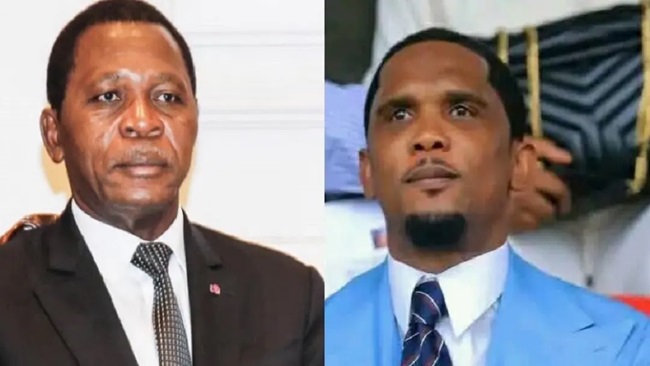
  • Atanga Nji’s Samuel Eto’o comment: Cameroon does not need bombastic declarationsAtanga Nji’s Samuel Eto’o comment: Cameroon does not need bombastic declarations

Most Commented Posts

  • 4 Anglophone detainees killed in Yaounde4 Anglophone detainees killed in Yaounde
    18 comments
  • Chantal Biya says she will return to Cameroon if General Ivo Yenwo, Martin Belinga Eboutou and Ferdinand Ngoh Ngoh are sackedChantal Biya says she will return to Cameroon if General Ivo Yenwo, Martin Belinga Eboutou and Ferdinand Ngoh Ngoh are sacked
    13 comments
  • The Anglophone Problem – When Facts don’t LieThe Anglophone Problem – When Facts don’t Lie
    12 comments
  • Anglophone Nationalism: Barrister Eyambe says “hidden plans are at work”Anglophone Nationalism: Barrister Eyambe says “hidden plans are at work”
    12 comments
  • Largest wave of arrest by BIR in BamendaLargest wave of arrest by BIR in Bamenda
    10 comments

Latest Tweets

→ Follow me

Featured

  • Kremlin says US mediation role in Russia-Ukraine negotiations on hold

    Kremlin says US mediation role in Russia-Ukraine negotiations on hold

  • Football: Bayern Munich eye €50m move for Yann Bisseck

    Football: Bayern Munich eye €50m move for Yann Bisseck

  • Southern Cameroons Crisis: Suspected Ambazonia fighters kill two students in Bambui

    Southern Cameroons Crisis: Suspected Ambazonia fighters kill two students in Bambui

  • Biya is already in Hell as Yaoundé unravels

    Biya is already in Hell as Yaoundé unravels

  • Child Benefit: Biya regime audit families after 55% jump in declared children

    Child Benefit: Biya regime audit families after 55% jump in declared children

  • BEAC halts key refinancing facility for productive investments across CEMAC

    BEAC halts key refinancing facility for productive investments across CEMAC

  • Biya leaves for Europe as Yaoundé await new cabinet

    Biya leaves for Europe as Yaoundé await new cabinet

Log In

  • Register
  • Log in
  • Entries feed
  • Comments feed
  • WordPress.org
© Cameroon Concord News 2026

We are using cookies to give you the best experience on our website.

You can find out more about which cookies we are using or switch them off in .

Powered by  GDPR Cookie Compliance
Privacy Overview

This website uses cookies so that we can provide you with the best user experience possible. Cookie information is stored in your browser and performs functions such as recognising you when you return to our website and helping our team to understand which sections of the website you find most interesting and useful.

Strictly Necessary Cookies

Strictly Necessary Cookie should be enabled at all times so that we can save your preferences for cookie settings.

3rd Party Cookies

This website uses Google Analytics to collect anonymous information such as the number of visitors to the site, and the most popular pages.

Keeping this cookie enabled helps us to improve our website.

Cookie Policy

More information about our Cookie Policy